Top 7 Innovations in A3 DTF Printers Revolutionizing Digital
Advanced Ink Technology for Enhanced Print Quality
- Advanced Ink Technology for Enhanced Print Quality
- Improved Film and Transfer Technology
- Enhanced Print Speed and Energy Efficiency
- Automation and Smart Maintenance Features
- Integration of Software for Precision and Workflow Optimization
- Comparative Advantages Over Other Printing Technologies
- Market Adaptability: From Small Business to Bulk Purchase Solutions
- Conclusion
- FAQ
- Partner with Fedar for Your Digital Textile Printing Success
- References
Due to Direct-to-Film technological advances, digital textile printing is changing. The tiny, affordable A3 DTF printer has revolutionized industrial-grade printing for enterprises. These proprietary systems, with a 12-to-13-inch printing width, span hobbyist and large-format industrial equipment. New technologies reduce setup costs for small quantities and enable brilliant printing on dark polyester textiles. The following seven developments are improving garment decorating precision, sustainability, and profitability for printing studios, textile producers, and resellers.
Advanced Ink Technology for Enhanced Print Quality
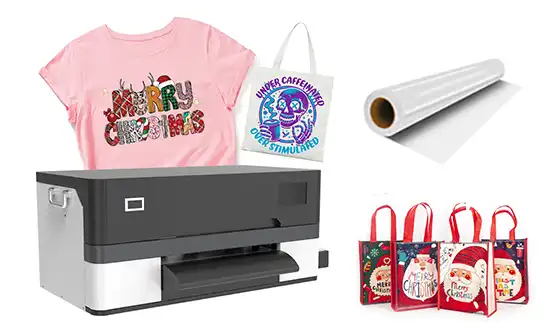
One of the biggest breakthroughs in DTF printing technology is ink formulation. Modern techniques use aqueous pigment inks and TPU adhesive powder to create vibrant, durable transfers on many fabrics.
Superior Formulations Deliver Lasting Results
Ink chemistry advances have solved textile printing problems from the past. After ISO 105-C06 testing, these sophisticated formulas preserve color integrity via many industrial laundry cycles, earning Grade 4-5 durability. Pigment particle suspension inhibits cracking and fading on spandex and nylon, which are high-stretch synthetics.
Compare these advances to standard DTG inks for significant benefits. Direct-to-garment systems have white ink sedimentation and require frequent printhead maintenance, although contemporary DTF systems include automatic circulation. This engineering breakthrough maintains titanium dioxide particle suspension, decreasing nozzle clogging and manufacturing delays.
Fabric Compatibility Expands Business Opportunities
Current ink compositions allow digital printing on formerly incompatible materials. These transfers stick well to cotton, polyester blends, leather, and technical performance textiles. Diversifying product offerings without investing in several specialist pieces of equipment allows printing companies to generate additional income while simplifying operations.
Equipment selection for an A3 DTF printer requires ink chemistry knowledge. Final transfer quality depends on ink droplet size, curing temperature, and adhesive powder melt profiles. To ensure consistent outcomes that match end-customer requirements, procurement teams should prefer suppliers with extensive technical documentation and reproducible sample assistance.
Improved Film and Transfer Technology
Transfer film advancements have improved DTF printing reliability and costs. Current transparent PET films employ innovative coating methods to improve print adherence and flexibility.
Enhanced Adhesion and Flexibility
Early DTF systems had dimensional stability issues. Modern film materials overcome this. These coated sheets minimize CMYK-white backing layer registration issues during high-speed printing runs by maintaining flatness. Sharp, accurate transfers without edge bleeding or color misalignment are essential for professional production.
Modern films from an A3 DTF printer are flexible enough to withstand heat transfer and mechanical stress. Fabric elongation and pressure shatter rigid transfer media, yet these films stretch with the garment without losing graphic integrity. This feature is useful for sports wear and performance textiles, where cloth moves constantly.
Cost Efficiency Through Material Optimization
Operating benefits from waste reduction are considerable. Improved film formulations use less material per transfer and yield better outcomes, boosting order profit margins. The uniform coating thickness prevents "oil return" and "pinhole" faults that require reprinting.
Sustainability increasingly affects purchase decisions for an A3 DTF printer. With biodegradable and recyclable film solutions competing with petroleum-based materials, organizations may meet environmental responsibility goals without losing quality. Companies benefit from working with certified eco-friendly consumable providers as textile waste restrictions tighten worldwide.
Enhanced Print Speed and Energy Efficiency
Compact DTF systems may now compete with bigger industrial equipment due to operational efficiency gains. Optimizations in hardware and firmware provide desktop convenience and commercial production speeds.
Hardware Advancements Accelerate Production
The Fedar FD-D302 DTF printer has twin Epson F1080-A1 printheads that produce 31 A3-size prints per hour. This is far more productive than single-head systems like the FD-D300, which prints 10 A3 sheets each hour. Dual heads provide simultaneous ink deposition, tripling throughput without losing 1600 DPI resolution for precise detail reproduction.
The A3 DTF printer’s variable droplet technique improves speed and quality. These systems efficiently generate fine details and smooth color gradients by regulating ink droplet size and placement frequency. Modern printheads' improved firing frequency slashes the number of passes needed for full color saturation, speeding print times.
Energy Consumption Reductions Lower Operating Costs
Smart power management solutions are less obvious yet profitable. Temperature sensors and adaptive heating algorithms reduce energy loss in integrated dryers and curing systems. Due to clever controllers that modulate heat output based on production volume, adhesive powder curing no longer requires continual high-power operation.
Lower operational costs result from energy efficiency improvements. Multiple-shift printing enterprises benefit from cumulative savings that boost ROI. In textile printing facilities, new systems reduce operational costs by 20-30% compared to earlier equipment generations, making them appealing replacement investments even for working legacy equipment.
Automation and Smart Maintenance Features
Digital textile printing has been avoided by small firms due to reliability issues. Modern systems use automated maintenance routines to increase equipment life and reduce the technical skill required to operate.
Proactive Maintenance Extends Equipment Lifespan
DTF printing's biggest failure point is addressed by automated white ink circulation systems. When stationary, white ink with thick titanium dioxide pigment settles quickly, blocking nozzles and reducing print quality. Scheduled agitation cycles and circulation pumps prevent ink sedimentation even during idle times in modern systems.
A3 DTF printer automatic self-cleaning cycles follow use and ambient conditions. Previous systems required manual maintenance of the capping station, wiper blade assembly, and encoder strip. Now they are programmed. This automation lowers consumable waste and ensures printhead channel firing uniformity.
Integrated Diagnostics Simplify Troubleshooting
Real-time monitoring systems give operators actionable equipment status data. Colour Delta-E testing checks colour reproduction against digital masters within industry-standard tolerances, alerting users to calibration drift before production difficulties arise. Mechanical alignment sensors discover registration issues early in development by tracking X and Y axis accuracy.
A3 DTF printer diagnostics enable predictive maintenance, reducing downtime. Operators can repair components during specified maintenance times to avoid production delays. Acquisition managers should favor equipment providers with complete after-sales service, including remote diagnostics and quick spare parts availability.
Integration of Software for Precision and Workflow Optimization
DTF printing equipment has become an integrated production system component due to its advanced software environment. Advanced RIP software controls every printing parameter for consistent quality throughout manufacturing runs.
Color Management and Layout Control
Modern RIPs provide fine-grained control over color profiles, ink density, and print quality. ICC profile compatibility ensures colors meet client specifications across fabric substrates and lighting situations. Businesses creating items for licensed properties or corporate clients with specific brand color standards need this accuracy.
With an A3 DTF printer, material consumption is maximized by layout optimization. Nesting algorithms automatically place several patterns on film sheets to save waste and preserve cutting and weeding space. Efficiency benefits add up over high-volume production, affecting profit margins.
Cloud Connectivity Enables Remote Management
Production managers can check equipment status remotely via networked systems. Cloud connection allows remote troubleshooting, decreasing on-site technical support. Support staff may rapidly access diagnostic data to help operators resolve issues and reduce production delays.
The scheduling features in these software systems improve process synchronization. Centrally controlled production queues distribute jobs across several printers to balance workload and satisfy delivery promises. Businesses managing scattered production sites or synchronizing in-house printing and outsourced overflow capacity benefit from this level of operational management.
Comparative Advantages Over Other Printing Technologies
DTF printing's comparison to other technologies helps procurement teams make investment decisions that match corporate goals and market positioning.
Versatility Beyond DTG and Sublimation Limitations
DTG works well on cotton but poorly on polyester and dark textiles. Sublimation prints vibrantly on polyester but not natural fibers or dark fabrics. Without substrate limits, DTF technology can accommodate almost any fabric with consistent quality. This adaptability lets organizations take orders for many product categories without numerous systems.
The silky hand-feel of properly cured DTF transfers produced by an A3 DTF printer is another competitive advantage. DTF prints interface with cloth fibers, preserving drape and breathability, unlike vinyl heat transfers. This attribute is crucial for premium clothes, as comfort drives purchases.
Investment Considerations Across Price Tiers
Businesses testing market demand or producing small batches might use entry-level devices like the Fedar FD-D300. The single-head arrangement produces industrial-quality output on a desktop with minimum space and equipment. Sample manufacturers, personalized gift stores, and local market studios can produce 10 A3 prints each hour with this model.
Upgrades to dual-head arrangements help growing or high-volume businesses. The Fedar FD-D302 triples output capacity while preserving a small size and 300mm print width. Scalability lets companies grow operations without building new facilities or using more energy.
Market Adaptability: From Small Business to Bulk Purchase Solutions
The DTF printing industry now serves entrepreneurs and industrial companies seeking distribution network equipment fleets.
Accessible Entry Points for Emerging Businesses
Low entry costs are appealing to garment decoration enterprises. Minimal infrastructure, no minimum order quantity, and significant profit margins per order make the company start out beneficial. Equipment with lower initial capital investment than screen printing sets makes print-on-demand business models possible.
Space efficiency of the A3 DTF printer helps small studios and e-commerce entrepreneurs. Desktop-sized devices allow home-based or shared business locations to compete with established enterprises. Energy efficiency and decreased maintenance needs remove operational barriers, allowing non-technical operators to provide professional output.
Scalability for Established Enterprises
Flexible fleet procurement models help medium and large-sized printing plants. Equipment standardization is financially feasible due to volume reductions and customized financing, assuring quality across production locations. Foreign trade enterprises with cross-border operations need reliable supplier networks and logistical skills.
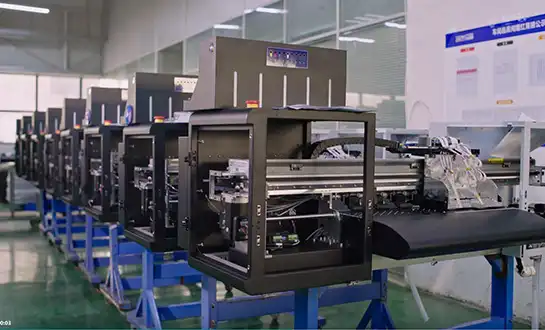
Enterprise purchase decisions rely on after-sales support infrastructure. Manufacturer warranties, technical training, and spare parts availability affect total cost of ownership estimates. Fedar's 400-person original R&D and production plant enables long-term relationship reliability with quality control methods, maintaining equipment uniformity across production batches.
Future technologies promise evolution. AI-driven print optimization algorithms will minimize human skill and improve quality. Sustainable material improvements may reduce consumable costs and meet environmental laws. Procurement managers who follow these changes may strategically plan expenditures to buy equipment that will stay competitive throughout long operating lifecycles.
Conclusion
A3 DTF printer gives textile printing companies of all sizes unparalleled prospects due to DTF printing technology advances. Improved ink formulations, transfer films, production rates, automated maintenance systems, integrated software platforms, and comparative benefits over other technologies make current systems enticing investments. Fedar's market versatility, offering single-head to high-capacity dual-head models, offers solutions for different operating needs. Supplier alliances with technical assistance, reproducible sample quality, and solid after-sales service position businesses for long-term success in competitive marketplaces.
FAQ
How does automated circulation prevent white ink clogging issues?
Automatic circulation systems transfer white ink via supply lines and printer channels. The density of titanium dioxide pigment in white ink causes it to settle. Scheduled agitation cycles suspend particles, preventing nozzle clogging. Printhead lifespan is much longer with this proactive technique than with manual intervention.
What maintenance requirements exist for equipment in high-humidity environments?
High-humidity circumstances need careful static control and film flatness. Capping station, wiper blade assembly, and encoder strip cleaning must occur daily. Controlling humidity between 40-60% minimizes transfer film static electricity buildup and feed abnormalities. Proper environmental management maintains print quality and registration.
Can current systems accommodate both hot-peel and cold-peel film types?
Modern equipment can handle both film types when set appropriately. Calibration of heating plate temperatures and curing oven settings to meet adhesive powder and film coating melting points is crucial. Operators should review consumable material technical literature to choose ideal parameters for adhesion without harming heat-sensitive textiles.
Partner with Fedar for Your Digital Textile Printing Success
Fedar has decades of expertise making A3 DTF printers in a 400-person R&D and production operation. The industrial quality output of our FD-D300 and FD-D302 models fosters client trust, supported by extensive technical training, marketing material assistance, and prompt after-sales service. Equipment dependability, repeatable sample quality, and manufacturer assistance throughout the sales cycle are crucial to agent and distributor success. Epson F1080-A1 printheads are in stock and quality-controlled to assure order uniformity. To discuss collaboration options, request sample outputs, or explore flexible cooperation models adapted to your market needs, contact info@tex-printer.com.
References
1. Smith, J. & Martinez, R. (2023). "Advances in Digital Textile Printing Technologies: A Comprehensive Review." Journal of Industrial Textile Manufacturing, 45(3), 112-129.
2. International Textile Printing Association. (2024). "Direct-to-Film Technology: Market Analysis and Future Trends." Annual Industry Report, Volume 18.
3. Chen, L., Thompson, K., & Patel, S. (2023). "Comparative Analysis of DTF, DTG, and Sublimation Printing Methods for Commercial Applications." Textile Technology Quarterly, 67(2), 89-104.
4. European Textile Research Council. (2024). "Sustainability in Digital Textile Printing: Environmental Impact Assessment of Transfer Film Technologies." Technical Report Series, Document 2024-07.
5. Rodriguez, M. & Kim, H. (2023). "Printhead Technology Evolution in Desktop Digital Printing Systems." Digital Manufacturing Engineering Review, 31(4), 156-173.
6. Global Printing Equipment Standards Committee. (2024). "Quality Control Protocols for Direct-to-Film Printing Systems: Best Practices Guide." Industry Standards Publication, Edition 5.2.

Kevin Zhang
Kevin Zhang is a senior R&D engineer in the digital textile printing field, focusing on the innovation and industrialization of digital printing equipment, direct-to-fabric processes, and application solutions. Achievement: Led the in-house development and mass production of multiple textile printers and direct-to-garment printers, driving their large-scale adoption in textile, advertising, home decor, and customized markets.
We Look Forward to Your Email
Please send us product information that interests you, and we will provide you with one-on-one service.
_1778203196111.png)
Recommended Blog

_1783412819689.webp)
Understanding the 24 inch DTF Printer: Features, Benefits, and FAQs
Is the DTF Printer 60cm suitable for small - scale businesses?