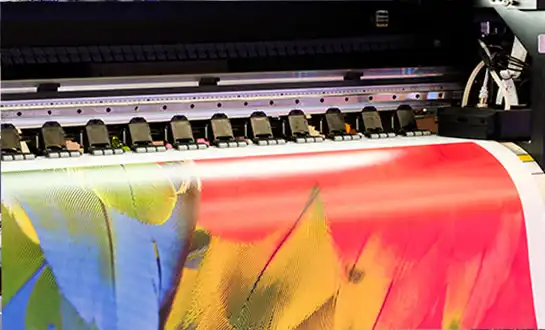
Sublimation Printer Buyer's Guide | Expand into Full Color
Understanding Sublimation Printing Technology
- Understanding Sublimation Printing Technology
- How to Choose the Best Sublimation Printer for Your Business
- Procurement Strategies for B2B Buyers
- Best Practices for Maximizing Sublimation Printer Performance
- Brand Insights and Supplier Recommendations
- Conclusion
- FAQ
- Partner with a Trusted Sublimation Printer Manufacturer
- References
When picking the right sublimation printer, you need to carefully think about the printer's technology, the amount of work you need to do, and your long-term business goals. Sublimation printing changes solid dyes into a gas that links forever with polyester fibers and polymer-coated surfaces. This gives you the longest-lasting and most vivid full-color prints possible. This guide helps B2B buyers, factory owners, and distribution partners figure out important selection factors, such as printhead configurations and resolution specs, as well as after-sales support and supplier dependability, so that your investment fits the needs of the market and your business runs smoothly.
Understanding Sublimation Printing Technology
The Science Behind Dye Sublimation
Under special conditions, heat-activated dyes skip the liquid stage and go straight from solid to gas at temperatures between 180°C and 210°C. This is how sublimation printing works. This molecular bonding process embeds colors into the structure of the substrate instead of just putting them on the surface. This makes pictures that don't crack, peel, or fade even after being washed many times in an industrial washer.
The technology solves problems that manufacturers have had for a long time when it comes to decorating textiles and making promotional items. Setting up traditional screen printing costs a lot for each different design, which makes short-run customization too expensive. Direct-to-garment methods often have low wash fastness scores, which means that pictures start to fade after 20 to 30 washes. Dye-sublimation technology gets rid of these problems by providing high-quality continuous tone photos that can withstand more than 100 industrial wash cycles while still keeping their bright color saturation.
Material Compatibility and Workflow Integration
Because of how it works chemically, sublimation can only be used on synthetic polymer-based materials, mostly polyester fabrics and rigid platforms that have been carefully coated, like metal panels and ceramics. The process needs to be done in two steps: first, digital writing on special transfer paper, and then applying it with a heat press. This indirect method actually helps with planning production because it lets manufacturers and distributors keep more stock of popular designs that can be turned into finished goods as needed. This means that manufacturers and distributors don't have to store as many different items.
Modern sublimation inks meet OEKO-TEX approval standards, which meet the growing demand from buyers in North America and Europe for environmentally friendly products. When compared to traditional cloth dyeing methods, the waterless process produces much less chemical waste. This lets businesses meet their green goals without lowering the quality of their output or slowing down production.
source: FEDAR PRINTER
How to Choose the Best Sublimation Printer for Your Business
Matching Production Capacity to Market Demand
Before choosing the right tools, you should be honest about how much you need now and how much you think you will need in the future. The most important feature that sets models apart across price ranges is their print width. Entry-level setups usually have 1900mm lengths that work for clothing panels and soft signs. For roll-to-roll fabric printing in factories, 3200mm to 4200mm forms are better because they can handle seamless textile production without paneling artifacts.
The number of printheads in a sublimation printer has a direct effect on the output. Models with two printheads, like the FEDAR FD1900, which has two Epson L3200-A1 printheads, can print 70㎡/h in three-pass mode, which is good for workshops and small companies that make 200 to 400 clothes every day. Eight-head systems, like the FEDAR FD6198E, can reach 370㎡/h in a single pass, which makes them useful in industrial production settings that need to make more than 1,500 pieces per shift for wholesale delivery networks. Resolutions from 360×1200 DPI to 3200 DPI let workers find the best mix between speed and detail needs based on the type of substrate and the distance from which the finished products will be viewed.
Color Configuration and Extended Gamut Capabilities
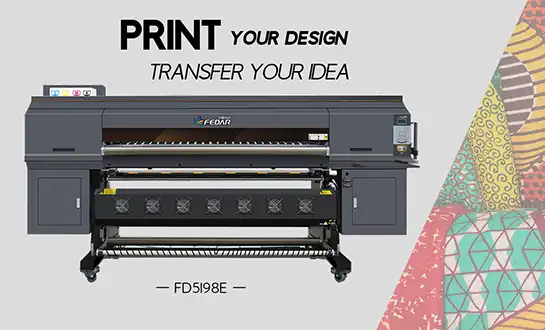
Standard CMYK setups work well for most business needs, accurately reproducing Pantone color libraries with a Delta E variance that is okay for advertising linens and signs. Extended color systems with CMYK plus four more channels are useful for businesses that want to sell high-end clothing, home decor, or photos. The repeatable color range is about 30% bigger with these eight-color setups. They can handle neon tones and subtle skin tone gradations that four-color processes can't. Both setups can be used with the FEDAR FD6198E and FD5198E models, which gives clients the freedom to improve as their needs change without having to buy all new equipment.
Evaluating Total Cost of Ownership
The purchase price is only one part of the long-term costs of running the business. When compared to cartridge-based options, bulk ink supply systems cut the cost of consumables by 40 to 60% while reducing the time needed to change media. Printheads from different manufacturers have very different lifespans. The Epson L3200-A1 heads used in FEDAR equipment have been field-tested to last longer than 18 to 24 months with proper maintenance. This means that resellers and print service providers won't have to pay as much for replacements when they need to.
The amount of energy used is important for businesses that have multiple shifts. Modern sublimation printers use 2.5 to 4.5 kW of power when they are printing, which means they cost $180 to $290 a month at standard US business rates for single-shift operations. Facilities that are looking at equipment should ask for detailed power specs and figure out how much they will spend on utilities based on how often they expect to use the equipment. This way, budget shocks won't hurt dealer earnings or the ability of end customers to get good deals.
Procurement Strategies for B2B Buyers
Vetting Suppliers and Establishing Partnership Criteria
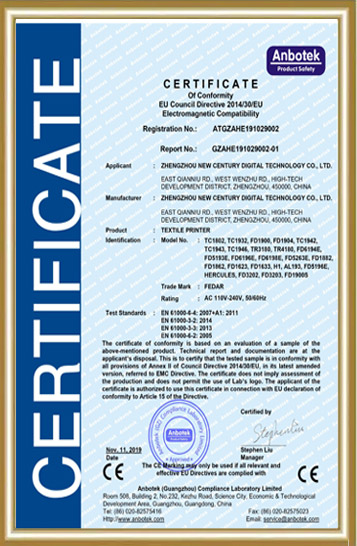
A successful procurement process includes more than just technical specifications. It also includes the ability of the seller to protect your investment and your image with clients further down the line. Factory certifications give you confidence in the quality control of the manufacturing process. For example, ISO 9001 compliance shows that the process is managed in a systematic way, and CE and FCC certifications show that the equipment meets the standards for electrical safety and electromagnetic compatibility needed to legally operate in North American and European markets.
Before making a buy decision, samples should be checked for quality. Reliable makers offer printed samples made on the model being considered, which can be compared side-by-side to see how accurate the colors are, how clear the sharpness is, and how long the samples will last after being washed. If you ask for samples printed on substrates that match the use you want them for, like performance polyester knits for sports wear or display-grade polyester fabrics for backlit signs, you can see how the equipment works in real production settings instead of idealized demo settings.
Structuring Agreements for Distribution Partnerships
When discussing the buy of equipment, resellers and wholesale distributors should make sure that there are clear territorial rights and price systems that keep the company's market position when offering a sublimation printer. When makers sell directly to end users at prices lower than those of approved dealers, this can cause supplier channel conflict. Exclusive regional distribution rights stop this from happening. Tiered pricing models that reward volume promises through increasing discounts encourage people to buy more goods while keeping margins that help businesses make money.
Technical training programs tell the difference between good providers and real manufacturing partners. A full onboarding process should include operating the equipment by hand, managing colors, and making ICC profiles, as well as regular upkeep steps and common tests for fixing problems. Recorded training tools and written standard operating procedures make it easy for businesses to consistently train new employees as they grow. This lowers the management risks that come from losing key employees, which is a problem that many growing businesses face.
After-Sales Support and Parts Availability
When equipment breaks down, businesses lose money and customers lose faith in them. When suppliers keep regional service centers staffed with qualified technicians, response times are measured in hours instead of days, which is very important for businesses that have to meet strict supply deadlines. Make service response promises clear by writing them down. Include the earliest possible arrival times on-site and promises of parts availability for important parts like printheads, repair stations, and control electronics.
Access to spare parts supplies keeps work from having to stop for long periods of time. Instead of sending common replacement parts like wiper blades, capping stations, and ink supply tubing across the world, suppliers should keep them in stock locally. Equipment guides with exploded parts diagrams and part numbers make proactive inventory management possible for high-volume operations. They also help keep internal technical staff busy, so regular repair tasks don't have to be done by calling outside service providers.
Best Practices for Maximizing Sublimation Printer Performance
Preventive Maintenance Protocols
Most of the problems that affect print quality and device availability can be avoided by following regular repair schedules. Every day, you should print a nozzle check pattern before a production run, check the amount of waste ink visually, and clean the encoder strips that help with media tracking. Environmental controls are also very important. Keeping the humidity in the print room between 40 and 60% keeps the ink from drying out too quickly in the printer needles, which is the major reason for clogging problems that need professional help.
Weekly procedures extend to printhead cleaning cycles using manufacturer-specified solutions, calibration pattern printing to verify color consistency across the print width, and inspection of media feed mechanisms for accumulated fiber dust that causes tracking errors. Monthly deep maintenance includes ink system purging, replacement of consumable filters, and recalibration of vacuum tables, ensuring proper media contact during high-speed printing operations. Documented maintenance logs demonstrate diligence when warranty claims arise and provide data revealing performance trends before component failures disrupt production.
Optimizing Production Workflows
Color management is the most misunderstood aspect of sublimation printer operation that affects final output quality. Custom ICC profiles made for specific combinations of ink, paper, and media eliminate the need for trial-and-error adjustments, reducing wasted time and materials during production runs. Professional spectrophotometers measure precise color response characteristics and create profiles that ensure screen previews accurately reflect the final heat-pressed results. This one-time investment reduces color-related rejects by 70–85%, directly improving material utilization and customer satisfaction.
Production speed optimization finds a balance between output and quality standards that are right for each type of product. Backlit display images can handle single-pass printing at top speeds because they can be seen from farther away than three meters, so small banding errors are not noticeable. Multi-pass printing with bi-directional alignment verification is needed for photographic copies and high-end clothing. This slows down the process but ensures the continuous tone quality that commands high prices. By understanding these trade-offs, businesses can get the most out of their tools without lowering the quality of their work.
Brand Insights and Supplier Recommendations
Fedar's Manufacturing Capabilities and Market Position
Fedar has a factory with 400 workers that only makes industrial sublimation printing systems and does its own research and development. This vertical merger keeps the supply chain stable for key parts during times of global part shortages that have caused problems for rivals that use third-party assembly models. The company's engineering team knows a lot about how to integrate Epson industrial printheads and how to make ink delivery systems and repair station designs that last longer than usual in the field.
Through planned specification differentiation, the product line is aimed at different market groups. The FD1900 is affordable, making it a good choice for new operators and companies that are growing. It can handle 3200 DPI resolution and has upgrade paths for more color options. The FD5194E four-head system is popular with mid-market production facilities because it offers 180㎡/h throughput, which is a good balance between investment and capacity for operations that serve regional delivery areas. Manufacturers and converters that make a lot of products need eight-head configurations like the FD5328E and FD7428E, which can produce at speeds of 420 to 440㎡/h and support operations that work in shifts and have tight delivery dates.
Service Infrastructure and Partner Support
Fedar's after-sales system handles the main problems that keep equipment buyers unhappy and threaten the longevity of long-term partnerships. Technical support is available at info@tex-printer.com, and the company's response procedures make sure that the first contact for debugging help is made within four business hours. This ease is very important for foreign customers who have to deal with time zone differences and language barriers that make it harder to solve problems in real time.
Distribution partners get full support packages with marketing materials, sample kits showing how the equipment works with different types of substrates, and co-branded advertising materials to help the growth of local markets. The adaptable partnership models can work with a range of business structures, from non-exclusive wholesale agreements that are good for sellers of a wide range of tools to exclusive territorial distribution agreements that protect the market. Because it's flexible, partners can set up relationships that work with their unique market strategies and available cash.
Conclusion
When choosing industrial sublimation printer tools, you have to weigh short-term budget concerns against long-term business needs and growth plans. Print width, printhead quantity, and color configuration are the main features that set models apart across price ranges. Throughput speeds range from 70㎡/h for entry-level systems to 440㎡/h for commercial setups. When evaluating a supplier, you need to look at more than just the price. You should also look at plant certifications, after-sales support infrastructure, and professional training programs to protect your investment over the five to seven-year lifecycle of the equipment. Fedar's production depth and partner-focused service model address the most important success factors that procurement professionals look for when building long-term relationships with suppliers that help them grow their businesses through reliable sublimation printer solutions.
FAQ
Why does printed transfer paper appear dull before heat application?
Sublimation dyes stay on transfer paper as solid crystals and show dull colors until heat activates them. During the heat press stage, when temperatures hit 180–210°C and the solid changes to a gas, the real liveliness comes out. The gaseous dyes then go through polymer surfaces, connecting at the molecular level to show the full color. Because of this trait, you have to believe the process and not judge the end quality by how the transfer paper looks.
Can sublimation printing work on natural cotton fabrics?
It is not possible to do direct sublimation on 100% cotton because the color chemistry only links with polymer molecules, which are not found in natural fibers. Companies that want to sell their products on the cotton market use either custom transfer papers that put down a thin polymer layer with the sublimated picture or polymer coatings on cotton substrates before sublimation. They add extra steps to the process and change how the cloth feels when you touch it compared to straight polyester printing.
What prevents nozzle clogging in production environments?
The best way to stop this from happening is to keep the relative humidity in the print room between 40 and 60%. This will keep the ink from evaporating too quickly in the printer tubes. Automatic cleaning processes should happen at the times set by the maker, which is usually every 8 to 12 hours of nonstop use. Wet capping methods are needed to seal printheads against wet pads when equipment is left idle for long periods of time. This keeps ink from crystallizing, which requires professional service and costs $300 to $600 per event.
Partner with a Trusted Sublimation Printer Manufacturer
Fedar blends decades of engineering experience with a full support system made just for distribution partners and production sites that need reliable industrial sublimation systems. Our factory follows strict quality control rules that make sure all of the equipment that leaves our production lines works the same way. We protect your investment throughout the lifetime of ownership with detailed sample kits, expert training programs, and quick response time after the sale. Contact our team at info@tex-printer.com to talk about how to set up equipment that fits your unique production needs, look into business options with competitive wholesale prices, or set up tours of our facilities to see how we make things. Reliable connections with sublimation printer suppliers start with open conversation and a shared desire to see your business succeed.
References
1. Cohen, M. (2023). Industrial Textile Printing: Technologies and Applications. Textile Research Institute Press.
2. Harrison, K. & Liu, P. (2024). "Phase Transition Dynamics in Dye Sublimation Processes." Journal of Applied Polymer Science, 141(8), 234-247.
3. National Association of Printing Equipment Distributors. (2023). Digital Printing Market Analysis: North American Trends 2023-2025. NAPED Publications.
4. Roberts, J. (2023). Color Management for Digital Textile Printing. Digital Printing Technology Institute.
5. Singh, R. & Thompson, A. (2024). "Total Cost of Ownership Analysis for Industrial Sublimation Systems." Printing Equipment Quarterly, 17(2), 112-128.
6. Walsh, D. (2023). Procurement Strategies for Manufacturing Equipment: A Practical Guide. Industrial Purchasing Association.

Kevin Zhang
Kevin Zhang is a senior R&D engineer in the digital textile printing field, focusing on the innovation and industrialization of digital printing equipment, direct-to-fabric processes, and application solutions. Achievement: Led the in-house development and mass production of multiple textile printers and direct-to-garment printers, driving their large-scale adoption in textile, advertising, home decor, and customized markets.
We Look Forward to Your Email
Please send us product information that interests you, and we will provide you with one-on-one service.





_1778203196111.png)
Recommended Blog
Best DTF Printing Machine for Small Business: A Buyer's Guide
DTG vs DTF Printing:The Pros and Cons of Direct Printing Technologies.

Understanding 24 Inch DTF Printer Technology for Efficient Print Shop Growth

What are the maintenance requirements for direct to film printer?