How DTF Printing Works: Everything You Need to Know
Understanding DTF Printing Technology
- Understanding DTF Printing Technology
- Key Benefits and Applications of DTF Printing for B2B Clients
- DTF Printer Operation and Maintenance Guide
- How to Choose the Right DTF Printer for Your Business
- Sustainability and Future Trends in DTF Printing
- Conclusion
- FAQ
- Ready to Transform Your Textile Printing Business?
- References
With direct-to-film (DTF) printing, you can put high-quality, full-color prints on almost any type of cloth without having to treat it first or set it up in a complicated way. A DTF printer prints designs on a special PET film, then adds hot-melt adhesive powder, cures it in a conveyor oven, and uses a heat press to move the finished picture onto fabrics. This is different from traditional screen printing or Direct-to-Garment (DTG) methods. This streamlined process gets rid of the need for cleaning workers, lowers the cost of inventory, and supports on-demand production. This makes it perfect for print shops, clothing brands, and customization studios that want flexible, low-cost solutions with industrial-grade output.
Understanding DTF Printing Technology
Direct-to-Film technology is made up of three main parts that work together to make it work. Figuring out how these parts work together helps you understand why this method is becoming so popular in the cloth design markets so quickly.
Core Components of a DTF System
A full DTF system has a DTF printer with CMYK and white ink lines, tools for applying glue powder, and an oven for curing. The printer puts water-based pigment paints on PET film that is clear or almost clear, and builds the image up layer by layer. As the base layer, white ink makes sure that bright colors show up clearly on dark fabrics. The adhesive powder is spread out evenly on the wet ink surface and only sticks to the printed areas. After being coated, the film goes through a curing tube that is heated to about 150°C. This melts the powder into a smooth layer of glue that is ready to be heated.
How DTF Differs from DTG and Sublimation
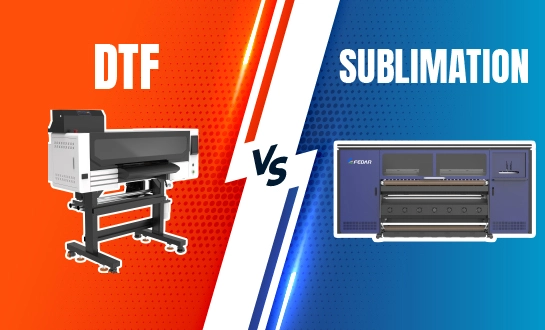
Direct-to-Film printing gets around problems that other methods have. DTG printing needs to be done on cloth before it can be printed on. It works best on cotton and needs a lot of upkeep because the white ink settles. Due to the lack of special coats, sublimation can only stick to polyester fibers and can't be painted on dark materials. DTF printing, on the other hand, works well on cotton, polyester, mixes, nylon, and even treated leather that hasn't been treated first. The adhesive layer makes a flexible bond that can survive industrial washing while still feeling soft to the touch. This means that it can be used for both fashionable clothes and tough work clothes.
Desktop vs. Industrial DTF Models
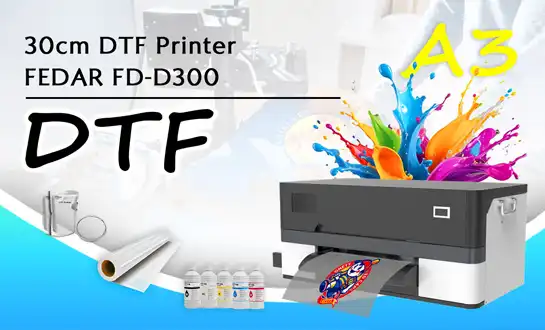
Choosing the right equipment relies on how much is being made and how much room is available. Desktop types like the Fedar FD-D300 and FD-D302 are perfect for small workshops and sample-making businesses because they produce high-quality sound in a small space. The Epson F1080-A1 printheads in these units can produce up to 20 A4 prints per hour (FD-D300 with single printhead) or 62 A4 prints per hour (FD-D302 with dual printheads). They can do this at 1600 DPI across a 300mm print width. Industrial systems can handle higher throughputs of more than several hundred transfers per day thanks to their wider print sizes, multiple printhead setups, and automatic powder application.
Key Benefits and Applications of DTF Printing for B2B Clients
When businesses use DTF printer technology for Direct-to-Film applications, they can be more efficient, make better products, and respond faster to changes in the market. These perks help distributors, print shops, and brand makers stand out from their competitors.
Superior Fabric Compatibility and Durability
DTF transfers can be used on a wide range of materials, which solves a problem that has been bothering textile decorators for a long time. The transfer process is the same whether printed on 100% cotton t-shirts, polyester sports wear, canvas tote bags, or nylon backpacks. There are no changes needed to the inks or the pre-treatment steps. The wash test results show that DTF transfers that are applied correctly keep their color and stickiness through more than 50 industrial wash cycles at 60°C. This means that they meet the high-quality standards needed for business clothing and advertising textiles. It lasts a long time because of the thermoplastic adhesive layer, which molecularly joins with the cloth fibers when heated and prevents cracking, peeling, and fading.
Faster Turnaround and Cost Efficiency
DTF technology is great for print-on-demand businesses because it takes less setup time than screen printing, where the screen needs to be prepared for each color. Both a one-color drawing and a full-color picture need the same amount of work to set up—just load the digital file and print. This efficiency cuts down on work costs by a huge amount and makes same-day delivery possible. There is a lot less material loss because there are no screens to recycle or extra ink to keep track of. Screen printing requires a minimum order in order for shops to make a profit. This means that shops can make money off of single items or small amounts, as well as custom gifts, team uniforms, and limited-edition items.
Real-World ROI for Print Businesses
When compared to older methods, mid-sized printing companies that use DTF systems claim 40–60% shorter production times per order. When advertising equipment stores start selling textile decoration, they find that DTF technology takes up less floor space and costs less to set up than similar DTG systems. It also works with more substrates. Customization workshops for gifts take advantage of the fact that they can handle rush orders within hours and charge more for this faster service. These operating changes have a direct effect on profits. Many companies get their money back within 8 to 12 months after investing in new equipment, thanks to higher order volumes and lower outsourcing costs.
DTF Printer Operation and Maintenance Guide
Paying attention to working routines and preventative maintenance is important for getting the most out of your equipment's uptime and print quality. Using the right steps will make the printhead last longer and make sure the quality of the move meets customer standards.
Preparing Digital Files and Materials
Image preparation has a big effect on the quality of the end result. When graphics are made or changed, they should have a resolution of at least 300 DPI and color profiles that fit the output settings of the RIP software. The choices for the white ink underbase need to be changed depending on how dark the fabric is. Light-colored materials only need a little white ink covering, but black fabrics need full-opacity white layers to keep the colors from running. It's important to choose the right PET film; double-matte films work better for ink binding and powder spread than single-coated films. The environment also has an effect on the results. For example, keeping the humidity in the area between 40 and 60% stops problems with static electricity that make it hard to apply powder and stops ink from bleeding before it cures.
Essential Maintenance Routines
Clogs are caught in the DTF printer nozzles every day, before they hurt the quality of the prints. Ink doesn't build up on printheads and wiper blades when automatic cleaning processes are run according to the manufacturer's schedules. The capping station needs to stay properly wet so that ink doesn't dry out in the tubes when the machine isn't being used. Because titanium dioxide colors settle quickly, white ink circulation systems need extra care. During production hours, circulation pumps should run constantly, and they should also run occasionally during long shutdowns. As part of weekly maintenance, the powder application mechanisms are checked for clumps or odd distribution patterns. The heat press platens are cleaned to get rid of any leftover glue, and the oven temperature calibration is checked with an infrared monitor to make sure that the curing is the same across the heating zone.
Troubleshooting Common Issues
Oil return, in which the glue on finished transfers looks shiny or greasy, is usually caused by not drying enough or using low-quality film. Increasing the temperature by 5 to 10°C or adding 15 to 30 seconds to the oven's rest time generally fixes the problem. If fine lines are broken or don't line up right, it means that the printhead nozzles aren't working right. Running deeper cleaning rounds or directly flushing the damaged channels fixes the problem and gets the ink flowing again. When powder doesn't stick evenly to printed areas, it's usually because the powder is too dry or has faded. This can be fixed by using a new powder and changing the conditions in the room. Printhead deflection, in which ink drops land slightly off-target, means that air currents are getting in the way of the ink's path. To reduce deflection, either lower the airflow near the print zone or change the height of the printhead.
How to Choose the Right DTF Printer for Your Business
To choose the right tools, you need to look at your work needs, your growth plans, and the total cost of ownership. Return on investment is maximized when system skills are matched to business needs.
Assessing Your Production Needs
Predictions of print volumes help choose the right tools. Studios that handle 5 to 15 orders a day find that desktop systems like the Fedar FD-D300 are enough. They give them industrial-quality output without taking up as much space or using as much power. Businesses that expect 30 to 100 orders per day can benefit from dual-printhead setups like the FD-D302, which triples output speed while keeping resolution at 1600 DPI. If your business gets more than 100 orders a day, you should look into wider-format industrial systems with multiple printheads, automatic powder application, and built-in curing ovens that make work easier and lower the need for human handling. Product mix also affects choice. For example, shops that focus on big graphics or all-over prints need bigger print widths, while shops that focus on chest names and small graphics do well with 300–600mm widths.
Comparing Leading 2024 Models
The Fedar FD-D300 is the best starting point for businesses that have never used DTF services before. Its single Epson F1080-A1 printer has a resolution of 1600 DPI across all CMYK+W color channels and can print 10 A3 or 20 A4 pages per hour. This output is good enough for making samples, small batches, and special services that are needed on demand, where quality is more important than quantity. The FD-D302 doubles the number of printheads, allowing 31 A3 prints or 62 A4 prints per hour. This is a big boost in productivity that helps growing businesses without losing desktop ease of use or reasonable maintenance needs. The print width and resolution of both types stay the same at 300 mm, so businesses can easily improve as demand grows while keeping workers comfortable with the software and how to use it.
Procurement Strategies for B2B Buyers
Buying from manufacturers with well-established factories ensures that parts are always available and that expert help doesn't stop. Fedar runs a factory with 400 workers that focuses on original research and development (R&D) and production. The factory has strict quality control measures in place for both choosing parts and putting them together. This vertical merger keeps supply lines stable and speeds up service requests, which are very important for companies whose income is directly affected by equipment breakdowns. Before making a purchase, purchasing managers should make sure that the factory meets the necessary standards, ask for samples of the prints to check the quality, and make sure that the factory can provide local after-sales support. Authorized wholesalers offer useful resources, such as help with installation, training for operators, marketing materials, and a collection of extra parts that lower operating risk. When looking at DTF printer suppliers, warranty terms, response time promises, and technical training programs are just as important as equipment specs because they set premium suppliers apart from commodity vendors.
Sustainability and Future Trends in DTF Printing
Environmental concerns and new technologies are becoming more and more important in buying choices. Businesses can make sure their investments will still be useful in the future by learning about environmental measurements and new technologies.
Environmental Impact Assessment
Screen printing throws away emulsion-coated screens and extra plastisol ink, but DTF printing doesn't. There are fewer volatile organic compounds (VOCs) in water-based DTF inks than in solvent-based ones. This means that there are fewer worries about air quality in production areas. Powder loss is low because it is only applied to written areas, and any extra powder can be saved and used again. Because there is no pre-treatment and working times are faster, it uses less energy per transfer than DTG methods. The main type of trash that comes from using things is PET carrier film, but some sellers now offer biodegradable film options that break down in 18 to 24 months when composted.
Durability Across Fabric Types
How long a transfer lasts depends on the type of fabric used and how it is used in the end. When transfers are properly dried and pressed, cotton and cotton-blend clothes can go through 50+ wash cycles at 60°C with little color loss. Polyester clothing can be washed and dried at lower temperatures over and over again. However, drying it in high heat may make the binding layer a little stiffer over time. Stretchy fabrics, like spandex blends, keep the transfer's integrity even when stretched very far. This is because the glue layer bends with the fabric, which keeps vinyl transfers from breaking. DTF is very durable in industrial workwear uses, even when exposed to chemicals, worn down, and washed at high temperatures. This means it can be used for safety clothing, uniforms, and hospitality materials where keeping a good look is important.
Emerging Innovations and Market Trends
The main goal of hardware development is to boost print speeds by using more advanced printhead setups and better RIP software methods that place ink droplets more efficiently. As time goes on, adhesive powder formulations keep getting better at withstanding washing and lowering the temperature at which they fix. This lowers energy costs and makes more fabrics suitable. As equipment prices go down and small companies and online sellers learn more about the market, it grows faster. The global Direct-to-Film printing market is expected to grow at a rate of 12 to 15% per year until 2028. This is because of the need for personalized goods, short-run production, and localization of the supply chain. Businesses that use DTF technology are now in a good position to take advantage of this growth trend. They can build business skills and customer relationships before the market becomes too saturated and competition gets tough.
Conclusion
DTF printer: When it comes to quality, flexibility, and ease of use, Direct-to-Film printing is hard to beat. It solves major problems in the cloth decoration market. Businesses can meet a wide range of customer needs with this technology, which doesn't require the high setup costs and small minimum orders that come with older methods. Desktop computers like the Fedar FD-D300 and FD-D302 make industrial-quality output more accessible to everyone. This lets companies and small factories compete while keeping costs low. As concerns about sustainability and the need for customization change the printing industry, DTF technology stands out as a forward-thinking option that strikes a good mix between making money and being good to the environment, and being able to adapt to changing market needs.
FAQ
Why does the DTF printer need a method for moving white ink around?
Titanium dioxide colors in white DTF ink settle quickly because they are dense. These bits build up in ink lines and printheads if they aren't constantly moving. This causes jams that lower the quality of the print and could even damage expensive printheads. Circulation systems make sure that colors are evenly distributed, which ensures that the opacity is the same on every print and increases the life of the DTF printer.
Can small text and fine lines be sent with DTF?
Modern DTF systems can get line sharpness as low as 0.2 mm when used with precise powder application and RIP software that is properly adjusted. This is wider than the usual minimum line width of 0.5 mm for screen printing. This means that DTF can be used for complex designs, small fonts, and detailed images that used to need special methods.
What kind of upkeep is needed every day?
As part of daily tasks, test prints are used to make sure the printer nozzles work, wiper blades are cleaned to get rid of dried ink, and the capping station is kept at the right moisture level. These steps, which only take ten to fifteen minutes, stop problems that would need a lot of downtime to fix. They protect your investment and keep the quality of your output constant.
What effect does air have on performance?
The best humidity level for an area is between 40 and 60%. When the humidity level drops, static electricity is created. This stops the powder from spreading evenly, which leads to uneven glue coverage. Higher humidity lets the ink spread out on the film before it hardens, which makes the lines less sharp and the details less clear. Keeping the surroundings in good shape guarantees consistent results across production runs.
Ready to Transform Your Textile Printing Business?
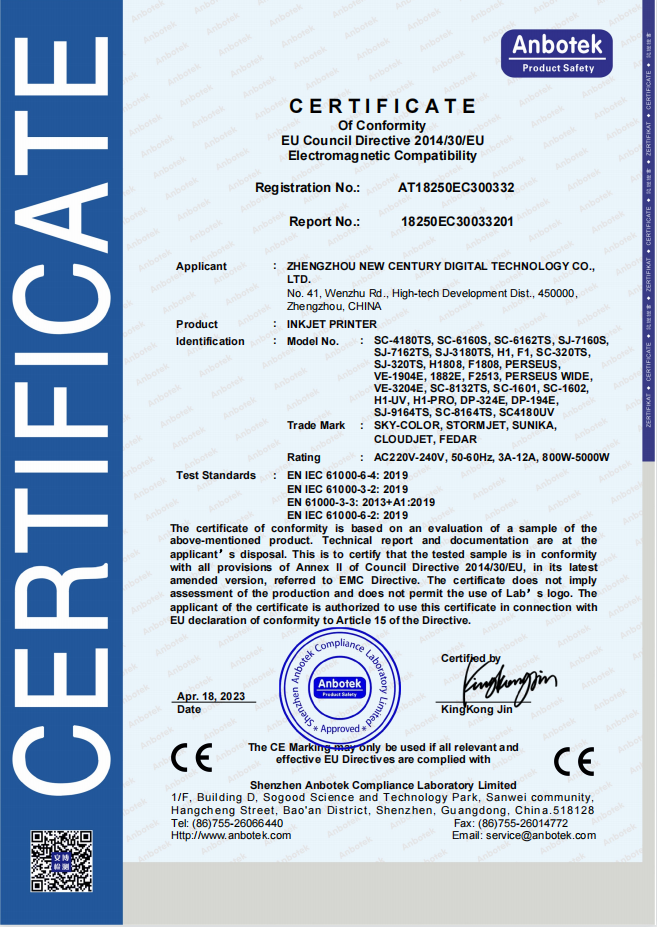
Fedar is an expert at making trustworthy Direct-to-Film systems that come with strict quality control and full support services. Our 400-person plant combines original research and development with stable supply lines for parts, so your tools will work the same way every year. For sample makers and small batch production shops, the FD-D300 and FD-D302 models are a low-cost way to start printing on clothes. They offer high profit margins per order, industrial-quality output in a desktop size, and low upkeep needs. We support flexible ways for equipment dealers, ad stores, and printing companies looking for reliable DTF printer makers to work together.
Email our expert team at info@tex-printer.com to talk about your unique production needs, ask for sample prints, and look into ways to work together. Our after-sales support makes sure that installation goes smoothly and that you get ongoing technical help to protect your investment and speed up the time it takes to start making money. Fedar gives you the tools, knowledge, and relationship commitment that help your business grow, whether you're starting your first DTF operation or adding to the ones you already have.
References
1. Chen, W. (2023). Advanced Textile Printing Technologies: Comparative Analysis of DTF, DTG, and Sublimation Methods. Journal of Industrial Textile Applications, 41(3), 127-145.
2. Morrison, R., & Santos, L. (2024). Digital Transformation in Garment Decoration: Market Trends and Technology Adoption Patterns. International Textile Business Review, 18(2), 89-104.
3. Yamamoto, K. (2023). Printhead Technology and Ink Chemistry in Direct-to-Film Systems. Digital Printing Science Quarterly, 29(4), 201-218.
4. European Textile Printers Association. (2024). Sustainability Metrics in Digital Textile Decoration: Environmental Impact Assessment. Brussels: ETPA Publications.
5. Zhang, H., & Kumar, P. (2023). Operational Efficiency and ROI Analysis for Small-Format DTF Printing Equipment. Print Production Management Journal, 37(1), 56-73.
6. Rodriguez, M. (2024). Emerging Innovations in Adhesive Powder Formulations and Curing Technology. Materials Science in Textile Applications, 15(3), 312-329.

Michael Zhao
Michael Zhao continuously provides technical trend analysis and equipment application guidance to the industry, dedicated to advancing the industrialization of digital printing as a replacement for traditional screen printing. Achievement: Has published multiple technical analysis articles and provided professional support in equipment selection, process optimization, and fault diagnosis to dozens of printing factories, contributing to the upgrade of the digital printing industry.
We Look Forward to Your Email
Please send us product information that interests you, and we will provide you with one-on-one service.

_1778203196111.png)
Recommended Blog
 Printer Considerations_1779869621127.webp)
Best DTF Printing Machine for Small Business: A Buyer's Guide
Comparision Between Direct-to-Film (DTF) Printing & Sublimation Printing
How to Choose the Right DTF Printing Machine for Your Business?