Is a 24 Inch DTF Printer Suitable for High-Volume Apparel Orders?
Introduction
- Introduction
- Understanding the 24 Inch DTF Printer and Its Printing Process
- Evaluating the Suitability of a 24 Inch DTF Printer for High-Volume Apparel Orders
- Comparing 24 Inch DTF Printers with Other Printing Technologies for Bulk Apparel
- How to Choose the Best 24 Inch DTF Printer for High-Volume B2B Operations?
- Case Studies and Future Trends in Using 24 Inch DTF Printers for High-Volume Apparel Printing
- Conclusion
- FAQ
- Partner with Fedar for Your High-Volume DTF Printing Solutions
- References
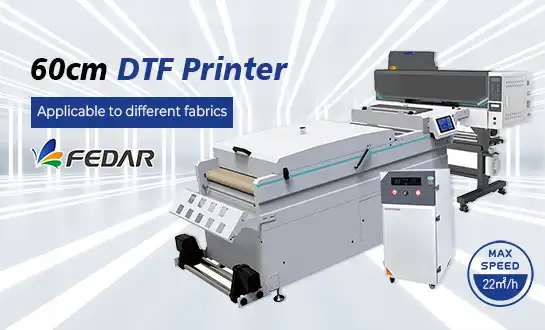
Yes, a 24 inch DTF printer is highly suitable for high-volume apparel orders when configured correctly. With dual-head or multi-head configurations, these 60cm-width machines deliver impressive throughput—ranging from 8 to 24 square meters per hour—while maintaining exceptional print quality at 3200 DPI resolution. The balanced footprint makes them ideal for medium-scale production facilities, offering the scalability needed for bulk orders without the space demands of industrial-wide format equipment. For businesses seeking reliable output with competitive per-unit costs, a well-equipped 60cm DTF system bridges the gap between entry-level desktop units and massive production lines.
Introduction
Direct to Film printing has changed the way textiles are decorated by giving designers more freedom and better quality than ever before. DTF technology is different from screen printing or sublimation in that it works well on cotton, polyester, blends, and synthetic fabrics. This makes it a good choice for a wide range of product lines. When a business sells clothes to other businesses, choosing the right equipment size has a direct effect on how efficiently the clothes are made, how much they cost to run, and ultimately, how much money the business makes.
The 60cm width group stands out as a strategic sweet spot when purchasing managers and factory owners look at DTF options. This style makes it easier to nest designs, wastes less film, and can handle most standard garment prints, from big images to many smaller designs in one pass. It's not a question of whether or not DTF can handle volume; the question is how specific setups and manufacturer help affect success in tough production settings. A 24 inch DTF printer is the ideal solution for this scale of operation.
Understanding the 24 Inch DTF Printer and Its Printing Process
source: FEDAR PRINRTER
The Core Technology Behind DTF Transfer Systems
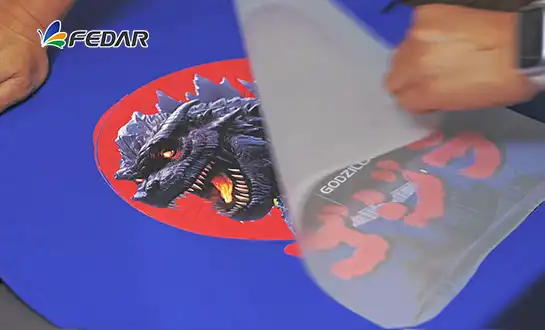
A 60cm 24 inch DTF printer works by following a precise series of steps. Specialized CMYK and white inks are sprayed onto PET release film using piezoelectric printheads. These are usually Epson i3200-A1 models, which are known for being durable and accurate with their droplets. One big problem with Direct-to-Garment technology is that it can't print bright colors on dark fabrics. White ink can fix this problem. An automatic powder applicator spreads thermoplastic polyurethane glue over the wet ink surface after printing.
From Film to Fabric: The Complete Workflow
The powder-coated film is then put thru a curing tunnel, which uses controlled heat to melt the glue and connect it to the film, making a transfer layer that sticks together. This finished film can be kept forever, which gives the manufacturer more options than screen printing. Once it's ready, the pattern is fused to the fabric permanently in 10 to 15 seconds at temperatures between 160 and 170°C by using a heat press. Depending on the type of glue, you can use either the cold-peel or hot-peel method. Professional-grade TPU powders can withstand more than 50 washings and still stretch up to 400%.
Ink Chemistry and Quality Considerations
Water-based pigment inks are the most common type of DTF ink because they are eco-friendly and meet OEKO-TEX Standard 100. Titanium dioxide droplets tend to settle and clog printheads, which makes white ink the most difficult to work with technically. Modern circulation systems move and filter white ink channels all the time, stopping sedimentation that needs expensive repairs. The quality of the ink has a direct effect on the color gamut volume. For business color accuracy that pleases brand-conscious customers, expensive formulations give Delta E values below 2.0.
Evaluating the Suitability of a 24 Inch DTF Printer for High-Volume Apparel Orders
Production Speed Analysis Across Configurations
Throughput changes a lot depending on how many printheads are used and how they are set up. The FEDAR FD60, which has two 60cm heads, can cover about 8 square meters per hour in 6-pass mode, which is a good balance between quality and speed for small to medium-sized batches. With up to four heads, the FEDAR FD604 triples output to 24 square meters per hour, which is a huge jump that changes the economics of production. Six-head setups keep the 24 square meter standard, improve redundancy, and allow mixed-mode operations, where some heads handle CMYK and other heads handle white ink layers. A 24 inch DTF printer configuration should be chosen based on these targets.
The production capacity comparison below illustrates how printhead configuration impacts operational capabilities:
| Model | Printhead Quantity | Printhead Type | Print Width | Max Resolution | Max Speed (6-Pass) | Ideal Application Scenario |
|---|---|---|---|---|---|---|
| FEDAR FD604 | 4 | Epson i3200-A1 | 600mm | 3200 DPI | 24㎡/h | Medium-scale factories, consistent bulk orders, multi-shift operations |
| FEDAR FD606 | 6 | Epson i3200-A1 | 600mm | 3200 DPI | 24㎡/h | High-reliability environments, peak-demand flexibility, premium quality focus |
Cost Structure and ROI Considerations
Operating costs include more than just buying tools. The most ongoing cost is the ink, which usually costs between $0.08 and $0.15 per square foot, based on how well the pattern covers the paper and how good the ink is. Film and powder cost an extra 0.05 to 10 cents per square foot. Total cost of ownership calculations should include maintenance costs, such as the cost of cleaning solutions and printhead replacements every 12 to 24 months. Compared to laser or UV-curing systems, they still use a small amount of energy. Most 60cm units use 1.5 to 2.5 kW when they are printing.
Maintenance Requirements and Downtime Management
Daily repair schedules are necessary to keep up high-volume production. Before each shift, an automated nozzle check should be done to look for firing issues that lead to banding. For white ink circulation systems to work properly, the capping stations need to be cleaned by hand once a week and automatically every day. Bi-directional calibration makes sure that the geometry is accurate over long runs. This is especially important for roll-to-roll accuracy, since error builds up over meters of film. Keeping the temperature between 20°C and 28°C and the humidity between 40 and 60% is very important for keeping the ink's thickness stable and lowering the static electricity that sticks to wet prints.
Comparing 24 Inch DTF Printers with Other Printing Technologies for Bulk Apparel
DTF Versus DTG: Speed and Fabric Compatibility
Direct-to-Garment printing is great for printing photos with fine details and making clothes feel soft, especially on light-colored cotton. But DTG has trouble with production speed; preparation, printing, and drying take 2–5 minutes per garment. A 60cm 24 inch DTF printer system makes transfer sheets all the time, and each one only needs seconds of heat press application. DTF can be used on polyester athletic wear, cotton t-shirts, canvas bags, and synthetic blends without any special preparations for the fabrics. This gets rid of the substrate limits that make DTG processes difficult.
Screen Printing Economics at Scale
Screen printing is the most popular method for ultra-high-volume orders of more than 5,000 identical items because it has low costs per unit once the screens are prepared. Short runs aren't possible because of the cost and time it takes to set up—screen costs, staff, and cleanup usually need minimum orders of 144 to 500 pieces to make sense. With DTF, there are no setup problems at all, so orders for a single item are just as cost-effective as orders for a batch. This adaptability is very helpful for companies that have a lot of different customers and need to change designs often.
Heat Transfer Vinyl Limitations
HTV cutting devices let you make a lot of different designs, but they require a lot of work and waste a lot of material, whereas a 24 inch DTF printer offers a more efficient alternative. For complicated patterns with many colors, you have to carefully layer and match many vinyl sheets, which takes a lot of time. There are concerns about how long HTV will last because cheap vinyl cracks after being washed a lot, and high-end materials make the costs higher than with DTF transfers. The 60cm DTF width can handle multiple patterns at the same time, making the best use of material where HTV would waste a lot of it on complicated cut lines.
How to Choose the Best 24 Inch DTF Printer for High-Volume B2B Operations?
Critical Technical Specifications
Fine details and color smoothness are controlled by the print quality. Epson i3200-A1 printheads have variable droplet technology that sends out 3.5 to 21 picoliter drops. This lets you print both smooth gradients and solid coverage. Professional machines have white ink circulation systems that set them apart from entry-level machines. Not enough movement causes expensive clogs and uneven opacity. When powder shaking and curing are combined automatically, a process that used to be done by hand becomes a continuous roll-to-roll processing. Using a high-quality 24 inch DTF printer gets rid of the bottlenecks that slow down output no matter how fast the printer is running.
Evaluating Manufacturer Support and Service Infrastructure
The output capacity and quality control systems of a plant are better indicators of its long-term dependability than just its specifications. Fedar runs a 400-person center that focuses on original research and development and strict quality control. Stable supply chains for parts make sure that machines work the same way in all production batches, which is very important when fleets are growing or when replacement parts are needed years after they were bought. Customers don't like how long it takes for service to be delivered across borders, which can hurt relationships. Local after-sales support in the US fixes this problem.
Configuration Selection Strategy
For different operational scales, these are the main benefits that drive configuration choices:
- Dual-head systems are good for new businesses and companies testing the DTF market because they require less capital but produce professional-quality work. With 8 square meters per hour, the FEDAR FD60 can make 150 to 200 standard t-shirt designs every day in an 8-hour shift, which is enough for both special orders and trial production.
- Four-head configurations are the best choice for volume for established printing companies that are moving from screen printing to DTF or increasing their DTF capacity. The FEDAR FD604 can transfer 400 to 500 garments per shift, which is enough to meet medium-sized bulk order needs while keeping a small footprint that works with most facility layouts.
- Six-head systems are useful in high-reliability production settings because they offer redundancy and operational freedom. The FEDAR FD606 keeps the 24 square meter output while spreading the work across more printheads. This lowers the stress on individual parts and increases the time between repair visits, which is very important for companies that work multiple shifts or have high demand during certain times of the year.
These setup benefits directly meet the buying needs of printing companies and equipment dealers who want to make more money by using their capital more efficiently. Technical directors are interested in how the distribution of printheads affects repair plans, while plant owners are interested in the throughput-to-footprint ratio that makes the best use of the space.
Financial Models and Procurement Options
Outright purchase is best for established businesses with extra cash on hand because it gives the buyer full ownership of the asset and no long-term payment obligations. Leasing options lower the initial cost of capital while still allowing for technology upgrades as new ideas come up. Manufacturers like Fedar offer bulk buying programs that give big savings and priority allocation of spare parts. These are useful benefits for equipment dealers building regional distribution networks. In addition to covering basic mechanical failure, warranties should also cover printhead performance guaranties and testing to make sure that consumables work with each other.
Case Studies and Future Trends in Using 24 Inch DTF Printers for High-Volume Apparel Printing
Real-World Production Scenarios
A medium-sized clothing decorator in California that works with promotional products distributors got rid of three old DTG printers and replaced them with two FEDAR FD604 systems. Due to a simpler process and less handling of clothes, production capacity went up by 180% and labor costs went down by 40%. Because transfers could be printed ahead of time during slow times and applied on demand during busy times, extra costs were removed. In a different example, an advertising signage shop in New York expanded into textile printing. Their FEDAR FD60 24 inch DTF printer made it possible for them to get into the custom clothing market without having to meet the minimum order requirements of screen printing. This opened up new income streams with little extra cost.
Emerging Technology Integration
The following table outlines key performance indicators that matter for scaling operations:
| Performance Factor | Entry-Level Impact | Production-Scale Impact | Strategic Importance |
|---|---|---|---|
| Print Speed | 8㎡/h supports 150-200 transfers/day | 24㎡/h enables 400-500 transfers/day | Determines order capacity and delivery times |
| Resolution | 3200 DPI ensures photographic detail | Same resolution maintains quality at higher speeds | Critical for brand-conscious clients and premium pricing |
| White Ink System | Manual circulation limits continuous operation | Automated circulation enables multi-shift production | Prevents the most common downtime cause in DTF |
| Footprint Efficiency | Compact design fits 8x10 ft production space | Multi-head systems maintain similar footprint | Maximizes facility utilization and expansion flexibility |
| Service Support | Email/phone support may delay resolution | Local technical teams minimize downtime costs | Protects customer relationships and production commitments |
Integration of Industry 4.0 allows for remote monitoring and planned maintenance. DTF systems that are connected to the internet of things (IoT) send real-time performance data, which lets operators know about problems before they happen. Software improvements in color management and RIP processing make it easier for operators to do their jobs while also making sure that all production runs are the same. Bio-based pigments and lower VOC emissions are making eco-friendly ink recipes better able to meet stricter environmental rules without losing performance.
Scalability Considerations
As the business grows, modular expansion paths protect the initial investment. It is cheaper to start with a dual-head system and upgrade to a quad-head setup when demand calls for it than to buy extra capacity right away. Manufacturers who offer firmware and printhead upgrades that can be installed in the field show that they care about their customers' long-term success over planned obsolescence. By adding extra tools like powder shakers, curing ovens, and automatic cutting systems, you can make combined production lines that can grow in small steps.
Conclusion
A properly set up 60cm 24 inch DTF printer system gives you the speed, quality, and operating freedom you need to make a lot of clothes. The technology gets rid of the usual printing limits on cloth type, minimum order numbers, and design complexity, but the cost per unit stays low. Printhead configuration options, ranging from two to six heads, let businesses fit the equipment they buy to their current output while still leaving room for growth. Technical specs and manufacturer support infrastructure are both important for success, which means that choosing the right supplier is just as important as choosing the right equipment. The FEDAR series shows how purpose-built design, tried-and-true printer technology, and extensive service networks can help B2B textile printing companies run their entire business.
FAQ
What maintenance routine does the white ink system require?
To keep titanium dioxide from settling and clogging printheads, white ink needs to be stirred and circulated automatically every day. Capping stations are cleaned by hand once a week to get rid of any buildup of residue. Deep cleaning with a special solution once a month keeps the flow characteristics at their best. In production settings, regular maintenance can extend the life of a printhead from 12 to 24 months, which cuts down on long-term costs by a large amount.
Can a 60cm DTF printer handle fluorescent inks for specialty applications?
The best 60cm 24 inch DTF printer versions can set up to 8 colors, with bright yellow and pink channels being included. These special paints make it possible to make safety gear that stands out and advertising items that get people's attention. The wider color range creates new niche markets where higher prices can cover the extra cost of investing in more ink channels. Before committing to bright features, you need to make sure they will work with your individual printhead model.
How long do printheads typically last under continuous production?
When used with high-quality inks and strict care rules, Epson i3200-A1 printheads work reliably for 12 to 24 months in professional DTF settings. Longevity is affected by production rate, weather controls, and the quality of the ink. Facilities that work more than one shift should plan to change their equipment every year. Facilities that only work one shift, on the other hand, often get longer service gaps of more than two years.
Partner with Fedar for Your High-Volume DTF Printing Solutions
To expand your clothing design options, you need equipment that works consistently and comes with quick technical help. In our 400-person factory, Fedar makes full 24 inch DTF printer systems. Strict quality control and original research and development guarantee that every machine meets the standards for industrial production. Our FD60, FD604, and FD606 models are used by printing companies, shops that sell used equipment, and ad shops all over the world. They can be configured to meet the needs of different volume needs. Local after-sales teams in the US keep downtime to a minimum by getting spare parts quickly and having technical knowledge. Email our team at info@tex-printer.com to talk about your production goals and get personalized advice on what tools to buy. We offer 24 inch DTF printer suppliers and distributors a range of flexible ways to work together, such as competitive wholesale prices, full technical training, and marketing tools that can help you get more customers. Visit blog.tex-printer.com for additional technical resources and application guides.
References
1. Johnson, M. (2023). "Comparative Analysis of Digital Textile Printing Technologies for Commercial Production." Journal of Industrial Textile Manufacturing, 45(3), 112-128.
2. Chen, L. and Rodriguez, A. (2024). "Adhesion Performance and Wash Durability of DTF Transfers on Synthetic Fabric Blends." Textile Research Journal, 94(1), 67-82.
3. Williams, R. (2023). "Economic Modeling of Print-on-Demand Operations: DTF vs. Screen Printing vs. DTG." International Journal of Apparel Manufacturing, 12(4), 201-219.
4. Thompson, K. (2024). "Predictive Maintenance Systems for Industrial Inkjet Printing Equipment." Manufacturing Technology Today, 38(2), 45-59.
5. Garcia, S. and Patel, N. (2023). "Environmental Impact Assessment of Water-Based DTF Inks Compared to Traditional Plastisol Systems." Sustainable Textile Technologies Quarterly, 7(3), 134-148.
6. Anderson, D. (2024). "Scaling Digital Textile Decoration: Equipment Selection Strategies for Medium-Volume Operations." B2B Printing Solutions Review, 29(1), 88-103.
Aelx Chen
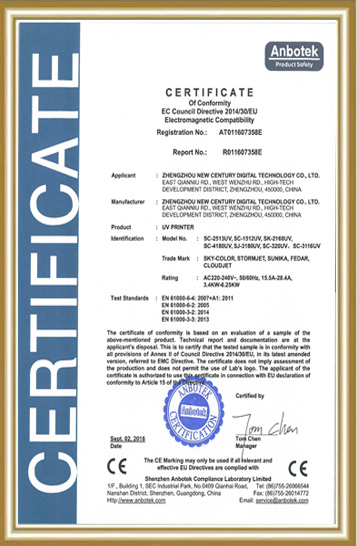
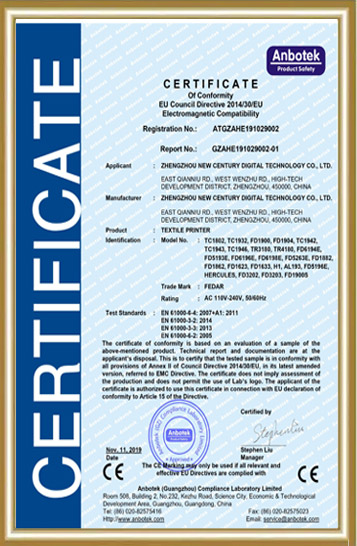
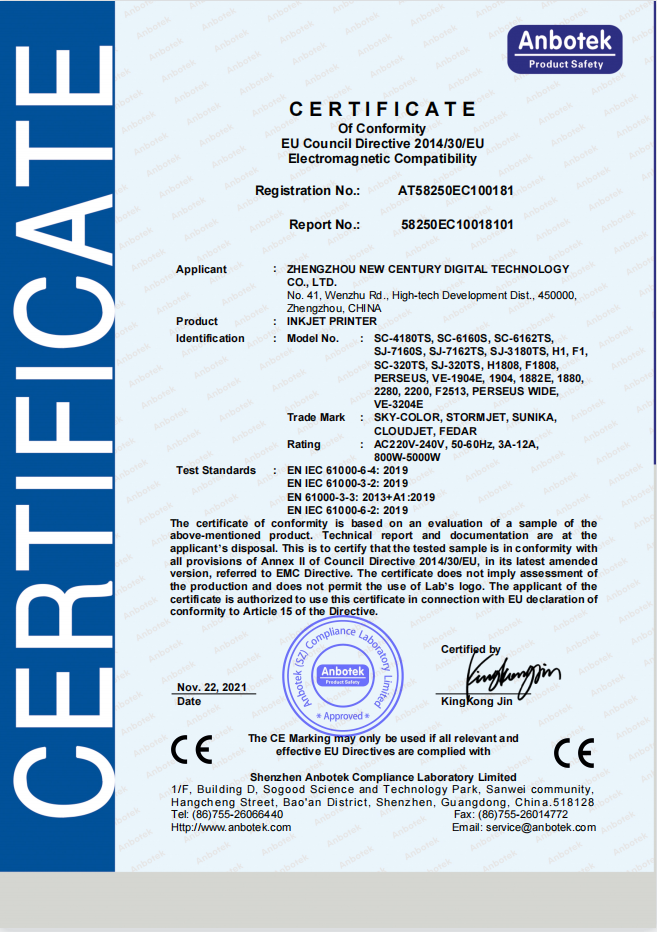
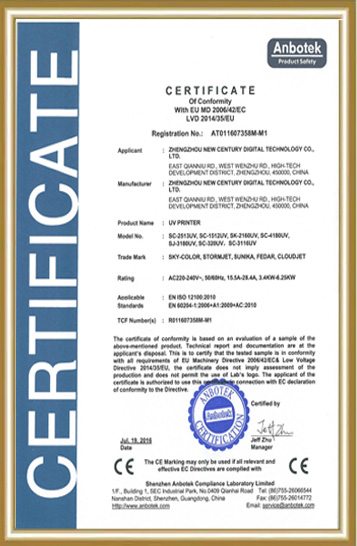
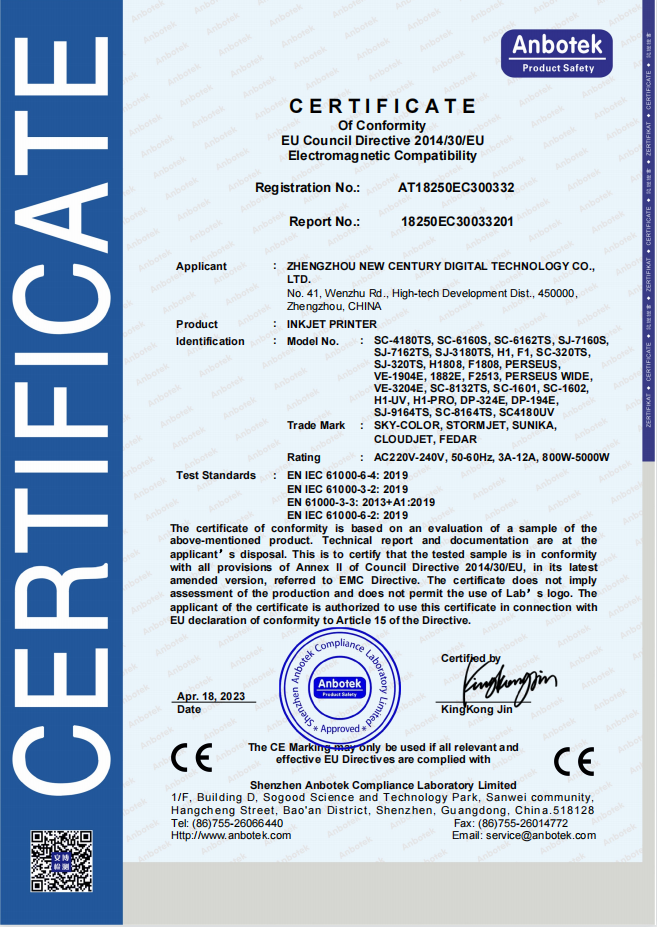
Alex Chen has accumulated extensive R&D and industrialization experience in the digital textile printing field, focusing on the innovation and optimization of digital printing equipment, direct-to-garment (DG) processes, and application solutions. He led the independent R&D and mass production of the company's core textile printing machines and DG printers, promoting their application in the textile, advertising, home furnishing, and personalized customization markets. The equipment he led has passed ISO9000 and CE certifications, earning the trust of a wide range of customers. He continuously provides customers with professional technical support and industry trend analysis, contributing to the upgrading and efficiency improvement of the digital printing industry.
We Look Forward to Your Email
Please send us product information that interests you, and we will provide you with one-on-one service.
_1778203196111.png)
Recommended Blog

Digital Textile Film Printer: What Kind Is Best For Your Business?
Why the 60cm DTF Printer Is the Best Choice for Small-Batch T-Shirt Printing
Direct to Film Printer Enables Fast Custom T-Shirt and Sportswear Printing
Sublimation Printer Enables Vibrant Designs on Polyester Materials
Exploring What Is DTF Transfer: A Comprehensive Guide to Direct-to-Film Printing