How to Choose the Right Size of DTF Printer?
Understanding DTF Printing and the Significance of Printer Size
- Understanding DTF Printing and the Significance of Printer Size
- Key Factors to Consider When Choosing the Right Size of DTF Printer
- Comparing 600mm DTF Printers with Other Printing Technologies and Sizes
- Maintaining and Troubleshooting Your 600mm DTF Transfer Printer
- How to Procure the Best 600mm DTF Transfer Printer for Your Business
- Conclusion
- FAQ
- Ready to Find the Right-Sized 600mm DTF Transfer Printer?
- References
Choosing the right DTF printer size comes down to matching print width and printhead count to actual order volume, not buying the biggest machine available. A 600mm DTF transfer printer sits in the middle tier between compact desktop units and full industrial-scale systems, built for factories and studios that have outgrown sample-making capacity but don't need the largest configuration on the market. This guide walks through the sizing factors that matter most, compares 600mm equipment against smaller and larger alternatives, and covers what keeps a machine running reliably once it's on the production floor.
Picking the wrong size wastes capital either way, overbuying or underbuying. Fedar manufactures its 600mm DTF transfer printer range, the FD60, FD604, and FD606, inside a 400-person factory built for consistent quality. Sizing questions can go directly to info@tex-printer.com before reading further.
Understanding DTF Printing and the Significance of Printer Size
What is a 600mm DTF transfer printer?
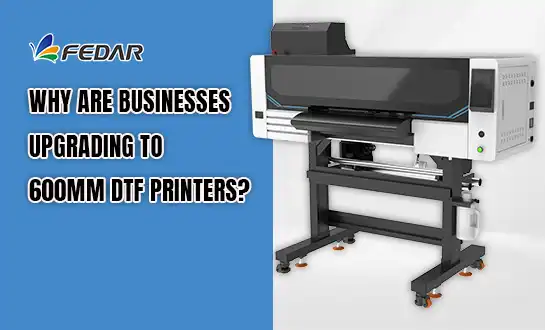
A 600mm DTF transfer printer is a roll-to-roll direct-to-film printer with a 600mm print width, designed for medium-scale production rather than single-sheet sample work. It prints CMYK and white pigment ink onto PET film using multiple printheads, then feeds the film toward automated powder and curing stations for continuous production.
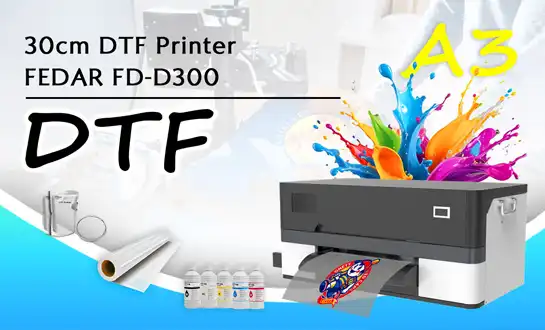
This size class sits between compact 300mm desktop DTF printers, built for individual sheets and small studios, and larger industrial-format systems designed for high-volume factory output. The 600mm tier targets businesses that need real throughput without the footprint or investment of the largest equipment available.
Why does print width affect production capacity so directly?
Wider film means more surface area covered per pass, which translates into more finished transfers per hour at a given printhead configuration. A 600mm DTF transfer printer covers roughly double the width of a compact 300mm unit, letting operators fit more design repeats across each meter of film.
This matters most for factories filling wholesale or bulk gift customization orders, where the difference between processing individual sheets and continuous rolls directly affects how many orders a shop can fulfill within a delivery window.
How does printer size relate to printhead configuration?
Size and printhead count usually scale together on this equipment tier. The Epson I3200-A1 printhead used across most 600mm DTF transfer printer machines delivers 3,200 nozzles across 8 rows with native 600 dpi resolution [1], and manufacturers typically offer dual-head, four-head, or six-head configurations at the same 600mm width to match different throughput needs.
Key Factors to Consider When Choosing the Right Size of DTF Printer
How do I estimate the order volume that justifies a 600mm printer?
Compact desktop DTF printers typically process around 10 A3 sheets per hour on a single printhead, which works for sample makers but creates a bottleneck once weekly order volume climbs into the hundreds of units. If your studio regularly turns away bulk orders because of turnaround time, that's a clear signal to evaluate a 600mm DTF transfer printer for your production floor.
Agents advising factory owners should ask about current weekly order volume and near-term growth plans before recommending a specific configuration, since overbuying capacity ties up capital that could go toward other equipment or inventory needs.
What's the real difference between dual-head, four-head, and six-head configurations?
Printhead count determines how many ink passes a machine completes simultaneously. Consider these three configuration tiers within the 600mm class:
- Dual-head configuration: Delivers balanced medium-scale production capacity around 8 square meters per hour at 6-pass CMYK settings, suited to factories stepping up from desktop equipment for the first time without a major footprint increase.
- Four-head configuration: Roughly triples dual-head throughput to around 24 square meters per hour, fitting factories with tighter wholesale delivery windows or multiple simultaneous client orders running through production daily.
- Six-head configuration: Matches four-head throughput at comparable settings while adding operational redundancy, useful for factories running near-continuous shifts where minimizing single points of failure matters more than raw speed alone.
Why does auto powder shaking and curing matter for sizing decisions?
Automated powder handling built into a 600mm DTF transfer printer removes a labor-intensive manual step that becomes a bottleneck at higher production volumes. Desktop printers typically require manual powder shaking per sheet, which doesn't scale well once order volume increases significantly.
Factories evaluating equipment size should weigh automated powder and curing capability as heavily as raw print speed, since manual powder handling can offset throughput gains from a wider print width if staffing isn't adjusted accordingly.
How does white ink circulation factor into sizing?
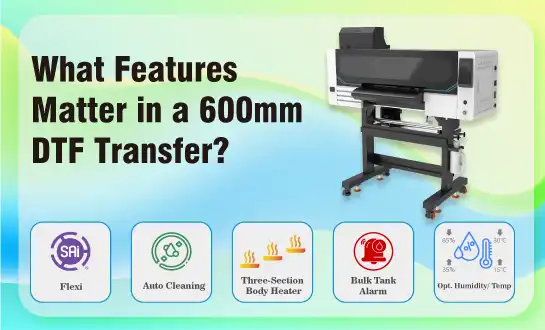
White ink pigment settles faster than CMYK ink due to heavier titanium dioxide particles, and that settling risk grows across a wider printhead array. A properly sized 600mm DTF transfer printer needs a dedicated white ink circulation system to maintain even opacity across the full film width, avoiding visible banding on the finished transfer run.
Comparing 600mm DTF Printers with Other Printing Technologies and Sizes
How does a 600mm printer stack up against compact desktop DTF units?
| Factor | 600mm DTF Transfer Printer | Compact Desktop DTF Printer |
|---|---|---|
| Print width | 600mm | Typically 300mm |
| Typical throughput | 8-24 m²/hour | ~10 A3 sheets/hour |
| Feeding method | Roll-to-roll continuous | Sheet-fed |
| Powder handling | Automated | Manual |
| Best fit | Medium-scale factories, wholesale orders | Sample makers, small studios |
| Footprint | Compact industrial | Small/desktop |
How does 600mm DTF compare against screen printing for mid-volume orders?
Screen printing requires a dedicated screen per color, and setup time for a multi-color design can run into hours before the first unit even prints. Grand View Research found dedicated DTF printers held the largest segment share, at 45.0%, of the direct-to-film printing market in 2024 [2], reflecting a broader industry shift away from screen setup time.
For factories running frequent design changeovers, a properly sized 600mm DTF transfer printer eliminates that setup delay entirely, since switching designs only requires a digital file change rather than physical screen production.
What real-world scenarios call for each printer size?
Three scenarios illustrate how sizing decisions typically play out:
- Small studios and e-commerce sellers filling single-item personalized orders rarely need more than a compact desktop unit, since order volume stays low and per-order turnaround matters more than bulk throughput.
- Medium-sized printing factories and advertising shops supplying wholesale apparel or home textile clients typically find a dual-head or four-head 600mm DTF transfer printer matches their delivery windows without over-investing in unused capacity.
- Large brand factories and foreign trading companies running near-continuous multi-shift production often justify six-head configurations, where redundancy and sustained throughput outweigh the marginal cost difference from a four-head setup.
Maintaining and Troubleshooting Your 600mm DTF Transfer Printer
What maintenance routine keeps output consistent at this scale?
Daily printhead cleaning combined with automated white ink stirring prevents the pigment settling that causes banding across a wide film format on any 600mm DTF transfer printer. Machines with circulation systems built into the ink delivery path cut this maintenance workload significantly compared to models needing manual intervention every shift.
Powder storage conditions matter just as much as printer upkeep. Humidity causes adhesive powder to clump, producing uneven curing and patchy adhesion regardless of how well the printer itself performs during printing.
What typically causes inconsistent color reproduction on wider machines?
One market analysis notes that ink and film quality variability directly impacts print durability, color vibrancy, and adhesion to fabrics [3], a risk that compounds across a 600mm print width where uneven ink flow shows up more visibly than on a narrow desktop unit. Using validated, printhead-compatible inks reduces this risk considerably.
Curing temperature errors compound the problem further. Too much heat scorches ink across the wider format, while too little leaves adhesive powder tacky instead of fully melted, both of which show up as inconsistent finish quality across a production run.
How does local after-sales support affect repair timelines at this equipment tier?
Downtime on a 600mm-class machine affects far more order volume than a single desktop unit going offline, making after-sales response time a bigger financial concern. No installation, repair, or spare parts support for cross-border business remains one of the most common pain points reported by agents managing this equipment tier.
A supplier with regional service centers and stocked spare parts cuts repair turnaround from weeks down to days, protecting factory production schedules from extended outages.
How to Procure the Best 600mm DTF Transfer Printer for Your Business
What factory credentials should I verify before purchasing?
A 400-person factory specializing in original R&D and production with strict quality control gives buyers a documented answer when evaluating manufacturing consistency behind a 600mm DTF transfer printer. Factories deeply rooted in the inkjet printer market, rather than treating DTF as a side product, tend to maintain steadier core component supply chains and fewer mid-order delays.
Unstable sample quality remains a leading reason agents struggle to convert prospects, so requesting reproducible sample runs on the exact configuration under consideration protects the investment before committing to inventory.
What procurement terms should agents negotiate beyond unit price?
Ask about market protection policies, minimum order requirements for agent inventory, and whether the brand supplies technical training and marketing materials alongside the 600mm DTF transfer printer equipment. Competitive pricing only holds up as genuine value if maintenance costs and downtime stay low over the machine's service life.
How do I confirm a supplier can support cross-border installation?
Ask directly whether the brand offers installation support, spare parts availability, and technician training in your specific target region before signing an agreement. A 600mm DTF transfer printer with roll-to-roll feeding and multiple printheads typically needs proper setup and calibration that factory technical staff may not confidently handle without vendor guidance.
Conclusion
Sizing a DTF printer correctly means matching print width and printhead count to real order volume rather than the highest available specification. A 600mm DTF transfer printer fills the gap between desktop sample-making and industrial-scale production, offering dual-head, four-head, or six-head configurations suited to different factory and wholesale demands. Pairing the right size with a manufacturer offering genuine after-sales support determines whether the investment protects margins over the equipment's full service life.
FAQ
Is a 600mm DTF transfer printer too large for a small studio?
Often, yes. Small studios filling single-item or low-volume orders typically get better value from a compact 300mm desktop unit, reserving the 600mm tier for factories with consistent wholesale-level order volume.
How much floor space does a 600mm DTF transfer printer need?
Compact industrial designs at this size class occupy meaningfully less space than full industrial-format wide-body systems meaningfully, letting medium-sized factories add capacity without a major facility overhaul.
Can I upgrade from a dual-head to a four-head configuration later?
Configuration is typically fixed at purchase rather than field-upgradable, so agents should help customers estimate near-term growth honestly before committing to a specific printhead count.
What's the biggest mistake buyers make when sizing a DTF printer?
Overbuying capacity relative to actual order volume ties up capital unnecessarily, while underbuying creates delivery bottlenecks. Matching configuration to realistic current and near-term demand avoids both problems.
Does printer size affect color accuracy across a print run?
Size itself doesn't determine color accuracy, but wider formats amplify the visibility of ink circulation or curing inconsistencies, making a reliable white ink circulation system more important at 600mm width.
Ready to Find the Right-Sized 600mm DTF Transfer Printer?
Guessing at printer size often means overpaying for unused capacity or underbuying and hitting a throughput wall within months. Fedar manufactures its 600mm DTF transfer printer lineup, the FD60, FD604, and FD606, inside a 400-person factory focused on original R&D and strict quality control. Whether you're comparing configurations as an agent or sizing equipment for your own factory, contact info@tex-printer.com for sample kits and current distribution terms.
References
1. DigiPrint USA, "Epson i3200-A1 Water Printhead | DTF & Sublimation Inkjet Head" (2025). https://digiprint-usa.com/products/epson-i3200-a1-water-printhead-i3200-a1
2. Grand View Research, "Direct To Film Printing Market Size | Industry Report, 2030" (2025). https://www.grandviewresearch.com/industry-analysis/direct-film-printing-market-report
3. ResearchAndMarkets via GlobeNewswire, "Direct To Film (DTF) Printing Market Analysis and Revenue Forecast 2025-2030" (2025). https://finance.yahoo.com/news/direct-film-dtf-printing-market-160600797.html
4. Congruence Market Insights, "By 2033 Direct-to-Film (DTF) Printing Systems Market: Key Trends, Opportunities & Strategic Insights" (2025). https://www.congruencemarketinsights.com/report/direct-to-film-printing-systems-market
5. Digitech FM, "DTF Film Leads the Next Wave of Distributor Growth in 2025" (2025). https://digitechfm.com/direct-to-film-technology-dtf-print-tech-dtf-innovation/
6. DTF Print Go, "DTF film: Mastering materials, curing, and finishing" (2026). https://www.dtfprintgo.com/dtf-film-mastering-materials-curing-and-finishing/

Aelx Chen
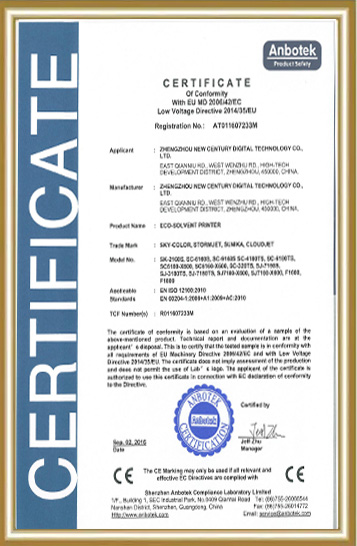
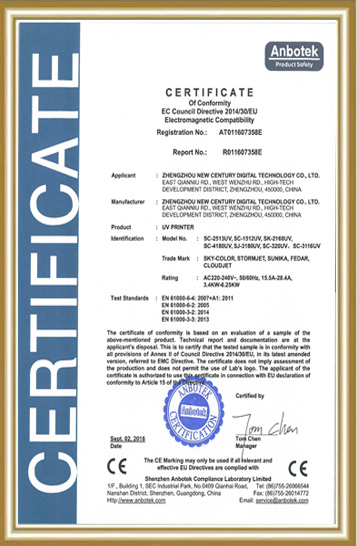
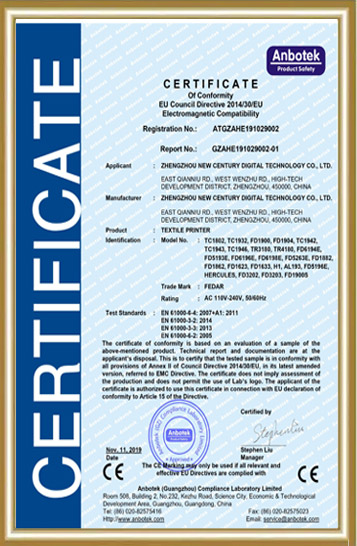
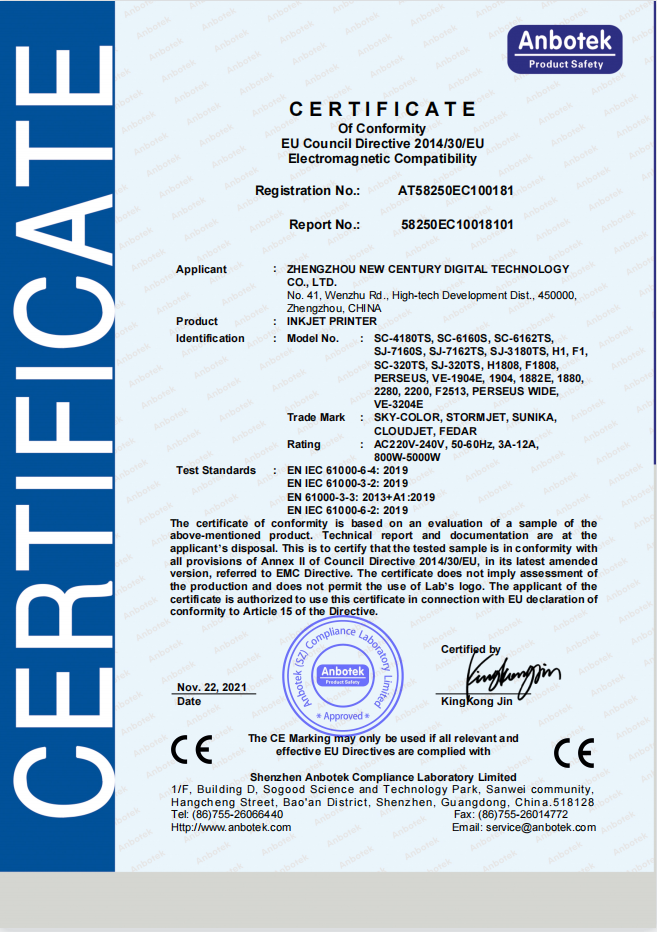
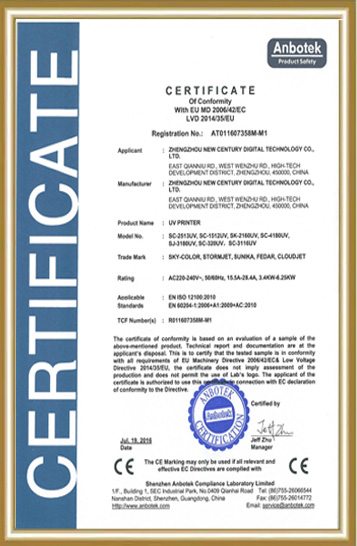
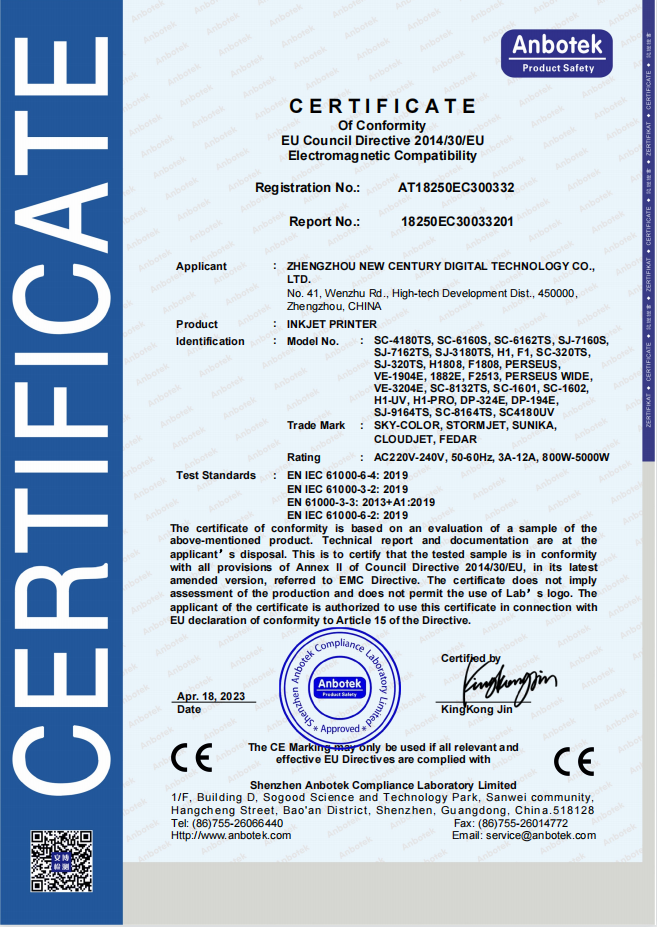
Alex Chen has accumulated extensive R&D and industrialization experience in the digital textile printing field, focusing on the innovation and optimization of digital printing equipment, direct-to-garment (DG) processes, and application solutions. He led the independent R&D and mass production of the company's core textile printing machines and DG printers, promoting their application in the textile, advertising, home furnishing, and personalized customization markets. The equipment he led has passed ISO9000 and CE certifications, earning the trust of a wide range of customers. He continuously provides customers with professional technical support and industry trend analysis, contributing to the upgrading and efficiency improvement of the digital printing industry.
We Look Forward to Your Email
Please send us product information that interests you, and we will provide you with one-on-one service.
_1778203196111.png)
Recommended Blog
Comparision Between Direct-to-Film (DTF) Printing & Sublimation Printing
DTG vs DTF Printing:The Pros and Cons of Direct Printing Technologies.
Best DTF Printing Machine for Small Business: A Buyer's Guide
Is the DTF Printer 60cm suitable for small - scale businesses?
 Printing is a Great Addition for Your Business_1781507126513.webp)
Why Direct-to-Film(DTF) Printing is a Great Addition for Your Business

 Printer Considerations_1779869621127.webp)