Dye Sublimation Printer Applications in Sportswear, Home Textiles, and Signage
Dye Sublimation Printer Applications in Sportswear, Home Textiles, and Signage
Understanding Dye Sublimation Printing Technology
- Understanding Dye Sublimation Printing Technology
- Key Applications of Dye Sublimation Printing in Industries
- How to Choose the Right Sublimation Printer for Your Business?
- Enhancing Production Efficiency and Reducing Risks in Sublimation Printing
- Strategic Considerations for Equipment Investment
- Conclusion
- FAQ
- Partner with a Trusted Dye Sublimation Printer Sublimation Transfer Printer Manufacturer
- References
The dye sublimation printer sublimation transfer printer has become a cornerstone technology for businesses producing polyester-based textiles and signage. This specialized equipment converts solid dye particles directly into gas under heat, embedding photographic-quality color permanently into the molecular structure of polyester fibers or polymer-coated surfaces. Unlike conventional inkjet or screen printing methods, sublimation provides wash-resistant, vibrant results without adding surface texture, making it ideal for high-performance sportswear, decorative home textiles, and durable outdoor signage requiring continuous tone output and exceptional colorfastness.
Understanding Dye Sublimation Printing Technology
How the Sublimation Process Works?
A unique phase transition makes sublimation printing work. The printer doesn't put ink on the surface; instead, it uses special transfer paper to apply dispersed dyes. When heated to between 180°C and 210°C and put under pressure, the solid colour goes straight from the solid phase to the gas phase, skipping the liquid phase completely. This gas gets into the molecules of polyester and forms a bond that can't be washed off or faded easily. The end result is photo quality continuous tones with smooth variations that can't be made with screen printing.
The technology needs very precise engineering. These days, sublimation transfer printers use piezoelectric printheads that can precisely fire tiny drops. These printheads work with variable droplet technology, which lets them make both fine, sharp lines and smooth changes between colours. The chemistry of the ink is very different from regular inkjet formulations. High-viscosity dispersed dyes stay stable at high frequencies, which makes sure that output stays the same during long production runs.
Why Sublimation Outperforms Traditional Methods?
Setting up plates for screen printing is expensive, and it's hard to get picture clarity. When you print directly on a garment, the surface gets textured, and it may crack over time. Both problems are solved by sublimation because it makes the thing itself. Since the colour is inside the fibre and not on top, the material stays soft and breathable. This is very important for sports wear that needs to be able to wick away sweat. Sublimation also doesn't need any water during the dyeing process, which is good for the environment because traditional dyeing methods use water.
When making signs, sublimation is better than vinyl cutting because it can stand up to the weather. The dye sticks to polymer coatings on aluminium panels or rigid substrates, making finishes that are scratch-proof and don't break down in UV light. Tension cloth graphics made with sublimation are popular with trade show exhibitors because the colours don't fade even in bright indoor lighting.
Key Applications of Dye Sublimation Printing in Industries
High-Performance Sportswear Production
Sublimation is used by athletic clothing companies to make unique jerseys, bicycle suits, and swimwear. The technology lets designs be as complicated as they want to be without making the cost of production go up. It is possible to print dozens of company names, gradient colour changes, and photographic elements on a single cyclist's shirt in just one pass. The fabric's moisture-wicking properties stay the same because the dye doesn't clog the pores. This keeps athletes comfortable during competition.
More and more, professional sports teams want short-run customisation. Personalised jerseys can't be made cheaply with traditional ways because they require large minimum orders. True on-demand printing is possible with sublimation, so teams can make small amounts without having to pay extra for setup. Commercial washing standards are not met by this wash resistance, and properly printed sublimated clothes keep their colour brightness through hundreds of wash cycles.
Home Textiles and Soft Furnishings
Interior designers now ask for custom curtains, furniture, and decorative pillows to be made from sublimated fabrics. The technology makes it possible to print museum-quality artwork on textiles, with colour accuracy that can't be reached with regular printing. Lightfastness ratings are higher than industry standards, which means that window treatments that are in direct sunlight will keep looking good for years.
The process works perfectly with different types of polyester mixes that are often used to make furniture for the home, and for dye sublimation printer sublimation transfer printer, sublimation dyes can be used on polyester suedes that feel like velvet, performance fabrics that don't stain easily, and even fabrics that are meant to be used outside, and because of this, manufacturers can offer customisation on all of their products without having to keep up with different printing methods, and synthetic napkins, sleeping sets, and even heat-resistant oven mitts that need to be washed often are all compatible with each other. Sublimation dyes can be used on polyester suedes that feel like velvet, performance fabrics that don't stain easily, and even fabrics that are meant to be used outside. Because of this, manufacturers can offer customisation on all of their products without having to keep up with different printing methods. Synthetic napkins, sleeping sets, and even heat-resistant oven mitts that need to be washed often are all compatible with each other.
Advertising Signage and Display Graphics
The sign business has changed a lot because of large-format sublimation. The longevity of sublimation makes it a good choice for posters that are used outside, backlit displays for stores, and tension fabric systems for trade show stands. The polymer-coated fabrics used in these situations have a smooth surface that lets heat move through them while still having the strength needed for frame mounting.
Customising rigid substrates is another area that is growing. Sublimation transfers onto polymer-coated aluminium panels with careful heat press techniques. This makes outdoor signs that can last for years in all kinds of weather. This is how photography companies make metal pictures that will last forever. Architectural firms choose sublimated panels for indoor wayfinding systems because the finish doesn't scratch easily and stays looking good in areas with a lot of foot traffic.
How to Choose the Right Sublimation Printer for Your Business?
Evaluating Print Volume and Width Requirements
The amount of production should determine what equipment is chosen. Small shops that make unique phone cases and mugs can get good results from small desktop computers. Print shops that work with sports leagues need to be able to work with wide formats in order to make full-size jerseys quickly. Industrial textile manufacturers need systems with the highest throughput.
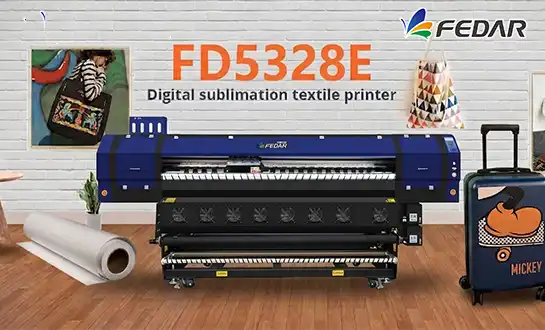
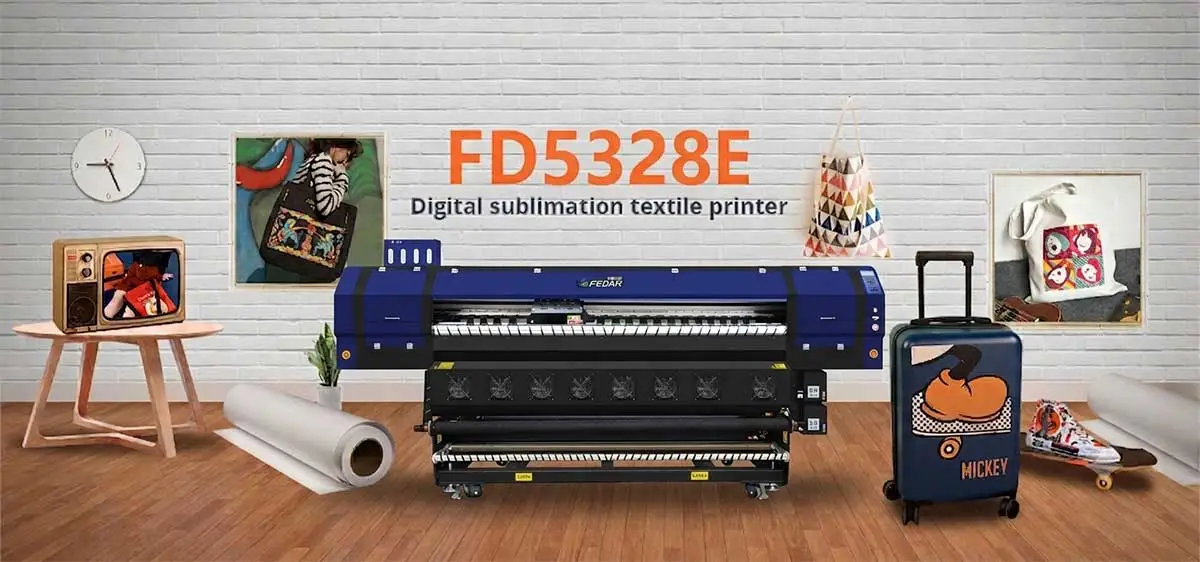
Fedar has a range that is made to meet all of these different needs. The main benefits of this machine are as follows: the FD5328E can handle high print volumes thanks to its 3200mm print width and 8 Epson I3200-A1 printheads that can produce 420㎡/h at 3200DPI resolution. The FD2624E type is good for medium-volume operations because it keeps the same 24-printhead setup across a 2600mm width and can print 1000m²/h. The FD1924's 1900mm width is good for smaller facilities, and it still uses 24 printheads for 960㎡/h of production speed. These benefits can help solve problems with production scaling while keeping the quality of the photographic output at all operational levels.
| Model | Print Width | Printhead Quantity | Max Speed (1pass) | Resolution |
|---|---|---|---|---|
| FD5328E | 3200mm | 8 × Epson I3200-A1 | 420㎡/h | 3200DPI |
| FD2624E | 2600mm | 24 × Epson I3200-A1 | 1000㎡/h | 3200DPI |
| FD1924 | 1900mm | 24 × Epson I3200-A1 | 960㎡/h | 3200DPI |
Assessing Printhead Technology and Color Systems
Long-term running costs depend on the strength of the printhead, and for dye sublimation printer sublimation transfer printer, industrial-grade piezoelectric systems, such as the Epson I3200-A1 line, are very reliable and can check the nozzles automatically, and these printheads can handle longer production runs without the banding problems that happen with cheaper options, and the technology lets you change the size of the droplets, which is important for showing both fine text and full colour blocks in the same design. Industrial-grade piezoelectric systems, such as the Epson I3200-A1 line, are very reliable and can check the nozzles automatically. These printheads can handle longer production runs without the banding problems that happen with cheaper options. The technology lets you change the size of the droplets, which is important for showing both fine text and full colour blocks in the same design.
Standard CMYK setups work well for most uses, but some niche markets may need wider colour ranges. Sometimes, trendy sportswear needs fluorescent pink or yellow to get brand-specific colours that can't be printed with four colours. Procurement managers should think about whether these extra features are needed for current projects or if growth in the future might mean that systems need to be able to be upgraded.
Budget Considerations and Total Cost of Ownership
The price of the equipment is only one part of the investment. Consumable costs like ink, copy paper, and upkeep supplies add up over the life of the printer. Genuine consumables made just for each printer model can be bought through authorised distribution channels. Compared to generic options, these matching systems have better colour accuracy and fewer printhead failures.
At Fedar's 400-person plant, they do original research and development and strict quality control during production. The company keeps its supply chains for core components stable so that replacement parts are always available for as long as the equipment is in use. This is very different from importers, who don't have direct relationships with manufacturers and leave customers open to risk when parts become obsolete. Warranty coverage and service agreements need to be added to the total cost because getting technical help quickly keeps output from stopping, which costs a lot of money.
Enhancing Production Efficiency and Reducing Risks in Sublimation Printing
Optimizing Print Settings and Media Selection
Rather than being caused by broken equipment, print quality problems are usually caused by choices that don't match. The weight of the transfer paper affects how well the ink soaks in. For example, 40gsm papers need different amounts of soaking than 100gsm papers. High ink loads don't cause the thin sublimation paper to wrinkle, which is called "cockling" and ruins pictures. Tension control systems stop this from happening. Modern media take-up mechanisms keep the tension constant over long production runs, so mistakes that waste expensive materials don't happen.
Delta E readings of colour uniformity should stay between 1.5 and 2.0 over long print runs. To do this, the ICC profile needs to be calibrated regularly to match the ink and paper that are being used. Changes in humidity and other external factors that affect the thickness of ink can be made at the software level to fix colour management issues. To keep the accuracy needed for high-resolution transfers, professional operations check the nozzles every day and clean the capping station once a week.
Maintenance Protocols for Maximum Uptime
Downtime for equipment has a direct effect on profits. Schedules for preventive repair cut down on sudden failures that stop output. When operators follow the manufacturer's cleaning instructions, the printhead lasts a lot longer. Automated nozzle tracking systems look for early signs of blockage and start cleaning processes before the print quality gets worse.
The environment affects how well sublimation technology works. Ink viscosity doesn't change when the temperature stays stable between 20°C and 28°C. Keeping the humidity level between 40% and 60% lowers the static electricity in transfer paper, which is what leads to media feeding errors. Facilities that don't have climate control have higher costs for supplies and more service calls.
Supplier Partnerships for Consumable Reliability
Performance differences are caused by changes in the ink chemistry used by different makers, and for dye sublimation printer sublimation transfer printer, real sublimation inks are put through a lot of tests to make sure they work with certain printhead technologies, and generic options may be cheaper at first, but they often fail too soon or change colours, which means that whole jobs have to be reprinted, and when you figure out how much loss and downtime cost, the fake economy becomes clear. Real sublimation inks are put through a lot of tests to make sure they work with certain printhead technologies. Generic options may be cheaper at first, but they often fail too soon or change colours, which means that whole jobs have to be reprinted. When you figure out how much loss and downtime cost, the fake economy becomes clear.
Working with authorised distributors gives you access to expert support teams that know how to fix problems with your unique equipment. When there are problems with colour matching or print defects, factory-trained technicians can figure out what's wrong from afar and often fix the problem without having to come to the site. This ability to respond quickly is very helpful during times of high production, when delays mean that delivery dates can't be kept.
Strategic Considerations for Equipment Investment
Scalability and Future Production Needs
Predictions of business growth should affect the choice of equipment. The switch from small-format to wide-format printing takes a lot of money, which means that startups might not be able to afford to buy too much at first. But equipment that isn't powerful enough causes bottlenecks that stop revenue growth. There is more freedom with modular devices that let you add more printheads, but they cost more up front than fixed designs.
Fedar's product line solves this problem with its tiered design. The FD61916E has a width of 1900mm and 16 printheads that can produce 670㎡/h, making it good for growing operations. When the amount of work goes up, the FD51915E keeps the same 1900mm size and adjusts to work best with different output profiles at 610㎡/h. The company's factory-direct model lets customers choose their own configurations based on their specific operational needs, rather than being forced to buy standard packages.
| Model | Printhead Configuration | Printhead Type | Speed Profile | Ideal Application |
|---|---|---|---|---|
| FD61916E | 16 × I3200-A1 | Epson I3200-A1 | 670㎡/h | Mid-volume textile production |
| FD61915E-A | 15 × I3200-A1 | Epson I3200-A1 | 610㎡/h | Custom sportswear shops |
| FD51915E | 15 × I3200-A1 | Epson I3200-A1 | 610㎡/h | Signage and home textiles |
| FD1912S | 12 × S3200 | Epson S3200 | 1100㎡/h | High-speed banner production |
Distribution Channel Selection
Long-term risks come from buying from unauthorised dealers. A warranty's validity often depends on proof that the item was bought through authorised means. Equipment from the grey market might not be properly calibrated or come with power settings that don't work with the equipment in your area. When technical problems happen, manufacturers usually won't help units that were bought outside of authorised networks.
Having a direct relationship with a manufacturer has benefits beyond just protecting your warranty. Representatives from the factory know how the local market works and can suggest setups that meet the needs of the local industry. They keep spare parts on hand, which cuts down on wait times when parts need to be replaced. Through partnerships with manufacturers, training programs make sure that workers fully understand what their tools can do, which maximises return on investment.
Conclusion
Dye sublimation printer sublimation transfer printer technology is very flexible and can be used for a wide range of things, including clothing, home materials, and signs. Sublimation is the best method for making things out of fabric because the colours stay together, they don't fade when washed, and the photos stay in the same tone. For a business to be successful, its capabilities must be matched to its needs, and it must work with dependable suppliers who provide real consumables and quick technical support. In competitive markets, long-term operating efficiency and profits depend on a careful analysis of print volume needs, total cost of ownership, and scalability potential.
FAQ
Why do colors appear different on transfer paper versus finished fabric?
The dye sublimation printer sublimation transfer printer puts down pigments that don't fully work until the heat press stage. Because the colour stays solid, the colours on the paper look dull. The gas phase shift is set off by heat, which makes the colour brighter as it goes through polyester fibres. This is normal and to be expected; operators with a lot of experience learn to read paper colours by looking at the end results.
What causes ghosting defects in sublimation transfers?
When transfer paper moves during heat press application, it makes two copies of the image. This is called ghosting. This risk is lower with high-tack sublimation paper because it sticks strongly to fabric. Vacuum heat presses stop all movement by applying constant pressure to the material and keeping it still. Choosing the right paper and setting up your tools correctly can stop this common quality problem.
Can sublimation work on natural fiber fabrics?
Cotton and other natural fibres don't have the molecular structure that dyes need to stick to them. For sublimation to work, the material must have at least 60% polyester substance or a polymer coating. Cotton blends with enough synthetic content can be sublimated, but the colour vibrancy goes down as the percentage of polyester goes up. Polymer coatings made for heat transfer uses need to be put on rigid surfaces.
Partner with a Trusted Dye Sublimation Printer Sublimation Transfer Printer Manufacturer
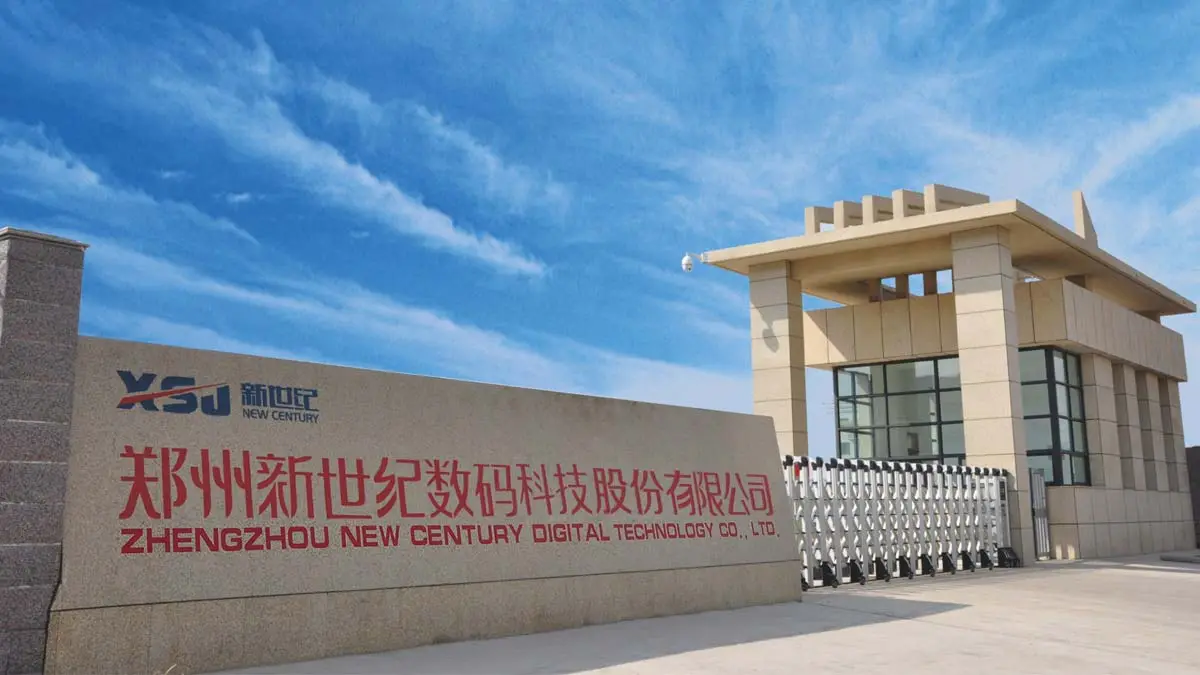
Fedar has a factory with 400 workers that is only used for original research and development and production. Throughout the whole process, quality control is very strict. Customers from all over the world use our sublimation equipment in the printing on textiles, making signs, and decorating for special events. We change designs to work with a variety of industries while keeping a steady supply of key parts like Epson I3200-A1 printheads. Since we've been in the dye sublimation printer sublimation transfer printer business for a long time, we can offer flexible ways for distributors, print shops, and large manufacturers to work together. Our after-sales support team helps you get the most out of your tools by giving you professional training, marketing materials, and quick troubleshooting. Get in touch with our experts at info@tex-printer.com to talk about how our sublimation solutions can help you make more money and make your production better.
References
1. Anderson, M. (2022). Industrial Textile Printing Technologies: A Comprehensive Guide. Textile Manufacturing Press.
2. Chen, L., & Rodriguez, P. (2021). "Phase Transition Dynamics in Dye Sublimation Processes." Journal of Applied Polymer Science, 138(45), 51234-51247.
3. International Textile Manufacturers Federation. (2023). Global Trends in Digital Textile Printing. ITMF Publications.
4. Morrison, K. (2021). Signage Production Methods: Comparative Analysis of Durability and Color Retention. Visual Communications Institute.
5. Patterson, R., & Liu, S. (2023). "Evaluating Total Cost of Ownership in Commercial Printing Equipment." Print Production Management Quarterly, 17(2), 89-104.
6. Williams, T. (2022). High-Performance Sportswear Manufacturing: Technology and Innovation. Athletic Apparel Research Foundation.
We Look Forward to Your Email
Please send us product information that interests you, and we will provide you with one-on-one service.

_1778203196111.png)
Recommended Blog
DTG vs DTF Printing:The Pros and Cons of Direct Printing Technologies.
How Does a Digital Textile Film Printer Compare to Screen Printing?

Roll to Roll DTF Printer vs Flatbed: Which One Should You Buy?