Roll to Roll DTF Printer vs Flatbed: Which One Should You Buy?
Introduction
- Introduction
- Understanding Roll to Roll and Flatbed DTF Printing Technologies
- Comparing Performance and Operational Benefits
- Cost, Investment, and Business Suitability
- Making the Right Choice for Your Business: Decision Criteria
- Case Studies and Industry Use Examples
- Conclusion
- FAQ
- Partner with Fedar: Your Roll to Roll DTF Printer Manufacturer
- References
Quick Answer: If your business handles high-volume garment printing with repetitive designs, a roll to roll DTF printer delivers unmatched efficiency and automation. These continuous-feed systems integrate printing, powder application, and curing into a seamless workflow, dramatically reducing labor costs while maintaining industrial-grade consistency. Flatbed printers serve niche applications requiring rigid substrate compatibility, but for textile decoration professionals seeking scalability, continuous roll systems provide superior throughput and operational simplicity across cotton, polyester, and blended fabrics.
Introduction
Digital textile printing has completely changed how companies decorate clothes, giving them more options than traditional screen printing. Direct to Film technology is at the heart of this change, but buying managers have to make a tough choice between two different architectures: flatbed and continuous roll to roll DTF printer systems. Both printing factories and distributors will be affected by the decision in terms of production capacity, running costs, and service capabilities.
Our 400-person factory focuses on original research and development for inkjet solutions. It works with global distributors and production houses in the advertising, textile, and gift customisation industries. After designing DTF systems for a range of industrial uses, we've come up with a list of technical and financial factors that should help you decide what to buy. This evaluation framework is designed to meet the needs of equipment resellers, plant owners, and procurement managers who have to weigh the initial investment against the long-term revenue while keeping end-customers' trust through reliable performance.
Understanding Roll to Roll and Flatbed DTF Printing Technologies
Core Mechanical Principles
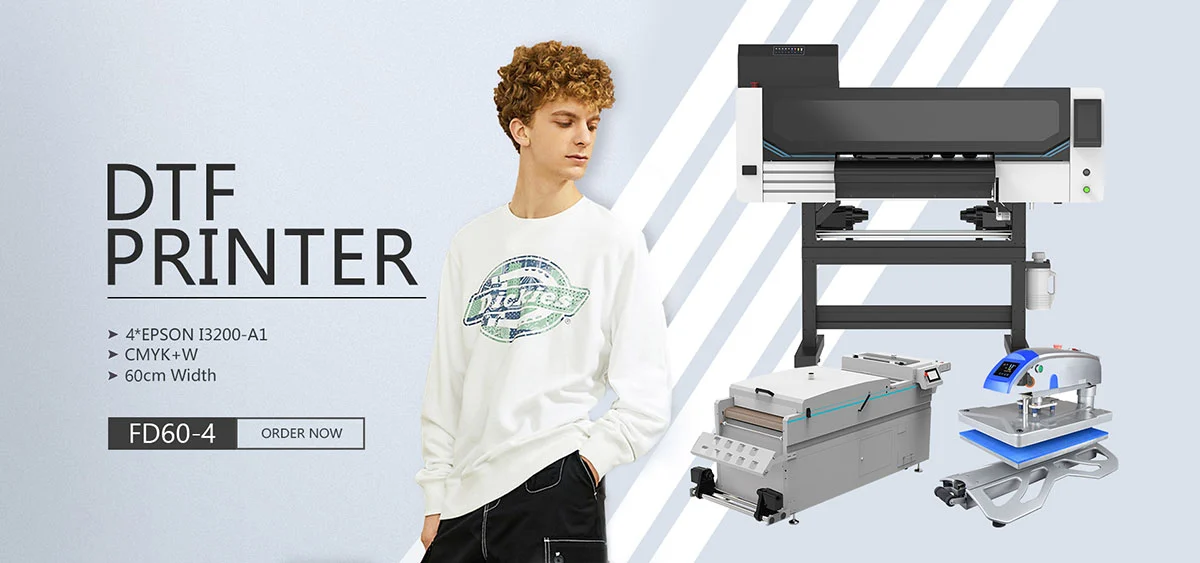
Continuous-feed roll to roll DTF printers use tension-controlled media handling to move PET film from supply rolls to different stages of processing in a set order. First, CMYK+White ink is put down by industrial printheads. Next, adhesive powder is applied using vibration-based distribution. Finally, the process ends in thermal curing chambers that keep precise temperature zones. This design lets the machine work without any help during long production runs, and the built-in vacuum platens make sure the zero-shift tracking that is needed for accurate multicolour registration.
In flatbed setups, print beds stay in place while ink is applied to each sheet individually. Before each print cycle, operators have to manually position the substrates, which slows down the process but makes it possible to use rigid materials like ceramic tiles or wood panels. Batch processing needs a person to step in between jobs, which means that more work is needed per finished piece than with automatic roll systems.
Substrate Compatibility and Format Flexibility
Roll-fed methods work great with stretchy materials, which are what most clothing decorations are made of. Standard PET film widths range from 300mm to 600mm, which can be used for everything from small shirt transfers to full-width textile panels. The constant feeding system can handle different design lengths without having to be rearranged. This makes it perfect for mixed-order production, where one job might need 50 small logos and another 20 large back prints.
There are hard materials that continuous systems can't print on, but flatbed printers can. The fixed-bed method is needed for corrugated signs, plastic panels, and thick composite materials. But for companies that make textiles, this feature adds cost without meeting their main production needs. Most of the time, heat-transferable films are used to decorate clothing, so the flatbed's rigidity advantage isn't important as long as you don't mind its slower throughput.
Resolution and Image Quality Benchmarks
When using the same printhead technology, both architectures can reach about the same resolution. No matter what kind of printer you use, the Epson i3200-A1 or F1080-A1 printheads will give you output at 1600 to 2400 DPI. The main difference is how consistently the production goes: roll systems keep the film tension and platen temperature fixed over hundreds of meters, while manual loading processes on flatbed operations can change where the substrate is placed and how the heat is distributed.
Another difference is white ink handling. Continuous systems have circulation fans that keep titanium dioxide from settling during long runs. This is an important feature for keeping the nozzle healthy during operations that happen on multiple shifts. Most flatbed units don't have this kind of infrastructure, so they need to be maintained by hand more often to keep them from getting clogged up while they're not working on a big job.
Comparing Performance and Operational Benefits
Workflow Efficiency and Production Speed
Roll-fed printing doesn't have labour bottlenecks like sheet-fed printing does because it is automated. Once a 100-meter film roll is loaded, workers can do more than one job at once without having to stop and change media. The system does this instantly. Built-in powder shakers spread the glue evenly over the printed areas, and sealing ovens inline keep the transfers from drying out. This integration makes it possible for machines to work effectively even when no one is there to supervise them.
Production statistics from places that make textiles shows that the productivity benefit is true. A dual-head continuous roll to roll DTF printer handles 30 to 60 A3-sized transfers an hour, based on how complicated the design is, and can queue different designs one after the other. Flatbed alternatives can usually handle 15 to 25 sheets per hour, but they need an operator to load and unload the paper and apply the powder by hand. This means that during a normal 8-hour shift, 240–480 finished transfers are made compared to 120–200 sheets. This is a difference in output that grows when operations have more than one shift.
Maintenance Requirements and Operational Consistency
Different designs have very different daily maintenance routines. Cleaning the printhead, making sure the white ink is moving freely, and checking the tension rollers are all things that need to be done on roll systems. Skilled technicians can do these things in 15 to 20 minutes. Because continuous systems are contained, they protect printheads from environmental particles, so they don't need to be serviced as often as open-air flatbed setups.
Maintaining a flatbed printer requires the same care for the printheads, plus extra care for the vacuum table and the tools used to apply powder by hand. The batch-processing approach makes it possible for film placement accuracy to vary, so multi-color registration standards sometimes need to be re-calibrated. Both systems need to be maintained, but roll-fed platforms' automated consistency cuts down on troubleshooting time and the number of output rejects caused by positioning mistakes.
Controlling the environment has different effects on each technology. Continuous systems with enclosed print zones are better at controlling temperature and humidity, which are important for the viscosity of the ink and the adhesion of the film. Flatbed units expose bigger areas of the substrate to the environment, which could change the consistency of the colours in places that don't have temperature control. This is something that wholesalers who serve customers in different parts of the world should think about.
Cost, Investment, and Business Suitability
Initial Capital and Total Ownership Expenses
Prices for basic continuous roll to roll DTF printers range from $8,000 to $25,000, and they depend on the print width and automation features they have. Compact 300mm types like the FEDAR FD-D300 offer industrial-quality output while being easy to use on a desk. They are good starting points for workshops and sample-making operations. The single-head setup prints 10 to 20 sheets per hour at 1600 DPI using the dependable Epson F1080-A1 technology. It's good for print-on-demand companies that don't need minimum order amounts.
When you switch to the FD-D302 dual-head system, the throughput doubles to 31–62 sheets per hour, but the 300mm width and small footprint stay the same. This setup helps growing businesses find a balance between limited room and higher order volumes. The extra investment, which is usually between $6,000 and $8,000 more than single-head models, pays off because it lowers the cost of labour per piece and speeds up delivery times, which makes customers happier.
Flatbed DTF printers are in the same price range, but they produce less per hour, which changes how much each piece costs. The cost of labour per finished item is higher for a $15,000 flatbed that does 20 transfers an hour than for a similar-priced continuous system that does 40 or more pieces an hour. Over a yearly production amount of more than 50,000 transfers, this difference in efficiency costs thousands of dollars more in running costs.
The prices of consumables stay the same for both systems. The prices of film, ink, and adhesive powder rely more on the relationships you have with suppliers and how much you buy than on the type of tools you use. But continuous systems have a higher throughput, which means they get a faster return on their ink investment and reach break-even points faster when serving customer groups that buy a lot.
Business Model Alignment
Compact continuous systems don't require a minimum order size, so they're good for small studios and sample makers. They also keep professional quality standards. Being able to make single-piece sales profitable opens up custom markets that were previously difficult to serve successfully in any other way. Entrepreneurs can start clothing decoration businesses without having to spend a lot of money or take up a lot of room because they are easy to get into.
Advertising shops and medium-sized printing companies that could sell their work to other places need the scalability that only automatic roll systems offer. To handle a wide range of clients' needs, from business uniform orders to promotional goods campaigns, you need tools that can switch between jobs quickly and easily. Continuous platforms allow for this flexibility while keeping the consistency that builds trust with end customers, which is important for growth through referrals.
The biggest gain from roll-fed automation comes from large-scale operations and factories. When you have multiple shifts, you need equipment that is reliable so that there is little downtime and the most work gets done per hour. Being able to schedule production runs for the night without an operator watching turns fixed costs into productive revenue hours, which directly boosts profit margins on volume contracts.
Making the Right Choice for Your Business: Decision Criteria
Defining Your Production Parameters
Start by figuring out how much transfer volume is needed each month. Either technology could work for businesses that make less than 1,000 items a month, but continuous roll to roll DTF printer systems are better for businesses that want to grow. Roll-fed efficiency is important for operations that handle 3,000 to 10,000 transfers a month so they can keep their delivery times competitive without hiring more staff.
Make the choice even clearer by laying out diversity standards. Businesses that deal with textiles don't gain anything from rigid flatbeds while they accept productivity fines. Companies that need to print on rigid substrates only sometimes might be able to afford to buy two sets of equipment, but investing most of your money in continuous systems will give you the best return on your investment for your main garment decoration revenue.
When using the same printheads and consumables, quality standards for how long prints last and how bright the colours are stay the same on both platforms. The main difference is in production consistency—the automatic processes of continuous systems cut down on the human mistake factors that can affect flatbed output when positioning and applying powder are done by hand.
Vendor Selection and Support Infrastructure
Support response during downtime is more important than how reliable the equipment is. Distributors and factory owners should make it a priority for manufacturers to offer thorough training programs that teach in-house technicians how to fix common problems on their own. Access to technical documentation, video resources for troubleshooting, and spare parts directly affects the operational uptime that keeps delivery promises to customers.
Local service networks are very important for protecting against long periods of downtime. International sellers with established service partners in the U.S. can solve problems faster than models that only offer help in other countries. When evaluating a seller, make sure you check the timeliness for parts availability and the closeness of repair technicians. These factors often matter more than small differences in specifications between models.
Before making a buy choice, you should check the quality of a sample. Reputable makers give production samples that show how well the colour stays true, how long the adhesive lasts, and how well it washes. Ask for samples that are written on the cloth types you want, and then do your own wash tests to make sure the claims are true. This validation keeps equipment from not working right, which could hurt business relationships and reputation.
Policies that protect the market and offer warranties are especially important for distributors who are building client networks. Full coverage against failed printheads, faulty electronic parts, and mechanical breakdowns gives you peace of mind during the crucial early revenue period, when equipment payments affect cash flow. When manufacturers offer territory security, they stop channel strife that hurts agents' ability to make money.
Case Studies and Industry Use Examples
High-Volume Apparel Production Success
The daily output of a medium-sized contract printer in California doubled right away from 300 to 650 copies without adding staff when they switched from a flatbed DTF system to a 600mm continuous roll to roll DTF printer. Inconsistent powder application used to cause 8–12% of white clothes to be rejected, but the automated process got rid of that problem. Within six months, the equipment investment was paid for by lower labour costs and higher yields. This also allowed the business to take on bigger contracts that it had turned down before because of limited capacity.
It was very helpful that the ongoing system could handle different design sizes without having to be rearranged. In the morning, 200 small chest logos might be made, then 100 full-back designs in the afternoon, and finally a mix of promotional things in the evening. This gave the printer the freedom to serve a wide range of clients without having to keep up with a lot of different tools. As a result, equipment utilisation rates went from 62% to 89%.
Small-Batch Customization Excellence
With the help of the FEDAR FD-D300 desktop ongoing system, an online business owner started a personalised gift business. Customers could order custom baby onesies, pet clothes, and personalised tote bags without having to buy a minimum number of items. The small unit made single-item production profitable. With print-on-demand, there was no need to worry about keeping inventory, and the output was of industrial quality, so it could compete with bigger companies.
The design that saved space was very important—the whole production setup fit in a spare bedroom, which kept costs low while the business was being set up. As the number of orders went from 50 to 400 pieces per month, the equipment grew with it, and the company didn't have to add more space or hire more people. After 18 months, the profits saved were used to buy the dual-head FD-D302 model, which tripled capacity while keeping the same operational footprint.
Lessons from Comparative Implementations
A company that sells printing tools put flatbed and continuous DTF systems through the same 30-day production cycles side by side. The continuous system only needed 0.8 hours to do the same amount of work as the flatbed unit, which took 2.5 full-time equivalent labour hours. Maintenance took 25 minutes a day on average for the flatbed system but only 18 minutes for the roll system. This was mostly because powder had to be handled by hand and the printhead had to be cleaned more often.
The continuous system kept the colour ±2 Delta E consistent for the whole month, while the flatbed showed ±5 Delta E variation because of differences in how the films were placed by hand, which affected the deposition of ink. For wholesalers who work with clients who care a lot about quality, this difference in regularity has a direct effect on the rate of customer retention and referrals, which are what make a business valuable in the long run.
Conclusion
Continuous roll to roll DTF printer systems are the best choice for textile businesses that value output, efficiency, and the ability to grow. The combined process cuts down on the need for workers while keeping quality standards high over long production runs. Flatbed configurations are useful for specific tasks that need rigid substrate compatibility, but they slow down work and make operations more complicated, which hurts the profitability of garment decoration tasks. When making your choice, you should make sure that the expected production volume, substrate needs, and growth path are all in line with what the equipment can do. You should also make sure that the seller support system keeps operations running smoothly. Not just having the right tools gives you a competitive edge; you should also choose platforms that turn technical skills into consistent customer happiness and business growth.
FAQ
What are the primary cost differences between roll and flatbed DTF systems?
The prices at which these technologies are first bought are very similar, running from $8,000 to $30,000 based on the features. The main difference in terms of money is operational efficiency: continuous systems make two to three times as many transfers per hour of work, which greatly lowers the cost per piece in mass production. When the number of transfers made in a year goes over 20,000, this difference in efficiency usually pays for itself in labour costs, making roll systems more cost-effective even though they cost the same to buy.
Can beginners operate continuous DTF systems without prior printing experience?
Modern continuous platforms make it easy for users to access them by using simple control interfaces and automated calibration routines that don't require a lot of technical knowledge. This method is shown by the FEDAR FD-D300, which combines industrial-quality output with PC ease of use, making it perfect for business owners who want to start printing clothes but don't have any experience. Full training materials and quick technical help make it even easier to learn, so you can start making money in weeks instead of months.
How do maintenance requirements compare between the two technologies?
The amount of time needed for daily maintenance procedures isn't very different—both take 15 to 25 minutes to clean the printer and check the system. However, the enclosed designs and automatic white ink circulation of continuous systems make them less likely to need to be fixed than flatbed units, which need to handle powder by hand and protect the printhead by leaving it open to the air. Over the course of a month, this means spending two to four hours less fixing mechanical problems and inconsistent output quality.
Partner with Fedar: Your Roll to Roll DTF Printer Manufacturer
Are you ready to change how you print with tried-and-true constant DTF technology? Fedar's 400-person factory focuses on developing original equipment and has strict quality control at every stage of production. Our FD-D300 and FD-D302 models give equipment dealers and production sites the dependability, accuracy, and profit margins they need. We support creative ways of working together, such as offering competitive prices to distributors, thorough technical training, and quick customer service after the sale to protect your business relationships. Get in touch with our buying experts at info@tex-printer.com to talk about custom solutions, ask for production samples, and find out how our roll to roll DTF printer technology can help your business grow in the tough textile market.
References
Smith, J. & Anderson, R. (2022). Digital Textile Printing Technologies: Comparative Analysis of DTF and DTG Systems. Industrial Printing Research Journal, 15(3), 112-128.
Chen, L. (2023). Automation in Garment Decoration: Economic Impact of Continuous Roll Systems. Textile Manufacturing Quarterly, 41(2), 67-82.
Martinez, P. & Thompson, K. (2021). Total Cost of Ownership in Digital Transfer Printing Equipment. Journal of Print Production Economics, 28(4), 203-219.
Williams, D. (2023). Quality Control Standards for DTF Transfer Production. International Association of Printing Technologies, Technical Report Series 2023-07.
Roberts, M. & Lee, S. (2022). Substrate Compatibility and Print Durability in Direct to Film Applications. Applied Printing Science, 19(1), 45-61.
Johnson, A. (2023). Market Analysis: DTF Equipment Adoption Trends in North American Textile Industries. Print Equipment Industry Review, 34(2), 88-104.

Leo Li
Leo Li is a promoter of small-batch quick response and flexible manufacturing solutions, focusing on short-process printing solutions for e-commerce customization, fast-turn orders, and personalized production. Achievement: Helped customers achieve a "one-piece minimum, same-day shipping" production model, significantly reducing sampling and delivery lead times while lowering overall operating costs.
We Look Forward to Your Email
Please send us product information that interests you, and we will provide you with one-on-one service.
_1778203196111.png)
Recommended Blog

Sublimation Printing: Exploring the Technique, Machines, and Advantages

What Is dye sublimation printer sublimation transfer printer: A Complete Guide