Dye Sublimation Printer Sublimation Transfer Printer, Tips for Best Printing Results?
Dye Sublimation Printer Sublimation Transfer Printer, Tips for Best Printing Results?
Understanding Dye Sublimation and Sublimation Transfer Printers
- Understanding Dye Sublimation and Sublimation Transfer Printers
- Choosing the Right Sublimation Printer for Your Business Needs
- Best Materials and Maintenance Tips for Optimal Sublimation Printing
- Enhancing Printing Performance: Techniques and Workflow Optimization
- Procurement Strategies for Sublimation Printing Equipment
- Conclusion
- FAQ
- Partner with a Trusted Dye Sublimation Printer, Sublimation Transfer Printer Supplier
- References
It takes more than just putting paper into a dye sublimation printer sublimation transfer printer, and pressing print to get great results. The key is to know how the different amounts of heat, material preparation, ink saturation, and proper equipment measurements work together. When done right, sublimation transfer gives you continuous-tone picture quality that lasts longer than other printing methods because it won't fade when washed. The chemical bonding process turns solid dye particles into gases, which lets the gases go deep into polyester fibers instead of just sitting on top of them. This makes bright, full-color output that doesn't fade even after hundreds of washings. This makes it the best choice for high-performance clothing, home decor, and custom signs where sturdiness and good looks are important.
Understanding Dye Sublimation and Sublimation Transfer Printers
Sublimation printing is a complex phase-transition technique in which heat and pressure turn solid dye particles into a gas directly, without going through a liquid state first. At temperatures usually between 180°C and 210°C, this gas-phase dye then forms a lasting bond with polyester molecules or polymer-coated surfaces. The process makes pictures that are actually part of the material instead of just sitting on top of it. This makes prints that stay flexible, airy, and soft to the touch.
How Heat-Based Technology Transfers Images
When specially coated transfer paper is created with scattered sublimation inks, the transfer process can begin. When put through a heat press, these paints turn into vapor and move into the open polymer chains of polyester fabrics or coated hard materials. As the base cools, the polymer chains close, which keeps the color molecules inside the structure of the material. This method gets rid of all hand-feel, keeping the fabric's original texture while adding photographic detail and gradient smoothness that can't be achieved with screen printing or vinyl application.
Direct Printing Versus Transfer Paper Methods
Both methods use sublimation chemistry, but direct-to-fabric printers skip the step of using transfer paper by writing directly on textiles that have already been treated. There are, however, more ways to use transfer paper for rigid surfaces that normal textile printers can't handle, such as aluminum panels, ceramic tiles, and hardboard. The Fedar FD3324E and FD2624E models are great for transfer paper processes. They can print at speeds of up to 1080㎡/h and have 24 Epson I3200-A1 printheads that can offer 3200DPI resolution. This mix allows for large-scale production without lowering the quality of the continuous-tone photos needed for high-end uses.
Common Challenges and Root Causes
Color banding is still one of the most annoying problems. It's usually caused by printer valves that are clogged or ink flow that is uneven. Viscosity changes that cause banding can be avoided by keeping the temperature between 20°C and 28°C, the humidity between 40% and 60%, and checking the nozzles automatically on a regular basis. Misalignment issues are often caused by media tracking systems that don't work right with light transfer papers (40gsm to 100gsm). Industrial-grade tools with advanced tension control systems keep the paper stable during long print runs. When heat press temperatures aren't within the range stated by the maker or when dwell times aren't constant, colors can change between the printed transfer and the final pressed product. These factors are taken out by precise measurements and written process settings.
Choosing the Right Sublimation Printer for Your Business Needs
When choosing the right dye sublimation printer sublimation transfer printer, you need to look at more than just the initial buy price. Print resolution decides how well fine details are reproduced, and 3200DPI is needed for digital work and patterns with lots of small parts. The Fedar FD1912S can print up to 1100㎡/h in single-pass mode with 12 Epson S3200 printheads, which makes it a good choice for big orders that need to be filled quickly. Durability includes both mechanical strength and printer life. When it comes to durability, piezoelectric Epson printheads are better than thermal options.
Performance Criteria That Matter Most
The total cost of ownership is more than just the price of the tools. Figure out how much ink is used per square meter, how much it costs to change the printhead, and how many hours of upkeep work need to be done every month. In production settings, the costs of equipment downtime add up quickly, so how quickly a seller responds to technical problems is a key part of evaluating them. The 400-person R&D and production center at the Fedar factory guarantees a steady supply of original parts and quick expert support. This directly addresses the problem of slow customer service after the sale, which hurts customer trust.
When investing in a dye sublimation printer sublimation transfer printer, warranty coverage changes a lot from one company to the next. Instead of just covering severe failures, full guarantees should cover things like replacing the printhead, computer component failures, and mechanical wear items. Depending on how close the service is, replacing the printhead could take two days or two weeks, which could affect your ability to meet client goals.
Matching Equipment to Material Requirements
Customizing a rigid base is not the same as customizing a polyester cloth. For soft signage and home textiles, where seamless prints get rid of obvious seams, wide-format skills become important. Standard cloth bolt sizes can be printed on the Fedar FD2624E's 2600mm print width, which keeps the 3200DPI resolution. On the other hand, smaller studios that focus on personalized gifts and small-batch custom orders can benefit from the FD61915E's small 1900mm width and 15 printheads, which balances a small size with a production rate of 610㎡/h.
To keep polymer-coated stiff materials from bleeding during heat transfer, the ink must be laid down carefully so that it doesn't become too saturated. Epson I3200-A1 printheads with variable droplet technology change the amount of ink that goes into each area of the picture on the fly. This lets you get both sharp text and smooth photographic gradients on the same print. This flexibility lets companies offer a wide range of products without having to buy extra tools.
Best Materials and Maintenance Tips for Optimal Sublimation Printing
The success of sublimation depends on how well the substrate works with the ink. Polyester material must be at least 60% for the dye to stick well, and 100% polyester gives the best color vibrancy and wash strength. Sublimation dyes can't stick to cellulose structures, so colors that are mixed with cotton or other natural fabrics are dulled. For non-textile uses, surfaces need special polymer coats made to take sublimation dyes. Aluminum or ceramic that hasn't been coated or treated doesn't transfer images that can be seen.
Substrate Selection for Different Applications
When it comes to high-performance clothing, the ability of sublimation to let air pass through is very important because moisture-wicking rayon knits are used. The dye goes through the fabric completely, leaving no layer on the outside to block the pores, so the fabric's sports performance properties are kept. For interior design, heavier polyester fabrics (200gsm to 300gsm) work best because they block out light for backlit screens and let a lot of ink fill the fabric without showing through. You can choose a rigid base from 0.5 mm polymer-coated metal for lightweight signs to 3 mm hardboard for long-lasting use outside.
The quality of the transfer paper has a big effect on the end result. The best paper weight for heat press use is between 70gsm and 100gsm because it absorbs ink well and keeps its shape. When heavy ink is put on lighter sheets, they swell up, which makes the pressure uneven and the color transfer spotty. Premium transfer papers have anti-curl coats that keep the edges from lifting during the heat cycle. If they did, ghosting would happen.
Essential Maintenance Protocols
Patterns for checking the nozzle every day help identify wear and tear in a dye sublimation printer sublimation transfer printer before it affects production runs. Automatic cleaning procedures should be performed during startup and shutdown, while manual deep cleaning should be carried out weekly using manufacturer-approved solutions. Avoid using standard cleaning chemicals on piezoelectric elements, as they may cause compatibility issues. Fedar's equipment features intelligent nozzle monitoring systems that alert operators to developing clogs before print quality begins to deteriorate.
Ink control is more than just keeping an eye on the level. Sublimation inks have droplets that are spread out and settle down after long periods of inactivity. To keep the suspension regular, it needs to be gently stirred once a week. When inks go bad, the colors don't print as well, and particles can build up and jam printheads. Set up strict rules for rotating your goods and storing them in a place that isn't too hot or too cold.
Routines for calibration check the consistency of colors, linearization curves, and media progress. Every month, normal test goals should be used to validate the ICC profile by comparing Delta E values to baseline measurements. Delta E differences must be less than 2.0 over long production runs for color uniformity to be acceptable. When using light transfer papers, where static electricity and changes in tension can cause alignment shift over 50-meter print lengths, media tracking correction is even more important.
Enhancing Printing Performance: Techniques and Workflow Optimization
The standard level for finished prints is set by how the digital artwork is prepared. If you design in CMYK color space instead of RGB, you won't have to deal with the gamut shift sadness that happens when RGB colors that aren't printable are turned into CMYK versions. Putting in ICC settings that are specific to your printer, ink, and paper will make sure that what you see on a calibrated monitor is the same as what comes out of the press. Resolution should match the printer's capabilities. For example, 3200DPI files for Fedar equipment avoid interpolation effects and avoid file sizes that are too big and slow down RIP processing.
Heat Press Parameter Optimization
Being accurate with the temperature makes the difference between vivid durability and dull loss. Buy calibrated infrared thermometers to make sure that the temperatures shown on the remote and the real surfaces of the plates match. Standard sublimation transfers need temperatures between 195°C and 205°C, but some ink formulas may need even lower temperatures. Dwell time, or how long surfaces stay under pressure, depends on the thickness and mass of the material. It usually takes 45 to 60 seconds for lightweight sports polyester to fully absorb the dye, while it takes 90 to 120 seconds for heavy couch fabrics.
Transfer consistency is affected by how the pressure is distributed, especially across large-format prints. In low-pressure zones, uneven pressure causes color changes and partial transfer. Commercial heat presses with air pressure systems that can be adjusted keep the platen surface in touch with the material all the way around. When used with stiff materials, silicone pads smooth out small surface flaws that would otherwise cause pressure holes.
Comparative Advantages Over Alternative Methods
Screen printing is great for covering dark surfaces, but it takes a lot to set up each design, so it's not a good option for runs of fewer than 100 units. Applying vinyl to different types of materials works, but the surface has a noticeable pattern, and after repeated bending, it cracks. Direct-to-garment printing works well with cotton, but it doesn't have the stability and hand-feel benefits that sublimation does with polyester. The on-demand printing feature of sublimation gets rid of the risk of keeping stock and allows for mass customization business models that would not be possible with traditional methods.
The Fedar FD52615E is a good example of a dye sublimation printer sublimation transfer printer because it has 15 Epson I3200-A1 printheads spread across a 2600mm-wide platform. It can produce up to 685㎡/h of output, making it suitable for both short custom orders and large-scale production runs. Variable data printing allows sequence numbers, custom names, or different designs to be added without interrupting production, directly supporting modern e-commerce fulfillment models.
Procurement Strategies for Sublimation Printing Equipment
When you buy a strategic dye sublimation printer sublimation transfer printer, you weigh the initial cost of the purchase against the long-term costs of running the business and the possibility of making money. Leasing reduces the amount of money you have to pay up front and gives you the freedom to update as technology improves, but the total cost usually exceeds the cost of buying outright over longer periods of time. Distributors add markups to products, but direct maker relationships get rid of those costs while still providing original parts and factory-trained expert support. The Fedar procurement model combines a reasonable price with a full after-sales system. This solves the common problem of getting tools quickly but not being able to find repair parts for months.
Evaluating Total Cost of Ownership
Figure out how much ink, transfer paper, and heat press products like protection sheets cost per print. OEM inks and third-party options have very different prices for ink, but cheap inks often cause printer failures that are much worse than any savings. Replacement printheads are a high ongoing cost—Epson I3200-A1 heads normally last 18 to 24 months—and making replacement budgets ahead of time keeps costs from being a surprise.
When processes are done in large quantities, they use a lot of energy. Modern sublimation printers have cooling systems that work well, but heat presses use 2 to 3kW of power all the time during working shifts. Location planning should include the need for electricity facilities and the cost of running the business. Traditional dyeing requires expensive handling of wastewater, but water-free sublimation methods don't need that. This saves money and is better for the environment.
Building Reliable Supplier Relationships
Partnering with equipment makers for a long time can give you access to beta testing, faster technical help, and better terms on supplies. The Fedar plant has customers all over the world, which shows that it can be relied on in a wide range of market situations. Set up clear service level agreements that spell out how long it will take to answer technical questions, the availability of extra parts, and the provision of on-site service. By writing down these promises, you protect your company from the "slow after-sales response" situation that hurts relationships with customers.
By negotiating big buying agreements for goods, you can get better prices and make sure that you always have supplies when the market is down. Ink inventory should keep three months' worth of coverage ahead of time without going over the shelf-life limits. When compared to price by event, multi-year service contracts usually save 15% to 25% on costs and make budgeting easier by ensuring predictable costs.
Conclusion
To get good at sublimation printing, you need to make sure that the substrate you choose, the process settings, and the care routine all work together. The technology gives polyester materials unmatched longevity and picture quality, making them useful for a wide range of uses, from sportswear to building signs. Making smart choices about what to buy, including selecting the right dye sublimation printer sublimation transfer printer, by putting total cost of ownership, supplier reliability, and a full support system at the top of the list, sets the stage for successful operations. As sublimation continues to replace traditional ways of decorating, companies that buy tried-and-true tools like Fedar's industrial printer range are well-positioned to take advantage of growing markets. With the right technical know-how, high-quality supplies, and a well-thought-out plan for improving workflow, sublimation technology can be used to make a business more competitive.
FAQ
What polyester percentage is required for quality sublimation results?
For noticeable dye bonding, substrates need to have at least 60% polyester content. However, materials made of 100% polyester produce the most vibrant colors and last the longest after being washed. Because sublimation colors can't stick to cotton or other natural fibers, the effects get paler as the amount of polyester goes down.
How does environmental control affect print quality?
Temperature changes between 20°C and 28°C and humidity levels between 40% and 60% keep the thickness of the ink consistent and keep lightweight transfer papers from having problems with static electricity. Deviations lead to issues with media tracking, banding, and color changes that lower the quality of the result.
What maintenance frequency prevents production disruptions?
Every day, automatic nozzle checks find new problems before they affect prints. Once a week, particles don't build up because the printer is cleaned by hand with approved solutions. Every month, the ICC profile is calibrated to make sure that the color consistency stays within the accepted Delta E range of 2.0.
Can sublimation work on non-polyester materials?
Outside of polyester materials, sublimation dyes can only be used on polymer-coated surfaces. Specialized coatings on metal, ceramic, and hardboard make them responsive, but natural materials that aren't covered, like wood, glass, or cotton, don't transfer anything noticeable, no matter what the heat press settings are.
Partner with a Trusted Dye Sublimation Printer, Sublimation Transfer Printer Supplier
Fedar is an expert at making industrial-grade dye sublimation printer sublimation transfer printers that meet the needs of dealers, production sites, and custom printing businesses all over the United States. Our 400-person R&D and production plant follows strict quality control rules at every stage of production. This makes sure that the equipment works well and protects your relationships with customers. The wide range of models, from small 1900mm models to large 3300mm systems, can be used by businesses of all sizes. The Epson I3200-A1 printhead technology ensures steady 3200DPI resolution at speeds of up to 1080㎡/h. We offer full technical training, trial help that can be repeated, and quick after-sales service that fixes problems before they affect your business. Email our procurement experts at info@tex-printer.com to talk about equipment setups, chances to work with agents, and unique solutions that meet the needs of your market and help you reach your growth goals.
References
1. Dawson, R. M. (2021). Sublimation Printing Technology: Fundamentals and Industrial Applications. Textile Science Publishers.
2. Chen, L., & Kumar, P. (2020). "Phase Transition Dynamics in Dye Sublimation Processes," Journal of Imaging Science and Technology, 64(4), 040501.
3. Industrial Fabric Association International (2022). Specialty Fabrics Review: Digital Printing Technologies Comparison Report.
4. Martinez, S. (2023). Total Cost of Ownership Analysis for Digital Textile Printing Equipment. Manufacturing Efficiency Press.
5. Patel, A., & Thompson, J. (2021). "Color Management and ICC Profiling Best Practices for Sublimation Workflows," Digital Printing Quarterly, 18(2), 45-62.
6. Wu, H., Zhang, Y., & Anderson, K. (2022). Maintenance Protocols for Industrial Inkjet Printheads. Technical Equipment Publishing.

Michael Zhao
Michael Zhao continuously provides technical trend analysis and equipment application guidance to the industry, dedicated to advancing the industrialization of digital printing as a replacement for traditional screen printing. Achievement: Has published multiple technical analysis articles and provided professional support in equipment selection, process optimization, and fault diagnosis to dozens of printing factories, contributing to the upgrade of the digital printing industry.
We Look Forward to Your Email
Please send us product information that interests you, and we will provide you with one-on-one service.
_1778203196111.png)
Recommended Blog

What are the maintenance requirements for direct to film printer?
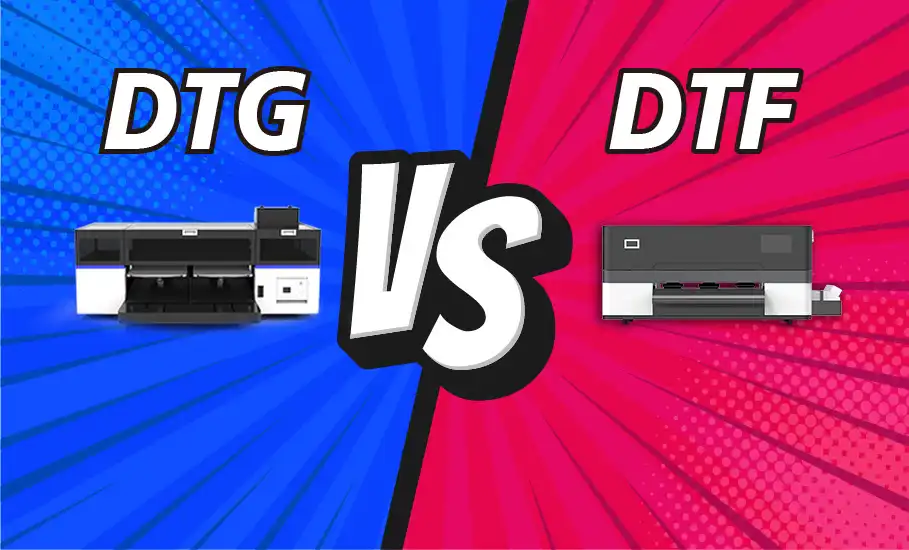
DTG vs DTF Printing:The Pros and Cons of Direct Printing Technologies.
How to Choose the Right DTF Printing Machine for Your Business?
A3 DTF Printer: with vs. without Oven System How To Choose?