A3 DTF Printer Features Benefits And Best Applications Guide
Understanding A3 DTF Printers: Features and How They Work
- Understanding A3 DTF Printers: Features and How They Work
- Benefits of Using A3 DTF Printers for Textile and Product Printing
- Choosing the Best A3 DTF Printer: Key Factors and Market Comparison
- Practical Guide for Operating, Maintaining, and Troubleshooting A3 DTF Printers
- Procurement and Sourcing: Where and How to Buy A3 DTF Printers
- Conclusion
- FAQ
- Partner with Fedar: Your Trusted A3 DTF Printer Manufacturer
- References
An A3 DTF printer is a special kind of digital printer that uses Direct-to-Film technology to make high-resolution graphics on fabrics. This machine has a printing width of 12 to 13 inches and uses aqueous pigment inks and binding powder to print bright patterns on PET transfer film. The designs are then heat-pressed onto cloth. Unlike traditional screen printing or direct-to-garment methods, this small system can print on a wide range of fabrics and produce industrial-quality results in a format that is easy to use on a desktop. This makes it perfect for businesses that want to start making custom clothing without spending a lot of money.
Understanding A3 DTF Printers: Features and How They Work
Small and medium-sized businesses can now customize textiles in completely new ways thanks to direct-to-film printing technology. Specialized CMYK and white inks are sprayed onto a covered PET film by precise printheads to start the process. Once the writing is done, TPU glue powder is spread out evenly over the wet ink. The ink is then heated to cure it and make a film that can be transferred. The target fabric is put on top of this film, and it is heat-pressed to attach the pattern firmly to the fabric.
Core Technical Architecture
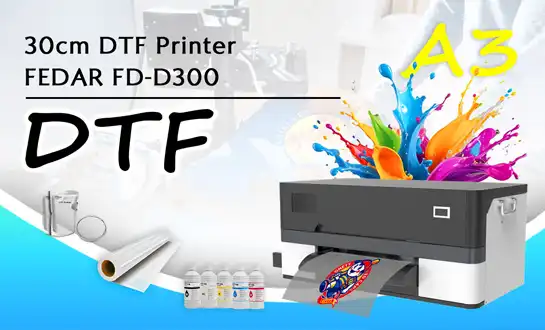
The main part of these systems is how the printer is set up. Fedar's FD-D300 type has a single Epson F1080-A1 printer that can print at speeds of 10 A3-sized pages per hour at 1600 DPI. This setup is good for businesses that are just starting out with DTF and don't need a lot of production. The printhead shoots very small droplets with amazing accuracy, making patterns that are smooth and text that is clear, which is hard to do with standard methods.
The FD-D302 type doubles the number of printheads, which greatly increases output to 31 A3 prints per hour while keeping the same quality standards. This two-head design solves a major problem that growing businesses face: increasing production without lowering quality or needing more floor space.
source: FEDAR PRINTER
Operational Workflow Integration
The printing process fits right in with the way things are already made. Standard drawing software is used by operators to make designs, and color patterns are changed to work with the CMYK+White ink system. The 300mm print width can fit a wide range of design sizes, from small names to full-chest images. Automated white ink movement systems stop the titanium dioxide pigment from settling, which happens with cheaper equipment, and make sure that the nozzle works the same way throughout long production runs.
Differentiation from Alternative Technologies
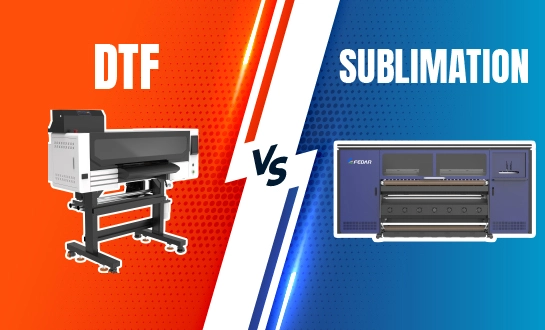
DTG printing puts ink directly on clothes that have already been treated. DTF printing, on the other hand, makes a transfer medium that can be used on raw cotton, polyester, mixes, and even tough materials like nylon and leather. Sublimation printing needs fabrics that are high in polyester and light colors. DTF transfers, on the other hand, can stick to dark fabrics and still look bright. Because of this material flexibility, there is no need to keep pre-treated garment stocks or limit product options based on fabric makeup, which would make managing inventory more difficult.
Benefits of Using A3 DTF Printers for Textile and Product Printing
Businesses that use this technology say it has big business benefits that have a direct effect on their profits and customer happiness. When you combine high-quality output, a wide range of materials, and operating efficiency, you get a strong value offer for people who are thinking about buying tools.
Superior Print Quality and Durability
Transfers made with DTF printing are very wash-fast; after 50+ industrial wash cycles, they often meet Grade 4-5 toughness standards. The color range is wider than standard screen printing, and Pantone colors are accurately reproduced. There are also smooth photographic curves. The white ink layer makes dark clothes as opaque as or more opaque than screen-printed white underbase, and the soft hand-feel of properly dried transfers keeps the fabric's ability to breathe.
At 1600 DPI, print quality can pick up small details that please customers who want photorealistic images or complex lettering. End-customers will trust this quality stability, which is very important for agents and resellers whose names depend on getting reliable sample quality when they're trying to get new clients.
Unmatched Material Compatibility
The real strength of the technology lies in how well it works with different substrates. Production sites can fill orders for a wide range of products without having to change the tools they use. The same printer can copy designs to cotton t-shirts, polyester sports wear, canvas tote bags, nylon jackets, and even leather patches. Because of this, businesses can take a wide range of unique orders without losing money because of material restrictions.
The A3 DTF printer offers this flexibility, which is especially helpful for companies that depend on the seasons. In the summer, swimwear is printed on spandex mixes, hoodies are printed on cotton-polyester fleece, and winter items are printed on acrylic knits. This ability to work in more than one season makes the best use of tools all year long.
Cost-Effectiveness and ROI Optimization
The costs of DTF printing are characterized by low entry hurdles. Screen printing setups need large minimum order numbers to cover setup costs. DTF, on the other hand, lets you print on demand with no minimum batch size. When single-piece delivery starts to make money, it opens up new ways to make money from things like custom gifts and limited-edition goods that screen printing can't do.
Profitability is further increased by using less ink. When compared to spray-based or flood-coat methods, the exact placement of the droplets reduces waste. Maintenance needs can still be met with simple daily cleaning routines, without the need for advanced technical understanding that screen printing requires. Energy use stays low—Fedar's A3 systems use a lot less power than large-format commercial printers because they are smaller, but the quality of each print is the same.
These improvements in business efficiency lead directly to higher profit margins. This system for the margins leaves a lot of room for competitive prices while still keeping profits high.
Choosing the Best A3 DTF Printer: Key Factors and Market Comparison
When buying this kind of equipment, you need to carefully look at the technical specs, the supplier's skills, and the long-term support system. Knowing the differences between the choices helps buyers match the capabilities of the tools with the needs of the business.
Print Size and Throughput Considerations
The 300mm print width, which can fit images up to about 11.7 inches wide, is what "A3 format" refers to. This measure works for most clothing decorating needs, from simple t-shirt patterns to hoodie designs that are too big. For companies that mostly work with the clothing industry, this size is perfect because it matches potential with a small footprint that's needed in production spaces that are limited in space.
There are clear use-case differences between single-head and dual-head setups based on their throughput. The FD-D300 can print 10 samples per hour, which is good for small-batch makers, businesses trying to meet market demand before going big, and sample-making operations. The FD-D302's ability to print 31 hours a day, three times as fast as before, is aimed at established businesses with steady order numbers, since production speed directly affects the ability to make money.
Printhead Technology and Longevity
Epson's F1080-A1 printer is an example of high-precision tech used in industry. Compared to entry-level options, this part has a higher shooting frequency and a longer operating lifespan. The native resolution of the printhead makes sure that the 1600 DPI standard refers to real optical resolution and not numbers that have been interpolated. This keeps the sharpness even when the print speed changes.
Total cost of ownership is directly linked to how long a printhead lasts. Premium parts can handle the tough conditions of white ink printing, where the small pigment particles test the longevity of the tip. Fedar's combination of automated circulation and repair systems saves this important investment by increasing the time between service calls and lowering the cost of replacement parts over the life of the equipment.
Comparison with Alternative Print Technologies
There are a number of reasons why film-based printing is better than DTG printing when comparing the two. DTG makers need to treat the clothes first, which adds to the cost of each piece in terms of work and materials. The pre-treatment method adds to the uncertainty of quality and makes production take longer. DTF gets rid of these steps, which speeds up work and lowers the risk of mistakes.
A3 DTF printer, with its ability to print on dark fabrics and natural fibers, makes it possible to reach a lot more customers than sublimation. Product variety is limited by the fact that sublimation can only be used on polyester-rich, light-colored materials. DTF is more flexible for catalogs that have a mix of products, while sublimation is better for printing all over specific things like sports shirts.
Screen printing still has benefits for very large runs of a single design, where setup amortization makes the process cost-effective. But DTF is better for custom orders, short runs, and companies that value design flexibility over maximum volume efficiency because it doesn't need to be set up and can print in endless colors without extra screens.
Practical Guide for Operating, Maintaining, and Troubleshooting A3 DTF Printers
A successful equipment rollout includes more than just choosing what to buy. It also includes daily operations that make the most of downtime and output quality. Costly production stops can be avoided by following systematic repair routines and learning about common problems.
Setup and Workflow Best Practices
For the first placement, the environment needs to be steady. A temperature range of 68 to 77°F and a humidity level of 40 to 60% are ideal for preventing static electricity problems and ensuring that the ink always works properly. Print registration is affected by the right film loading tension; the film should run easily without sagging or having too much resistance. Setting the powder shaker's application rate based on the density of the ink covering improves binding and cuts down on waste.
Preparing the design file has a big effect on the results. Before printing, images should be changed to the CMYK color space to make sure that the colors match perfectly. To keep white from "bleeding" beyond color lines when adding a white underbase layer to designs that will be printed on dark fabrics, the opacity and offset settings need to be changed. With practice, these technical issues become second nature, but they need to be paid attention to during operating training.
Routine Maintenance Protocols
As part of daily upkeep, the nozzles are checked to make sure that all channels can fire correctly 100% of the time. When nozzles are missing, it means that clogs are starting to form and need to be cleaned out right away by an automatic cycle. The capping station, which closes off printheads when not in use, needs to be cleaned once a week to get rid of ink waste that could get on the needles during capping.
Pay extra attention to white ink movement. Running the ventilation system for two to three minutes before printing and when it's not being used for a long time keeps the color from settling. This simple action greatly increases the life of the printer and keeps the white opacity uniform across prints.
The encoder strip, a clear strip with calibration marks that show how to move the printer, gathers dust and glue powder leftovers. Cleaning the printer once a week with isopropyl alcohol keeps it in the right place and stops banding or registration mistakes. These simple repair jobs take very little time but make a big difference in how reliable something is.
Common Issues and Solutions
Problems with print quality are usually caused by things that can be found. Horizontal bands across prints usually mean that the printer is dirty or that the encoder strip is blocked. Most banding problems can be fixed by running deep cleaning cycles and checking the motor parts. If you use expired ink or the wrong color profile, you might get color changes or weak saturation. These problems can be fixed by checking the expiration dates of the ink and restarting the ICC profiles.
Most of the time, problems with transfer stickiness are caused by wrong press settings rather than printer problems. Making sure the temperature of the heat press is between 325°F and 350°F and keeping the pressure on for 15 to 20 seconds makes sure the glue sticks well. Different types of films need to be handled in different ways. For example, design pulling can be avoided by letting hot-peel films cool completely before separating.
In an A3 DTF printer, when white ink images appear see-through or patchy, it is important to examine how the white ink transportation system works. These issues are usually caused by air bubbles in the ink lines or insufficient circulation time before printing. Properly bleeding the ink lines and extending circulation cycles can help restore the correct white ink intensity.
Procurement and Sourcing: Where and How to Buy A3 DTF Printers
Strategic choices about buying tools take into account how well it works, how reliable the provider is, and how much help is available. Knowing the different vendors helps buyers reduce risks and get the most out of their budgets.
Evaluating Manufacturers and Suppliers
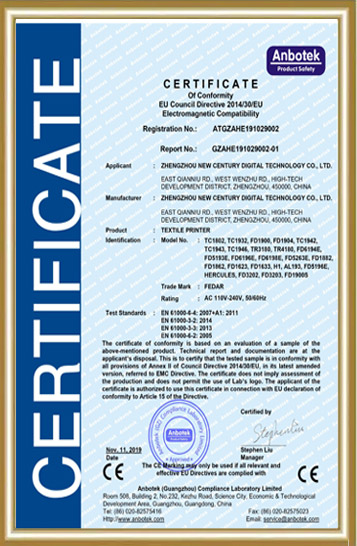
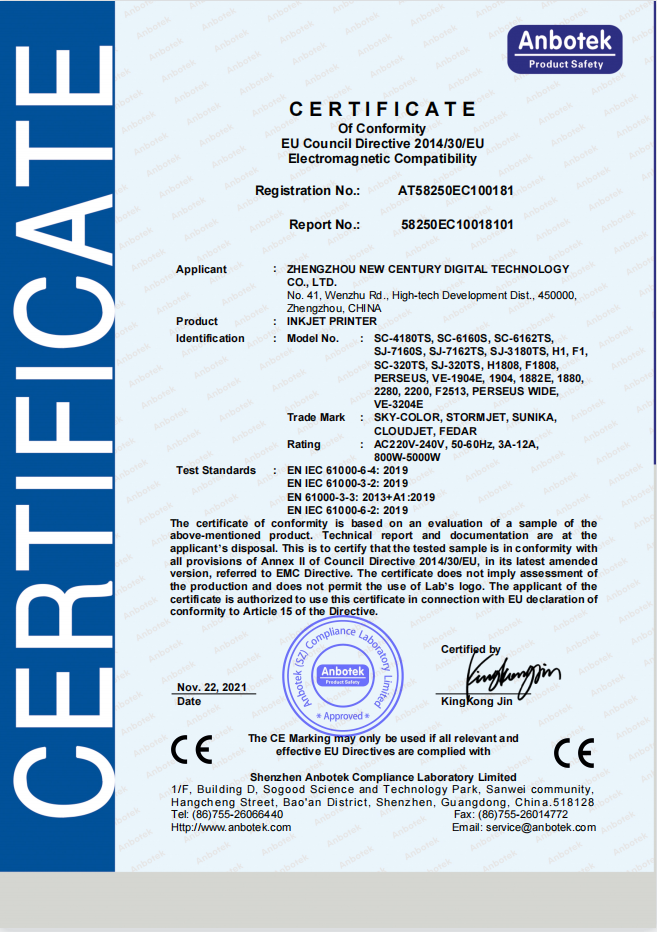
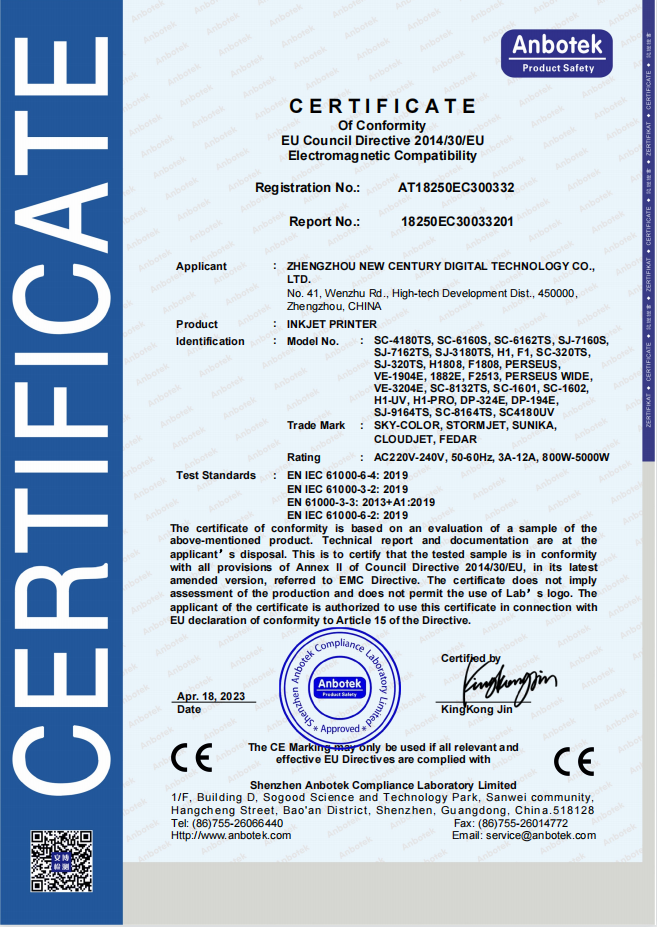
Reputable makers set themselves apart by having plant certifications, being open about where they get their parts, and having production capacities that can be checked. Fedar runs a 400-person facility that focuses on research, development, and production of unique technology. This vertical integration makes sure that the quality of the parts is controlled and that the supply lines stay stable, which is very important when production plans depend on the equipment working well.
When checking out a supplier, you should ask for proof of a factory audit, approvals of the quality management system, and contact information for customers who have used the supplier before. Manufacturers with established customer bases around the world have shown they can support foreign operations, such as providing cross-border expert help and managing the handling of spare parts.
Pricing Structures and Volume Considerations
Quality A3 DTF printers. This depends on the printhead setup, automation features, and extras that come with the system. While still having industrial-quality parts, the FD-D300 is priced at an entry level, making it easy for companies and small teams to use. The FD-D302's high price is supported by its tripled throughput ability, which comes from its dual-head design.
People who buy a lot of things, like equipment resellers, businesses with multiple locations, or training centers, should discuss prices that reflect their level of commitment. When you buy a lot of something, manufacturers often give you better prices, longer warranty terms, and more expert help. These deals are good for both sides because they help buyers save money and help sellers plan their production more accurately.
Support Infrastructure and After-Sales Commitment
Reliability of equipment doesn't mean much if you can't get help when problems happen. When judging a manufacturer's support, you should look at how available expert staff is across time zones, how well they speak other languages for foreign buyers, and where their spare parts inventory is kept. End-customer relationships are hurt by slow response times, which is a big problem for resellers whose businesses rest on keeping clients' trust.
Fedar offers organized technical training that covers how to operate, maintain, and fix typical problems. This sharing of information gives buyers the power to handle common problems on their own, which cuts down on downtime. Access to marketing materials, sample kits, and print examples that can be copied helps resellers get new customers. This solves the common problem of samples not being of good quality, which slows down sales rates.
The warranty terms should be carefully read. Standard coverage usually includes replacing parts for one year. Coverage for printheads is especially important because of how valuable and important they are. Buyers who don't want to take risks or who do business in areas where there isn't a lot of technical knowledge in-house may benefit from extended insurance options or service contracts.
Conclusion
A3 DTF printer A3 DTF printing technology offers an excellent mix of quality, flexibility, and ease of use that solves real operating issues that textile decorators and custom product makers face. Companies of all sizes can use it because it's small, produces high-quality output, and doesn't need much upkeep. This includes entrepreneurs starting home-based companies and factories expanding their capabilities. Fedar's FD-D300 and FD-D302 models show how this technology can be used. They make it easy for businesses to get into or grow in the custom printing market with low costs and long-term profits.
FAQ
What fabrics work best with DTF transfers?
The DTF technology works very well with cotton, polyester, nylon, spandex, canvas, leather, and even cotton-polyester mixes. DTF transfers bond consistently to almost any fabric makeup, unlike sublimation printing, which needs light-colored materials that are high in polyester, or DTG printing, which works best on cotton. This makes it possible for businesses to take on a wide range of unique orders without being limited by their tools. Dark fabrics get bright colors that are fully opaque, and delicate fabrics like tri-blends can handle the low heat-press temperatures that DTF needs.
How does maintenance time compare to DTG printers?
DTF systems need about 10 to 15 minutes of care every day, mostly checking the nozzles and running short cleaning processes. DTG printers need the same daily care, plus cleaning the tools for pre-treating the clothing, which adds 20 to 30 minutes to the total daily maintenance time. DTF gets rid of all pre-treatment, which speeds up the process. Both methods need care to keep the white ink moving, but DTF's closed-loop systems work better than DTG's direct-to-garment application. Maintenance needs for DTF stay lower on a weekly and monthly basis, which leads to more effective output time.
Can beginners operate these printers successfully?
When compared to screen printing or DTG operation, DTF printing has a relatively easy learning curve. Most workers can make good prints within days of being trained, as long as they know how to use a computer and follow set processes. The technology can handle small differences in method better than screen printing, which needs exact squeegee pressure and angle. Complex jobs, such as moving the white ink and cleaning the printer, are done automatically by features. DTF is now easier for businesses that want to start textile printing but don't have any experience in the field to use, thanks to thorough operator training materials and quick technical support.
Partner with Fedar: Your Trusted A3 DTF Printer Manufacturer
Choosing a trusted equipment partner is the first step in improving your output capabilities. Fedar has more than ten years of experience with inkjet printing and runs a 400-person factory that is committed to research and development and quality-controlled production. Industrial dependability and regular output quality are what resellers and production sites want from our FD-D300 and FD-D302 A3 DTF printer models. Our reasonable pricing, thorough technical training, and quick, helpful after-sales support help dealers and sellers keep their relationships with customers safe. Email our team at info@tex-printer.com to talk about bulk discounts, sample kits, and partnership possibilities that are made to fit the needs of your market.
References
1. Cohen, M. (2023). Direct-to-Film Printing Technology: Principles and Applications in Textile Decoration. Industrial Printing Research Institute.
2. Textile Printing Association. (2024). Comparative Analysis of Digital Textile Transfer Methods: DTF, DTG, and Sublimation Performance Metrics. Annual Industry Report.
3. R. & Liu, S. (2023). Adhesive Powder Chemistry in DTF Applications: Formulation Effects on Wash Durability. Journal of Applied Textile Technology, 18(3), 245-267.
4. Digital Printing Equipment Standards Committee. (2024). Quality Control Protocols for Direct-to-Film Production Systems. International Manufacturing Guidelines.
5. Ramirez, P. (2023). Small-Batch Custom Apparel Production: Economic Models and Technology Selection. Business of Print Publishing.
6. Wang, J. (2024). Printhead Technology Evolution in Desktop DTF Systems: Performance Comparisons and Reliability Engineering. Precision Manufacturing Quarterly, 41(2), 112-134.

Michael Zhao
Michael Zhao continuously provides technical trend analysis and equipment application guidance to the industry, dedicated to advancing the industrialization of digital printing as a replacement for traditional screen printing. Achievement: Has published multiple technical analysis articles and provided professional support in equipment selection, process optimization, and fault diagnosis to dozens of printing factories, contributing to the upgrade of the digital printing industry.
We Look Forward to Your Email
Please send us product information that interests you, and we will provide you with one-on-one service.
_1778203196111.png)
Recommended Blog
 Printer Considerations_1779869621127.webp)
Best DTF Printing Machine for Small Business: A Buyer's Guide