How Direct-To-Film Printing Works: Simple DTF Transfer Guide
What Is a Direct to Film Transfer Printer?
- What Is a Direct to Film Transfer Printer?
- Understanding the Direct-To-Film Printing Process
- Advantages of Direct-To-Film Printing for B2B Applications
- Troubleshooting and Maintenance Tips for DTF Printers
- How to Choose the Right Direct-To-Film Printer for Your Business
- Future Trends and Insights in Direct-To-Film Printing
- Conclusion
- FAQ
- Ready to Add a Reliable DTF Printer to Your Lineup?
- References
A direct to film transfer printer uses CMYK and white pigment ink to print a pattern on polyester film. The film is then put through a powder-and-heat process that firmly attaches the art to cloth. This way of printing on textiles is one of the fastest-growing areas of digital printing because it can be used on cotton, polyester, and mixed materials without the high costs of setting up that screen printing does. This book walks you through the whole process step by step. It also talks about what agents and plant buyers need to know before they buy equipment and the most common questions that come up when a machine is already in use.
It costs time and money to choose the wrong tools or partner. Fedar's direct to film transfer printers, like the FD-D300 and FD-D302, are made in a factory with 400 workers whose main goal is to produce consistently high-quality work. If you have questions about where to find something, email info@tex-printer.com before reading any further.
What Is a Direct to Film Transfer Printer?
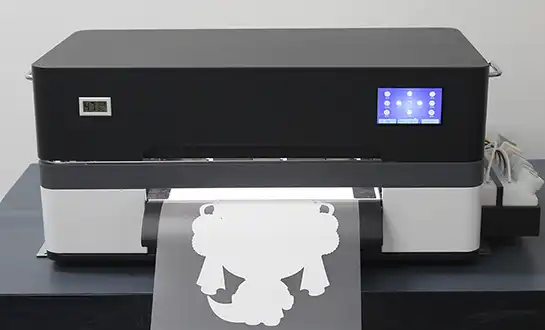
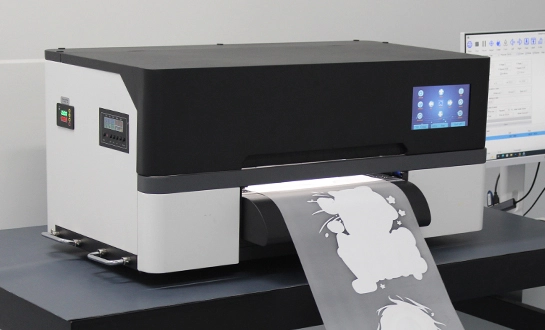
An inkjet printer that prints color and white underbase ink onto PET (polyester) film instead of fabric is called a direct to film transfer printer. After being dusted with adhesive powder and heated to harden, the printed film acts as a carrier. When pressed against a garment or textile surface, the design transfers, and the film peels off afterwards.
Screen printing needs a different screen for each color and design. Direct to Garment (DTG) printing, on the other hand, sprays ink directly onto cloth fibers instead of an intermediate film. All direct to film transfer printers work with film, which is why this type of equipment is often just called DTF.
Understanding the Direct-To-Film Printing Process
What happens during the printing stage?
First, the direct to film transfer printer puts down a layer of colorful CMYK ink. Next, it puts down a layer of white ink that makes dark or colored materials see-through. Before printing, RIP software flips design files so that the final pressed picture reads right when it is put on the clothing.
Here, resolution is important. Machines with the Epson F1080-A1 printhead can handle resolutions of up to 1600 DPI, which means that even on small print sizes common for custom gift orders, small text and fine gradient details stay clear.
How does the powder and curing stage work?
Adhesive powder is spread over the pattern while the ink is still wet and is shaken off where it doesn't stick. Inked areas are the only ones that hold powder, which is what makes the pattern stick to the cloth when it's pressed.
When it cures, the powder melts into a layer that is smooth and even. According to sources in the industry, hardening temps are usually between 160°C and 170°C for 10 to 20 seconds. However, the exact temperatures needed depend on the brand of film and the type of powder used [1]. If there isn't enough heat, the powder doesn't melt all the way, and the ink gets burned.
What happens during the final heat press and peel?
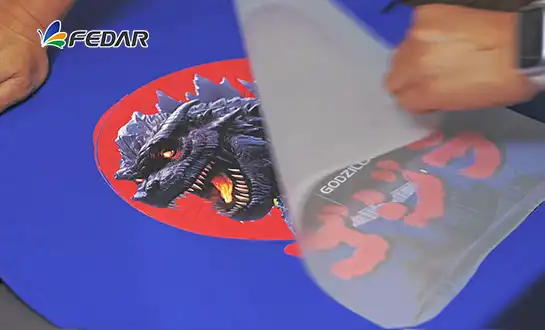
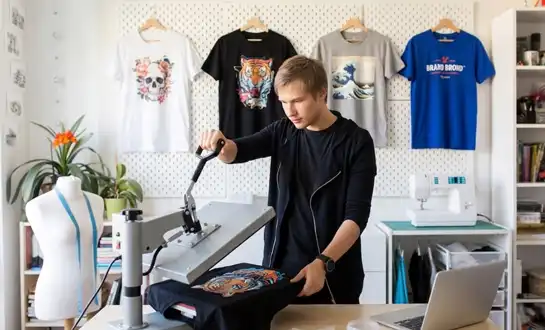
It is then pressed on the garment with even, medium pressure for 10 to 20 seconds at temperatures between 150°C and 165°C. The ink-side of the film is placed down on the garment. Depending on the type of film used, it either comes off right away (hot peel) or after it cools to room temperature (cold peel).
After pulling, a quick second press holds the pattern in place and makes it last longer through multiple washes. People who are using DTF for the first time often make the mistake of skipping this step.
Advantages of Direct-To-Film Printing for B2B Applications
Why is this method gaining traction across so many industries?
In 2024, the world market for direct-to-film printing was worth about USD 2.72 billion. It is expected to hit USD 3.92 billion by 2030, rising at a rate of 6% per year [3]. That growth is due to more people wanting customized, made-to-order clothes and the fact that direct to film transfer printing is cheaper for small runs than standard screen printing.
DTF is a really cheap way for a small company or sample maker who has never printed before to start decorating clothes and still make a real profit per order. When you print only what you need, you don't have to worry about having extra stock that you can't sell. Also, desktop-format machines are smaller, use less energy, and are easier to maintain than industrial print lines.
Where does direct-to-film printing show up in real business use?
There are three common use cases that happen a lot in the industries that agents usually work in:
Home textiles and soft furnishings manufacturers use DTF transfers for small-batch decorative textile runs, like making branded pillow cases or promotional table linens. This is because the setup costs for screen printing would eat into the margins on short orders.
For branded clothing related to events or marketing campaigns, where speed is more important than large-scale production, advertising signage and packaging printers rely on quick-turnaround film transfers.
E-commerce sellers and small studios count on the ability to handle single-item custom orders successfully, which is something that screen printing can't do for orders that small.
How does DTF stack up against DTG and screen printing?
When you compare a direct to film transfer printer to a DTG or screen printer, the following trade-offs become clear:
| Factor | Direct-To-Film (DTF) | DTG | Screen Printing |
|---|---|---|---|
| Minimum order quantity | None required | None required | Often 12+ units per design |
| Setup cost per design | Low | Low | High (separate screen per color) |
| Fabric range | Cotton, polyester, blends | Primarily cotton | Best on cotton |
| Dark fabric performance | Strong (white underbase) | Requires pretreatment | Strong |
| Typical time per transfer | 3-5 minutes | Moderate | Fast once screens are ready |
Troubleshooting and Maintenance Tips for DTF Printers
What causes clogged printheads and how do I prevent it?
White ink pigment settles faster than CMYK because titanium dioxide particles are heavier. A direct to film transfer printer without built-in white ink circulation clogs within days of regular use unless someone manually stirs the ink cartridge multiple times per shift.
Daily printhead cleaning cycles combined with automated ink stirring prevent most banding and clogging issues before they start. This single maintenance habit resolves a disproportionate share of quality complaints reported by new operators.
Why do some transfers peel or crack after washing?
One market analysis notes that inconsistent ink formulations can lead to fading, cracking, or poor washability, while subpar film materials may result in peeling or weak transfers [4], a risk that applies to any direct to film transfer printer running mismatched consumables. Curing temperature errors compound the problem, since scorched ink or under-cured powder both weaken the bond before the garment even reaches the customer.
Humidity is a quieter culprit. Adhesive powder stored in a damp environment clumps and cures unevenly, producing patchy adhesion regardless of how well the printer itself performed during printing.
How much does maintenance actually cost over time?
Maintenance costs climb fastest when studios use unvalidated third-party inks incompatible with their printhead chemistry, or skip scheduled cleaning cycles entirely. A direct to film transfer printer backed by a factory with stable core component supply tends to need fewer part replacements over its service life than machines assembled from inconsistent, mixed-source components.
How to Choose the Right Direct-To-Film Printer for Your Business
What specifications actually matter for procurement decisions?
Agents evaluating a direct to film transfer printer manufacturer should look past sticker price toward printhead count, resolution, and factory-backed reliability. As a reference point, the single-printhead FEDAR FD-D300 runs at roughly 10 A3 sheets per hour on CMYK settings, suited to sample makers and small-batch shops. The dual-printhead FEDAR FD-D302 roughly triples that pace to around 31 A3 sheets per hour, better matched to factories or agents supplying wholesale clients under tighter delivery windows.
Buying more capacity than current order volume needs adds cost without matching return. Buying less creates bottlenecks that push delivery dates and frustrate end customers who expected faster turnaround.
Why do factory qualifications matter so much to agents?
A 400-person factory specializing in original R&D and production with strict quality control gives agents a concrete, verifiable answer when procurement managers ask where their direct to film transfer printer comes from. Unstable sample quality is one of the most common reasons agents report struggling to convert prospects, so requesting reproducible sample runs before committing to inventory is a reasonable, standard ask.
Factories deeply rooted in the inkjet printer market, rather than treating DTF as a side product, tend to maintain steadier core component supply chains, which translates into fewer mid-order delays for agents promising delivery windows to their own customers.
What after-sales questions should cross-border agents ask before signing?
Ask directly about installation support, spare parts availability, and technical training coverage in your target region. No installation, repair, or spare parts support for cross-border business is a pain point that stalls agent operations right when a customer needs help most, and it's avoidable by confirming support terms before committing to a brand partnership.
Future Trends and Insights in Direct-To-Film Printing
Where is this technology headed over the next few years?
The direct-to-film printing systems market was valued at roughly USD 293 million in 2025 and is projected to reach USD 467 million by 2033, growing at a 6% compound annual rate driven by short-run customization demand and rising small-business adoption [5]. Sustainable materials are becoming a bigger focus too, with recyclable PET films and water-based pigment inks gaining traction as environmental standards tighten across European and North American markets.
What technology features should buyers watch for?
Cloud connectivity and remote monitoring are showing up more often on mid-size and enterprise-tier machines, letting operators track maintenance needs and reduce unplanned downtime. Analysts describe DTF as having transitioned from a niche method into a mainstream production platform, with distributors treating it as a strategic business line rather than a single consumable product [6].
Compact, entry-level printers paired with simplified software are also broadening access for small studios and startups that previously found the technology too complex or costly to adopt.
Conclusion
Direct-to-film printing works by moving ink onto polyester film first, then transferring that design onto fabric through powder, heat, and pressure. Getting reliable, wash-durable results depends on matching a direct to film transfer printer’s printhead capacity to real order volume, maintaining proper curing settings, and partnering with a manufacturer that backs its equipment with dependable regional support. For agents and factory buyers, that combination protects margins far more than chasing the lowest upfront price.
FAQ
What's the difference between hot peel and cold peel DTF film?
Hot peel film is removed immediately after pressing while still warm, speeding up high-volume runs. Cold peel film needs to cool to near room temperature first, which many suppliers say improves adhesion on delicate synthetic blends.
Can I run DTF printing on a converted regular inkjet printer?
No. Standard inkjet or laser printers can't handle DTF pigment inks or the film feeding mechanism required. A dedicated direct to film transfer printer supports white ink circulation that consumer printers lack entirely.
How long does a finished DTF transfer typically last through washing?
Properly cured and pressed transfers, including the second press after peeling, generally hold up well through repeated washing. Skipping the second press or using incorrect curing temperatures shortens durability noticeably.
Do I need different ink for light versus dark fabrics?
No, the same CMYK plus white ink set handles both. The white underbase layer provides the opacity needed for colors to show clearly on dark or colored fabric without switching ink formulations.
What's a realistic startup cost for a small DTF printing business?
Entry costs run considerably lower than screen printing, since there's no minimum order requirement and no per-color screen setup. A single desktop-format printer, ink, film, and powder covers most small studio needs at the start.
Ready to Add a Reliable DTF Printer to Your Lineup?
Slow repair turnaround or inconsistent samples shouldn't be the cost of doing business with a new supplier. Fedar builds its direct to film transfer printer models, including the FD-D300 and FD-D302, inside a 400-person factory focused on original R&D and strict quality control. Whether you're sourcing a direct to film transfer printer for sale as an agent or equipping your own studio, contact info@tex-printer.com for sample kits, technical training details, and current distribution terms.
References
1. DTF Print Go, "DTF film: Mastering materials, curing, and finishing" (2026). https://www.dtfprintgo.com/dtf-film-mastering-materials-curing-and-finishing/
2. Indiana DTF Print, "How Do DTF Transfers Work? Step-by-Step Process" (2026). https://indianadtfprint.com/blogs/news/how-do-dtf-transfers-work-step-by-step-process
3. Grand View Research, "Direct To Film Printing Market Size | Industry Report, 2030" (2025). https://www.grandviewresearch.com/industry-analysis/direct-film-printing-market-report
4. ResearchAndMarkets via GlobeNewswire, "Direct To Film (DTF) Printing Market Analysis and Revenue Forecast 2025-2030" (2025). https://finance.yahoo.com/news/direct-film-dtf-printing-market-160600797.html
5. Congruence Market Insights, "By 2033 Direct-to-Film (DTF) Printing Systems Market: Key Trends, Opportunities & Strategic Insights" (2025). https://www.congruencemarketinsights.com/report/direct-to-film-printing-systems-market
6. Digitech FM, "DTF Film Leads the Next Wave of Distributor Growth in 2025" (2025). https://digitechfm.com/direct-to-film-technology-dtf-print-tech-dtf-innovation/

Aelx Chen
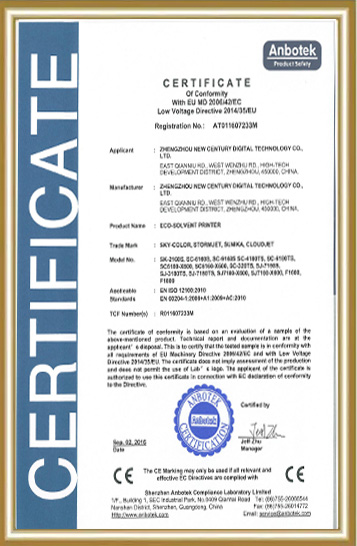
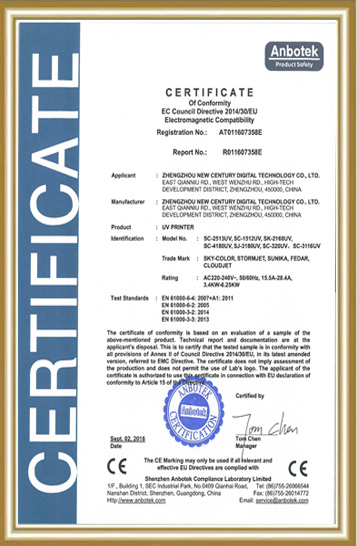
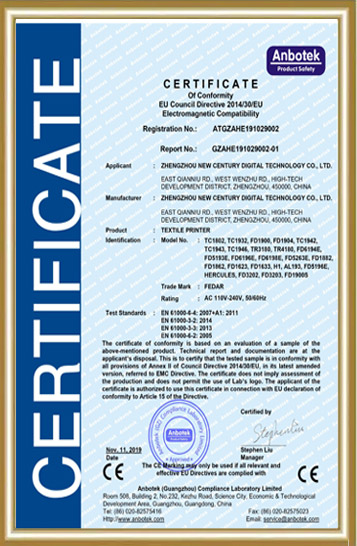
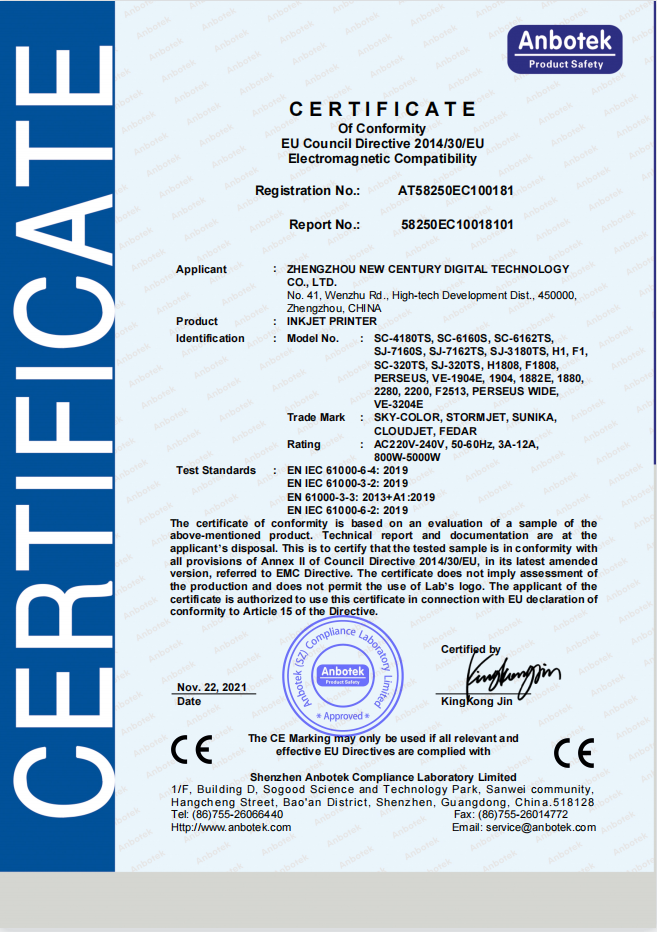
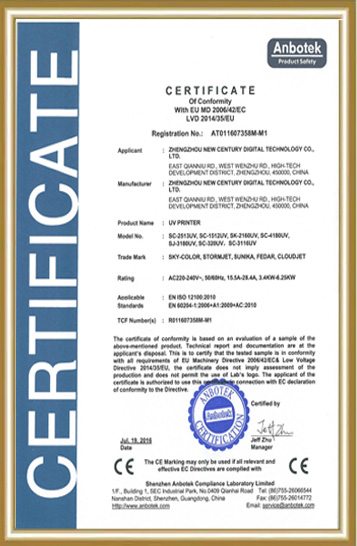
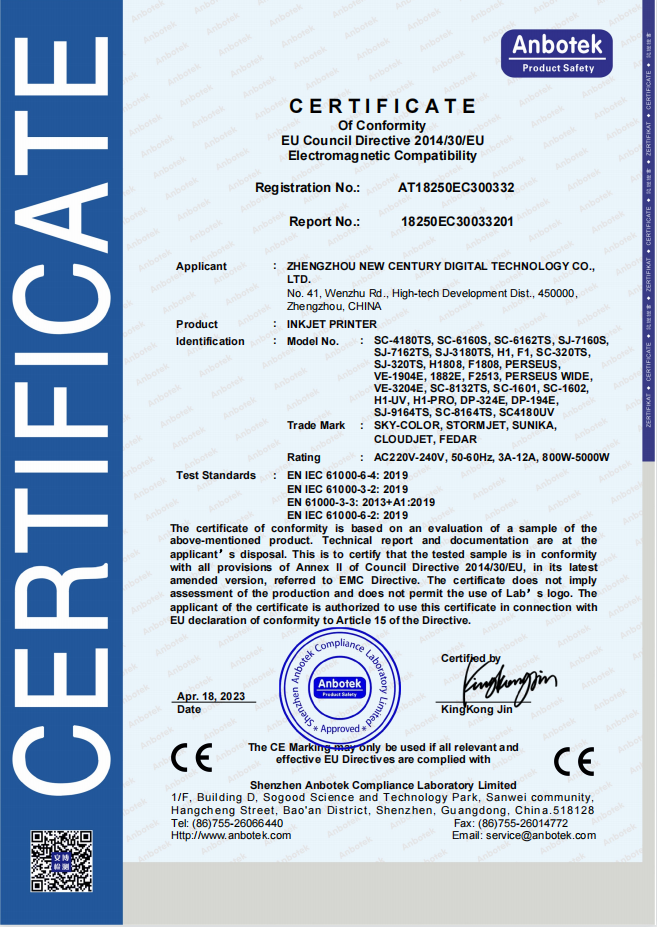
Alex Chen has accumulated extensive R&D and industrialization experience in the digital textile printing field, focusing on the innovation and optimization of digital printing equipment, direct-to-garment (DG) processes, and application solutions. He led the independent R&D and mass production of the company's core textile printing machines and DG printers, promoting their application in the textile, advertising, home furnishing, and personalized customization markets. The equipment he led has passed ISO9000 and CE certifications, earning the trust of a wide range of customers. He continuously provides customers with professional technical support and industry trend analysis, contributing to the upgrading and efficiency improvement of the digital printing industry.
We Look Forward to Your Email
Please send us product information that interests you, and we will provide you with one-on-one service.
_1778203196111.png)
Recommended Blog
 Printing is a Great Addition for Your Business_1781507126513.webp)
Why Direct-to-Film(DTF) Printing is a Great Addition for Your Business

Sublimation Printing: Exploring the Technique, Machines, and Advantages
Understanding the 24 inch DTF Printer: Features, Benefits, and FAQs

What are the maintenance requirements for direct to film printer?
Is the DTF Printer 60cm suitable for small - scale businesses?