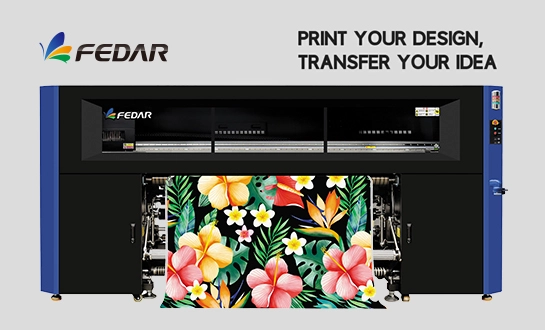
Dye Sublimation Printer Sublimation Transfer Printer: 5 Things to Know for 2026
Dye Sublimation Printer Sublimation Transfer Printer: 5 Things to Know for 2026
Understanding the Core Technologies: Dye Sublimation vs Sublimation Transfer Printing
- Understanding the Core Technologies: Dye Sublimation vs Sublimation Transfer Printing
- Top 5 Considerations When Choosing a Sublimation Printer in 2026
- Comparing Sublimation Printers with Alternative Printing Solutions
- Best Sublimation Printers for Beginners and Small Businesses in 2026
- Procurement Guide: How to Buy Sublimation Printers for Bulk or Enterprise Use
- Conclusion
- FAQ
- Partner with Fedar for Your Sublimation Printing Success
- References
As 2026 draws near, it's important for people who work in cloth printing, sign making, or custom product manufacturing to understand how dye sublimation printer sublimation transfer printer technology is changing. These specialized systems use heat to change inks from solid to gas. The gas then bonds firmly with polyester fibers and polymer-coated surfaces to make pictures that are bright and last a long time. Sublimation embeds color directly into the medium, unlike traditional printing methods that put ink on top of materials. This makes the results wash-resistant and photo-quality. Before buying sublimation equipment this year, procurement managers, plant owners, and people who sell equipment need to read this book. It has five important tips.
Understanding the Core Technologies: Dye Sublimation vs Sublimation Transfer Printing
When planning production, the difference between direct sublimation and transfer sublimation is very important. For direct sublimation, you print on special paper and then use a heat press to move the image to the end material. This two-step process lets you customize different goods without having to keep separate printers for each type of thing.
How the Transfer Process Works
Heat between 180°C and 210°C opens up the holes in the polyester fibers so the color molecules can go deep into the structure of the material. When the cloth cools down, these pores close up, keeping the color inside instead of covering the outside. This chemical connection is what keeps sublimated clothes bright even after being washed hundreds of times without cracking or fading. For the process to work, the temperature and pressure must be precisely controlled and consistent. High-quality equipment automatically controls these factors with measured heating elements and pneumatic pressure systems.
Material Compatibility and Limitations
Items with a polyester content of 60% or more or those that have been coated with a polymer are the only ones that can be sublimated. Material choice is very important because cotton, silk, and other natural fibers don't have the chemical structure needed for color bonding. Because of this, sublimation is mostly used on synthetic sportswear, polyester home linens, and coated, stiff surfaces like ceramic tiles and metal panels. Knowing these lines helps companies that serve a wide range of customers avoid making mistakes that cost a lot of money when fulfilling orders and choose the right printing technology for each line of products.
Comparing Against Alternative Methods
Setting up screen printing for each color split costs a lot of money, so it can't be used for small runs or custom orders. Direct-to-garment printing can be used on cotton, but the layer that you can feel isn't as smooth as the finish that you get with sublimation. On paper, laser printing works well, but on cloth, it can't produce the photographic curves and color depth that sublimation can. Each technology is good at different things, but sublimation comes out when customers want full-color images, flexible output, and very long-lasting results on man-made materials.
Top 5 Considerations When Choosing a Sublimation Printer in 2026
Finding the right equipment means combining a lot of different things that have an effect on how well the equipment works and how much money you make. These things help narrow down the options to systems that fit the needs of operations and growth goals.
Resolution and Print Speed Balance
Industrial dye sublimation printer sublimation transfer printer systems can now handle 3200 DPI sharpness while maintaining exceptionally high production rates. The FEDAR FD3324E can print 1080 square meters per hour in single-pass CMYK mode, featuring 24 Epson i3200-A1 printheads distributed across a 3300mm printing width. This combination resolves the long-standing tradeoff between quality and speed by delivering photorealistic detail without reducing production volume. Buyers should evaluate the types of orders they typically receive. Catalog production that requires moderate detail and high output volumes benefits from faster printing speeds, while high-end fashion applications may require slower operation to achieve the highest levels of sharpness and color accuracy.
Total Cost of Ownership Analysis
The purchase price is only one part of the long-term costs. Patterns of ink use are very different between printhead technologies and ink transport methods. Continuous ink supply systems lower the cost per liter, but they need to be paid for up front by buying large tanks and delivery systems. The quality of the transfer paper affects both how well colors are transferred and how much is wasted. Cheaper paper may seem like a good deal at first, but because it doesn't release well, it can lead to more ink being used and more copies being made. Finding the cost-per-square-meter of all the consumables, repair schedules, and projected equipment lifespans shows the real financial picture, which goes beyond the cost of buying the equipment in the first place.
Brand Reputation and Support Infrastructure
Reliability of equipment, including dye sublimation printer sublimation transfer printer, has a direct effect on how happy dealers' customers are and how consistently end users' products are made. Manufacturers with a history of reliability show their dedication by providing spare parts, good technical documents, and helpful support lines that are quick to respond. Fedar runs a 400-person center for developing and making unique equipment, which makes sure that parts can be tracked and quality is always the same. This level of production depth is important for troubleshooting complicated problems or finding new parts years after the purchase. Third-party assemblers can't do these things as well.
Ecosystem Compatibility Requirements
For sublimation printing to work, the parts must be carefully matched and work together. Printhead technology needs to work with the chemistry of the ink. The Epson i3200-A1 heads in the FEDAR FD61916E and FEDAR FD61915E-A types are designed to work with certain levels of viscosity and droplet sizes. The weight of the transfer paper, the chemistry of the coating, and the way it releases need to be optimized for the best temperature and pressure settings in the heat press. Color management software must use ICC profiles that are set for each ink, paper, and fabric combo to properly translate colors on the screen to printed output. Vendors that offer combined systems or thorough compatibility guides make testing easier and speed up the process of getting uniform results in production.
Environmental and Operational Benefits
Traditional cloth dyeing uses a lot of water. Sublimation gets rid of that need, meeting stricter environmental rules and sustainable standards. There isn't much trash from the process because used transfer paper can often be used for something else, and there aren't any chemical baths that need to be thrown away. Modern printhead technology and better drying systems have made energy economy much better. This has cut down on running costs while still achieving company sustainability goals. As brands expect verifiable environmental credentials from their supply chain partners, these factors become more important in buying choices.
Comparing Sublimation Printers with Alternative Printing Solutions
Figuring out when sublimation works best and when other technologies work better helps businesses make sure that the tools they buy help them reach their goals. This analysis gives useful information for making choices about purchases.
Sublimation vs. Direct-to-Garment Printing
DTG technology puts water-based prints right on the surface of fabrics, which makes it perfect for cotton clothes and patterns that need white base layers. The printed layer is still slightly tacky after drying, and how long it lasts in the wash depends a lot on how well the preparation and curing steps are done. In contrast, a dye sublimation printer sublimation transfer printer uses heat to transfer dye into polyester fibers, allowing the color to become part of the material rather than sitting on top of it. Because the dye lives inside the fiber instead of covering it, sublimation gives better hand-feel, and the color stays vibrant even after a lot of washing without any special care directions. But because sublimation only works with polyester, it limits the clothes that can be used, while DTG can be used on cotton. Companies that serve both types of customers often keep both technologies up to date so they can take advantage of more possibilities.
Heat Press Workflow Considerations
In order to use sublimation, you need a heat press and a dye sublimation printer sublimation transfer printer, which adds a step to the process compared to straight printing. This method, which seems inefficient, actually makes it very flexible—a single printer can print on mugs, mousepads, clothing, signs, and dozens of other items by simply changing the transfer medium and press attachment. The heat press is also a quality control point where workers can look over copies before they are put on for good. This cuts down on waste from printing mistakes. Calendar heat presses can handle ongoing yardage for making a lot of textiles, while clamshell units are better for smaller things and custom orders. This gives businesses the freedom to adjust their operations based on demand.
Industrial Production Scalability
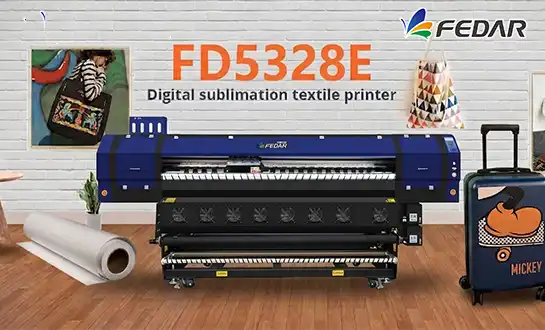
When it comes to production capacity, large-format sublimation systems (e.g., dye sublimation printer sublimation transfer printer) like the FEDAR FD2624E, which has a print width of 2600mm and a throughput of 1000 square meters per hour, are right up there with standard cloth printing methods. Being able to change designs without having to prepare the screen gets rid of the risk of having too many rolls of pre-printed fabric, which makes real on-demand production possible. This feature changes the economy of the supply chain for fashion brands, companies that make home textiles, and companies that make soft signs. Previously, they had to commit to minimum order amounts that were often higher than what was actually needed. Digital sublimation fills the void between one-of-a-kind custom orders and large-scale production runs. It takes advantage of valuable middle-market possibilities that can't be reached with traditional methods.
Best Sublimation Printers for Beginners and Small Businesses in 2026
For new businesses and companies, choosing the right tools at the start can be very important for their long-term success. These suggestions strike a mix between cost and room for growth.
Entry-Level Systems Under $15,000
The FEDAR FD61915E has 15 Epson i3200-A1 printheads spread out over a width of 1900 mm. It can print at 610 square meters per hour at 3200 DPI. This setup gives small production shops enough space while keeping the amount of cash needed reasonable. The single-pass speed can handle the daily order amounts of custom clothing shops, special product shops, and local sign makers without slowing down production. The 1.9-meter width fits most clothing panels and makes it easy to stack several smaller things on top of each other during a print run, which saves material and speeds up the process.
Specialized Applications and Product Diversification
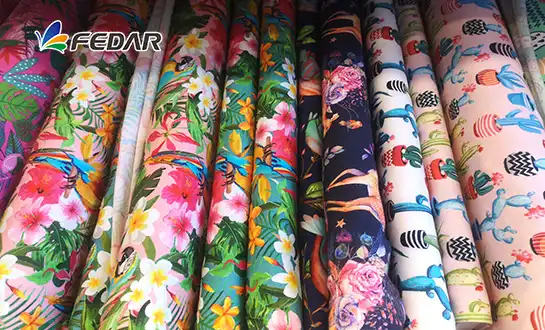
One way for businesses to stand out is to become experts in printing for certain types of products, using a dye sublimation printer sublimation transfer printer. Custom clothing made with sublimation can breathe and come in an infinite number of colors, but it doesn't have the weight and stiffness of layers that are screen-printed. Home decor companies use photo-realistic technology to make personalized curtains, pillow covers, and furniture fabrics that are more cost-effective than traditional methods. Sign shops can make good money by specializing in lighted fabric displays, tension fabric prints, and event branding. Vibrant colors and materials that don't wrinkle are in high demand. Newcomers can better place themselves in these specialized markets if they understand them, instead of just fighting on price in commodity areas.
Growth Path and Upgrade Considerations
Smart choices about equipment take into account both present wants and growth in the future. Moving from 12-head systems like the FD1912S to 15-head systems and then to 16-head systems like the FD61916E lets businesses increase output gradually as the number of orders rises. With widths ranging from 1900mm to 3300mm, you can add more products without having to replace the whole system. This modular approach to growth protects the original investments and makes it easy to improve at the right time for the business's growth stage. Offering this flexibility story to customers is especially helpful for resellers, who can then position equipment as growth partners instead of fixed-capacity purchases.
Procurement Guide: How to Buy Sublimation Printers for Bulk or Enterprise Use
When sourcing a dye sublimation printer sublimation transfer printer, large-scale buys need thorough evaluations and the building of relationships with suppliers. This framework helps big buyers make hard decisions about what to buy.
Volume Pricing and Warranty Negotiations
When you place a lot of orders at once, you can get better prices and longer guarantee terms. When looking at sublimation printer makers to buy more than one, make sure you get thorough cost breakdowns that show how much the tools, training, installation, and ongoing support will cost. The FEDAR FD1924 with 24 printheads is an example of industrial-grade equipment that can save you a lot of money per unit if you buy in bulk. In addition to price, you should arrange a full warranty that covers the repair of the printhead, which is the most expensive part of a sublimation system that wears out the fastest. Service level agreements that spell out reaction times for technical help and parts delivery keep production schedules from being thrown off by unplanned downtime.
Evaluating Authorized Distributors
Authentication problems can be avoided, and proper help access is guaranteed by telling the difference between real maker agents and third-party resellers. Authorized dealers keep in touch directly with tech teams, which speeds up the process of fixing problems and getting firmware changes. They usually keep original replacement parts in stock and hire factory-trained techs who know how to work with certain model designs. Steps in the verification process include asking the maker to confirm the distributor's status, looking over the licenses of the service center, and checking the amount of the parts inventory. This extra work is especially important when buying equipment such as a dye sublimation printer or sublimation transfer printer from another country, where distance and language barriers make after-sales help more difficult.
Technical Specifications Checklist
Business buyers of dye-sublimation printers and sublimation transfer printers need more than just marketing tools; they need detailed specs. Check the type and number of printheads. Epson i3200-A1 heads are the latest version of technology, and they have been shown to be reliable and work with a wide range of inks. Check the highest resolution that can be used, along with the fastest output speeds that are possible at different quality settings. The FD52615E specification, which says that it can handle 685 square meters per hour in single-pass mode, gives an idea of what the real output might be compared to the possible top speeds. Check the specs for handling media, such as the largest roll width that can be used, the core sizes that can be used, and the automatic take-up capacity. These technical details decide how well the equipment works and how much it costs to run and replace parts over its lifetime.
Fedar's Integrated Manufacturing Advantage
There are clear benefits to working directly with sublimation printer makers instead of sellers of assembled equipment. Vertically integrated production at Fedar makes sure that quality control is done at every stage of production, from the parts to the assembly. This lowers the unpredictability that happens in systems that are put together from different parts. Our research team knows a lot about Epson printhead technology. They have made sure that the ink delivery methods they use work best with the i3200-A1 and S3200 printhead families, which are used in all of our products. Different types of printheads with this level of specialization produce more consistent colors, need less upkeep, and last longer than general versions of the same printhead technology.
The technical training classes we offer after the sale cover operation, upkeep, and troubleshooting steps, giving customers the skills to fix common problems on their own. For more complicated issues, our support team can do tests remotely and, if needed, set up service on-site through our global network. When purchasing managers are looking for dye sublimation printer sublimation transfer printer providers, they should connect with companies that see selling equipment as the start of long-term partnerships rather than a transactional goal.
Conclusion
The world of sublimation printing in 2026 is full of amazing possibilities for companies that know what the technology can and can't do. From entry-level systems for new businesses to industrial-width platforms for mass production, choosing the right dye sublimation printer sublimation transfer printer should align with your application requirements, growth objectives, and market positioning strategies. As important as technical requirements are for a successful application, so are factors such as material compatibility, total cost analysis, and supplier support infrastructure. The FEDAR product line shows how careful engineering, which includes using proven Epson printhead technology along with improved ink supply and media handling systems, can make a printer work reliably in a wide range of production settings.
FAQ
What makes dye sublimation printing different from regular inkjet printing?
When you print with an inkjet printer, the wet ink falls to the surface of the material and dries there. In sublimation, heat changes dyes from solid to gas, which goes deep into polyester fibers at the molecular level. As the material cools, the dyes return to solid form. This makes a lasting color fusion instead of a surface coating, which is why sublimation is better at staying vibrant and not washing off. Specialized inks, transfer papers, and heat press tools are needed for the process. This makes it a separate technology and not just an inkjet version.
Can I use sublimation printers on any fabric type?
For sublimation technology to work, the polyester content must be above 60%, or a polymer layer must be applied to other materials. Natural fibers like cotton, flax, and silk don't have the right chemical structure to hold sublimation inks and dyes together. Because of this limitation, sublimation can only be used on synthetic clothing, polyester home textiles, and rigid objects that have been carefully coated. If your market needs natural fiber printing, your business might want to look into mixed methods that combine sublimation with DTG or screen printing.
How often do industrial sublimation printers require maintenance?
Checking the nozzles every day takes about 10 minutes and keeps them from getting clogged, which could stop production. Cleaning rounds that include wiping the printhead and capping station care once a week usually take 30 to 45 minutes. Manufacturers like Fedar suggest deep cleaning the printer once a month to keep the colors accurate and extend their life. Having the right temperature (20–28°C) and humidity (40–60%) in the surroundings lowers the need for upkeep by stopping changes in the viscosity of the ink that cause nozzle problems to happen more quickly.
Partner with Fedar for Your Sublimation Printing Success
Choosing the right dye sublimation printer sublimation transfer printer provider is important for long-term business growth and making money. Our 400-person production plant focuses on developing original equipment, and strict quality control procedures make sure that every unit meets the highest standards. We have stable supply relationships for key components like Epson printheads, which lets us stick to production plans without having to wait for parts to arrive. Our world customer base includes companies that make textiles, signs, and custom products. They trust our tools to work well in a wide range of challenging situations. The full after-sales support team offers professional training, help with fixing problems, and access to original parts to protect your investments in output capacity. Get in touch with us at info@tex-printer.com to talk about your unique needs and find out how our sublimation solutions can help you reach your business goals. Equipment resellers, plant purchasing managers, and studio owners looking for trusted manufacturing partners to help their businesses grow are free to contact us.
References
1. Smith, J. & Chen, L. (2025). Advanced Textile Printing Technologies: Sublimation Processes and Industrial Applications. Textile Manufacturing Press.
2. Rodriguez, M. (2024). "Digital Printing Revolution in Apparel Manufacturing: A Comparative Analysis of Sublimation vs Traditional Methods." Journal of Industrial Textile Production, 18(3), 145-162.
3. Williams, K. (2025). The Complete Guide to Sublimation Printing Equipment: Selection, Operation, and Maintenance. Digital Printing Institute.
4. European Textile Research Association (2024). "Sustainability Assessment of Modern Fabric Printing Technologies." ETRA Technical Report Series, Volume 42.
5. Patterson, R. & Kumar, S. (2025). "Cost-Benefit Analysis Framework for Digital Textile Printing Investment Decisions." International Journal of Production Economics, 31(2), 78-94.
6. Global Sublimation Technology Consortium (2024). Industry Standards and Best Practices for Dye Sublimation Printing Systems. GSTC Publications.

Leo Li
Leo Li is a promoter of small-batch quick response and flexible manufacturing solutions, focusing on short-process printing solutions for e-commerce customization, fast-turn orders, and personalized production. Achievement: Helped customers achieve a "one-piece minimum, same-day shipping" production model, significantly reducing sampling and delivery lead times while lowering overall operating costs.
We Look Forward to Your Email
Please send us product information that interests you, and we will provide you with one-on-one service.
_1778203196111.png)
Recommended Blog
What are the maintenance requirements for direct to film printer?