600mm DTF Transfer Printer for Small and Large Businesses
Understanding 600mm DTF Transfer Printing Technology
- Understanding 600mm DTF Transfer Printing Technology
- Advantages and Best Uses of 600mm DTF Transfer Printers for Businesses
- Operating and Maintaining Your 600mm DTF Transfer Printer Effectively
- Making an Informed Purchase: How to Choose the Right 600mm DTF Transfer Printer
- Future Outlook and Trends in 600mm DTF Transfer Printing for Businesses
- Conclusion
- FAQ
- Partner with Fedar for Reliable DTF Printing Solutions
- References
The 600mm DTF transfer printer has become an important tool for companies that want to find a balance between production capacity and operating size. This Direct-to-Film technology is a middle ground between laptop units and large-scale machines. It lets medium-sized printers serve a wide range of textile and advertising printing markets. Whether you're in charge of a small office or a factory floor, the 600mm width gives you a lot of options without taking up too much room or costing too much.
Understanding 600mm DTF Transfer Printing Technology
Core Principles and Technical Foundation
Direct-to-Film printing is different from screen printing and direct-to-garment printing because it uses a methodical process. The technology writes CMYK and white ink on a special PET release film, which is then covered with hot-melt sticky powder. This method gets rid of the need to pre-treat the cloth and makes it possible to use cotton, polyester, nylon, and mixed materials as substrates, which was not possible with DTG systems before.
The 600mm DTF transfer printer format is what people in the business world call the "sweet spot" width. It works with normal clothing sizes and wastes as little film as possible, which means that material costs are usually 15% lower than with narrower forms. Print shops like this because it makes figuring out the cost per unit for medium-volume runs easier.
Essential Components and Their Functions
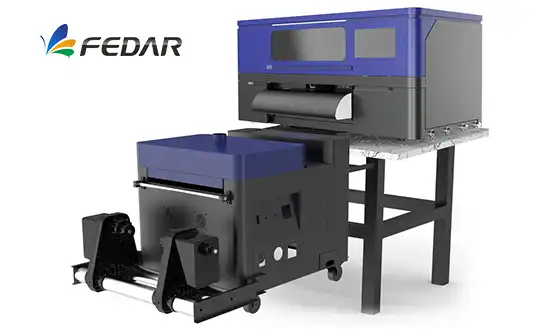
Today's DTF systems are made up of several important parts that work together in sync. Throughput ability is based on the number of printheads used, which can be two, four, or six. Fedar's FD60 type has two Epson i3200-A1 printheads that can print 8 square meters per hour at 3200 DPI. When you turn this up to four times the size, the FD604 can print on 24 square meters per hour with four printheads while keeping the same quality standards.
Titanium dioxide sedimentation is a common reason why nozzles fail on cheap machines. White ink movement systems stop this from happening. Automated powder shaking and drying units make sure that the glue is applied evenly across the whole print width. This stops the uneven transfers that make customers unhappy. Roll-to-roll feeding systems keep the tension constant throughout production runs, which is very important when printing complicated designs with many colors that need to be registered perfectly.
Ink Chemistry and Print Durability
OEKO-TEX-certified water-based pigmented inks have become the standard in the industry. These inks are better for the earth and last longer in industrial washings. When checked against ISO 105-C06 protocols, good DTF transfers usually get Grade 4-5 scores after 50 or more washings. This longevity is the same as or better than screen printing, and it gives photographic precision that mesh-based methods can't match.
When ink formulation and TPU glue powder work together chemically, they make ties that are flexible and can stretch with fabrics that have a lot of give. Performance gear makers really like this trait because it means that transfers stay intact even after repeated stress cycles that would break weaker plastisol treatments.
Advantages and Best Uses of 600mm DTF Transfer Printers for Businesses
Strategic Benefits Across Business Scales
The way 600mm DTF transfer printers work financially is good for both new teams and well-known makers. When compared to screen printing, where short runs make it too expensive to make split negatives and burn screens, setup costs stay low. A small shop that sells advertising items can fill requests for 25 items that would normally have to be outsourced and still make a profit. On the other hand, clothing companies that make 500 units every day benefit from uniform quality without having to do a lot of work to change the screens by hand.
Substrate versatility opens up new ways to make money that used to require buying different tools. The machine that prints bright patterns on dark hoodies can also print on canvas totes, nylon caps, and polyester sports wear with no problems. This flexibility cuts down on capital costs while increasing the number of services available, which is a huge benefit when showing potential clients what you can do.
Here are the core operational advantages driving adoption rates:
- Footprint Efficiency: Compact industrial design fits production settings where floor space is expensive, usually taking up 40% less room than screen printing units with the same capacity.
- Color Accuracy: Delta E values below 2.0 guarantee brand color stability, which is important for business clients and approved merchandise uses.
- Minimal Waste: Digital processes get rid of the problems that come with screen printing when it comes to getting rid of chemicals and recycling them.
- Rapid Turnaround: Production processes of twenty-four hours become normal, not unusual. This makes "no minimum" business models possible, which attracts online sellers.
These advantages collectively address the pain points procurement managers have when they are thinking about buying tools. The technology gives a clear return on investment (ROI) by cutting down on worker costs, material waste, and reaching more customers.
Industry Applications and Market Fit
Textile factories use DTF to make tagless neck labels and complicated logos because the setup costs for screen printing are too high for these jobs. Advertising sign shops have customers who need images that are heat-applied to non-standard surfaces. Businesses that customize gifts use the technology's ability to print digital detail on everything from aprons to pillow covers.
The home linens industry has adopted DTF for accent pieces and decorative pillow covers that need complicated designs. Printed fabric bags with logos and show boxes wrapped in textiles are examples of packaging printing. Digital printing companies keep prices low on short-run orders while still meeting the high standards of quality that demanding customers expect.
Unlike the smaller 300mm units, the 600mm units can handle adult-sized clothes without having to piece together multiple transfers, which is a quality issue that hurts the brand's image. Compared to wide-format 1.2m machines, the middling width requires 60% to 70% less initial investment while still having enough space for businesses to process 200 to 800 units per day.
Operating and Maintaining Your 600mm DTF Transfer Printer Effectively
Daily Operation Protocols
For successful 600mm DTF transfer printer production to go well, external controls are needed, but they are often forgotten during the initial setup. Keeping the relative humidity between 40 and 60% stops static electricity from stopping the film from feeding and makes sure that the powder sticks properly. Stability at temperatures between 20°C and 25°C makes the thickness of the ink ideal for uniform droplet formation.
In the morning, operators should go through the starting steps, which include cleaning the automated heads and visually checking the capping stations. The white ink system needs extra care because it can settle during overnight shutdowns, even with circulation devices in place. By doing test prints before production runs, you can avoid wasting film and find problems before they affect customer orders.
Preventative Maintenance Essentials
Maintenance should be done every day, and it should only take about 10 to 15 minutes. Wiping down the closing station gets rid of the ink buildup that makes the seal less reliable. Tracking mistakes that cause registration issues in multi-pass prints can be avoided by checking the stiffness of the film. Checking the mesh screens on the powder shaker makes sure that the powder is spread out evenly across all transfer sizes.
As part of the weekly jobs, vacuum suction platforms need to be cleaned so that the film stays flat while the wagon moves quickly. Linear rails need to be oiled every month, and the tightness of the belts across the drive system needs to be checked. These regular maintenance tasks make parts last longer and stop expensive breakdowns that make customers lose faith.
Partnering with approved repair shops allows you to get real replacement parts and technicians who have been trained by the manufacturer to protect your investment. Fedar keeps a world support network ready to help clients in other countries who need help quickly. This framework is very helpful for fixing complicated problems that affect the quality of prints or the speed of the system.
Staff Training and Workflow Integration
Technical leaders know that having good equipment doesn't mean much if the people who use it can't operate it properly. Staff can keep up regular output quality with the help of thorough training programs that cover setting up RIP software, managing colors, and fixing problems. By writing down standard working procedures, you build institutional knowledge that stays with the company even after employees leave.
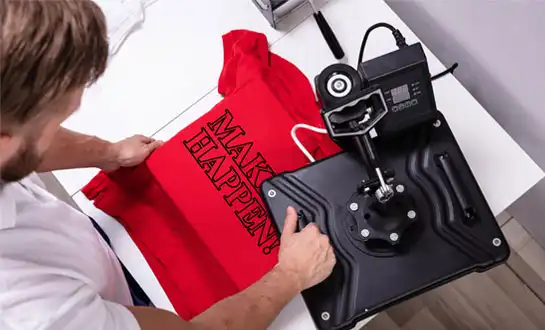
Workflow integration looks at how making DTF fits in with other processes that are already in place. Working together with the heat press makes sure that the transfers are applied correctly at the right temperatures and for the right amount of time. Checkpoints for quality control find problems before they get to customers. This protects the brand's image and keeps remake costs low.
Making an Informed Purchase: How to Choose the Right 600mm DTF Transfer Printer
Critical Evaluation Criteria
Print quality starts with choosing and setting up the 600mm DTF transfer printer. Epson i3200-A1 heads have earned trust in the industry by proving their dependability in harsh production settings. Businesses that make 50 to 150 units per day should use dual-head configurations like Fedar's FD60. On the other hand, manufacturers who need three times as much capacity without sacrificing sharpness should use six-head configurations like the FD606.
The speed of operations has a direct effect on worker prices and delivery times. Knowing how pass count and flow work together helps match tools to the needs of production. Most industrial printing needs six passes at 8 square meters per hour, but configurations that can print 24 square meters per hour are better for high-volume processes.
Energy use affects ongoing running costs that are often not taken into account when planning at the start. Modern DTF systems with LED heating technology use 30% less power than older systems with hot elements. To find the total cost of ownership, you have to add up all the costs of things like ink, film, powder, and repair materials over the expected lifetime of the equipment.
Supplier Selection and Warranty Considerations
The ability to manufacture gives you an idea of how easy it will be to get parts in the future and how good the expert help will be. Fedar runs a plant with 400 workers that focuses on original research and development. This makes sure that there is a steady supply of parts and that products are always getting better. This size supports the infrastructure needed for after-sales service, which is important for keeping downtime to a minimum in foreign installations.
Different sellers offer very different warranty packages. The coverage terms show how confident the maker is in the quality of the build. Comprehensive agreements that protect printheads, give you access to expert help, and speed up the sending of parts explain higher prices by lowering your risk. Before finalizing buy deals, procurement managers should check how to file a warranty claim and how long it usually takes for an answer.
Procurement Channels and Logistical Planning
When compared to multi-tier delivery networks, direct factory sales usually save between 15% and 25% on costs. But well-known sellers offer regional support that is helpful for buyers who don't have their own technical staff. To evaluate this trade-off, you need to be honest about your organization's risk tolerance and what it can do.
When you ship goods internationally, you need to pay close attention to customs paperwork, figuring out duties, and freight insurance. Reliable providers help with these details and make sure the equipment comes ready to be installed. Making sure there is installation help available, whether it's remote direction or on-site commissioning, avoids long rollout delays that delay making money.
Future Outlook and Trends in 600mm DTF Transfer Printing for Businesses
Technological Innovations Reshaping Production
New chemistry for inks that are still being developed offers a wider range of colors than CMYK. Leading makers already offer fluorescent ink choices that can be used for high-visibility applications on safety clothing and in fashion-forward designs. These unique formulations fetch higher prices and create niche market possibilities.
Printhead technology for the 600mm DTF transfer printer keeps getting better, with faster firing rates and higher native images. Next-generation components will meet current quality standards at twice the speed of production, which will completely change the economics of cost per unit. Businesses that plan to keep their equipment for more than one year should look at upgrade paths that protect their initial investments as the equipment's capabilities grow.
Automation coupling is the next big thing for making DTF processes more efficient. Automated systems for adding film, cutting transfers, and getting rid of waste cut down on the amount of work that needs to be done by hand while also making output more consistent. New software with predictive maintenance algorithms lets workers know about problems before they become failures, which cuts down on unplanned downtime.
Sustainability and Regulatory Compliance
Environmental duty used to be a way to set textile supply lines apart from others, but now it's just expected. Designs that use less energy and include heat return systems and LED curing technology lower electricity costs and leave smaller carbon footprints. Water-based ink formulas get rid of the need to handle dangerous chemicals, which makes safety rules and trash disposal easier.
Tough rules, like California's Proposition 65 and the European Union's REACH guidelines, apply to the things that are used to decorate textiles. By choosing equipment that is built around compliant products, you can avoid problems with reformulating in the future and possible limits on your ability to get to markets. When trying to get business clients who care about the environment, forward-thinking makers market sustainability as a buying benefit.
Strategic alignment with these trends ensures equipment investments remain relevant throughout their operational lifespan. When businesses use DTF technology, they can quickly adapt their production to changes in the market. This gives them a competitive edge that is very important in retail settings that are always changing.
Conclusion
The 600mm DTF transfer printer is an important part of modern textile design because it can meet the high standards for production and quality that are needed in competitive markets without taking up as much room or costing as much money. Fedar's engineered options, ranging from the low-cost FD60 to the large FD606, show how careful setup can meet a wide range of business needs. Businesses are set up for long-term growth when they make purchasing choices based on technical knowledge, the ability of the seller, and practical needs. As digital decoration technologies get better, DTF printing will play a bigger role in making clothes, promotional items, and other unique uses. This is because it is flexible and cheap.
FAQ
What distinguishes 600mm DTF from DTG printing systems?
DTF technology prints on release film before applying heat. This lets it be used on polyester, nylon, and fabric mixes that are hard to work with with direct-to-garment methods. In addition to making substrates more compatible, this gets rid of the need for DTG's preparation steps. Print longevity is the same as or better than DTG results, and it works better on dark fabrics.
How do I prevent common white ink clogging problems?
Titanium dioxide doesn't settle between production runs when there are continuous white ink transmission systems for the 600mm DTF transfer printer. Every day, automatic cleaning processes keep the nozzles healthy, and using filtered inks that are recommended by the maker lowers the amount of particulate contamination. Keeping the humidity in the air between 40 and 60% also helps keep clogs to a minimum.
What financing options support DTF equipment acquisition?
Leasing commercial tools spreads out the costs of buying them over 24 to 60 months, which is in line with how much money the business makes. Competitive rates and faster approval processes are available through vendor funding programs through makers like Fedar. Traditional business loans and equipment lines of credit are other ways to get money, based on the needs of the business and its credit history.
Partner with Fedar for Reliable DTF Printing Solutions
Businesses seeking a proven 600mm DTF transfer printer supplier find comprehensive help from Fedar's combined manufacturing and service infrastructure. Our 400-person center has strong quality control over all original equipment development. This makes sure that the FD60, FD604, and FD606 models always work at a level that meets international standards. Customers get better deals from the plant, professional training, and quick help with installation, maintenance, and running the machine after the sale.
Whether you're establishing new production capabilities or scaling existing operations, our team provides tailored guidance matching equipment configurations to your specific workflow requirements. Contact our specialists at info@tex-printer.com to discuss sample output, obtain detailed specifications, and explore partnership opportunities. We support flexible cooperation models serving resellers, factory operators, and studios across global markets—your success drives our commitment to excellence in digital textile decoration technology.
References
1. International Textile and Apparel Association. (2023). "Digital Printing Technologies in Textile Manufacturing: Performance and Market Analysis."
2. Association of Print Technologies. (2024). "Direct-to-Film Transfer Printing: Technical Standards and Quality Benchmarks for Commercial Applications."
3. Johnson, M. & Chen, L. (2023). "Comparative Analysis of Digital Decoration Methods in Apparel Production." Journal of Industrial Textiles, 47(3), 412-438.
4. Global Industry Analysts, Inc. (2024). "Digital Textile Printing Equipment: Market Trends, Technology Developments, and Growth Forecasts 2024-2029."
5. European Committee for Standardization. (2023). "Textile Print Durability Testing Protocols: ISO 105-C06 Compliance Guidelines for Digital Transfer Methods."
6. Smith, R. (2024). "Sustainable Manufacturing Practices in Digital Textile Decoration: Environmental Impact Assessment of DTF Technology." Textile Research Quarterly, 61(2), 189-207.

Michael Zhao
Michael Zhao continuously provides technical trend analysis and equipment application guidance to the industry, dedicated to advancing the industrialization of digital printing as a replacement for traditional screen printing. Achievement: Has published multiple technical analysis articles and provided professional support in equipment selection, process optimization, and fault diagnosis to dozens of printing factories, contributing to the upgrade of the digital printing industry.
We Look Forward to Your Email
Please send us product information that interests you, and we will provide you with one-on-one service.
_1778203196111.png)
Recommended Blog
 Printer Considerations_1779869621127.webp)

Best DTF Printing Machine for Small Business: A Buyer's Guide
What is DTF Printing? A Complete Guide to Direct-to-Film Printing.
 Printing is a Great Addition for Your Business_1781507126513.webp)