The Ultimate Guide to Sublimation Printers
Understanding Sublimation Printing Technology and Core Benefits
- Understanding Sublimation Printing Technology and Core Benefits
- Strategic Equipment Selection for Commercial Operations
- Professional-Grade Equipment: Fedar Sublimation Printer Series
- Maintaining Peak Equipment Performance
- Establishing Reliable Supply Relationships
- Professional Support From Established Manufacturers
- Conclusion
- FAQ
- Partner With Proven Sublimation Printing Experts
- References
When wholesalers and plant owners talk to me about expanding their lines of textiles or promotional items, we always talk about sublimation technology. A sublimation printer is a special kind of digital camera that uses controlled heat to turn solid dye into a gas. The gas then bonds forever with polyester fabrics and polymer-coated materials without ever going through a liquid phase. Cracking, fading, and peeling are problems that come up with regular surface printing methods. This molecular-level merging gets rid of those problems. Working with printing equipment resellers and medium-sized production facilities across North America for years, I've seen how this technology solves problems that have been around for a long time, like the fact that screen printing short runs is too expensive to set up and that textiles can't have photographic gradients. This guide takes those ideas and boils them down so that buying managers, technical directors, and distributor principals can invest in tools with confidence and get a return on their money.
Understanding Sublimation Printing Technology and Core Benefits
The process of dye sublimation is based on a very simple idea that leads to amazing effects. Instead of putting liquid ink on top of materials like regular inkjet printers do, these special printers use sublimation dyes to print on treated transfer paper. When heated in a heat press to temperatures between 180°C and 210°C, the solid dye particles turn into air and get into the molecular structure of polyester fibers or polymer coats.
This one-of-a-kind mechanism makes what I call "zero-feel" prints, which are pictures that are part of the material and don't sit on top of it as a layer that you can touch. This has effects on many fields where old ways of doing things don't work.
Industrial Applications Across Sectors
Sublimation is used in the interior design industry to make lighted tension cloth displays that are commonly seen at trade shows. For these uses, colors need to be very bright even in harsh lighting, and they also need to be very resistant to light. Dye sublimation meets both needs and lets you make things quickly, which is something that standard coloring methods can't do.
When it comes to promotional items, hard substrate uses have been especially useful for customization. Polymer-coated metal panels, ceramic tiles, and hardboard substrates can all take sublimated images with finishes that are scratch-resistant and don't break down in UV light. This is important for outdoor architectural signs and high-quality photography goods.
Quantifiable Business Advantages
Environmental compliance is becoming a bigger factor in purchasing choices. When compared to traditional textile dyeing, waterless dye sublimation methods produce less chemical waste, and many current aqueous-based sublimation inks have OEKO-TEX certifications. These qualifications are important if you want to work with clients who have sustainable requirements or get contracts that need environmental paperwork.
Strategic Equipment Selection for Commercial Operations
Making good procurement choices starts with laying out clear, practical needs. When selecting a sublimation printer, I suggest that technical directors start by putting numbers on three things: daily square meter output goals, maximum substrate width requirements, and the amount of work that needs color gamuts other than standard CMYK.
Critical Performance Specifications
Print sharpness has a direct effect on the quality of the final product and the length at which it can be seen. Continuous-tone photographic quality that can be used for close study in high-end clothing and fine art copies is produced by equipment that can handle 3200 DPI. If your business focuses on big posters that people can see from farther away, 1200 DPI specs might be enough, letting you put your money toward faster printing instead.
Careful consideration should be given to ink transfer methods. When compared to cartridge-based systems, bulk ink configurations greatly lower the cost per milliliter, which becomes a significant factor when production numbers top 200 square meters per month. Compatibility with third-party ink recipes gives you more options for what to buy, but before you commit to non-OEM supplies, I suggest making sure that the printhead guarantees are still valid with the alternative inks.
Operational speed requirements need more information than just raw square meters per hour rates. Single-pass printing from a sublimation printer gives you the most output, but it needs perfect media feeding and weather limits. Multi-pass setups give up speed for better color intensity and more than one nozzle in case one fails. Distributors who work with advertising shops should think about how quickly clients want their orders to be filled versus the higher cost of equipment that allows for a single pass.
Brand Evaluation Framework
Epson, Sawgrass, and Ricoh are well-known brands in the business world, and each has its own unique tech philosophy. Epson's industrial printheads, especially the I3200-A1 line, have set the bar for the industry thanks to their high MTBF ratings and ability to connect to any global service network. Spare parts for equipment made around these printheads are easy to find, which is very important for cross-border marketing operations.
When agency owners are looking at brands, they should ask for specific paperwork, like factory ISO certifications, samples of prints on the substrates they want to use, and detailed after-sales service level agreements that spell out how long it will take for technical support questions to be answered. When these basics are missing, it's often a sign that the seller doesn't have the infrastructure to support business ties beyond the initial sale of tools.
Professional-Grade Equipment: Fedar Sublimation Printer Series
After talking to dozens of printing companies, I've learned that equipment selection problems are usually caused by specs that don't match, not by problems with the product itself. Different methods are needed for different operating scales in the production world.
High-Volume Production Solutions
Eight-head setups are most common for large-format jobs that need to get as much done as possible. This type of printer is best shown by the FEDAR FD7428E, which has a huge 4200mm print area that can handle wide cloth rolls without seaming. Its eight Epson I3200-A1 printheads can print 440 square meters per hour in single-pass CMYK mode. This is a huge amount of work that can be done, and it can completely change the economics of places that make event graphics, outdoor posters, and home textile materials. This speed lets contract printers bid on large orders that would be too much for slower machines to handle.
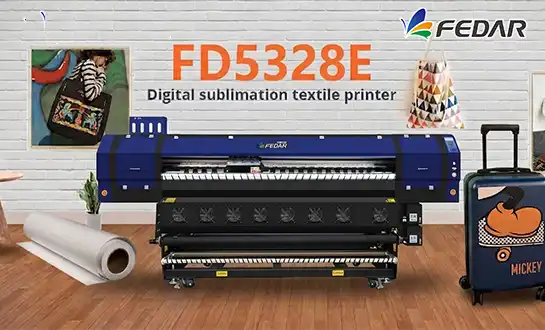
The sublimation printer market includes high-performance models such as the FEDAR FD5328E, which can handle tasks that need 3200mm lengths while still producing 420 square meters per hour. Its 360×1200 DPI resolution strikes a good mix between quality and speed for applications where productivity is more important than fine detail. This design sweet spot works especially well for companies that manufacture soft signage for exhibitions.
Mid-Range Commercial Systems
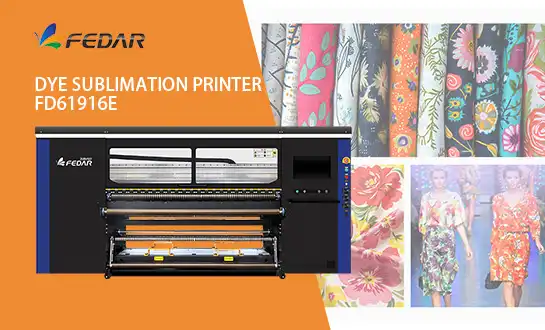
The 1900mm width group serves the largest business market, and where a printer fits in this segment depends on how many printheads it has. The FEDAR FD6198E and its version FD6198E-A both use eight Epson I3200-A1 printheads on 1900mm lengths to print 370 square meters per hour in CMYK plus four extra color channels. This wider color range is useful for clothing artists who need to match specific Pantone standards or make neon-colored images that standard CMYK can't do.
The FEDAR FD5194E is often sold by stores that sell advertising equipment as a starting point for shops that want to switch from personal equipment to business production. Its four-head setup prints 180 square meters an hour in two-pass mode, which is enough for small businesses that serve local customers while still keeping the professional 3200 DPI quality that makes commercial output different from hobbyist prints.
Essential Performance Characteristics
These systems are similar in important ways that meet the needs of both distributors and end users. High durability and wash resistance in sublimation printer systems come from the basic sublimation bonding process, not from different pieces of equipment. However, uniform heat transfer factors make sure that the results are reliable. Precise placement of ink droplets at maximum resolutions leads to vivid full-color output. This makes a continuous-tone picture quality that is on par with traditional photographic methods.
The fact that polyester and polymer-coated materials are limited is both a problem and a chance to focus on the market. Successful wholesalers don't see this as a limitation; instead, they see sublimation as the best way to decorate synthetic fabrics, working with DTG systems that target natural fibers instead of against them.
Maintaining Peak Equipment Performance
Distributors' ability to keep customers and production sites' ability to make money are both directly affected by how reliable their equipment is. Together with the technical leaders, I've come up with maintenance procedures that keep unexpected downtime to a minimum and extend the life of printheads.
Preventive Maintenance Routines
Checking the nozzles every day should become second nature. It should take less than five minutes, but it will save hours of lost time on banded prints. Automated printhead cleaning processes need to be scheduled based on the environment. For example, facilities that work in low-humidity areas need repair more often than climate-controlled production places that keep the relative humidity between 40 and 60%.
Managing ink is more than just refilling the cartridge. Particulate pollution can happen because of bad storage cases or transfer methods in bulk ink systems, so they need to be watched out for. I suggest having separate refill spots with filtered air to keep foreign matter from getting in. When you consider that a single jammed nozzle on an eight-head sublimation printer cuts output by 12.5% until it is fixed, the financial impact is clear.
Common Operational Challenges
When companies don't do ICC profile calibration, they have problems with color stability. These color management files at the program level need to be compatible with a certain printer model, ink type, transfer paper brand, and end substrate. Generic profiles work fine, but custom profiles made with spectrophotometer readings give the color precision that makes higher prices necessary in competitive markets.
When weak copy images show offset from the main graphics, this is called ghosting. It usually means that the transfer paper moved during the heat pressing process. This risk is lower with high-tack sublimation papers, but using the right method is still important. Most ghosting problems can be avoided by teaching people who use heat presses how to use heat-resistant tape to secure the edges of the paper.
When there are a lot of copies to make, accurate media tracking is very important. Substrate skewing over 50-meter lengths can mess up pattern repeats in textile applications or make edges that need to be fixed with trimming. Checking the media tension systems and feed wheel cleaning on a regular basis stops tracking from slowly breaking down.
Establishing Reliable Supply Relationships
There are two main problems that procurement workers have to deal with when sourcing a sublimation printer: finding sellers who really know how to manufacture reliable equipment and making sure that agreements protect the value of their investments. As a consultant for foreign trade sales representatives, I've seen clear patterns that distinguish successful partnerships from unsuccessful ones.
Supplier Verification Criteria
Certifications of production capacity, quality management system accreditations (at least ISO 9001), and proof of R&D capabilities should all be included in factory approval paperwork. A 400-person manufacturing plant with separate engineering teams shows that the company has the means to keep developing new products and quickly fulfilling orders for spare parts. Ask for pictures of the factory that show the production lines, quality control stations, and storage areas for goods. Reliable makers will gladly provide this information.
To judge the quality of a sample, you need to do more than just look at it. Ask for prints to be made on particular substrates, and then test them with wash methods that fit the needs of your customers. If sublimation is done right, fabrics should last 50 wash cycles at 60°C without losing much of their color. This check makes sure that sellers don't use bad ink formulas that make the finished product less durable.
Commercial Terms and Support Infrastructure
Professional sellers can be told apart from common vendors by technical training programs. Color management processes, regular upkeep methods, and advanced troubleshooting diagnostics should all be covered in thorough training. Suppliers who offer approved training for your service workers can help you fix problems faster and keep your customers from having to wait.
There are more benefits to buying in bulk than just lower unit prices. Ask about sale inventory programs, marketing development funds for regional advertising, and co-branded sample kits that help new sellers get customers faster. These parts of a relationship give you a competitive edge that you can't get from just negotiating prices.
Professional Support From Established Manufacturers
Distributors and production sites should work with makers who have a history of success and a full support environment. Fedar runs a 400-person factory that focuses on original R&D and production. Quality control standards have been improved over the years to serve the global markets for cloth printing, advertising signs, and promotional products. Our research team has a lot of experience with inkjet printer technology, which lets them keep adapting to new uses in the business.
When you're looking at sublimation printer suppliers, the security of their core component supply lines will show you how well they can keep their promises to customers when parts run out. Because we have long-term ties with providers of printheads and electronics, we can keep up production even when the market is down. We offer full sample sets, personalized profit structure proposals, and market security policies that help businesses grow over the long term instead of just making quick deals.
Conclusion
Sublimation technology has grown and is now an essential tool for decorating textiles, making promotional items, and producing custom signage. Choosing the right sublimation printer requires careful evaluation because equipment investments can be significant. It is important to assess operational requirements, supplier capabilities, and the availability of long-term technical support. By focusing on measurable performance standards, verifying manufacturer credentials, and building partnerships with responsive service teams, distributors and production facilities can better capitalize on increasing market demand. The decision-making framework outlined here consistently supports successful sublimation printer deployments that deliver lasting competitive advantages. It emphasizes total cost of ownership rather than initial purchase price, the strength of the support ecosystem rather than feature lists alone, and strategic supplier relationships rather than purely transactional purchases.
FAQ
What maintenance frequency keeps sublimation equipment operating reliably?
Most quality problems can be avoided by checking the nozzles every day. It only takes five minutes. Deep cleaning processes once a week and regular calibration checks keep things running at their best. Mid-shift nozzle checking helps facilities with multiple shifts find problems before they affect production.
Why do prints appear dull on transfer paper before heat pressing?
Sublimation dyes stay on transfer paper as uniform crystals and show colors that aren't very bright. The finished look is only bright when heat changes the dye into a gas and links it to the polyester fibers. This is not a problem with the printer; it's just how technology works.
Can sublimation work on natural fiber fabrics?
For direct sublimation to work, the polyester percentage must be higher than 65% for acceptable results. For cotton and other natural fibers to work, they need to be treated with polymers or hybrid sublimation vinyl. Instead of trying to make sublimation work with natural fibers, most businesses keep separate DTG tools for that.
What causes banding defects in sublimation prints?
Banding usually happens when the printer nozzles are jammed, the media feed speed is set incorrectly, or the print height is set incorrectly. Most problems can be avoided by keeping the humidity in the air between 40 and 60% and maintaining the nozzles regularly. Banding that won't go away could mean that the printer is damaged and needs to be fixed by an expert.
How do I select appropriate ink types for different applications?
Most uses for textiles and protected substrates can be covered with standard water sublimation inks. High-transfer inks get the most color out of a single pass, but they cost more per milliliter. Adding fluorescent ink lets you use a wider range of colors for more complex artwork. Instead of looking for general answers, choose ink based on the types of applications you use most.
Partner With Proven Sublimation Printing Experts
To make your distribution business more profitable or to increase your production capabilities, you need to do more than just buy tools. You need to work with manufacturers who understand your business's problems and operational needs. Fedar's expert team has a lot of experience helping advertising shops, printing equipment dealers, and textile factories do business all over the world. Our adaptable business models can work with companies of all sizes, from new distributors testing area demand to well-established companies that need to set up multiple units and make their own service deals. Email us at info@tex-printer.com to talk about your specific needs and get thorough equipment specs, checked sample prints, and clear price structures that will help you plan your business. Our system for after-sales help makes sure that you never have to deal with technical problems on your own, which could hurt your relationships with customers.
References
1. Cohen, Michael R. Industrial Textile Printing: Advanced Technologies and Applications. Textile Institute Publications, 2022.
2. Harrison, Elizabeth, and Thompson, David. "Comparative Analysis of Digital Textile Printing Methods: Quality, Cost, and Environmental Impact." Journal of Industrial Textiles, vol. 51, no. 3, 2023, pp. 412-438.
3. Rodriguez, Patricia. The Complete Guide to Sublimation Printing for Commercial Operations. Digital Printing Press, 2023.
4. Sullivan, James K. "Printhead Technology Evolution in Wide-Format Dye Sublimation Systems." International Journal of Printing Technology, vol. 18, no. 2, 2023, pp. 67-89.
5. Wang, Li, and Patel, Rajesh. Quality Control Standards for Digital Textile Production. Manufacturing Excellence Institute, 2024.
6. Zimmerman, Robert. "Economic Viability Analysis of Sublimation Printing Versus Traditional Textile Decoration Methods." Business of Printing Quarterly, vol. 29, no. 1, 2024, pp. 22-41.

Kevin Zhang
Kevin Zhang is a senior R&D engineer in the digital textile printing field, focusing on the innovation and industrialization of digital printing equipment, direct-to-fabric processes, and application solutions. Achievement: Led the in-house development and mass production of multiple textile printers and direct-to-garment printers, driving their large-scale adoption in textile, advertising, home decor, and customized markets.
We Look Forward to Your Email
Please send us product information that interests you, and we will provide you with one-on-one service.






_1778203196111.png)
Recommended Blog
 Printer Considerations_1779869621127.webp)
Comparision Between Direct-to-Film (DTF) Printing & Sublimation Printing
What Is dye sublimation printer sublimation transfer printer: A Complete Guide