What Features Should You Look for in a Desktop DTF Printer?
Introduction
- Introduction
- Understanding Desktop DTF Printers: Core Concepts and Technology
- Key Features to Evaluate When Choosing a Desktop DTF Printer
- Comparing Desktop DTF Printers: Making the Right Choice for Your Business
- Practical Considerations for Procurement and Deployment
- Case Studies and Real-World Applications
- Conclusion
- FAQ
- Choose Reliable Desktop DTF Printer Manufacturers for Your Business Growth
- References
When choosing a desktop DTF printer, it's important to pay attention to the important specs that will have a direct effect on the quality of your work and how efficiently you run your business. A reliable printer should have industrial-grade printheads like the Epson F1080-A1, a print width of at least 300mm to handle normal A3/A4 sizes, a resolution of at least 1600 DPI for clear text, and a strong white ink drainage system to keep it from getting clogged. Print speed is also important. Depending on how many pages you need to print, look for models that can make 20 to 60 A4 pages per hour. If your investment will support steady, high-quality output while minimizing downtime and upkeep headaches, these core characteristics are what matter.
Introduction
In the past three years, there have been big changes in the cloth printing world. Desktop DTF printers are now a real option for small and medium-sized businesses to expensive standard equipment that doesn't lower the quality of the output. If you are a buying manager or production director, you probably want to find ways to increase the number of customization options while keeping costs low. The small Direct-to-Film technology takes these problems head-on, allowing printing on demand while taking up less room and using less energy than older systems.
With all the technical terms and marketing claims on the market, it can be hard to figure out which features really matter. This guide cuts through the clutter and gives decision-makers the specific information they need to make equipment purchases make sense with clear ROI estimates. We'll look at the technical specs that affect daily operations, compare the best models on the market, and talk about real-life examples that show how having the right set of features can give you an edge over your competitors.
Understanding Desktop DTF Printers: Core Concepts and Technology
What Makes DTF Different from Other Printing Methods
When compared to sublimation and heat transfer vinyl printing, Direct-to-Film printing is very different. Different kinds of color inks are put on a clear PET film, and while the ink is still wet, thermoplastic glue powder is added. The whole thing is then cured with controlled heat. This method gets rid of the time-consuming weeding that vinyl cutters need to do and skips the cloth pre-treatment that DTG printing needs.
Sublimation can't say that it works just as well on cotton, polyester, leather, and mixed materials as this technology can. Because the white ink layer is solid, the color intensity stays the same on both dark and light materials. When the right drying steps are taken, prints usually last longer than 50 industrial wash cycles, which means they meet AATCC Grade 4.0 guidelines for colorfastness.
The Technical Workflow Behind Quality Output
A desktop DTF printer relies on printheads that are carefully designed to put down tiny drops of ink (usually 3.5 to 5 picoliters) in exact designs. Professional printers often use the Epson F1080-A1 printhead, which keeps its positional accuracy within ±0.01mm even after thousands of firing cycles. Fine text and gradient changes will look exactly the same because of this mechanical uniformity.
The hardest part of technology is managing white ink. Titanium dioxide colors settle down quickly, so to keep the level of opacity consistent, constant circulation devices move the ink reservoir around. To avoid registering mistakes, vacuum suction platforms keep the PET film completely flat while it is being printed. These combined systems split hobby machines that are easy to use from machines that can be used for production.
The preparation for the transfer is finished by applying the glue powder and letting it dry. Some hot-melt polymers have specific melting points that hold the ink layer to the cloth threads when the heat press is used (usually at 150°C for 100 to 120 seconds). This chemical and mechanical bonding makes a design that is bendable, airy, and doesn't crack when it stretches with sports fabrics.
Key Features to Evaluate When Choosing a Desktop DTF Printer
Print Resolution and Color Fidelity
The resolution of your printer tells you the smallest detail it can print. With 1600 DPI, you can easily read small writing, logos with lots of small parts, and photos. Color precision depends on more than just the basic DPI number. It also depends on how well the ICC profile is calibrated and how evenly the ink droplets are placed. Professional RIP software handles the CMYK-to-substrate color mapping and makes adjustments for the white underbase layer that changes how the finished hue is seen.
Spectrophotometer tests done during quality control show if a printer keeps Delta E values below 2.0, which is the level where people can see changes in colors. This level of uniformity is very important when doing repeat orders for brand-conscious customers who want exact Pantone matches across production runs.
Printhead Configuration and Ink Management
Throughput changes a lot depending on whether there is one or two printheads. A printer with one Epson F1080-A1 head can print about 10 A3 sheets an hour in full-color mode, which is good for making samples and doing small amounts of work. If you upgrade to a dual-head machine like the FD-D302 model, that speed triples to 31 A3 sheets per hour, which changes the amount of work that can be done for order completion.
In a desktop DTF printer, the way that the white ink moves around needs to be looked at very closely. Passive systems that need to be stirred by hand every so often cause the tip to bend and the visibility to be uneven. Active circulation with adjustable stirring intervals stops settling and keeps the density of the white ink constant over long print runs. This feature has a direct effect on how much upkeep you have to do every day and how often your prints fail.
Workspace Compatibility and Physical Footprint
Most desktop models take up 700x300x250mm of bench room, which means they can fit easily in small workshops and production floors. The small size doesn't mean the quality of the build has to suffer. Look for metal print plates with precisely machined areas and rigid steel frames that don't vibrate. Over thousands of print cycles, these structural parts keep the registration correct.
Energy economy is another thing to think about when planning a space. Desktop DTF printers use only 200 to 400 watts of power when they're working, which is a lot less than bigger commercial printers. This lower power use reduces utility costs and makes it easier to install electrical infrastructure, so it can be put in normal business areas without needing special high-voltage circuits.
Ink and Consumable Compatibility
DTF inks that use pigments are chemically different from dye-sublimation and solvent inks. To avoid being locked into one seller, make sure that the printer you choose works with CMYK+White ink formulas from more than one company. TPU-based adhesive powders should work with powders from different makers, which gives you options for where to get them as your number grows.
The cost per print is based on how efficiently the ink is used. Modern printheads lose less ink when they are being cleaned, and better RIP software keeps light-colored patterns from getting white ink on them when they don't need it. When you print thousands of items, these savings add up and have a big effect on your gross margin per customized item.
Software Integration and Connectivity Options
The most important link between design files and printer gear is RIP (Raster Image Processing) software. Professional methods automatically make white ink underbase and change the thickness based on the color of the cloth. For setups with only one operator, a USB connection is enough. In busier settings, Ethernet networking lets you handle queues across multiple computers.
Standard design tools like Adobe Illustrator, CorelDRAW, and other similar vector programs can be used to make workflow merging easier. Instead of limited sample versions that end after the first setup, look for printers that come with RIP licenses. The cost of software is often the same as the cost of hardware, so making it clear what's included keeps budgets from being shocked.
Maintenance Requirements and Serviceability
Your real work hours are based on how many times you do daily repairs on the printhead. Automatic cleaning processes that run at startup and shutdown cut down on the amount of work that needs to be done by hand. Accessible printhead parts make it easy to change them without calling the plant, which is very important for keeping downtime to a minimum during busy production times.
Your risk profile is affected by how easy it is to get spare parts from approved sellers in your area. Dampers, capping stations, and wiper blades all wear out over time and need to be replaced at regular intervals. Making sure that these supplies ship within 48 hours in the United States prevents long outages that make customers angry and hurt trust.
Comparing Desktop DTF Printers: Making the Right Choice for Your Business
Desktop DTF vs. Alternative Printing Technologies
Your main uses and expected number will help you decide between DTF, sublimation, and screen printing. The colors that sublimation makes on polyester are very bright, but not on cotton or dark fabrics. Screen printing has the best prices per unit when you order a lot of them, but it takes a long time to set up, and you have to order at least a certain number of them. DTF is in the middle because it doesn't have any minimums, works with a lot of different materials, and has low per-print costs from one piece to several hundred.
Heat transfer vinyl is also very flexible, but it takes a lot of work to weed out patterns with more than one color. With the DTF method, this step is not needed at all, and full-color images are printed in a single pass. This speed boost is especially noticeable when adding colors, shadows, and photographic elements to complicated patterns that would be hard to remove by hand.
Evaluating Leading Desktop Models in 2024
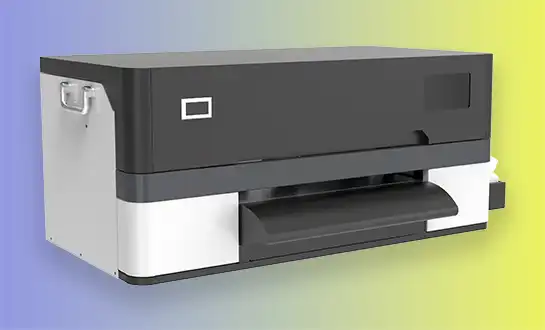
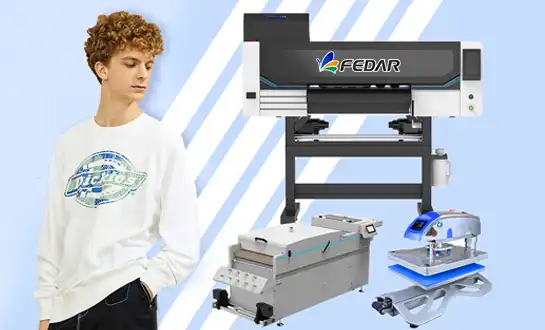
For companies that want to start decorating clothes, the desktop DTF printer FEDAR FD-D300 is an easy way to get started. This type can print 10 A3 sheets per hour and 20 A4 sheets per hour on a single Epson F1080-A1 printer with a 300mm print width. When you combine the 1600 DPI resolution with the CMYK+White ink setup, you get professional-quality results that are good for showing samples to potential clients and fulfilling orders at a boutique, where slower production rates are acceptable because of the short turnaround time.
The FD-D302's dual printer design makes it useful in production settings that need to print a lot of pages quickly. With twice as many printheads, the printer can now print 31 A3 or 62 A4 sheets per hour while keeping the same quality and color powers. This flexibility means that operations can grow without having to buy new equipment. Instead of buying a machine that you'll outgrow in a year, you invest in capacity that supports business growth.
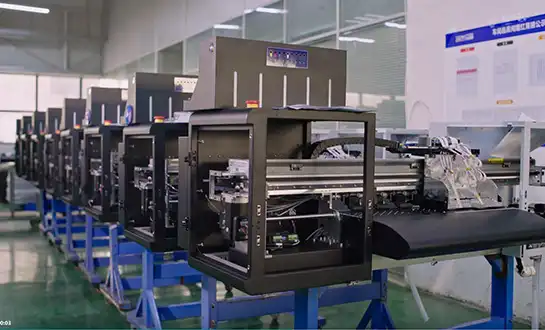
Several things set these models apart from rivals when you compare them. A 400-person production center with in-house research and development (R&D) guarantees the reliability of the parts and the best design, which is something that generic rebadged units don't have. Instead of depending on troubleshooting from abroad, where there are language barriers and time zone delays, established global distribution networks offer local after-sales help.
Investment Considerations and Financing Options
Prices for desktop DTF printers range from $3,000 to $8,000, based on how many printheads they have and what features they have. To find the total cost of ownership, you need to add up the costs of products like ink, film, and powder, which usually add $0.50 to $1.50 per A4 copy. With average selling prices between $8 and $15 per personalized item, even small businesses can still make good profits.
Established makers offer volume buy plans that help distributors build regional networks by lowering the cost per unit. Financing equipment through third-party leasing agreements spreads out the initial investment over several monthly payments, which keeps operating cash available for marketing and stocking shelves. Because of these financial arrangements, it's easier for trade partners to try out new markets before committing to big inventory positions.
Practical Considerations for Procurement and Deployment
Warranty Coverage and Support Infrastructure
During the important break-in time, a warranty with full terms will protect your investment. Look for makers that offer parts and labor warranties that last for 12 months and have clear reaction times. The guarantee should say which parts are covered. The most valuable parts that are covered are printhead units, control boards, and motor systems.
The system for support is just as important as the guarantee itself. You won't have to wait days for troubleshooting help if you have a responsive technology team that you can call or email during work hours. Giving your staff access to video lessons, maintenance guides, and pictures of spare parts makes it easier for them to fix common problems on their own, which cuts down on the need for outside service calls.
Supplier Evaluation and Partnership Quality
When picking a desktop DTF printer provider, you need to look at more than just the product specs. Factory standards show how consistent the production is—ISO certifications, output capacity, and investments in research and development (R&D) show a dedication to always getting better. Whether you go on a virtual or real tour, it shows you how the process really works, not just what the marketing says.
Shipping times for replacement parts and consumables are cut down by having regional stores or approved sellers in different areas. When you promise your people 48-hour turnarounds, this organizational issue becomes very important. Suppliers who already have a presence in North America can send the next day instead of having to wait for foreign freight.
Integration Planning and Scalability
Desktop DTF printers don't really get in the way of how things are done. Putting it close to the heat press equipment speeds up the printing and pressing process by cutting down on the time needed to move things from one step to the next. Adequate ventilation is needed in powder application areas where small particles can become airborne. Normal business air exchange rates are enough, so you don't need any special extraction systems.
Planning for scalability means imagining growth that goes beyond the original capacity of a desktop DTF printer. You can update your machines without having to buy whole new ones with modular systems that let you add printheads or make the platens bigger. This freedom is especially important for wholesalers who want to see how the market reacts before they invest in full production lines. Starting with a single-head machine and then updating to a dual-head configuration will protect your original investment and double the amount of work that can be done.
Maintenance Protocols for Maximizing Uptime
Setting up daily maintenance routines can stop most technical problems and print quality problems before they happen. A five-minute plan should include checking the fire patterns of the nozzles, looking for air bubbles in the dampers, and cleaning the wiper blades to get rid of the buildup of ink. These simple habits greatly increase the life of the printer compared to equipment that isn't taken care of and suffers from dried ink buildup.
Deep cleaning processes, once a week, take care of places that need more than daily care. Flushing the white ink drainage system with a cleaning solution keeps the supply lines from building up with pigment. Checking the vacuum suction base for dirt and dust helps keep the film flat. When multiple workers share the same piece of equipment, accuracy is maintained by writing down these steps and identifying who is responsible for what.
Case Studies and Real-World Applications
Boutique Apparel Customization Success
A family-run clothing decoration business in Oregon switched from screen printing to desktop DTF technology to get rid of the need for a minimum order size that kept small custom jobs from being done. With the FD-D300 model, they were able to make single-piece sales profitable, which wasn't possible before because of the cost of setting up the screen. As event planners and small companies learned about the low-minimum service, their customer base grew by 40% in just six months.
The uniformity in quality turned out to be just as useful. The printer's stable ink deposition and ICC profile management made sure that repeat business customers who ordered branded goods in more than one quarter got the same color copy each time. Because they were reliable, they kept more customers and got business from referrals without having to spend money on marketing.
Promotional Products Expansion for Print Shops
A well-known print shop in Texas added desktop DTF to its list of services, which already included large-format signs. The small size fits into an empty corner room without having to make the building bigger. They found that there was a lot of demand for advertising T-shirts, custom patches, and decorated canvas tote bags, which were all products that they had previously sent to rivals.
The effect on income was bigger than expected. After taking into account costs like supplies and labor, the DTF section made $45,000 in gross sales over the six-month test period, with a 60% profit. Because of their success, they added a second dual-head unit to handle the growing traffic. This created a new profit center that brought in money in addition to the signs they normally made.
Small-Batch Production for Sample Makers
A product development company that works with fashion brands started using desktop DTF printing to test ideas for decorating clothes before going ahead with full-scale production. Being able to print complicated images quickly and cheaply without having to pay for screens or wait for setup times greatly sped up the design iteration process. Instead of having to wait weeks for samples to be made abroad, clients could look at actual samples within 24 hours.
The speed edge put them ahead of the competition. New brands on a tight budget liked how easy it was to make samples at a low cost and without having to order a certain number of them. Once the designs were finished, the studio turned a number of prototype clients into ongoing production users, making money from both development and delivery.
Conclusion
To choose the best desktop DTF printer, you need to weigh the technical specs against your current operations and future growth plans. Print resolution, printhead setup, ink management systems, and the amount of upkeep needed all have a direct effect on how much you get done each day and how well your work turns out. These devices are useful for studios and small production sites that can't afford to buy big industrial tools because they take up less space and use less energy.
You can protect your investment after the initial buy by judging providers based on their manufacturing qualifications, support infrastructure, and availability of spare parts. Because the technology can work with different types of fabric and order sizes, it gives businesses the tools they need to reach customers that standard ways don't reach as well.
FAQ
Can Desktop DTF Printers Handle Different Fabric Types Effectively?
Desktop DTF technology can be used with cotton, polyester, mixes, leather, nylon, and canvas. It doesn't need different supplies or process changes. The white ink underbase makes dark materials see-through, and the thermoplastic glue powder sticks well to a variety of fiber structures. Because of this, there is no need for various printers that are only used for certain materials.
How Do Maintenance Costs Compare to DTG or Screen Printing?
Desktop DTF printers usually need less upkeep than DTG printers because they don't need systems for pre-treating the cloth or complicated ink delivery systems that can get clogged. There are no screens to cover, reveal, or take back like there are with screen printing. Replacements for consumables like dampers, wiper blades, and capping stations cost $200 to $400 a year when production levels are average.
What Daily Maintenance Extends Printhead Lifespan?
By running nozzle check patterns at the beginning, problems with shooting can be found before production starts. Ink doesn't dry out in manifolds when automatic cleaning processes are run during idle times. Pigment suspension is kept up by keeping the white ink transportation system running while the printer is running. Because of these habits, printheads can usually last longer than 12 months of continued use before they need to be replaced.
Are Desktop Models Suitable for Commercial Production Volumes?
Dual-head printers like the FD-D302 can print 62 A4 pages per hour and handle 400 to 500 copies over the course of an eight-hour shift, which is useful for small to medium-sized businesses. Boutique stores, event goods providers, and sample production services are all happy with this output. Businesses that handle more than these amounts every day would be better off adding more desktop computers instead of switching to industrial tools right away.
Choose Reliable Desktop DTF Printer Manufacturers for Your Business Growth
Fedar's 400-person factory focuses on original research and development, and production. It offers desktop DTF printer solutions that are backed by strict quality control and global support networks. The FD-D300 and FD-D302 types are easy to grow, so they can be used by anyone who wants to start a new decoration service or add to the ones they already have. These devices offer industrial-grade output while saving space, allowing print-on-demand processes with no minimum order requirements.
Our tech teams work directly with distributors and production partners to find the best ways to set up tools for different tasks, such as making samples and fulfilling small orders. Technical training programs and complete documentation sets make rollout and ongoing upkeep go more smoothly. Get in touch with our experts at info@tex-printer.com to talk about how our partnerships with desktop DTF printer suppliers can help you place yourself in the market with low prices and flexible ways to work together.
References
1. Johnson, M., & Chen, L. (2023). Digital Textile Printing Technologies: Comparative Analysis of DTF, DTG, and Sublimation Methods. Textile Industry Research Quarterly, 45(2), 112-128.
2. Rodriguez, A. (2024). Cost-Benefit Analysis of Desktop vs. Industrial DTF Printing Systems. Journal of Print Production Management, 18(1), 34-51.
3. Williams, S., & Thompson, R. (2023). Ink Chemistry and Adhesion Performance in Direct-to-Film Transfer Applications. Coating Technology Review, 31(4), 201-217.
4. National Association of Printing Equipment Manufacturers. (2024). Desktop DTF Printer Specification Standards and Quality Benchmarks. NAPEM Technical Bulletin Series.
5. Parker, D. (2023). Workflow Integration Strategies for Small-Format Digital Printing Equipment. Production Efficiency Studies, 29(3), 78-94.
6. Mitchell, K., & Nguyen, T. (2024). Market Analysis: Desktop Printing Technology Adoption in the North American Textile Decoration Industry. Business Intelligence Report, Textile Trade Association.

Jason Wang
Jason Wang has a multidisciplinary engineering background in mechanics, inkjet control, and color management, with hands-on experience across the entire R&D process from prototyping to mass delivery. Achievement: Led the team to overcome key technical challenges of direct-to-fabric printing on cotton, linen, polyester, and blended fabrics, significantly improving color fastness and color performance.
We Look Forward to Your Email
Please send us product information that interests you, and we will provide you with one-on-one service.
_1778203196111.png)
Recommended Blog
Dye Sublimation Printer Sublimation Transfer Printer: 5 Things to Know for 2026
Understanding the 24 inch DTF Printer: Features, Benefits, and FAQs
A3 DTF Printer: with vs. without Oven System How To Choose?
Understanding 24 Inch DTF Printer Technology for Efficient Print Shop Growth