600mm DTF Transfer Printer Enables Faster Gang Sheet Production for Apparel Businesses
600mm DTF Transfer Printer Enables Faster Gang Sheet Production for Apparel Businesses
Understanding the 600mm DTF Printing Process
- Understanding the 600mm DTF Printing Process
- Fedar's 600mm DTF Printer Models: A Closer Look
- Comparing 600mm DTF Against Alternative Printing Technologies
- Maintenance and Troubleshooting Best Practices
- Making Informed Procurement Decisions
- Environmental and Operational Impact
- Conclusion
- FAQ
- Ready to Scale Your Apparel Output? Talk to Fedar
- References
If you run an apparel printing operation and you're still toggling between desktop units and oversized wide-format machines, a 600mm DTF transfer printer may be exactly the equipment gap you've been searching for. This 24-inch direct-to-film solution sits at the productive midpoint of the DTF spectrum — wide enough to maximize gang sheet yield on standard T-shirt graphics, yet compact enough to fit a mid-scale production floor without a full facility overhaul. In this article, I'll walk through how this technology works, how it compares to alternatives, and why it's gaining serious traction among apparel manufacturers and equipment distributors across the U.S. market.
Understanding the 600mm DTF Printing Process
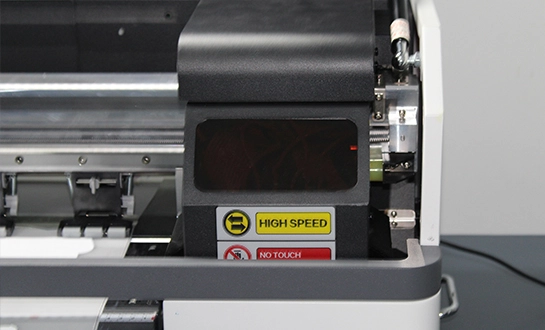
source: FEDAR PRINRTER
How the Workflow Actually Functions
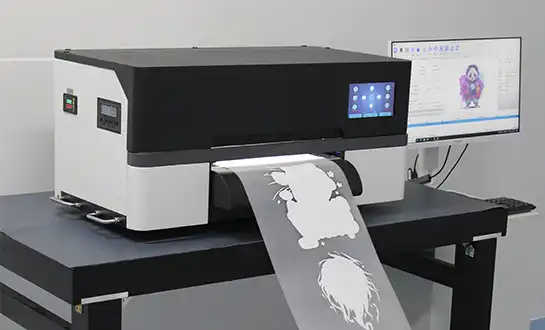
The direct-to-film method has five steps, which are: preparing the digital design; depositing CMYK+White ink onto PET release film; applying hot-melt adhesive powder; curing in infrared light; and finally heating the target material. The roll-to-roll feeding mechanism of the 600mm format makes it very efficient. It allows continuous film advancement without operator interruption, which is a key throughput advantage during gang sheet runs.
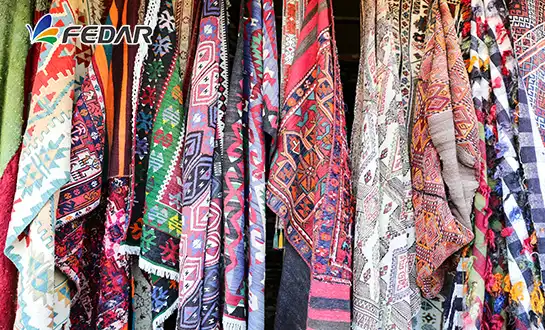
DTG printing needs to treat the fabric first and can only be used on cotton-dominant mixes. DTF transfers, on the other hand, stick to cotton, polyester, nylon, canvas, and performance stretch fabrics. The thin TPU layer moves with the material, which makes it especially reliable for sportswear and high-elasticity pieces that often crack when put under stress with other transfer methods.
Titanium dioxide sedimentation is one of the main reasons why nozzles get clogged in pigment-based film printing. A well-calibrated white ink circulation system stops this from happening, and all of Fedar's 600mm DTF transfer printers come with this feature.
Fedar's 600mm DTF Printer Models: A Closer Look
Fedar's engineering team has come up with three different 600mm configurations, each aimed at a different level of production volume. These are the main types that you should look at:
| Specification | FEDAR FD60 | FEDAR FD604 |
|---|---|---|
| Printhead Quantity | 2 × Epson i3200-A1 | 4 × Epson i3200-A1 |
| Print Width | 600mm | 600mm |
| Print Colors | CMYK + White | CMYK + White |
| Max Resolution | 3200 DPI | 3200 DPI |
| Max Speed (6-Pass) | 8 m²/h | 24 m²/h |
| Configuration | Dual-head | Four-head |
The FD60 is the first step for shops that want to switch from A3 desktops. It has two heads that can work together to produce up to 8 m²/h in 6-pass mode, which is enough for small-batch customization orders, boutique runs, and sample production. The FD604 has four printheads, which triples that speed and lets it reach 24 m²/h while keeping the same 600mm footprint and 3200 DPI resolution limit.
Fedar also makes the FD606, a six-head model that can match the FD604's 24 m²/h speed limit and is more stable during long production runs, for businesses that need to keep producing a lot of things without upgrading to a 1.2-meter machine. All three types have the same features, such as automatic powder shaking and curing, roll-to-roll media handling, and a small industrial chassis made for easy placement on the floor.
These setups really give dealers and plant owners options. Starting with the FD60, a print shop can grow without switching platforms because the learning curve, ink chemistry, and maintenance procedures are all the same for all models.
Comparing 600mm DTF Against Alternative Printing Technologies
Where the 600mm Format Wins
Screen printing is still a good way to save money on large orders of a single design, but it can't be used for short to medium runs with multiple pictures because it costs too much to set up. DTG works well for printing on-demand on cotton, but not so well for polyester-heavy substrates, and it doesn't have a good way to work with gang sheets. While a 1200mm DTF printer has a better throughput, it also needs a lot more floor room, costs more, and uses more ink per cycle.
The 600mm DTF transfer printer is placed in the middle on purpose. It makes high-opacity white copies that work consistently on dark fabrics, which is always a problem with DTG. It also uses less energy and wastes less media than wide-format options. According to a study released in the Journal of Imaging Science and Technology in 2022, narrower-format digital textile systems produce up to 15% less media waste than their wide-format peers when they are set up to print on standard clothing sizes.
| Technology | Substrate Range | Setup Time | Gang Sheet Support | Suitable Run Length |
|---|---|---|---|---|
| 600mm DTF | Cotton, Poly, Nylon, Blends | Low | Yes | Short to Medium |
| DTG | Cotton-dominant | Medium | Limited | On-demand |
| Screen Printing | Most fabrics | High | No | Long runs only |
| 1200mm DTF | Cotton, Poly, Nylon, Blends | Low | Yes | Medium to High |
This comparison makes it clear where the 600mm format gives businesses that handle different types of orders the best return on their investment.
Maintenance and Troubleshooting Best Practices
Keeping Your Machine Running Clean
It takes about 10 to 15 minutes a day to do routine maintenance on a DTF device. Most preventative maintenance is taken care of by the automatic head-cleaning cycle. However, the capping station can be wiped clean by hand to get rid of any leftover ink before it hardens. Because it has more titanium dioxide pigment, white ink needs more care than CMYK channels. Fedar's models have a built-in circulation system that keeps the pigment suspended and greatly lowers the amount of work that needs to be done by hand.
Print inconsistencies are usually caused by three things: a partially blocked nozzle, changes in humidity outside the 40–60% operating range, or a powder curing temperature that is not set correctly. If the oven for curing isn't set to the goal 150°C band across the whole 600mm width, transfers might look oily or fail sticking tests. Fedar's technical support team offers online calibration help and extra parts delivery as standard. This cuts down on downtime for wholesalers who are in charge of end-customer accounts.
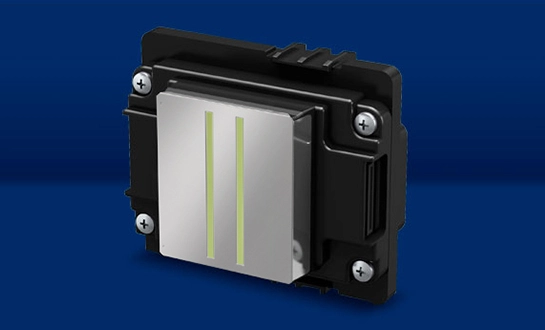
With regular upkeep and the right way to filter the ink, Epson i3200-A1 printheads should last between 12 and 24 months. This is a number that has been confirmed by independent tests in a number of different types of 600mm DTF transfer printers.
Making Informed Procurement Decisions
When purchasing DTF equipment, purchasing managers should think about five useful factors: the rated print speed compared to the actual production demand, the resolution compared to the type of graphics needed, the substrate range compared to the customers, the energy draw compared to the facility's capacity, and the speed of response after the sale.
Fedar runs a business with 400 workers that is only for original research and development. That level of in-house manufacturing means a steady flow of parts, which is very important for wholesalers who can't wait weeks for new parts. The company lets approved dealers and resellers buy directly from them, buy in bulk, and work with them in a variety of ways.
Fedar offers export packaging, help with customs paperwork, and a dedicated after-sales team for buyers across borders. This fills in the support gaps that often make agents less confident when working with overseas 600mm DTF transfer printer suppliers.
Environmental and Operational Impact
DTF printing uses water-based pigmented inks, and the best suppliers certify their formulations to OEKO-TEX standards. This is a big deal for clothing companies that want to sell their products in countries with strict chemical rules. When compared to screen printing with plastisol, water-based DTF ink systems greatly lower the amount of volatile organic compounds that are produced.
Gang sheet optimization on a 600mm film roll cuts down on the amount of blank media between images, which means less ink is used per copy and lower material costs per unit. Auto powder shaking makes sure that the adhesive covers evenly without having to be applied again by hand, which cuts down on both labor costs and powder waste. The total cost of ownership will go down even more as the 600mm DTF transfer printer technology continues to develop. This is because better head longevity, ink pigment stability, and substrate binding chemistry should all make tools last longer and cost less to run.
Conclusion
For clothing companies that want to use more than laptop printers but don't want to spend as much on industrial wide-format systems yet, the 600mm DTF format fills a real production gap. Fedar's FD60, FD604, and FD606 models offer a smooth upgrade path, from two-head initial capacity to six-head sustained throughput, all in a small, easy-to-maintain platform. This 600mm DTF transfer printer format provides a good mix of output, cost, and flexibility for wholesalers, studio owners, and factory purchasing teams looking to buy their next piece of equipment.
FAQ
What daily maintenance does a 600mm DTF printer require?
The basic process, which includes running the automatic head-cleaning loop and wiping down the capping station by hand, takes about 10 to 15 minutes. The white ink circulation system takes care of pigment suspension automatically, which cuts down on the most time-consuming physical job in regular 600mm DTF transfer printer maintenance.
Can these printers handle fluorescent or specialty inks?
Many 600mm models have more ink channels for fluorescent yellow, pink, green, and orange. This is helpful for making high-visibility clothes and trendy promotional items.
How does humidity affect print output?
At both ends of the 40–60% relative humidity range, working outside of that range causes problems. Low humidity makes PET film sticky, and high humidity makes it harder for powder to stick. The most reliable results come from a print room with temperature control.
How long do the Epson i3200-A1 printheads last?
If you keep the heads in good shape and use quality-filtered inks, they should last between 12 and 24 months in a 600mm DTF transfer printer industrial setting.
Are the inks environmentally compliant for export markets?
Reliable DTF ink systems use water-based pigments that are OEKO-TEX certified and biodegradable TPU powders. These meet the current standards for textile export compliance in the world's biggest markets.
Ready to Scale Your Apparel Output? Talk to Fedar
Fedar backs up every 600mm DTF transfer printer with a 400-person R&D and manufacturing team, a steady supply of core parts, and a support team that works with customers all over the world after the sale. Our team offers checked print examples, technical training, and open ways to work together, whether you're a wholesaler looking for a reliable 600mm DTF transfer printer provider or a factory owner comparing setups. Reach out directly at info@tex-printer.com or visit blog.tex-printer.com to request specifications and agent pricing.
References
1. Journal of Imaging Science and Technology — "Media Efficiency in Narrow-Format Digital Textile Printing Systems," 2022.
2. Textile World — "Direct-to-Film Technology: Market Adoption and Production Benchmarks," 2023.
3. Impressions Magazine — "Gang Sheet Workflow Optimization for Decorated Apparel Shops," 2023.
4. Screen Printing Magazine — "Comparing DTF, DTG, and Screen Printing for Short-Run Apparel Decoration," 2022.
5. Printwear & Promotion — "Epson i3200 Printhead Performance in Industrial DTF Applications," 2023.
6. AATCC Journal of Research — "Wash Fastness Standards and Adhesion Testing for Heat-Transfer Textile Decoration," 2021.
Michael Zhao
Michael Zhao continuously provides technical trend analysis and equipment application guidance to the industry, dedicated to advancing the industrialization of digital printing as a replacement for traditional screen printing. Achievement: Has published multiple technical analysis articles and provided professional support in equipment selection, process optimization, and fault diagnosis to dozens of printing factories, contributing to the upgrade of the digital printing industry.
We Look Forward to Your Email
Please send us product information that interests you, and we will provide you with one-on-one service.
_1778203196111.png)
Recommended Blog
Sublimation Printing: Exploring the Technique, Machines, and Advantages
_1785483129054.webp)