Can a DTF PET Film Printer Handle Sportswear and Small Batch Textile Orders?
Can a DTF PET Film Printer Handle Sportswear and Small Batch Textile Orders?
Understanding DTF PET Film Printer Technology and Its Role in Textile Printing
- Understanding DTF PET Film Printer Technology and Its Role in Textile Printing
- Evaluating the Suitability for Sportswear and Small Batch Orders
- DTF PET Film Printer vs. Alternative Printing Solutions: Making the Right Choice
- Procurement Insights: Where and How to Acquire Your Ideal DTF PET Film Printer?
- Maximizing Returns: Best Practices for Operating a DTF Transfer System
- Conclusion
- FAQ
- Partner with Fedar — Your Trusted DTF PET Film Printer Supplier
- References
Yes — a DTF PET film printer handles sportswear and small batch textile orders exceptionally well. This technology prints CMYK + White pigment ink onto a release-coated PET film, then heat-transfers the design onto fabric. Unlike DTG printing, it requires no fabric pre-treatment. It bonds cleanly to polyester, cotton, nylon, and blended activewear fabrics, maintaining elasticity and wash durability. For small batch runs with no minimum order quantity, the setup speed and low waste make direct-to-film transfer an operationally sound choice for studios, distributors, and procurement teams evaluating scalable garment decoration solutions.
Understanding DTF PET Film Printer Technology and Its Role in Textile Printing
source: FEDAR PRINRTER
How the Transfer Process Works?
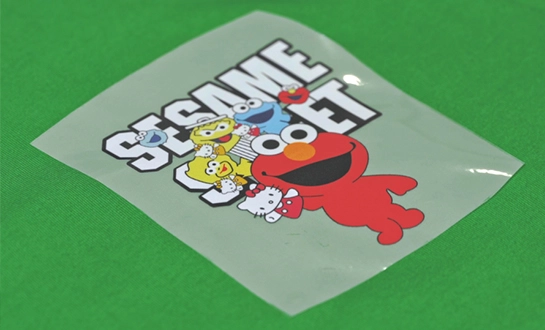
With the DTF PET film printer process, printing and application are not tied together. Pigment ink is jetted onto coated PET film by the machine. A white underbase layer is then added, and TPU adhesive powder is used. The powder cures in a drying tube at 110°C to 150°C, and the finished transfer is heat-pressed onto the clothing. With this stepwise process, transfers can be made ahead of time, stored, and then used as needed, which is a big practical benefit over screen printing or embroidery.
Why PET Film Matters for Fabric Compatibility?
The release coating on the PET carrier film stops feathering and controls how much ink spreads. It is possible to get accurate color with ΔE values below 2.0 when you use good pigment inks and properly calibrated RIP software. This is a professional standard that has been proven through ISO 105-C06 wash fastness tests at Levels 4–5. Stretchable activewear fabrics, like high-denier polyester mixes that are popular in sports shirts and compression wear, keep the print quality even after many washings, which is something that regular heat transfer vinyl can't do.
Evaluating the Suitability for Sportswear and Small Batch Orders
Three main problems that come up when printing on sportswear are how well it can stretch, how well it can wick away moisture, and how well it can stand up to washing. All three can be done with DTF PET film printer transfer. The TPU adhesive layer bends with the fabric instead of breaking under strain, and the white underbase stops dye migration, which is known to happen when images are put on dark polyester without enough blocking.
Small Batch Economics
The math works out in favor of this technology for procurement managers who are looking at cost-per-unit at low volumes. There are no screens to make and no minimum orders. To switch between patterns, all you have to do is swap files in the RIP program. The whole process can be run by a single operator. When compared to rotary screen printing, setup waste is very small, and on-demand production gets rid of the risk of having too much stock, which is useful for sample makers and print-on-demand studios.
| Production Factor | DTF Transfer | Screen Printing | DTG Printing |
|---|---|---|---|
| Minimum Order Quantity | None | 12–50 units typical | None |
| Pre-treatment Required | No | No | Yes (cotton) |
| Fabric Compatibility | Cotton, poly, blends, nylon | Cotton-heavy | Cotton-preferred |
| Wash Fastness (ISO) | Level 4–5 | Level 4–5 | Level 3–4 |
| Setup Time per New Design | Minutes | Hours | Minutes |
DTF PET Film Printer vs. Alternative Printing Solutions: Making the Right Choice
Print Resolution and Ink Adhesion Compared
The latest DTF PET film printer methods can print photographic gradients and fine lettering with more accuracy than sublimation can on cotton (at 1600 DPI) and HTV can't on complex multi-color artwork (at 2440 DPI). Sublimation still works better on white 100% polyester backgrounds, but it doesn't work at all on dark fabrics or natural fibers. DTG makes similar quality, but it needs to be treated first and has trouble with polyester because the dyes move around. This is exactly where film transfer shines.
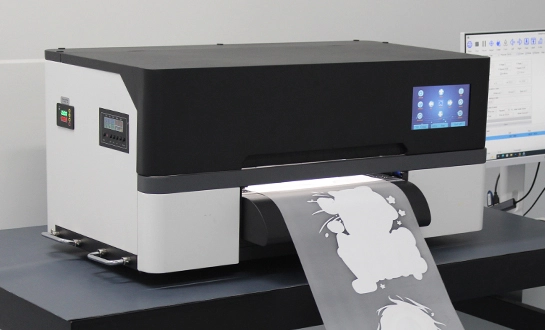
The Epson F1080-A1 printhead is used by both the FEDAR FD-D300 and FD-D302. It is a piezoelectric system that consistently prints droplets over long print runs. Here is a direct look at the two models side by side:
| Specification | FEDAR FD-D300 | FEDAR FD-D302 |
|---|---|---|
| Printhead Quantity | 1 | 2 |
| Printhead Model | Epson F1080-A1 | Epson F1080-A1 |
| Print Width | 300mm | 300mm |
| Print Colors | CMYK + W | CMYK + W |
| Max Resolution | 1600 DPI | 1600 DPI |
| Max Speed (A3) | 10 sheets/hr | 31 sheets/hr |
| Max Speed (A4) | 20 sheets/hr | 62 sheets/hr |
The FD-D300 is good for studios that want to start decorating clothes or making samples. The FD-D302's dual-head configuration is designed for shops that need to produce more. It can produce over three times as much as an A3 without taking up more floor space or adding more operators.
Procurement Insights: Where and How to Acquire Your Ideal DTF PET Film Printer?
Finding industrial-grade digital printing tools takes more than just comparing prices. Long-term operating dependability is based on the trustworthiness of the supplier, the availability of parts, and the after-sales infrastructure. This is especially true for cross-border buyers who are in charge of handling remote installations.
Before making a decision about a seller, buying teams should look at these main factors:
- Factory qualification and R&D depth: A company with a 400-person facility and dedicated original R&D shows stable supply chains and regular hardware iteration. Fedar makes and tests all of its own equipment, but it gets core parts from trusted suppliers, like printheads, ink delivery systems, and motion controllers.
-
Sample reproducibility: When purchasing managers look at equipment to resell, they need checked print samples that they can give to customers, and a DTF PET film printer from Fedar delivers this. Fedar offers sample kits that can be used again and again that are aligned with certain types of substrates, such as fabrics used for sportswear and soft furnishings.
- After-sales response architecture: A slow technical response hurts the credibility of the distributor. Fedar's support team helps with technical issues that happen across borders, the shipping of extra parts, and training materials that agents can share with their own customer networks.
- Agent profit protection: Market security rules and clearly stated territorial deals are important to distributors because they help agents make money. Fedar sets up ways for agents to work together by setting clear margins and giving them access to co-marketing materials.
When distributors and plant owners add new tools to their product lines or their clients' operations, these benefits can directly lower the risk they face from a new DTF PET film printer.
Maximizing Returns: Best Practices for Operating a DTF Transfer System
Printhead Maintenance and Ink Circulation
Titanium dioxide, which is found in white ink, is a thick pigment that settles quickly without moving. Nozzle jams that stop output can be avoided by using automated stirring every day and checking the dampers once a week. Regularly cleaning the capping station and inspecting the encoder strip is good for the Epson F1080-A1 printer because it keeps the registration accuracy between the CMYK and white layers within a range of 0.02mm.
RIP Software and Color Management
For consistent color output across production batches, RIP software profiles that are calibrated for each type of fabric are used. For sales of sportswear with licensed artwork or brand names, ΔE accuracy below 2.0 is possible with processes that are properly ICC-profiled. Running multiple SKUs in a single print queue, which is called batch customization, cuts down on idle time and boosts throughput on both the FD-D300 and FD-D302 DTF PET film printers.
Fedar's training support materials help operators who are new to direct-to-film production. These materials cover ink loading, profile creation, heat press calibration, and regular upkeep. This takes away the usual learning curve for companies that have never done this before.
Conclusion
DTF PET film printer technology is a real solution for decorating sportswear and making small amounts of textiles. It doesn't need any pre-treatment, works with almost any cloth, and can handle runs of hundreds of units or single pieces without any changes to the tools. The FEDAR FD-D300 and FD-D302 produce high-quality industrial output in a desktop-sized package. This makes them easy for new shops to use and effective for established ones. Fedar is a solid, well-resourced choice for wholesalers, plant owners, and procurement managers looking for strong manufacturer support. It is backed by original research and development (R&D) and a global service infrastructure.
FAQ
Can this technology print on dark sportswear fabrics without color bleeding?
Yes. In CMYK + W printing, the dark textile surfaces can't let the dye move because of the white underbase layer. Anti-migration adhesive powder makes the bond even stronger and makes sure that the colors are true, even on blue, black, and charcoal sportswear.
What is the typical turnaround time for a small batch order?
The FD-D302 can handle 31 A3 transfers per hour by a single operator. If you don't count heat pressing, it takes less than two hours to make 50 units of graphics that are all the same size.
How does maintenance cost compare to DTG printing?
Direct-to-film systems are easier to maintain than DTG systems because they don't need any gear for pre-treating the fabric, and as long as white ink movement rules are followed, there is less chance of the nozzle getting clogged. Every day upkeep doesn't take more than 15 minutes.
Is prior printing experience required to operate Fedar equipment?
No, Fedar makes its entry-level models for users who have never used a computer before. To help new agents and studio owners learn faster, the company offers training materials, sample kits, and technical support.
What substrates beyond sportswear does this technology support?
Direct-to-film transfers can be used on cotton T-shirts, hoodies, tote bags, canvas, nylon accessories, leather goods, and goods for the home. The film's flexibility lets it be used on rough or curved surfaces that can't be printed on directly with an inkjet printer.
Partner with Fedar — Your Trusted DTF PET Film Printer Supplier
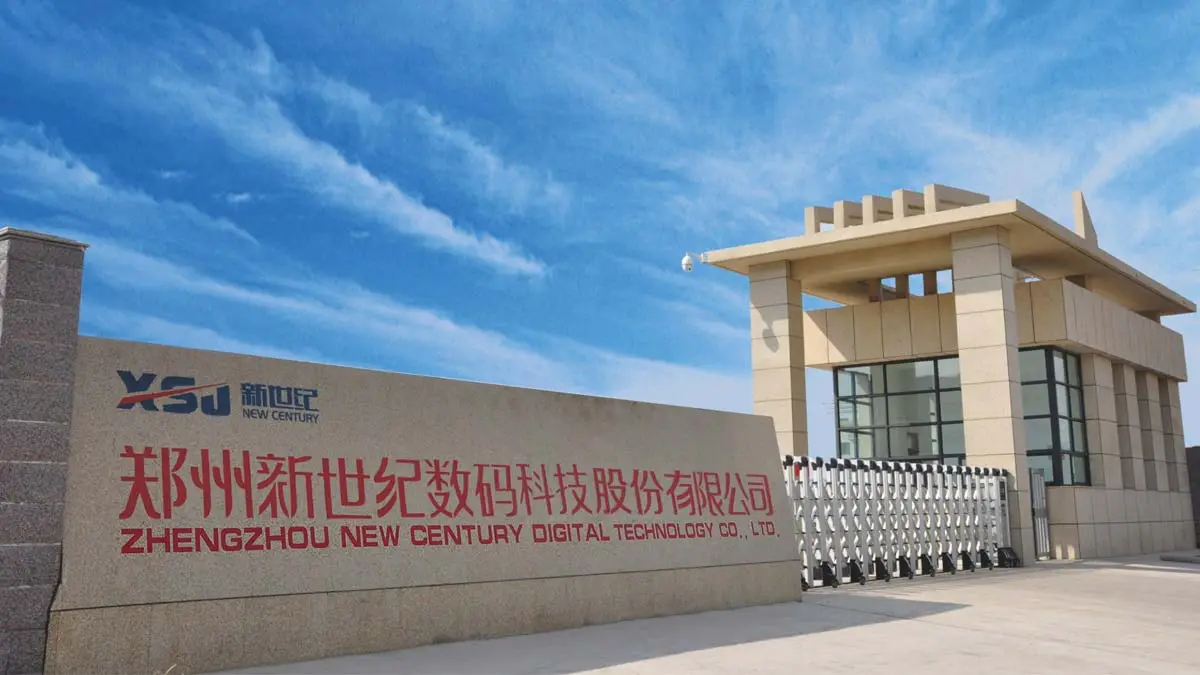
Fedar has its own research and development team, a factory with 400 workers, and a global network of after-sales service providers to help dealers, distributors, and plant owners at all stages. Whether you're looking at the FD-D300 as a low-cost starting point or the FD-D302 for better throughput, our team can help you with verified samples, protecting your agent margin, and quick technical support. You can email info@tex-printer.com or go to blog.tex-printer.com to ask for a consultation, a product demo, or a custom quote for your DTF PET film printer needs.
References
1. Choudhury, A. K. R. Principles of Textile Finishing. Woodhead Publishing, 2017.
2. Tyler, D. J. Textile Digital Printing Technologies. Textile Progress, Vol. 37, No. 4, Taylor & Francis, 2005.
3. Broadbent, A. D. Basic Principles of Textile Coloration. Society of Dyers and Colourists, 2001.
4. Provost, J. Digital Textile Printing: Market Trends and Technology Review. Smithers Pira, 2022.
5. ISO 105-C06. Textiles — Tests for Colour Fastness — Part C06: Colour Fastness to Domestic and Commercial Laundering. International Organization for Standardization, 2010.
6. Leach, R. H., et al. The Printing Ink Manual, 5th ed. Springer, 1993.
Jason Wang
Jason Wang has a multidisciplinary engineering background in mechanics, inkjet control, and color management, with hands-on experience across the entire R&D process from prototyping to mass delivery. Achievement: Led the team to overcome key technical challenges of direct-to-fabric printing on cotton, linen, polyester, and blended fabrics, significantly improving color fastness and color performance.
We Look Forward to Your Email
Please send us product information that interests you, and we will provide you with one-on-one service.
_1778203196111.png)
Recommended Blog
Roll to Roll DTF Printer vs Flatbed: Which One Should You Buy?
Which DTF Printer Features Matter for High-Volume Transfer Production?

How to Prevent DTF Printhead Clogging After Long-Term Printer Storage
Why Choose a Sublimation Printer for Custom Product Production?
How 24 Inch DTF Printers Support Efficient Roll-to-Roll Transfer Production
A3 DTF Printer vs A4 DTF Printer, Which is Right for Business