What Applications Can a DTF Printer Support Beyond T-Shirt Printing?
Understanding the DTF Printing Process and Its Versatility
- Understanding the DTF Printing Process and Its Versatility
- Diverse Industry Applications Supported by DTF Printers
- Comparing DTF with Alternative Printing Solutions for Varied Applications
- Optimizing DTF Printer Settings and Maintenance for Diverse Applications
- Procurement Insights: How to Acquire DTF Printers and Supplies for Business Use?
- Conclusion
- FAQ
- Partner with Fedar — Your Trusted DTF Printer Manufacturer
- References
Direct-to-film printing has quietly reshaped how businesses approach custom decoration. A DTF printer is no longer just a tool for cotton T-shirts — it has become a versatile production asset capable of transferring sharp, vibrant designs onto dozens of substrate types. Whether you run a garment factory, manage procurement for a mid-sized print shop, or distribute equipment across the U.S., understanding the full range of this technology can directly influence your revenue strategy and competitive positioning.
Understanding the DTF Printing Process and Its Versatility
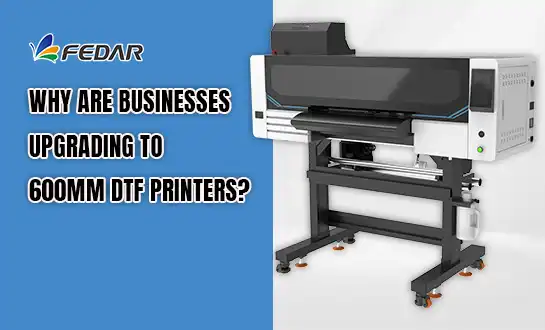
source: FEDAR PRINRTER
How the Workflow Actually Functions
First, CMYK inks are used to print a mirrored design onto a coated PET release film. Next, a white ink layer is added. The wet ink is then covered with hot-melt adhesive powder. This cures in a heat tunnel or oven at about 150°C for two minutes. Finally, a heat press is used to press the finished transfer onto the target substrate. In the end, you have a flexible, long-lasting image that sticks to the surface of the material without needing to be treated first.
This process gets rid of three major problems that happen with old ways of decorating. You don't have to weed as you do with heat transfer vinyl, treat the fabric first like you do with direct-to-garment printing, or be limited to polyester only like you are with dye sublimation. The process can be used on a lot of different substrates, like cotton, nylon, polyester blends, canvas, leather, and even some rigid surfaces, because the adhesive layer acts as the bonding agent.
For B2B companies that make small to medium runs, this means lower setup costs per job, faster turn-around times, and the ability to take different kinds of orders without having to retool production lines.
Diverse Industry Applications Supported by DTF Printers
Apparel, Uniforms, and Workwear
DTF printers can be used for a wide range of business tasks. Direct-to-Film transfers stick well to more than just T-shirts. They stick well to hoodies, jackets, athletic wear, and work uniforms. Quality hot-melt powder has binding properties that keep the transfers' shape even after being washed at high temperatures and under mechanical stress. This is important for putting company logos on work clothes. These transfers can be used for long-term uniform programs because they meet ISO 105-C06 standards for Grade 4 washing fastness.
Home Textiles and Soft Furnishings
The materials that can be used are pillow covers, tote bags, curtain panels, tablecloths, and canvas wall art. Home decor brands and online sellers make a lot of money with this app because patterns can be made only when they are ordered, so there is no risk of having too much inventory.
Promotional Products and Gift Customization
When the surface lets heat touch it, caps, bucket hats, umbrellas, and other small items can easily be transferred. Distributors of advertising items can get the most out of their materials and cut costs per unit by putting multiple patterns on a single film sheet.
Advertising and Signage Substrates
Film-based transfers make it possible for soft signs, fabric banners, and cloth display screens that are used at trade shows and in stores to have a lot of colors. In places with moderate light exposure, printed signs will last longer if they are resistant to UV light. The above output scope makes a strong case for distributors and plant owners who want to get more clients without having to buy a lot of different printing technologies.
Comparing DTF with Alternative Printing Solutions for Varied Applications
When you compare Direct-to-Film technology to screen printing and dye sublimation, you can see right away how the differences affect your buying choices.
| Feature | DTF Printing | Screen Printing | Dye Sublimation |
|---|---|---|---|
| Substrate Flexibility | High (many fabrics + some rigid) | Low (mainly flat fabric) | Low (polyester only) |
| Minimum Order Quantity | 1 unit | 24–50+ units typical | 1 unit |
| Color Complexity | Full gradient, no limit | Limited by screen count | Full color |
| Pre-treatment Required | No | No | No |
| Fabric Compatibility | Cotton, poly, nylon, blends | Cotton, poly | Polyester only |
Screen printing is still a good way to save money on large runs of a single design, but because it costs a lot to set up, it's not good for short runs or testing, while a DTF printer offers greater flexibility. On polyester, sublimation gives photographic quality, but on natural fibers, it doesn't work at all. Direct-to-Film printing is becoming more popular in U.S. print shops and companies that handle a wide range of customer requests because it offers full color accuracy, no minimum order size, and wide substrate compatibility.
Optimizing DTF Printer Settings and Maintenance for Diverse Applications
Calibrating Color Profiles by Substrate Type
RIP software is very important for getting correct color output on a variety of surfaces. To keep colors from bleeding, cotton substrates usually need higher white ink opacity settings. Nylon and synthetic blends, on the other hand, often need their ink density curves changed. Controlling the humidity is very important—the best working setting is between 40% and 60% relative humidity. Below that range, static electricity makes it hard for the powder to spread, and above it, the ink might spread on the film before it cures.
Routine Maintenance That Protects Output Quality
Simple but necessary daily maintenance tasks must be done. Checking the printhead nozzles, cleaning the wiper blades, and keeping the closing station wet keep the ink from drying in important parts. Titanium dioxide, which is in white ink, settles quickly. Continuous circulation systems keep the opacity consistent and keep the printheads from getting clogged. These actions directly lower the costs of repairs and make your equipment last longer, which is very important for dealers and distributors who have to meet customer standards.
Procurement Insights: How to Acquire DTF Printers and Supplies for Business Use?
Evaluating Equipment for Entry-Level and Mid-Volume Production
It is very important to choose a DTF printer that fits your production volume and budget. Fedar is a company with a 400-person factory that focuses on original research and development (R&D) and production. They have two purpose-built compact models that are perfect for sample-making studios and print businesses that are growing.
| Specification | FEDAR FD-D300 | FEDAR FD-D302 |
|---|---|---|
| Printhead Quantity | 1 | 2 |
| Printhead Model | Epson F1080-A1 | Epson F1080-A1 |
| Print Width | 300mm | 300mm |
| Print Colors | CMYK + W | CMYK + W |
| Max Resolution | 1600 DPI | 1600 DPI |
| Max Speed (A3) | 10 prints/hr | 31 prints/hr |
| Max Speed (A4) | 20 prints/hr | 62 prints/hr |
The small size of both models makes them perfect for studios, sample rooms, and small-batch production settings, while still producing industrial-grade sound. The FD-D300 is a low-cost starting point with a high profit margin per order. The FD-D302, on the other hand, has two printheads that make it much more productive for busier production plans.
Because these machines don't have a minimum order quantity, operators can make money on custom orders for a single item, which is great for online sellers and businesses that customize gifts. Because it uses less energy and is smaller, it has lower overhead costs, so operators can run production without having to rent industrial space.
Fedar helps its worldwide network of distributors by providing sample kits that can be used again and again, technical training materials, and a helpful after-sales team that can handle requests for help from different countries. These things make it much less risky for procurement managers to work with DTF printer suppliers whose plant standards have been checked and whose parts are always available.
Conclusion
Direct-to-Film technology has grown up with the DTF printer and is now a real tool for making movies in many different fields. The range of applications allows for real income diversification. These include advertising items and soft signs, as well as workwear and home textiles. The most important things in any buying choice are still how reliable the equipment is, how accurate the colors are, and how good the supplier support is. Fedar's production base and equipment line directly address all of these issues, which makes them a reliable partner for studios, distributors, and factory owners who want to join or grow in the U.S. market.
FAQ
Can a DTF printer print on rigid or non-textile materials?
For a DTF printer to work, the base needs to be able to handle heat and let the surface be touched. Most of the time, smooth, rigid materials that are covered or made of some plastics won't work with each other. The technology works best on cotton, polyester, nylon, canvas, leather, and other flexible fabrics.
How often does a DTF printer require maintenance?
Nozzle test prints, wiper blade cleaning, and moisture checks at the sealing station should all be done every day. To keep titanium dioxide from settling, the white ink should always be moving around. Deep cleaning of the ink lines once a month and regular repair of the printer keep the machine in good shape.
How do DTF ink costs compare to other printing methods?
Because there is no cost for chemicals to treat the fabric first, DTF ink costs less per print than DTG on dark fabrics. When compared to screen printing, DTF doesn't have any production costs for short runs, so the price per unit is low when ordering less than 50 pieces.
What resolution can a professional DTF printer achieve?
Epson F1080-A1 printheads can reach up to 1600 DPI, which means they can resolve fine lines as thin as 0.2 mm. This is a lot better than most screen printing options.
Partner with Fedar — Your Trusted DTF Printer Manufacturer
Are you ready to offer more products or confidently enter the market for custom decorations? With a 400-person R&D and production team behind them, Fedar's FD-D300 and FD-D302 DTF printers offer industrial precision in a small, energy-efficient package. No matter if you are a wholesaler, factory owner, or studio owner, our team can help you with technical training, trial kits, and quick support after the sale. To get a price right away, email us at info@tex-printer.com or go to blog.tex-printer.com.
References
1. Printwear Magazine, 2023 — Direct-to-Film Printing: Technology Overview and Market Adoption Trends
2. Impressions Magazine, 2022 — Comparing DTF, DTG, and Screen Printing for Custom Apparel Decoration
3. Images Magazine (now Impressions), 2021 — Substrate Compatibility in Modern Heat Transfer Technologies
4. Textile World, 2023 — Advances in Adhesive Powder Chemistry for Direct-to-Film Applications
5. SGIA Journal (Specialty Graphic Imaging Association), 2022 — Washfastness Standards and Testing for Decorated Textiles: ISO 105-C06 in Practice
6. Digital Output Magazine, 2023 — DTF Printing Enters the Soft Signage and Home Décor Market

Aelx Chen
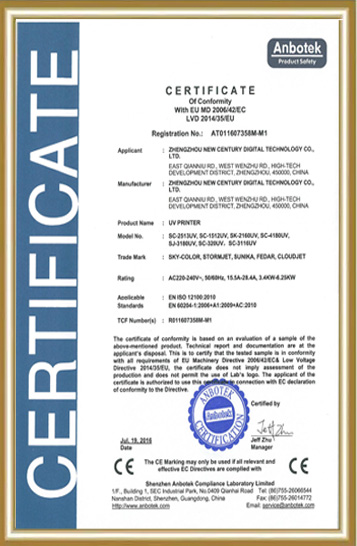
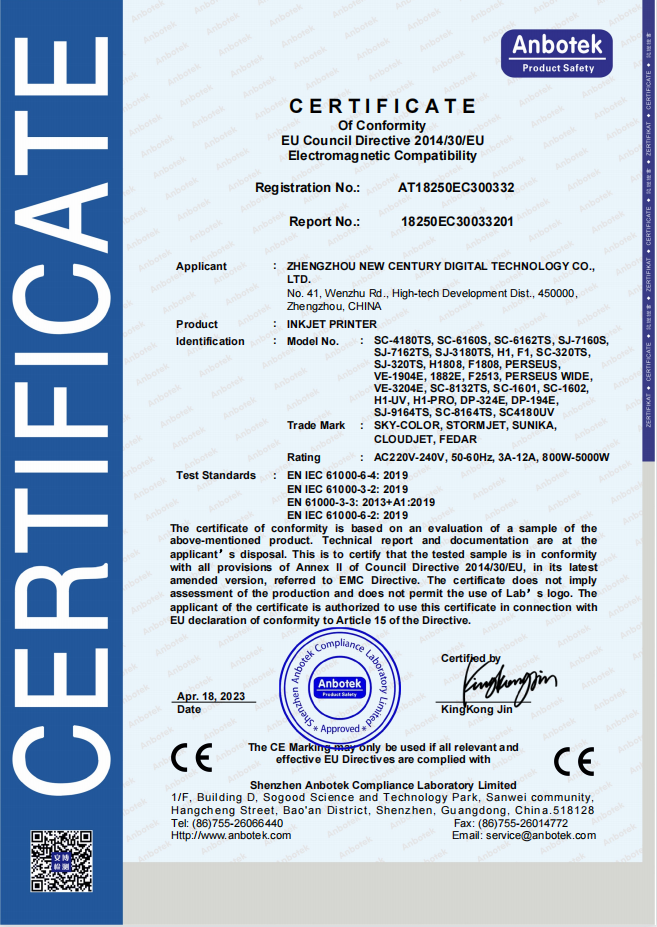
Alex Chen has accumulated extensive R&D and industrialization experience in the digital textile printing field, focusing on the innovation and optimization of digital printing equipment, direct-to-garment (DG) processes, and application solutions. He led the independent R&D and mass production of the company's core textile printing machines and DG printers, promoting their application in the textile, advertising, home furnishing, and personalized customization markets. The equipment he led has passed ISO9000 and CE certifications, earning the trust of a wide range of customers. He continuously provides customers with professional technical support and industry trend analysis, contributing to the upgrading and efficiency improvement of the digital printing industry.
We Look Forward to Your Email
Please send us product information that interests you, and we will provide you with one-on-one service.
_1778203196111.png)
Recommended Blog
Understanding the 24 inch DTF Printer: Features, Benefits, and FAQs
What Causes Color Fade in Sublimation Printers and How to Fix It?
How Does a 600mm DTF Transfer Printer Increase Transfer Output?
How Does a 60cm DTF Printer Adapt to Various Fabric Materials?
24 Inch DTF Printer Buying Guide for Print Shops and Garment Manufacturers
_1785483477752.webp)
Color Fade Solutions for Consistent Color Accuracy in Industrial Printing