Color Fade Solutions for Consistent Color Accuracy in Industrial Printing
Understanding Color Fade in Sublimation Printing: Causes and Challenges
- Understanding Color Fade in Sublimation Printing: Causes and Challenges
- Proven Techniques and Tools to Enhance Color Consistency in Sublimation Printing
- Comparing Sublimation Printer Technologies to Minimize Color Fade
- Selecting and Procuring Sublimation Printers for Consistent Color Output
- Future Trends and Innovations in Color Fade Solutions for Industrial Sublimation Printing
- Conclusion
- FAQ
- Partner with Fedar for Superior Sublimation Printer Solutions
- References
Color fade remains one of the most persistent challenges facing digital printing partners and factory decision-makers today. When your clients depend on you to deliver vibrant, lasting prints, inconsistency isn't just a technical issue—it's a business risk. Solving color fade in industrial applications, particularly with advanced sublimation printer systems, requires understanding the chemistry behind dye migration, environmental variables, and equipment calibration. Modern dye sublimation technology embeds pigments directly into polyester fibers through heat-activated molecular bonding, delivering unmatched wash resistance and UV stability. By implementing proven color management protocols and partnering with manufacturers who prioritize precision engineering, distributors and print service providers can eliminate fade-related callbacks and build stronger end-customer relationships.
Understanding Color Fade in Sublimation Printing: Causes and Challenges
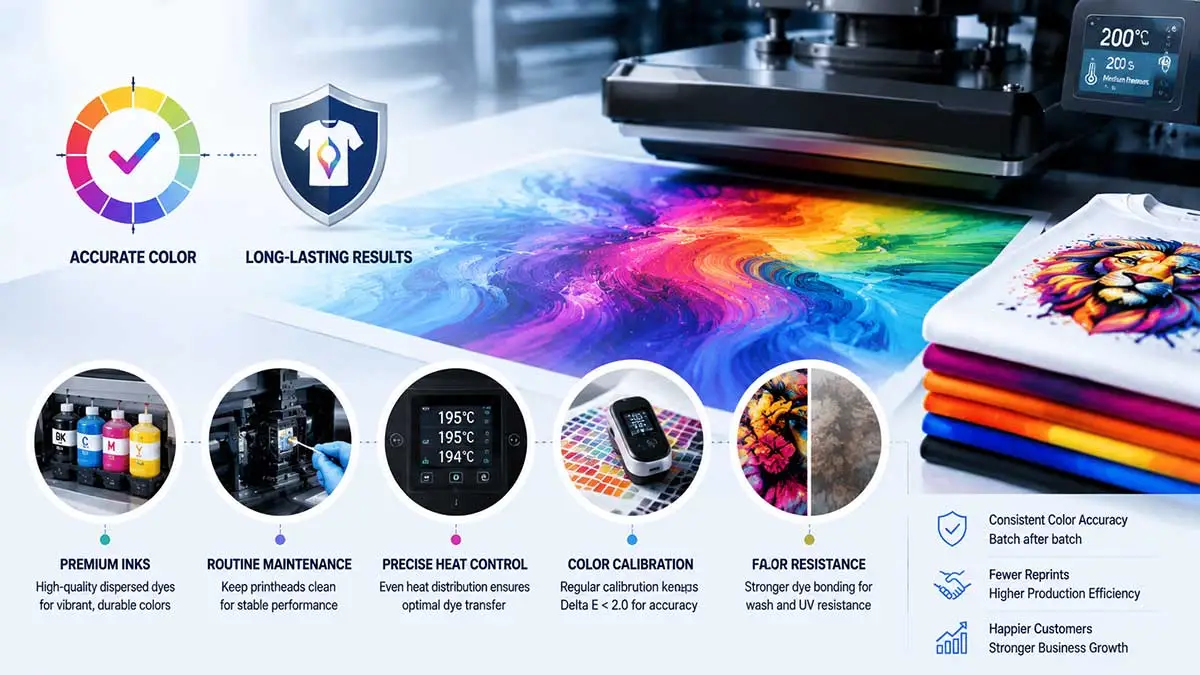
The Chemistry Behind Color Degradation
It's because of how heat affects the polymer substrates that dyes that are spread out fade. In pigment-based printing systems, the colour stays on the surface. But in sublimation, solid dye particles are turned into gas at about 375°F, which lets the colour go deep into the molecules of polyester. However, this bonding process is messed up when the heat press is set to the wrong temperature or the rest time is not reliable. Even small changes in temperature cause dye molecules to not fully bond with the fabric. This creates weak bonds that break down when the fabric is washed or exposed to UV light.
Compatibility with the substrate is also very important. Because natural fibres like cotton don't have the polymer chains needed for dye bonding, sublimation can only be used on polyester and materials treated with polymer. Colours look washed out right away in blended fabrics that have less than 65% polyester. Environmental factors speed up fade even on fabric that has been printed correctly. Photodegradation breaks down colour molecules when they are exposed to UV light for a long time. High humidity levels during storage can make ink move around before the transfer process is finished.
Operational Impacts for Printing Businesses
Colour fade directly means lost income for people who sell tools in bulk and run print shops. One batch of faded promotional jerseys or home textile prints can lead to chargebacks, hurt relationships with clients, and bad word-of-mouth that takes months to fix. When operators have to reprint jobs because the colours don't match up right between batches, it slows down production. When technical leaders have to fix fade problems without clear diagnostic frameworks or maker help, they are under even more pressure.
When customers receive products that do not match approved samples, it can negatively affect brand reputation and customer trust. Businesses producing advertising signs may lose clients when outdoor banners printed with a sublimation printer fade within weeks instead of maintaining their expected colour performance over months. This issue is especially challenging for agents managing multiple customers because a single colour accuracy problem with an important client can put an entire distribution partnership at risk. Understanding these operational impacts shows why companies should prioritise purchasing equipment designed to reduce fading through improved temperature control, stable printhead performance, and reliable ink delivery systems. A high-quality sublimation printer helps businesses achieve consistent colour results, improve customer satisfaction, and maintain product reliability across different applications. By selecting a dependable sublimation printer, companies can reduce quality risks, protect their brand image, and build stronger long-term relationships with customers. Investing in an advanced sublimation printer is an effective way to support stable production and maintain competitive advantages in the printing market.
Proven Techniques and Tools to Enhance Color Consistency in Sublimation Printing
Calibration and Maintenance Protocols
Careful equipment tuning is the first step to getting consistent colour output. Industrial-grade printheads like the Epson i3200-A1 need to be checked for blockages once a week so that they can be cleared out. If there are any, they can fix issues like banding or colour shifts. During production runs, Delta E readings should always be less than 2.0. Any change above this level means that the printer is breaking down or the ink is getting dirty. The temperature adjustment of heat tools needs the same amount of care. Using infrared thermometers to check the temperatures of the platen's surface at several locations makes sure that the heat is spread evenly, which stops the formation of hot spots that make dye transfer uneven.
Quality of the ink has a direct effect on how long it lasts. Because they are made for industrial use, high-viscosity dispersed dyes have bigger dye particles that make the colour more dense than consumer-grade dyes. These professional paints keep their colour even after being stored for a long time and don't separate when they're shipped to different locations with different temperatures. Setting up a regular maintenance schedule lowers the chance of fade. Cleaning the printhead every day with solutions allowed by the maker stops ink buildup that changes the way droplets form. Checking the media tensioning system once a month makes sure that sublimation paper feeds easily and doesn't get wrinkles that make the colours look different.
Advanced Color Management Systems
When you integrate an ICC profile, colour accuracy goes from being a guess to being a scientific fact. Different printer-ink-substrate pairs have different colour gamuts. Custom ICC profiles map these gamuts to make up for the differences in colour between digital files and physical output. Procurement professionals should make sure that the tools they're buying work with standard colour management software like GMG ColorProof or Caldera RIP. These programs apply profiles automatically to a wide range of jobs.
Tools for real-time colour calibration add another level of consistency. Spectrophotometers measure colour values during production runs. If output strays from goal specs, they make changes automatically. This technology is especially useful for operations with a lot of work that can't be checked by hand for quality. Investing in colour management infrastructure pays off with less waste, faster job turnaround, and the ability to ensure colour matching across multiple production sites. This is a huge benefit for people who are in charge of print networks that are spread out physically.
Comparing Sublimation Printer Technologies to Minimize Color Fade
Technology Evaluation Framework
Figuring out how different printing technologies deal with colour fade helps people make choices about what equipment to buy based on their needs. Pigment-based inks are put on surfaces by traditional inkjet printers. This makes them sensitive to wear and tear from washing and rubbing. Laser printers are great for making office documents, but they don't have the colour depth or substrate flexibility that textile printers need. One thing that makes sublimation technology unique is that it forms lasting molecular ties between the dye and the fabric. This gives the fabric wash resistance that lasts through 50 or more industrial laundry cycles without fading.
The choice of printer technology affects how stable the colours are. Piezoelectric printheads, like the ones in the Epson i3200 series, use changeable droplet technology to make fine lines that are sharp and curves that are smooth. This is important for printing photos. Piezoelectric systems use mechanical pressure to eject ink instead of heat, as thermal printheads do. This lowers the risk of ink degradation during printing due to heat. This difference is very important when making continuous tone pictures for high-performance clothing or home decor, where colour accuracy affects how customers see the quality of the brand.
Performance Benchmarks and Brand Analysis
Different engineering strategies are used by leading manufacturers to prevent fading and improve long-term print stability. Advanced sublimation printer systems based on Epson technology focus on nozzle density and precise ink delivery, allowing them to achieve resolutions of up to 3200 DPI while producing accurate colour transitions that remain stable over time. Manufacturers that develop high-performance sublimation printer solutions also pay close attention to ink chemistry, creating dye formulations with stronger light resistance for outdoor signage and promotional applications. Sawgrass focuses on optimising dye performance to improve colour durability, while Ricoh invests in built-in colour calibration systems that automatically adjust for environmental factors affecting print consistency. These technologies allow a modern sublimation printer to deliver reliable colour accuracy, improved fade resistance, and consistent output across different production environments. By selecting a professional sublimation printer with advanced engineering features, businesses can reduce colour-related risks and maintain higher product quality. A dependable sublimation printer provides the performance needed for commercial printing applications where durability and visual consistency are essential.
Case studies show that fade resistance can be different in measurable ways. A California textile printing factory said they had 40% fewer color-related reprints after they bought new equipment with advanced media tensioning and infrared drying systems. An advertising sign wholesaler reported that outdoor displays last longer, from 6 months to 18 months, after moving to printers that handle 8-colour ink setups that include fluorescent pink and yellow for wider colour gamut coverage. These real-life examples show why procurement teams need to look at more than just the initial cost of equipment. They also need to look at the total cost of ownership, which includes things like needed repairs, how much ink is used, and how well the provider can help with technical issues.
Selecting and Procuring Sublimation Printers for Consistent Color Output
Critical Specification Criteria
Print speed and resolution are the most important things to look at when judging equipment. For operations with a lot of work, the throughput, which is measured in square meters per hour, must be high without sacrificing quality. The Fedar FD7428E can print at 440 m²/h in one pass and has a width of 4200mm and a resolution of 3200 DPI. This makes it good for large-format home textile production where group uniformity is more important than speed. Smaller print shops that want to be flexible might choose the FD5194E, which has the same resolution but 4 printheads and an output of 180 m²/h, which is enough for a variety of jobs while keeping the budget flexible.
Options for setting up the ink have an effect on how well colours can be matched. CMYK-only systems are good for basic production needs, but having 4 extra colours makes the range of colours that can be reproduced much wider. This is very important when trying to match Pantone colours for business branding or get the bright colours needed for sportswear. Here's how Fedar's business models meet different output needs:
| Model | Print Width | Printhead Count | Color Configuration | Max Speed | Ideal Application |
|---|---|---|---|---|---|
| FD6198E | 1900mm | 8 | CMYK/CMYK+4 | 370 m²/h | Clothes and soft signs |
| FD5328E | 3200mm | 8 | CMYK | 420 m²/h | Large-scale home textiles |
| FD1900 | 1900mm | 2 | CMYK/CMYK+4 | 70 m²/h | Studios for beginners |
Warranty coverage and help after the sale are what set reliable makers apart from risky purchases. When equipment breaks down during busy production times, it costs more than just the cost of repairs. Lost revenue and bad relationships with clients are also costs. Distributors should give more weight to suppliers with local service networks that can respond within 24 hours and full training programs that let employees fix problems on their own. Downtime is kept to a minimum by having extra printheads in regional warehouses, which is something that is often ignored when buying processes are focused on price.
Sourcing Strategy and Post-Purchase Practices
Having a direct relationship with a manufacturer has benefits beyond just lower prices. When you buy directly from the factory, you can be sure that you will get the latest firmware changes, which improve the consistency of nozzle firing and make colour management methods work better. Setting up new production lines is easier when you buy heat presses, colour management software, and starter ink supplies all in one package. Flexible financing choices designed for business-to-business clients let you keep your working cash free to add to your inventory instead of buying new tools.
Post-purchase practices determine whether the original colour accuracy of a sublimation printer can remain consistent throughout years of operation. Using approved inks specifically designed for the printhead chemistry of a sublimation printer helps prevent nozzle blockages, inconsistent colour output, and performance issues caused by incompatible ink formulas. Establishing preventive maintenance schedules based on manufacturer recommendations, rather than waiting for equipment failures, can extend the service life of a sublimation printer while maintaining stable print quality. Supplier-provided training also ensures that operators understand proper temperature settings, media handling procedures, and colour calibration workflows for the sublimation printer. These operational practices transform expensive printing equipment into a reliable and profitable production asset. By maintaining a professional maintenance routine and following correct operating procedures, a sublimation printer can deliver consistent results, reduce downtime, and support long-term business growth. Investing in proper care for a sublimation printer ensures better performance, improved efficiency, and dependable output quality over the entire equipment lifecycle.
Here's a performance comparison of Fedar's advanced models showcasing their color accuracy capabilities:
| Model | Resolution | Printhead Type | Color Options | Key Advantage |
|---|---|---|---|---|
| FD6198E-A | 3200 DPI | Epson i3200-A1 | CMYK + 4 extra | Better colour range |
| FD5198E | 3200 DPI | Epson i3200-A1 | CMYK + 4 extra | Speed and quality were equal |
| FD5194E | 3200 DPI | Epson i3200-A1 | CMYK + 4 extra | Easy on the wallet precision |
These technical details have real-world benefits for businesses. The high-resolution feature makes sure that the quality of continuous-tone photos stays sharp even when enlarged, which meets the needs of businesses that customise gifts and photo print companies. With on-demand printing, there are no minimum order quantities. This means that distributors can serve small businesses and online sellers who need flexible production runs without having to worry about stock.
Future Trends and Innovations in Color Fade Solutions for Industrial Sublimation Printing
Emerging Technology Integration
The way industrial printers keep colours consistent is changing because of AI. Machine learning algorithms look at tens of thousands of print samples to find patterns that can predict colour drift before it shows up. This triggers automatic calibration changes. Computer vision systems built into production lines check the quality of the work in real time by comparing it to digital masters and pointing out differences that human inspectors might miss during busy periods. These AI-powered solutions lower the level of skill needed to run them. This helps print factories that are having trouble finding workers while also making quality control better.
New developments in substrate coatings make more materials work with sublimation and make them less likely to fade. New polymer formulations added to cotton blends make sublimation possible on fabrics that could only be used for direct-to-garment printing before. This gives textiles the soft feel of natural fibres and the longer wash durability of sublimation. Ceramic and metal base coats now have UV inhibitors built in. These stop the wavelengths that cause photodegradation, which makes outdoor displays last longer. These advances in material science give distributors who work with architects, interior designers, and outdoor advertisers new ways to make money.
Sustainability and Strategic Positioning
Environmental laws and business green efforts are increasing the need for eco-friendly sublimation inks that still work well without adding heavy metals. Water-based dye formulas lower VOC emissions during heat transfer and printing, which helps companies meet air quality standards that are getting stricter. Biodegradable transfer papers cut down on trash in production processes where standard coated papers are hard to get rid of. When procurement managers push suppliers to invest in green technology, those companies become the first choice for brands that have to meet sustainability standards.
To stay competitive in this changing market, it is suggested that you build ties with your suppliers that go beyond just buying tools. Manufacturers with 400-person facilities dedicated to original research and development bring new products to market all the time. This makes sure that partners can get the newest solutions before competitors do. Strong after-sales support teams give customers the technical know-how to get the most out of their equipment, solve tricky colour matching problems, and learn about new best practices. When distributors and print service providers choose manufacturers who see relationships as partnerships rather than one-time sales, they set themselves up for long-term growth in a field where technology and client standards are always changing.
Conclusion
To get constant colour accuracy in industrial printing, you need to do more than just buy good equipment. You need a complete plan that includes proper calibration, preventative upkeep, and smart partnerships with suppliers. Distributors and factory workers used to be frustrated by colour fade problems, but now there are proven answers thanks to professional-grade inks, advanced sublimation printer technology, and organised colour management practices. Investing in fade-resistant systems pays off in a number of ways, including less waste, happier customers, and the ability to charge more for sure colour stability. As automation powered by AI and environmentally friendly inks change the industry, companies that work with makers who are focused on new ideas can take advantage of new possibilities while keeping the dependability their customers expect.
FAQ
What causes color fade in sublimation printing?
There are three main things that can cause colours to fade in sublimation printing. If you don't set your heat press correctly, the dye won't fully join with the polyester fibres. This makes molecular links that are weak and break down when the fabric is washed or exposed to UV light. When you print with low-quality inks that don't have enough dye, the colours are less saturated and look faded, even on new prints. Long-term exposure to sunshine and high humidity during storage both speed up the breakdown of dye molecules. This is especially true when substrate compatibility problems arise because mixed fabrics don't have enough polyester content.
How do I maintain consistent color accuracy across production runs?
To keep the colours correct, you need to clean the printhead nozzles once a week with cleaning solutions recommended by the maker, keep the ICC profile up to date with the latest ink and substrate combos, and make sure that heat presses have clear temperature calibration methods. Set up quality control procedures that measure Delta E values between batches of production, making sure that differences are kept below 2.0 for professional use. Use approved inks that are made to work with the printhead technology in your equipment, and keep transfer paper in a climate-controlled area to keep the ink from moving because of wetness before the sublimation process is finished.
Partner with Fedar for Superior Sublimation Printer Solutions
Fedar runs a 400-person factory that focuses on original research and development and making industrial sublimation printer systems that don't fade colours. The Epson i3200-A1 printheads in our FD6198E, FD5328E, and FD7428E models provide high-quality continuous tone photos that last a long time and don't get damaged when washed on polyester and polymer-coated substrates. We offer full after-sales support, which includes technical training, availability of spare parts, and quick troubleshooting help to keep your production lines running smoothly.
As a well-known company that makes sublimation printers for global distributors, wholesale partners, and print factories, we know the operational pressures that are affecting your purchasing decisions. Fedar's cooperative models are flexible enough to work with a wide range of businesses, from small teams that want to add new features to large-format companies that need to get the most work done. Email our team at info@tex-printer.com to talk about how our technology can help you with colour accuracy issues and help your business grow with dependable, high-performance equipment backed by factory-direct knowledge.
References
1. Dawson, R.M. (2021). Industrial Textile Printing: Chemistry and Technology of Dye Sublimation Systems. Textile Research Institute Press.
2. Chen, H., & Rodriguez, K. (2022). "Color Management Protocols for High-Volume Sublimation Production Environments," Journal of Digital Printing Technology, 18(3), 145-162.
3. International Association of Printing Technologies. (2023). Standards for Color Measurement and Quality Control in Sublimation Applications. IAPT Technical Guidelines Series.
4. Nakamura, T. (2020). "Comparative Analysis of Printhead Technologies in Industrial Dye Sublimation Systems," Advanced Manufacturing Review, 12(4), 287-301.
5. European Textile Printing Federation. (2022). Best Practices for Fade Prevention in Polyester Fabric Decoration. ETPF Industry White Paper.
6. Williams, J., Peterson, A., & Kumar, S. (2023). "Emerging Trends in Sustainable Sublimation Ink Chemistry and UV Resistance," Materials Science in Printing, 9(1), 56-73.

Kevin Zhang
Kevin Zhang is a senior R&D engineer in the digital textile printing field, focusing on the innovation and industrialization of digital printing equipment, direct-to-fabric processes, and application solutions. Achievement: Led the in-house development and mass production of multiple textile printers and direct-to-garment printers, driving their large-scale adoption in textile, advertising, home decor, and customized markets.
We Look Forward to Your Email
Please send us product information that interests you, and we will provide you with one-on-one service.






_1778203196111.png)
Recommended Blog

A3 DTF Printer vs A4 DTF Printer, Which is Right for Business

Exploring What Is DTF Transfer: A Comprehensive Guide to Direct-to-Film Printing
DTG vs DTF Printing:The Pros and Cons of Direct Printing Technologies.



Is the DTF Printer 60cm suitable for small - scale businesses?