Roll-to-Roll vs. Roll-to-Sheet DTF Printing
Understanding Roll-to-Roll and Roll-to-Sheet DTF Printing Technologies
- Understanding Roll-to-Roll and Roll-to-Sheet DTF Printing Technologies
- Comparing Advantages and Limitations: Roll-to-Roll vs. Roll-to-Sheet
- Key Operational Insights and Best Practices for Roll-to-Roll DTF Printers
- Strategic Considerations for Procurement and Supplier Selection
- Use Case Scenarios: Selecting Between Roll-to-Roll and Roll-to-Sheet for Your Business
- Conclusion
- FAQ
- Partner with Fedar for Your DTF Printing Success
- References
The main difference between roll-to-roll and roll-to-sheet direct thermal printing is the size of the production run and the level of automation. A roll to roll DTF printer works all the time, sending film from big rolls through steps of printing, powder application, and curing without any help from a person. This system changes the way textiles are decorated by getting rid of the handling problems that come up with sheet-fed operations. It also provides smooth output for places that make a lot of things. Roll-to-sheet systems can work with film panels that have already been cut. They are flexible for mixed-batch runs, but the user needs to be more involved between rounds.
Understanding Roll-to-Roll and Roll-to-Sheet DTF Printing Technologies
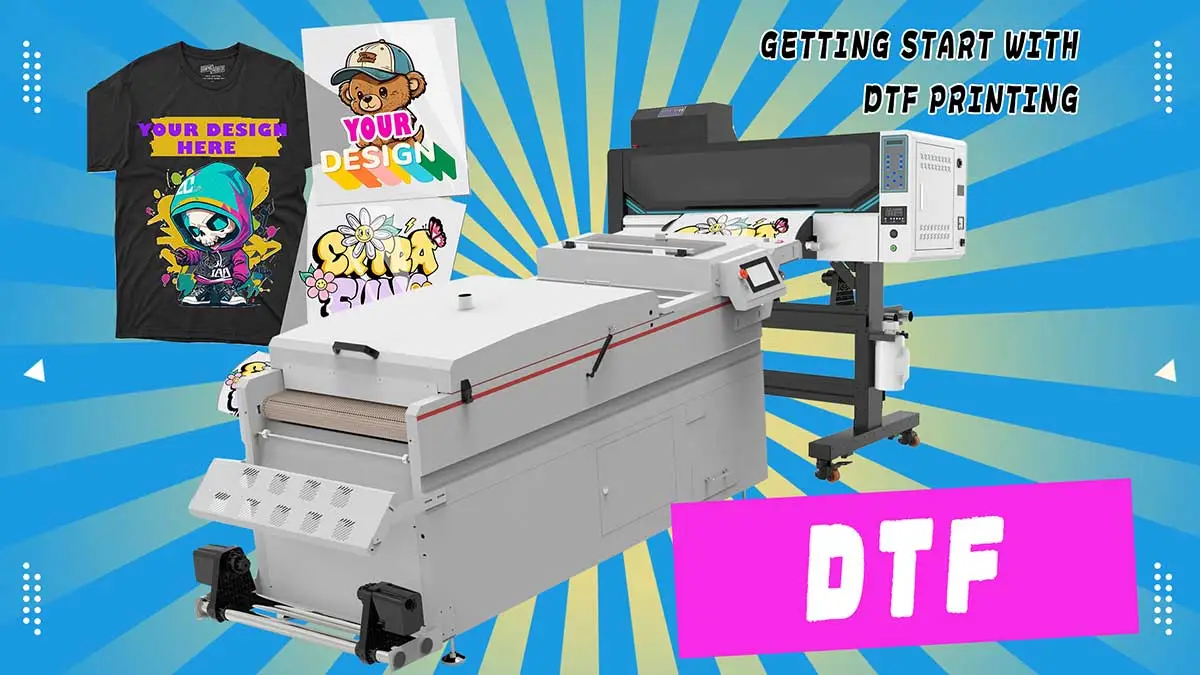
Learn about the differences between roll-to-roll and roll-to-sheet DTF printing technologies.
The Mechanics of Roll-to-Roll DTF Systems
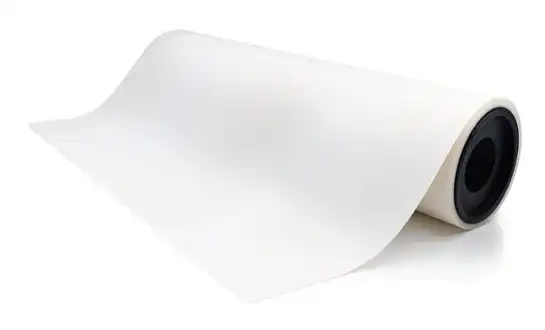
Roll-to-roll technology changes the way clothes are decorated by using automated processes that handle film continuously from supply rolls to take-up rolls. These systems have inline powder shakers, vacuum-assisted print beds, and tension-controlled media feeding that all work together in sync. The first step is for inkjet printheads to put layers of CMYK and white ink onto a special PET film that has been treated to absorb the ink best. After that, the film goes through a powder shaker that applies thermoplastic polyurethane adhesive. It then goes into a curing oven, where controlled heat turns the powder layer into a solid. This uninterrupted sequence gets rid of the need to handle film by hand between stages, which cuts down on labour costs by a huge amount while keeping output quality high over long production runs.
Roll-to-Sheet Operations and Advantages
Sheet-fed DTF printers go through each step of the production process one at a time, using pre-cut film panels. Individual sheets are put on the print bed by operators, which then move the printed sheets to powder application stations and then to different drying units. This method gives you a lot of freedom for small-batch customisation and making prototypes. Being able to switch between jobs quickly without losing materials is helpful for printing companies that have a lot of different clients with different design needs. Due to their flexible design, sheet-fed systems let companies upgrade individual parts like powder shakers or add extra drying units without having to replace whole production lines.
Workflow Comparison and Material Handling
Material efficiency makes these technologies very different from each other. Continuous-feed methods, such as roll to roll DTF printer systems, use almost all of the film on each roll by printing one sheet after another without breaks. This cuts down on waste. Sheet-based processes create trash from trimming the edges and moving the materials around. Sheet systems, on the other hand, are great for printing designs of very different sizes on the same production day because they don't require the complicated changeovers that happen with variable-width rolls. Knowing these operational differences helps purchasing managers match the capabilities of equipment with real-world production patterns instead of just theoretical capacity numbers.
Comparing Advantages and Limitations: Roll-to-Roll vs. Roll-to-Sheet
Productivity and Throughput Analysis
Continuous-feed systems have a higher throughput for production runs that are all the same. Once they are set up, these machines can work for hours without being watched, making hundreds of transfers without any help from a person. If the printer is well taken care of and has enough paper, a 60cm DTF printer roll-to-roll set up to print can make more than 200 A3-sized copies in eight hours. Sheet-fed alternatives need the operator's attention between cycles, which limits output to about 60–80% of the possible top speeds. This perceived limitation can actually be a benefit when design changes need to be made quickly for production reasons or when test batches are used before committing to large volumes.
Print Quality and Substrate Compatibility
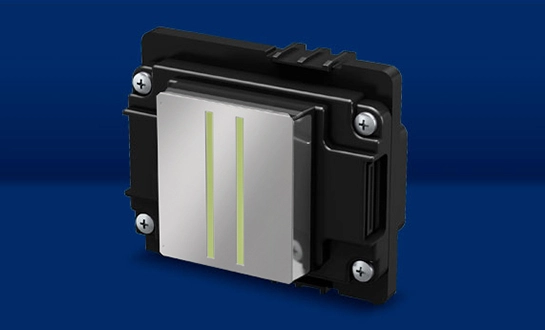
Both methods can still achieve resolutions that are similar, and current systems using Epson F1080-A1 printheads can reach 1600 DPI or higher. Over long runs, differences in quality show up in how well registration works. Precision tension controls in roll-to-roll systems keep the tracking steady, making sure that the design placement is accurate within ±0.5 mm across the whole roll. Sheet-fed operations depend on positioning that is either done by hand or partially automatically, which means that each piece may be slightly different. Continuous systems work best with uniform film types because they are more substrate compatible, but sheet-fed configurations are better for speciality films that come in different thicknesses because they only need simple pressure adjustments instead of full tension recalibration.
Cost Structures and Investment Considerations
The initial investment in tools changes a lot. Sheet-fed kits for beginners start at about $8,000 to $12,000. These are good for companies that want to try out DTF technology before going all the way to automation. Integrated roll-to-roll systems start at about $25,000 for widths of 30 cm and go up to more than $60,000 for industrial configurations of 60 cm. Adding up the costs of doing business changes this equation a lot. Automated systems use materials more efficiently and cut down on labour costs by 60–70% per transfer. Maintenance needs are about the same, but roll systems have more moving parts that need to be adjusted from time to time. When systems are properly optimised, there aren't any noticeable changes in how much energy they use. The curing ovens still use the most power, no matter what kind of feeding device is used.
Key Operational Insights and Best Practices for Roll-to-Roll DTF Printers
White Ink Management and Circulation
For continuous-feed operations, white ink circulation systems are very important. Titanium dioxide colours settle quickly if they are not constantly stirred, which jams the printhead and stops production right away. Ink tanks are stirred while fluid is recirculated through printhead passageways in high-quality roll to roll DTF printer designs. As part of daily maintenance, the circulation lines must be flushed, and the agitator mechanisms must be checked to make sure they work properly. For businesses with long shifts, setting up automatic cleaning cycles that run every four hours is helpful because they stop pigment buildup without any help from an operator.
Calibration and Environmental Controls
To get uniform colour output, external factors must be taken into account during regular calibration. Between 40 and 60% relative humidity keeps the ink's thickness in the right ranges and stops static electricity from building up, which can lead to film tracking mistakes. Stability at 20–25°C ensures predictable curing behaviour and stops changes in film dimensions during printing. Checking the alignment of the printheads once a week, updating the colour profiles based on the environment, and testing the vacuum table's suction should all be part of the calibration process. These steps keep the colour accuracy within Delta E < 2.0 limits, which is important for brand-sensitive uses and repeat orders that need exact colour matching.
Maintenance Protocols for Extended Service Life
The total cost of ownership is directly affected by maintenance schedules. Every day, chores include cleaning the printer, checking the wiper blades, and moisturising the capping station to keep the ink from drying out in the nozzles. As part of the weekly routine, the tension rollers are cleaned, the vacuum filter is changed, and the powder shaker screen is checked. As part of the monthly deep maintenance, the printhead alignment, belt tension, and thermal sensor calibration are all checked. When maintenance is done according to the manufacturer's instructions, printheads last more than 12 to 18 months, compared to only 6 to 9 months when maintenance isn't done. Using digital logs to keep track of maintenance tasks allows for more accurate replacement scheduling, which cuts down on unplanned downtime during key production times.
Strategic Considerations for Procurement and Supplier Selection
Evaluating Supplier Qualifications and Support Infrastructure
It takes more than just comparing specification sheets to buy DTF tools successfully. Supplier factory skills show how consistent output is and how well quality control can be done for equipment such as the roll to roll DTF printer. Manufacturers whose facilities are ISO 9001-certified and have separate R&D teams show that they are committed to ongoing growth and providing a high level of technical support. Local service networks are what set suppliers who can provide responsive after-sales support apart from those who only sell equipment. Professionals in procurement should check the guarantee terms that cover both parts and labour. They should pay special attention to the policies on replacing printheads, as these are the most expensive items that will need to be replaced at some point.
After-Sales Service and Technical Training
Premium suppliers are set apart from common suppliers by thorough technical training programs. Manufacturers of good products offer multi-day training on installation and operation that covers regular upkeep, how to fix problems, and optimisation methods that are specific to different fabric uses. Continuous help through specialised technical hotlines, remote diagnostic tools, and knowledge bases that are regularly updated makes sure that workers get the most out of their equipment. We've seen that companies that get thorough training get 85–90% uptime rates within three months, while companies that only use user guides and generic support channels only get 65–75%.
Profit Models and Market Protection
When manufacturers set clear territorial protections and reasonable profit margins, agent partnerships do very well. When resellers use clear pricing systems, they can offer reasonable prices to end users while still keeping 25–35% margins for things like marketing, technical help, and demonstration tools. Leading suppliers offer reusable sample kits that show how well prints look on different types of fabric. This lets agents convert prospects without having to do a lot of custom sampling. Market protection policies that stop direct sales from manufacturers within certain areas give distributors the confidence they need to buy more inventory and do more marketing.
Use Case Scenarios: Selecting Between Roll-to-Roll and Roll-to-Sheet for Your Business
Small to Medium Enterprise Solutions
Sheet-fed systems are helpful for digital printing companies and small production sites that have a lot of different clients who need to make design changes all the time. A typical small studio that makes 50 to 150 custom transfers every day finds that sheet-fed workflows give them enough throughput while still letting them be flexible for rush orders and prototype development. The costs of investing are still reasonable, so businesses can start using DTF printing without having to spend a lot of money. The Fedar FD-D300 DTF Printer is an example of equipment designed for this market segment. It provides output of industrial quality while being easy to use on a desktop. Its single Epson F1080-A1 printhead configuration can make 20 A4-sized copies an hour at 1600 DPI resolution, which is a good balance between quality and speed for small-batch operations.
High-Volume Manufacturing Environments
Large printing factories and original equipment manufacturers (OEMs) of clothing need continuous-feed systems to keep the flow of work going. Automation makes facilities that do more than 500 transfers a day much more efficient. Compared to manual sheet-handling workflows, automation cuts labour costs per unit by 60–70%. With 62 A4-sized copies per hour and the same 1600 DPI quality standards, the Fedar FD-D302 DTF Printer shows how dual-printhead setups can be used to increase output. This huge increase in productivity lets manufacturers take on bigger orders without having to hire more people. This makes them more competitive for large orders while keeping service levels for current customers the same.
Hybrid Production Strategies
Businesses that are on the cutting edge use both technologies in a smart way. They use sheet-fed systems for special orders and samples and continuous-feed equipment for repeat production runs. This method makes the best use of capital across a wide range of order patterns without pushing either system outside of its optimal range of performance. Sample makers like being able to use sheet-fed printing for customer meetings and review processes before committing designs to automated equipment for large-scale production runs. Hybrid strategies like these take up a small amount of extra floor space but give you more operational flexibility than single-technology approaches alone.
Conclusion
Choosing between a roll to roll DTF printer and sheet-fed direct thermal printing depends on how much you print, the types of orders you get, and how much money you have on hand. Continuous-feed systems work best in standardised, high-volume production settings where automation gives the company a competitive edge by lowering the cost of labour and maintaining quality. Sheet-fed alternatives are good for companies that want flexibility, low start-up costs, and a wide range of batch production needs. When used and maintained correctly, both technologies produce industrial-quality results that can be used in tough textile applications. By understanding these operational facts, procurement professionals can match the capabilities of tools with the actual needs of the business instead of just looking for the most theoretical capacity. To successfully adopt a new technology, you need to look at the total cost of ownership, the provider's support system, and how well it fits with the way things are done now.
FAQ
What maintenance does a roll to roll DTF printer require during idle periods?
Ink doesn't dry out in printer needles when the machine isn't being used because of daily flash spray routines and weekly capping station moisturising. When the printer is turned off for more than 48 hours, it needs to be protected by cleaning solution flushing and protective capping. These simple rules keep expensive printer replacements from happening and make sure that operations can start up right away when production starts up again.
How does curing temperature affect transfer quality?
The best temperatures for curing are between 110°C and 150°C, but the exact temperatures depend on the powder formulation. Powder polymerisation can't happen fully when the temperature isn't right, which causes poor wash durability and transfer peeling. Too much heat can change the shape of the film and possibly break down the ink, leaving behind oily remains that lower the quality of the copy. Multi-zone curing ovens that keep precise thermal profiles are part of high-quality systems.
Can continuous-feed systems handle different film thicknesses?
Modern roll-to-roll systems can handle different film thicknesses by having tension and vacuum pressure sets that can be changed. When you switch between standard 75-micron films and heavy-duty 100-micron films, you have to recalibrate the media sensors and change the take-up tension so that the films don't buckle or stretch too much. When you calibrate your machine correctly, you can avoid head strikes and keep the registration accuracy even when the film specifications change.
Partner with Fedar for Your DTF Printing Success
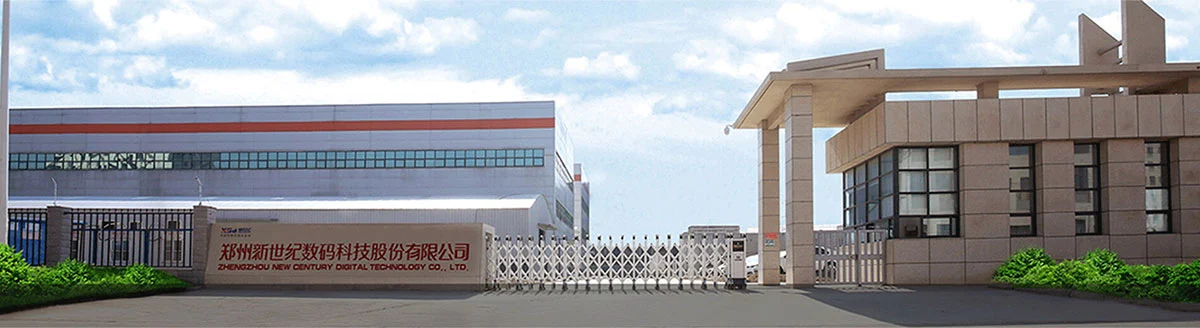
Fedar runs a factory with 400 workers that focuses on original research and development and making digital cloth printing equipment. Our engineering team has decades of experience creating roll-to-roll DTF printer solutions that meet the strict needs of the world's textile decoration markets. During production, we follow strict quality control procedures and only use original Epson printheads and high-quality parts to ensure long-term dependability. Our relationships with suppliers offer flexible ways to work together, from single-unit demonstrations to large-scale purchases. They also have clear price systems that allow agents to make good profits. Technical support goes beyond just delivering tools. It includes full training programs, help in multiple languages, and quick logistics for extra parts. Our team offers personalised advice to match equipment specs to your specific production needs, whether you're starting up your first DTF operations or expanding ones you already have. Get in touch with our experts at info@tex-printer.com to talk about how Fedar roll-to-roll DTF printer options can help your business grow and make your production more efficient.
References
1. Smith, J. & Anderson, K. (2022). Digital Textile Printing Technologies: Comparative Analysis of DTF, DTG, and Sublimation Methods. Textile Industry Press.
2. International Textile Manufacturers Federation (2023). Global Survey on Digital Printing Adoption in Garment Decoration. ITMF Annual Report.
3. Chen, L. (2021). "Optimization Strategies for Direct-to-Film Transfer Processes in Industrial Applications." Journal of Digital Textile Printing, 15(3), 127-145.
4. Rodriguez, M. & Thompson, R. (2023). Equipment Selection Guide for Commercial Textile Printing Operations. Print Production Association.
5. Williams, D. (2022). "Economic Analysis of Automated vs. Manual DTF Production Workflows." Textile Technology Quarterly, 48(2), 89-103.
6. European Digital Printing Council (2023). Technical Standards and Best Practices for DTF Equipment Operation and Maintenance. EDPC Guidelines Publication.

Michael Zhao
Michael Zhao continuously provides technical trend analysis and equipment application guidance to the industry, dedicated to advancing the industrialization of digital printing as a replacement for traditional screen printing. Achievement: Has published multiple technical analysis articles and provided professional support in equipment selection, process optimization, and fault diagnosis to dozens of printing factories, contributing to the upgrade of the digital printing industry.
We Look Forward to Your Email
Please send us product information that interests you, and we will provide you with one-on-one service.
Recommended Blog

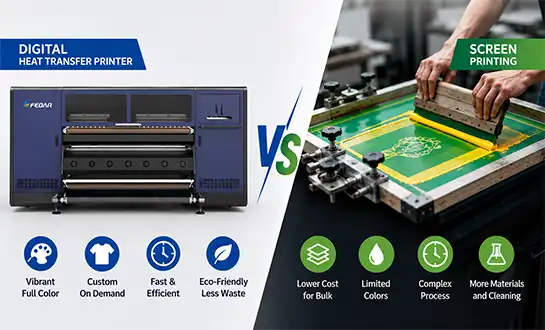
How Does a Digital Textile Film Printer Compare to Screen Printing?
A3 DTF Printer: with vs. without Oven System How To Choose?