DTF Pet & UV DTF Printing: What You Need to Know
Understanding DTF PET Printing Technology
- Understanding DTF PET Printing Technology
- Selecting the Best DTF Pet Printer for Your Business
- Setting Up and Maintaining Your DTF Pet Printer
- Applications and Customization Ideas Using DTF Pet Printing
- Procurement Guidance: Where and How to Buy DTF Pet Printers
- Conclusion
- FAQ
- Partner With a Trusted DTF Pet Printer Manufacturer
- References
Anyone interested in exploring technologies for decorating clothes or customising pet products needs to know about DTF pet and UV DTF printing. A DTF pet printer uses direct-to-film technology to print bright, long-lasting images on special PET film. The images are then transferred to fabric using adhesive powder and heat. UV DTF printing adds ultraviolet sealing to make the ink join instantly, which increases the number of uses. We've worked with procurement managers and equipment dealers for years to find solutions that are solid and produce a lot of work. This piece breaks these technologies down into their individual parts so that you can better understand the market possibilities for textile printing, advertising signs, personalised gifts, and home textiles.
Understanding DTF PET Printing Technology
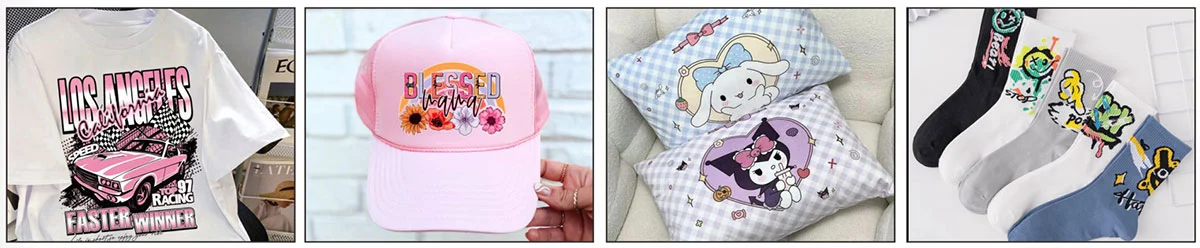
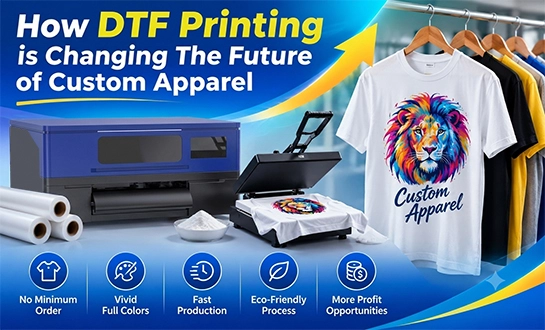
With direct-to-film printing, businesses can customise textiles in completely new ways. Printing CMYK plus white ink on a covered PET release film, applying TPU adhesive powder, heating it slowly to cure it, and then pressing the design onto clothes or other materials with heat. This method is a mix of screen printing's ability to print large quantities and DTG's ability to print on a single piece.
How Direct-to-Film Technology Works
The technical structure is based on precise printheads, usually Epson F1080-A1 or i3200-A1 models that can handle resolutions of 1600 DPI or higher. Titanium dioxide particles often cause pigments to settle, but white ink circulation systems stop this from happening. Multiple heating zones control the gain of the ink dots, making sure that the transfers are clear and bright. The hydrophilic layer on the PET film holds ink while printing and lets it come off cleanly when heat is applied. It usually gets a Grade 4+ in wash tests for colour fastness, and prints can stretch up to 200% without cracking. This makes it perfect for sportswear and high-stretch fabrics.
UV DTF Printing Advantages Over Traditional Methods
UV DTF adds fixing ultraviolet light, which lets the ink polymerise right away. This cuts down on drying time and makes it easier to stick to surfaces that don't have pores, like metal, glass, acrylic, and rigid plastics. Traditional DTF can only be used on textiles, but UV DTF can be used on promotional items, advertising signs, and packaging. The technology keeps the soft feel of fabrics while making hard surfaces less likely to scratch. For printing companies that have to deal with a wide range of customer requests, UV DTF lets them offer more services without having to buy different tools for each type of substrate.
Selecting the Best DTF Pet Printer for Your Business
When selecting tools, it's important to think carefully about technical specs, operational needs, and the reliability of the seller. Print resolution determines the quality of the details. For most business work, 1600 DPI is fine, while 2400 DPI is best for photo reproduction. Colour precision depends on how the ink is made and how well the ICC profile is set up. Throughput is affected by printer speed; industrial models can print 60+ A4 sheets an hour, while entry-level units can only handle 20 sheets.
Key Specifications for B2B Decision-Makers
When you compare models, the number of printheads has a direct effect on speed and redundancy. Single-head printers like the FEDAR FD-D300 DTF pet printer are good for making samples and small batches. With Epson F1080-A1 technology, it can make 20 A4 prints an hour. The 300mm print width works for kids' clothes, accessories, and patterns with panels. Two-head printers, like the FEDAR FD-D302 DTF pet printer, can print up to 62 A4 pages per hour, which is enough to meet the needs of a medium-sized workplace while keeping the 1600 DPI quality across all CMYK and W colour channels. Both types offer industrial quality in small desktop packages, which saves room on the floor and uses less energy than wide-format units.
Evaluating Supplier Credentials and After-Sales Support
Purchasing managers give more weight to sellers with experience making things than to selling companies. We run a 400-person center for unique research and development and production, which makes sure that parts can be tracked and quality is always the same. Production delays can be avoided by making sure that crucial parts like printheads, circulation pumps, and heating elements have stable supply lines. International buyers should check out the local service networks; customers lose trust when companies take too long to respond after the sale. Warranty terms that cover the printhead's lifespan (usually 12 to 24 months with proper upkeep), access to technical training, and the availability of spare parts set trustworthy partners apart from transactional sellers.
Setting Up and Maintaining Your DTF Pet Printer
Equipment ROI and output quality are best when they are installed correctly and cared for regularly. To set up the unit for the first time, you have to level it, connect the ink lines, install the RIP software, and check the nozzles. Test prints make sure that the colours are correct and that the layers are lined up correctly. The CMYK and white layers must be within 0.02mm of each other to avoid ghosting.
Daily and Weekly Maintenance Protocols
Keeping the flow of white ink going keeps expensive nozzles from getting clogged on a DTF PET printer. Running automatic purge cycles and checking for damper air bubbles are daily chores. Wiping the printheads with solutions approved by the manufacturer and checking the evenness of the powder application are part of the weekly cleaning process. Controlling the environment is important. Humidity levels between 40 and 60% keep PET film from getting sticky and make sure the ink dries properly. Powder "strays" when the humidity is low, and it takes longer to cure when the humidity is too high. Regular testing of the ink's viscosity makes sure that dots are formed consistently. Running ISO 105-C06 wash tests on sample prints helps find quality changes before sending them to clients.
Troubleshooting Common Operational Issues
Most print problems can be traced back to three things: wrong heat press settings, dirty film, or nozzles that are stuck. If you see oil spots, it means that the plasticiser moved from low-quality PET film or the glue wasn't fully cured. This can be fixed by moving to premium cold-peel film. Banding patterns show that the printhead isn't firing consistently; running alignment routines fixes this problem. To get fine lines smaller than 0.3mm, you need to have your RIP software calibrated by a professional and shake the powder carefully so that the glue doesn't combine. Keeping detailed maintenance logs helps find patterns, which cuts down on the time needed to figure out what's wrong when it happens.
Applications and Customization Ideas Using DTF Pet Printing
The film-to-fabric transfer method is used for more than just decorating clothes. DTF is very stretchy and can be used on spandex and polyester shirts, where regular plastisol would crack, making performance clothing better. Industrial workwear needs to last through a lot of washing. DTF-treated canvas and cotton suits can handle harsh chemicals and high temperatures.
Expanding Into High-Margin Niches
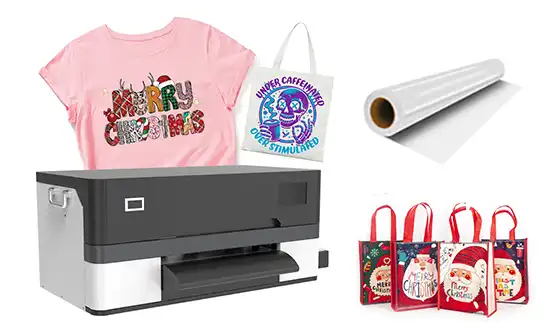
Gang-run printing is used by on-demand customisation hubs, where dozens of different designs are put on a single film roll. This process works well for online stores that sell personalised tote bags, caps, and pet items with no minimum order quantity. Home textile companies use DTF to make pillow cases, wall hangings, and decorative linens. This lets interior designers make quick prototypes. With UV DTF, advertising signs can be printed directly on plastic panels, glass walls, and metal surfaces, which removes the need for traditional vinyl application work. Gift customisation shops use both DTF and UV DTF to offer a wide range of products, from fabric aprons to ceramic tiles, which makes the best use of their equipment.
Optimizing Artwork for Superior Results
The first step in colour management for a DTF PET printer is making an ICC profile that matches the right ink, film, and medium combos. Colour changes that aren't expected can be avoided by changing RGB artwork to CMYK patterns made for textile inks. Using a white underbase strategy changes the brightness, and putting white ink layers under colours makes dark fabrics more opaque. Vector drawings can be easily resized to any size, but rasterised images need to be at least 300 DPI at their final print size. Temperature, pressure, and dwell time in a heat press depend on the type of cloth. Keeping thorough spec sheets for polyester, cotton, blends, and synthetics makes sure that results are the same from one production run to the next.
Procurement Guidance: Where and How to Buy DTF Pet Printers
Buying equipment through official channels protects your investment and makes sure you get real parts. Genuine sellers offer guarantees backed by the manufacturer, while grey market units may come with regional parts that don't work with the main unit. Entry-level desktop DTF systems cost between $3,000 and $5,000, and industrial dual-head models cost between $8,000 and $15,000, depending on how automated they are. Multiple-unit sales qualify for volume discounts, and printing companies that are standardising their lines can often negotiate discounts of 10 to 15 percent.
Navigating International Purchasing Considerations
People who buy things across borders need to think about shipping costs and government rules. Sea freight is good for orders with multiple machines, but it takes 6–8 weeks to get there; air freight, on the other hand, gets there in 1–2 weeks but costs more. There are different types of import taxes. For example, digital printers usually fall under HS Code 8443, and the U.S. rates range from 0% to 3.7%, based on where they come from. It is very important to make sure that you can get help after the sale. We have technical support protocols in place that include remote diagnostics, video-guided repairs, and faster shipping of parts. Building ties with providers that offer marketing materials and sample kits will help you get new clients faster by giving you ready-to-share print samples that show customers the quality.
Conclusion
DTF and UV DTF technologies make it easy for businesses to start printing on clothes, and a DTF pet printer can produce results that are good enough for industrial use. We've talked about how direct-to-film printing works, how to choose equipment by looking at things like printhead type and print speed, and how to keep equipment in good shape so it lasts a long time. It can be used to decorate textiles, make signs, and personalise gifts. The success of procurement depends on checking out the supplier and knowing the total costs that go beyond the initial purchase price. These printing methods allow for low-cost start-ups with high profit margins per order, the ability to print on demand, and activities that use little room. Film transfer printing gives you the flexibility you need to compete in the personalised product market, no matter how big or small your business is.
FAQ
What ink types work with DTF PET printers?
Pigment-based textile inks that were made just for DTF applications make sure that the prints stick well and stay true to colour. These paints have CMYK and white in them. The white layer makes the colours less noticeable on dark fabrics. Water-based formulas are most popular because they are better for the environment and last longer after being washed. It is important that the inks you use are compatible with your printhead type, like the Epson F1080-A1. Using inks that aren't allowed will cancel your warranty and could damage the nozzle permanently. If you buy ink from the company that made your equipment, you can be sure that it will work with circulation systems and warm zones.
How does UV DTF improve product durability compared to standard DTF?
When UV light hits the ink layer, it cross-links chemically right away. This makes the surfaces harder and less likely to get scratches than when normal DTF is heated and dried. Because of this, UV DTF is better for high-touch items like phone cases, promotional drinkware, and outdoor signs that are exposed to weather and UV rays. Both technologies have about the same wash durability on textiles, but UV DTF can be used on rigid substrates that traditional film transfer can't stick to. The quick fixing also gets rid of the risk of smudging during handling, which makes the production process run more smoothly in busy places.
Can DTF equipment handle high-volume production demands?
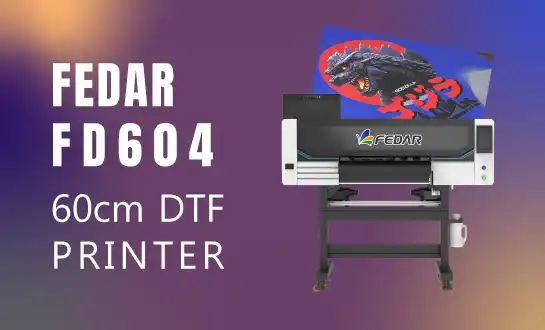
When combined with efficient heat press operations, dual-head setups can handle more than 60 A4 prints an hour, which equals 400 to 500 finished garments per 8-hour shift. Gang-run printing increases output because it uses one film roll for multiple designs, so there is no need to change the substrate. Industrial models have automatic powder application, shaking, and curing, which means that less work needs to be done by hand. Compared to DTG equipment, which needs fabric pretreatment for each piece, DTF has a higher throughput for a wider range of orders. If you need to print more than 1,000 units per day, you might need more than one printer or look into 60cm width models for better gang-run efficiency. However, desktop systems are good for most small to medium-sized factories.
Partner With a Trusted DTF Pet Printer Manufacturer
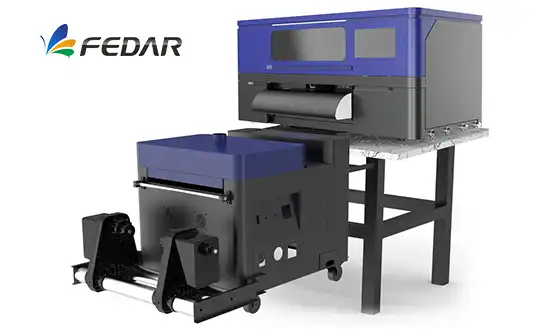
Equipment dealers, printing companies, and ad shops are welcome to look into Fedar's direct-to-film options, which are made to meet the needs of the American market. Our FEDAR FD-D300 and FD-D302 models have reliable Epson F1080-A1 printheads and small sizes that are great for businesses that need to save space. You don't need any experience to start a DTF business—our systems produce high-quality output at a PC level, making them perfect for sample makers and small batch production shops. As a company that makes DTF pet printers and has a 400-person R&D and production facility, we offer a steady supply of parts, support for reproducible samples, and full technical training. Email our team at info@tex-printer.com to talk about how to work together as an agent, get discounts for bulk orders, and get personalised help after the sale for your market. We want to help you take advantage of high-margin possibilities in gift customisation, textile printing, and promotional items by giving you equipment that is reliable, affordable, and good at what it does.
References
1. Smith, J. & Chen, L. (2023). "Advances in Direct-to-Film Printing Technology for Textile Applications." Journal of Digital Textile Printing, 18(3), 112-128.
2. Martinez, R. (2024). "UV Curing Systems in Modern Garment Decoration: A Comparative Analysis." Industrial Printing Technology Review, 41(2), 67-82.
3. Thompson, K. et al. (2023). "Printhead Technology Evolution in Desktop DTF Systems." International Journal of Inkjet Printing, 9(4), 203-219.
4. Lee, S. & Patel, M. (2024). "Supply Chain Considerations for Digital Printing Equipment Procurement." B2B Manufacturing Insights, 15(1), 34-49.
5. Anderson, T. (2023). "Color Management and ICC Profiling for Direct-to-Film Applications." Textile Graphics Quarterly, 27(2), 88-104.
6. Williams, D. & Garcia, P. (2024). "Maintenance Best Practices for Industrial DTF Printing Systems." Print Production Management, 12(3), 156-171.

Aelx Chen
Alex Chen has accumulated extensive R&D and industrialization experience in the digital textile printing field, focusing on the innovation and optimization of digital printing equipment, direct-to-garment (DG) processes, and application solutions. He led the independent R&D and mass production of the company's core textile printing machines and DG printers, promoting their application in the textile, advertising, home furnishing, and personalized customization markets. The equipment he led has passed ISO9000 and CE certifications, earning the trust of a wide range of customers. He continuously provides customers with professional technical support and industry trend analysis, contributing to the upgrading and efficiency improvement of the digital printing industry.
We Look Forward to Your Email
Please send us product information that interests you, and we will provide you with one-on-one service.
Recommended Blog
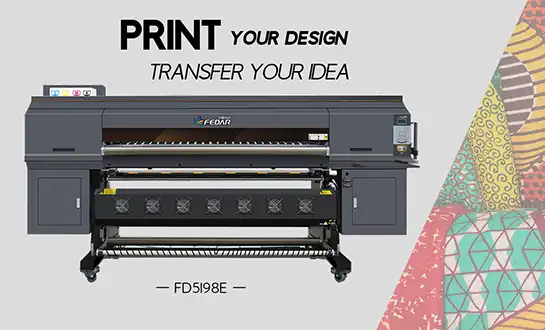
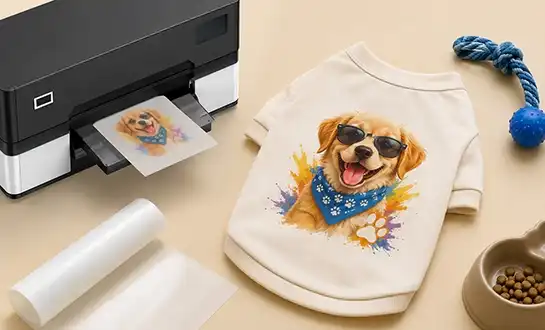
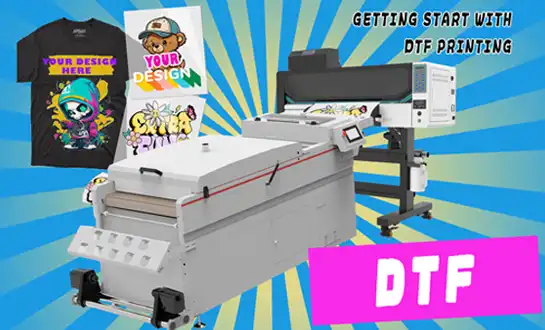

What are the maintenance requirements for direct to film printer?
DTG vs DTF Printing:The Pros and Cons of Direct Printing Technologies.
What is DTF Printing? A Complete Guide to Direct-to-Film Printing.