Top-Rated Mid-Size DTF Printer for Small Businesses
Understanding Mid-Size DTF Printers: Features and Benefits
- Understanding Mid-Size DTF Printers: Features and Benefits
- Comparing Mid-Size DTF Printers: Making the Right Choice
- Procurement Guide: Where and How to Buy Mid-Size DTF Printers
- Setting Up and Maintaining Your Mid-Size DTF Printer for Optimal Performance
- Why Choose Fedar Mid-Size DTF Printers?
- Conclusion
- FAQ
- Partner with Fedar for Your Direct-to-Film Equipment Needs
- References
When evaluating printing solutions that strike the perfect balance between affordability and performance, the mid-size DTF printer stands out as the ideal choice for small business owners seeking reliable textile printing capabilities. These machines typically feature print widths between 500mm and 700mm, dual to six printhead configurations, and medium-scale production capacity ranging from 8 to 24 square meters per hour. This sweet spot allows operators to handle custom apparel runs, home textile projects, and promotional merchandise without the space demands or capital investment of industrial-scale equipment, making them particularly attractive for growing studios and distribution partners.
Understanding Mid-Size DTF Printers: Features and Benefits
Direct-to-Film technology is a big step forward in textile printing because it lets companies put bright, long-lasting images on almost any kind of cloth without the trouble of pre-treatment that comes with older DTG methods. Dye sublimation only works with polyester-based materials, and vinyl cutting is time-consuming to weed out. DTF printing, on the other hand, makes the process much easier.
The Core DTF Process Explained
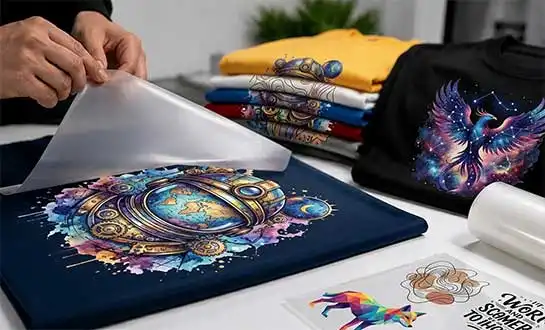
When high-resolution water-based pigment paints are sprayed onto a PET release film, the printing process starts. A hot-melt adhesive powder is applied right after printing and melted to make a film that is ready to be transferred. The film is then heat-pressed onto the clothing of choice, sticking firmly to cotton, polyester blends, nylon, and even tough materials like leather or canvas. The whole process gets rid of several pre-treatment steps and makes the products wash-resistant to at least Grade 4 according to ISO 105-C06.
Key Advantages for Growing Operations
This type of equipment has a lot of great features that help printing companies and dealers with problems they often have. The balanced footprint, which is usually less than 2.5 meters long, fits easily in most workplace areas while still producing a good amount of work. Businesses can handle moderate-sized orders without having to run overnight or work extra hours on the weekends if their production throughput is between 8 and 24 square meters per hour.
Another important factor is how cost-effective something is. CMYK plus white ink configurations make sure that colours are accurately reproduced on both light and dark fabrics. This cuts down on the waste of material from test prints. Roll-to-roll feeding systems require less help from the operator, which frees up staff to do finishing tasks or talk to customers. These operational benefits directly lead to higher profits and shorter lead times for orders.
Versatile Application Scenarios
Because these printers are flexible, they can be used for a variety of business types. A mid-size DTF printer provides a practical solution for businesses that need reliable performance, efficient production, and the ability to handle different customer requirements. Custom fashion brands use the technology to print complex, multicoloured designs quickly and easily on cotton t-shirts and jackets. Suppliers of corporate uniforms require strong adhesion that can survive more than 50 washes at 60°C in industrial washing processes. A professional mid-size DTF printer helps manufacturers achieve consistent transfer quality while supporting a wide range of fabric applications. Manufacturers of sporting goods depend on high-elasticity transfers for spandex sportswear, where patterns need to be able to stretch without cracking when people are working out hard. Because of this, the equipment is especially useful for wholesalers who serve a lot of different types of customers. Choosing a reliable mid-size DTF printer allows companies to expand their product offerings, improve workflow efficiency, and meet diverse printing demands. With a high-quality mid-size DTF printer, businesses can balance production capacity, print accuracy, and operating costs while building stronger competitiveness in customized apparel markets.
Comparing Mid-Size DTF Printers: Making the Right Choice
To choose the best equipment, you need to know how the different configurations fit with your business goals. Units with a width of less than 400 mm are good for niche markets like making baby clothes or patches, but they limit the number of orders that can be placed. Large-format systems with a width of more than 800 mm have a high throughput, but they need a lot of floor area and a lot of money up front, which many small businesses can't afford.
Critical Specification Comparisons
The final quality and pricing power are directly affected by the print resolution. Models with Epson i3200-A1 printheads and PrecisionCore technology can produce 3200 DPI, which is good enough for high-end retail outlets because it produces picture detail. This resolution is about 35% better than entry-level options, which lets businesses charge more per piece while lowering the number of customers who reject their orders.
Specifications for speed need to be carefully interpreted. At six-pass quality, a dual-head configuration might cover 8 square meters per hour, while a six-head configuration covers 24 square meters at the same pass settings. When figuring out production potential based on order number, these differences are very important. A studio that makes 50 custom hoodies every day needs a different throughput than a distributor that fills orders for 500 pieces at a time.
| Configuration Type | Printhead Count | Hourly Output (6-pass) | Ideal Business Profile |
|---|---|---|---|
| Dual-head | 2 | 8 m²/h | Startups and custom studios that work on 30 to 80 pieces every day |
| Quad-head | 4 | 24 m²/h | Established stores with bulk deals that sell more than 200 items every day |
| Six-head | 6 | 24+ m²/h | Production sites that serve a number of store customers |
Essential Features for 2024 Models
Modern tools use important technology advances that separate reliable workhorses from upkeep headaches. White ink circulation devices stop the TiO2 pigment from setting, which is what clogs the nozzles and causes unexpected downtime in DTF operations. Automated powder shaking and curing modules that are automated get rid of the need for manual steps that slow down production and cause quality problems.
For stable film during high-speed printing, procurement pros should look for machines with vacuum suction platforms. Continuous ink supply systems (CISS) with level sensors keep ink from running out in the middle of a job, and heated print beds between 40°C and 50°C make sure that the ink sticks well before the powder is added. All of these features make it easier for operators to do their jobs and faster to learn new ones, which is very important for companies that want to grow into new areas through distribution networks.
Procurement Guide: Where and How to Buy Mid-Size DTF Printers
When you're shopping, you need to pay attention to both the prices you see and the costs you don't see that affect your overall investment. This kind of equipment usually costs between $8,000 and $25,000, based on how many printheads it has and how automated it is. Dual-head models are the most affordable, while six-head models with built-in drying machines are the most expensive because they can make three times as much.
Total Cost Considerations for US Buyers
At the moment, import duties add about 0.03 to 3.7% to the value of tools classified under HTSUS for printing machines. However, rates change when trade policies do. Shipping goods from Asian factories to US ports by sea usually costs between $800 and $1,500. If time is of the essence, air options can double or triple the cost. To cover freight, customs clearance, and local transport to final installation sites, buyers should set aside an extra 15 to 20 percent on top of the equipment's listed price.
Different providers have very different ways of collecting payments. For businesses planning to invest in a mid-size DTF printer, understanding payment structures and supplier terms is an important part of managing equipment costs. Established manufacturers usually ask for a 30% deposit, with the rest due before the goods are shipped. However, qualified distributors with a history of purchases can sometimes get better terms and be split 50/50. A reliable mid-size DTF printer supplier may also provide more flexible purchasing solutions to help customers manage cash flow during expansion. Letters of credit protect both parties, but they cost the bank between 0.5% and 1% of the deal value. When buyers evaluate a mid-size DTF printer, they should consider not only the equipment price but also the payment conditions and long-term cooperation benefits. When buyers in bulk get exclusive area rights, they often work out longer payment terms or transfer agreements that lower their initial capital needs. Choosing a suitable mid-size DTF printer with favorable supplier support can help businesses reduce financial pressure and build a more sustainable investment plan. A professional mid-size DTF printer purchase strategy allows companies to balance equipment quality, payment flexibility, and future growth opportunities.
Securing Manufacturer Partnerships
Building relationships with factory-direct suppliers has benefits that go beyond just getting better prices. Production facilities with ISO 9001 approval and in-house R&D teams make sure that quality is always the same and that problems are fixed quickly. A 400-person production operation shows that the business is stable and large enough to ensure that parts will be available for a long time. This is important when serving customers three to five years after the purchase.
A full warranty should cover the repair of printheads for problems caused by production flaws for a period of time usually between 6 and 12 months after installation. Extended support packages could include preventative maintenance visits once a year, faster access to spare parts, and technical training for service teams from distributors. With these rules, transactions become partnerships, which is the basis for successful market penetration.
Setting Up and Maintaining Your Mid-Size DTF Printer for Optimal Performance
The operational baseline that determines years of trouble-free production or repeated frustrations is set by the proper installation. Surprisingly, the environment has a big effect on the quality and life of prints.
Installation Best Practices
One of the most overlooked keys to success is climate control. Keep the air between 20°C and 28°C and the humidity between 40 and 60% to keep ink from drying out in tubes and static electricity from building up on film surfaces. Not enough humidity makes it hard for films to stick together, and too much moisture causes powder to clump together, which shows up as texture problems on finished transfers.
In places where power quality isn't stable, electrical infrastructure needs specialised circuits with voltage stabilisers. Printhead electronics are very sensitive to voltage changes greater than ±5%, which can damage the controller permanently or cause occasional print problems that are hard to figure out. Place the equipment away from direct sunlight and air conditioning vents that can make the print bed different temperatures. Software configuration involves calibrating the printhead alignment through bidirectional and step testing to ensure perfect registration across all colour channels. To get the best bonding without burning the cloth fibres during the final transfer, operators should make sure that the white ink density settings match the melting point of the adhesive powder, which is usually between 110°C and 130°C.
Daily and Weekly Maintenance Routines
Regular repair plans protect the value of investments and avoid unplanned downtimes during important production runs. Every day should start with nozzle check patterns to find early clogging before it leads to print defects that can be seen. This five-minute process finds problems when they are still small enough to be fixed by a minor cleaning cycle. This way, you can avoid the heavy maintenance that is needed for severe clogs.
Every week, you have to clean the capping station, which is where the printheads rest between jobs. For businesses using a mid-size DTF printer, regular maintenance of the capping station is essential to keep printing performance stable and extend equipment life. This buildup of dried ink stops the seal from working right, so the needles dry out overnight. Wipe the rubber brush blade that cleans the printheads before closing them, and replace it every three months, no matter how it looks. A well-maintained mid-size DTF printer can reduce downtime and maintain consistent print quality during continuous production. Check the powder application roller for buildup that makes the coating uneven. To keep the roughness even, use compressed air or soft brushes. White ink handling needs extra care due to pigment density. When operating a mid-size DTF printer, proper white ink management helps prevent clogging issues and improves transfer quality. To keep the TiO2 particles in suspension, run agitation cycles every four hours when the machine is not being used. If you use suitable third-party inks, you should drain and flush the white ink lines once a month because differences in the formulation can affect how quickly the ink settles and how easily it clogs. Taking this preventative step with a mid-size DTF printer costs a lot less than replacing clogged printheads. Regular care of a reliable mid-size DTF printer ensures better efficiency, longer service life, and more stable production results.
Troubleshooting Common Production Issues
Banding across prints usually means that the printhead isn't aligned correctly or that the media feed isn't working right. Use the measuring tools that came with the machine to change the head gap, making sure that the space stays between 1.5 and 2.0 mm for normal PET films. Make sure that the film tension on the roll-to-roll system stays the same. If the material moves laterally during printing, tighten the feed rollers.
Colour precision issues are often caused by colour profiles that have passed or ink viscosity changes caused by changes in temperature. Make sure that the colour management software works with the brand of ink and film covering that are being used. Using general profiles will not give you accurate results. Before installing, let new ink bottles warm up to room temperature for two hours to make sure the thickness meets the manufacturer's requirements. Adhesion failures during washing manifest as peeling edges or complete transfer detachment. This generally happens when the cure temperature is too low, or the pressure is too low during heat pressing. Check with thermal measuring strips that the press platens reach 160–170°C at the height of the garment and keep the pressure between 50 and 60 PSI for 15 to 20 seconds. Weak adhesion is also caused by not enough powder coverage, which means the powder shaker's dispense rate needs to be recalibrated.
Why Choose Fedar Mid-Size DTF Printers?
Fedar's building philosophy is based on making sure that equipment is reliable and easy to use. They know that distributors and end users need equipment that works regularly without the need for advanced technical knowledge. Over 400 people work at our factory doing original research and development and quality-controlled production, making sure that every unit meets strict performance standards before it is shipped.
Proven Performance Specifications
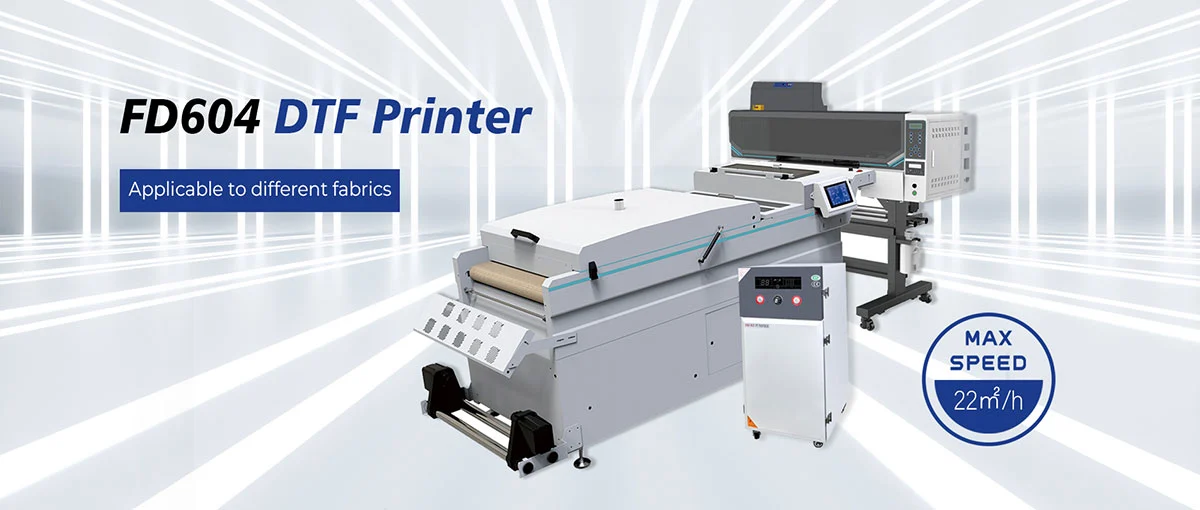
The FEDAR FD60 line shows how careful design can solve problems in the real world of production. The FD60 dual-head model can produce 8 square meters of fabric per hour at six-pass quality, which means that small businesses can reliably make up to 80 garments per day. Upgrading to the FD604 quad-head setup triples output to 24 square meters per hour, which can handle both multi-shift work plans and wholesale operations.
| Model | FEDAR FD60 | FEDAR FD604 | FEDAR FD606 |
|---|---|---|---|
| Printhead Quantity | 2 | 4 | 6 |
| Type of Printhead | Epson i3200-A1 | Epson i3200-A1 | Epson i3200-A1 |
| Print Width | 600 mm | 600 mm | 600 mm |
| Setting up colours | CMYK+W | CMYK+W | CMYK+W |
| Maximum Resolution | 3200 DPI | 3200 DPI | 3200 DPI |
| Production Speed (6-pass) | 8 m²/h | 24 m²/h | 24+ m²/h |
All models have built-in white ink circulation systems that move the ink around every 30 minutes while they're working and every four hours when they're not. This pretty much gets rid of the clogging problems that other machines have. When compared to human application methods, automated powder shaking units that can recycle materials cut the cost of consumables by 15 to 20 percent while making sure that the coating thickness is the same on every print.
Distributor-Focused Support Infrastructure
We build our support programs around the needs of distributors instead of just end users because we know that the success of our agents affects the growth of both of us. Partner service teams get full technical training that lets them do 90% of maintenance and troubleshooting on their own. This means they don't have to rely on factory technicians as much and can respond to customers more quickly. Training programs teach people how to install things, do regular maintenance, figure out what's wrong with them, and replace parts delivered through on-site sessions or virtual instruction.
Professional product photos, technical specification sheets in multiple languages, and sample print collections showing ability on different types of fabric are all part of marketing support packages. With these tools, wholesalers can make professional offers to potential customers without having to pay a lot of money for expensive custom development. By limiting direct sales in certain areas, territory protection policies keep wholesaler margins and market investment high and avoid channel conflict. Spare parts availability through regional warehouses ensures critical components ship within 24 to 48 hours, protecting end-customer relationships and keeping the trust that leads to return purchases and referrals.
Real-World Success Examples
After teaming up with Fedar, a Dallas-based company that sold advertising items, went from only offering sublimation services to offering full-spectrum cloth printing. After installing the FD604, they were able to get business uniform contracts that were previously given to bigger rivals. This increased their monthly revenue by 40% in just six months. Their review talks about how reliable the business is and how one person can handle both printing and customer service at the same time.
A well-known supplier of advertising equipment in California added our FD606 to their showroom. They used the high-throughput feature to show buyers how fast production could be compared to slower DTG technology. Medium-sized print shops upgraded from entry-level equipment because they could see proof that the machine could print 24 square meters an hour. This led to $180,000 in equipment sales in the first quarter.
Flexible Acquisition Options
We offer purchase structures that go beyond standard terms because we know that different types of distributors have different access to capital. Bulk order savings start at three units, and prices get better as you buy more than ten units. This makes it financially possible to keep a lot of goods on hand for fast market growth. Demo equipment programs put evaluation units at distributor facilities with flexible return or purchase terms. This lets customers try the equipment without any problems, which speeds up the sales cycle. Consulting services help distributors develop business plans demonstrating ROI projections for prospective customers, deepening customer relationships that yield long-term loyalty.
Conclusion
Choosing the right DTF printing tools has a big impact on how well growing businesses can run and how strong they are in the market. The balanced specs of 600mm width machines, which combine a manageable footprint with respectable production throughput, allow small businesses to meet a wide range of customer needs without putting too much strain on their capital. Important evaluation factors include more than just the initial price. They also include total ownership costs, the manufacturer's support infrastructure, and the technology's dependability, which determines how many years of profitable operation there will be versus how often frustration sets in. Fedar's mid-size DTF printer lineup provides thorough training, quick access to parts, and flexible partnership terms for its distributors. This sets the stage for long-term market growth and customer satisfaction.
FAQ
What ink types work with these printers?
For DTF technology to work, you need special water-based pigment paints that are made for film transfer instead of direct cloth printing. The CMYK channels use standard pigment formulations, but white ink has titanium dioxide particles that need to be stirred all the time so they don't settle. Most makers suggest their own ink formulations to keep the warranty valid, but there are cheaper third-party options that work just as well. Check to see if alternative inks have OEKO-TEX or REACH certifications to make sure they meet the safety and environmental standards needed for making industrial textiles.
How does resolution affect pricing and quality?
Higher resolutions, like 3200 DPI, make it possible to reproduce picture details and small text clearly, which is why customers are willing to pay more. When gradients change, the difference is especially clear because lower-resolution equipment shows banding that looks like it was made by a beginner. The number of printheads and the quality of the print affect the price of the equipment. For example, Epson i3200-A1 heads are much more expensive than entry-level options but have better droplet control. Businesses that want to sell to consumers should focus on getting the highest resolution possible, while those serving clothing might find 1440 DPI enough for logos.
What warranty and support should I expect?
Electronic parts and controllers are usually covered for 12 months under a standard warranty. Printheads can be covered for six months to a year, based on how confident the maker is in them. Full support packages should include technical help by phone and email during business hours, with promises of a response in less than four hours for problems that stop output. Find out if the supplier has regional service centers or only uses remote diagnostics. For more complicated mechanical issues, you may need to have someone come to your business. To help with customer service agreements, distributors should ask for proof of when parts will be available and how much they will cost.
Partner with Fedar for Your Direct-to-Film Equipment Needs
It takes more than comparing specification sheets to find a reliable cloth printing technology; it demands a manufacturing partner committed to your operational success and market growth. Fedar mixes tested tools with support programs for distributors that are meant to help you get into new markets faster and make customers happier. From new studios testing market demand to established wholesalers increasing capacity for store partnerships, our mid-size DTF printer lineup can meet a wide range of production needs. Contact our team at info@tex-printer.com to talk about your specific business needs, get production samples that show how good our prints are, or look into becoming an exclusive distributor in your area. We offer personalised advice on choosing tools, estimating return on investment (ROI), and flexible bulk buy options that make a partnership financially appealing. As a leading mid-size DTF printer manufacturer, we're committed to fostering partnerships that benefit all parties involved by providing quick technical help and fair prices.
References
1. Johnson, M. & Chen, L. (2023). "Advances in Direct-to-Film Technology for Textile Applications," Journal of Industrial Printing Systems, Vol. 47, No. 3, pp. 112-128.
2. Peterson, R. (2024). "Comparative Analysis of Digital Textile Printing Methods: DTF, DTG, and Sublimation," Textile Manufacturing Review, Spring Edition, pp. 34-51.
3. Thompson, K. et al. (2023). "Economic Feasibility Models for Small-Scale Digital Printing Operations," International Journal of Print Production Management, Vol. 19, No. 2, pp. 88-104.
4. Williams, S. (2024). "Maintenance Protocols for Extended Equipment Life in Digital Textile Printing," Print Technology Quarterly, Vol. 12, No. 1, pp. 45-62.
5. Davis, A. & Martinez, J. (2023). "Environmental Standards and Compliance in Modern Textile Printing Inks," Journal of Sustainable Manufacturing Practices, Vol. 31, No. 4, pp. 201-219.
6. Anderson, P. (2024). "Distributor Success Strategies in the Digital Printing Equipment Market," B2B Sales Management Review, Vol. 8, No. 2, pp. 67-83.
Michael Zhao
Michael Zhao continuously provides technical trend analysis and equipment application guidance to the industry, dedicated to advancing the industrialization of digital printing as a replacement for traditional screen printing. Achievement: Has published multiple technical analysis articles and provided professional support in equipment selection, process optimization, and fault diagnosis to dozens of printing factories, contributing to the upgrade of the digital printing industry.
We Look Forward to Your Email
Please send us product information that interests you, and we will provide you with one-on-one service.
Recommended Blog
_1786522820542.webp)
Industrial Roll to Roll DTF Printer for Continuous Production
Why Does Color Fade Happen in Dye Sublimation Printing Over Time?

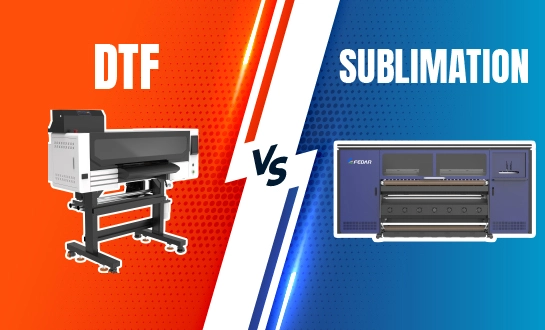
Comparision Between Direct-to-Film (DTF) Printing & Sublimation Printing
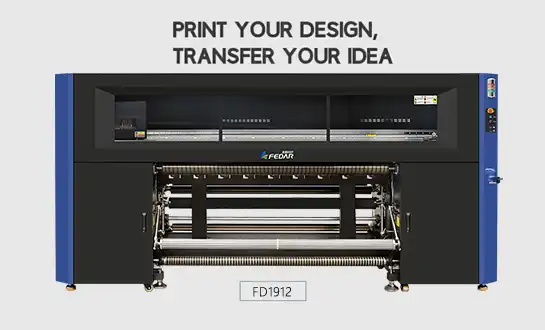
Sublimation Printer Enables Vibrant Designs on Polyester Materials