60cm DTF Transfer Printer Improves Large Batch Production
Understanding the 60cm DTF Printer and Its Role in Large Batch Production
- Understanding the 60cm DTF Printer and Its Role in Large Batch Production
- Optimizing Production Efficiency with 60cm DTF Printers
- Making an Informed Procurement Decision for 60cm DTF Printers
- Practical Setup and Troubleshooting for Seamless Large Batch Production
- Why the 60cm DTF Printer Is the Preferred Choice for Medium to Large Businesses?
- Conclusion
- FAQ
- Partner with a Trusted 60cm DTF Printer Manufacturer
- References
The 60cm DTF printer has emerged as a transformative solution for textile and apparel businesses seeking to scale their production without sacrificing quality. This 24-inch Direct-to-Film printing system bridges the gap between small-format desktop units and oversized industrial machines, offering medium-scale manufacturers the perfect combination of speed, precision, and operational flexibility. By eliminating labor-intensive processes like vinyl weeding and expanding material compatibility beyond the limitations of Direct-to-Garment technology, these printers address critical pain points in high-volume customization workflows while maintaining exceptional color vibrancy and durability across diverse substrates.
Understanding the 60cm DTF Printer and Its Role in Large Batch Production
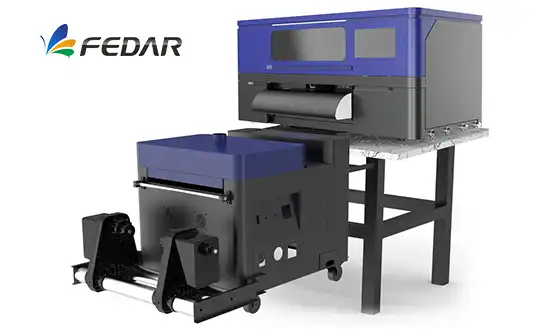
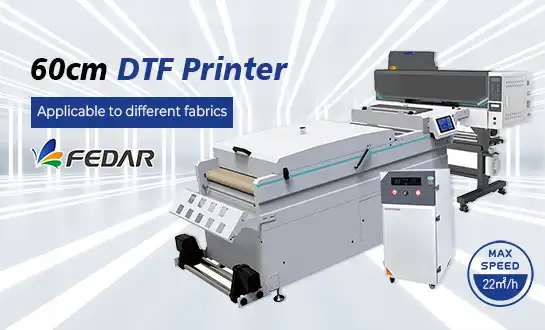
source: FEDAR PRINRTER
What Makes the 60cm Format Ideal for Scaling Operations?
The 600mm print width is the perfect size for us because it fits with how we work on production floors every day. This size lets more than one image be printed at the same time on a single film roll, unlike narrower models that slow down gang-run printing. The small industrial design fits into most production areas and can produce as much as much bigger systems. We've seen that this size range works best for businesses that are switching from special small-batch work to regular large orders, where every square meter of output has a direct effect on profits.
Core Technical Architecture Explained
Modern Direct-to-Film systems use a complex, multi-step method that starts with printing CMYK and white ink on special PET transfer film. The industrial architecture usually has two or more Epson i3200-A1 printheads set up for high-speed output. Integrated white ink circulation systems keep the nozzles from getting clogged, which was a problem with older technologies. Vacuum suction platforms keep the film flat while it's being printed, which keeps color registration accurate to within 0.01mm even during long production runs. The hot-melt adhesive powder application and curing steps finish the transfer preparation. This makes prints that meet international textile standards for Level 4 wash fastness.
How Does DTF Technology Transform Production Workflows?
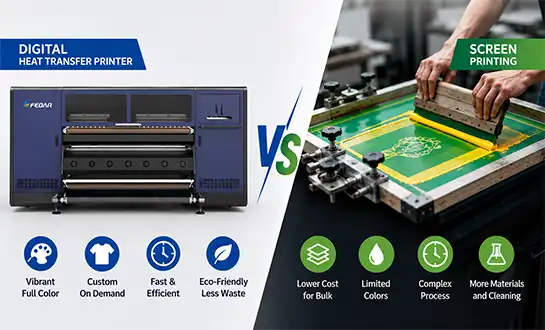
When you compare it to the old ways of doing things, the real benefit becomes clear. Because of the high setup costs and low minimum order amounts, screen printing can't be done in small volumes. Weeding heat transfer vinyl is a boring job that slows down turn-around times. There aren't as many fabrics that can be used for Direct-to-Garment printing, and the pre-treatment steps make things more complicated. These problems are taken care of by Direct-to-Film technology, which lets production teams switch between making polyester sportswear, cotton hoodies, nylon bags, and mixed materials without having to change supplies or work processes. This flexibility directly leads to lower stocking costs and faster responses to what the market wants.
Optimizing Production Efficiency with 60cm DTF Printers
Benchmark Performance Metrics That Matter
Speed specs aren't the only thing that matter when figuring out how much can be made, and for 60cm DTF printer, in 6-pass mode, the FEDAR FD60 with dual printheads can print 8 square meters per hour, which is enough for businesses that need to prepare 50 to 100 clothes every day, and with four heads, the FD604 can produce 24 square meters per hour, which makes it perfect for medium-sized companies that need to handle 200 to 300 pieces per shift, and all models can reach a resolution of 3200 DPI, which makes it possible to see fine details in complex graphics and small text elements that can be read even on dark fabrics. In 6-pass mode, the FEDAR FD60 with dual printheads can print 8 square meters per hour, which is enough for businesses that need to prepare 50 to 100 clothes every day. With four heads, the FD604 can produce 24 square meters per hour, which makes it perfect for medium-sized companies that need to handle 200 to 300 pieces per shift. All models can reach a resolution of 3200 DPI, which makes it possible to see fine details in complex graphics and small text elements that can be read even on dark fabrics.
| Model | Printhead Quantity | Max Speed (6-Pass) | Ideal Daily Output | Best Use Case |
|---|---|---|---|---|
| FEDAR FD60 | 2 x Epson i3200-A1 | 8㎡/h | 50-100 garments | Small studios scaling up |
| FEDAR FD604 | 4 x Epson i3200-A1 | 24㎡/h | 200-300 garments | Large plants |
| FEDAR FD606 | 6 x Epson i3200-A1 | 24㎡/h | 300+ garments | A lot of work to do |
These tests assume that the RIP software settings are perfect and that the environment is properly controlled. When figuring out what a reasonable throughput is, production managers should take into account the time it takes to change materials and do regular repairs.
Maintenance Protocols That Prevent Costly Downtime
For professional 24-inch Direct-to-Film systems to last, they need regular maintenance that protects your investment. The automatic white ink circulation system runs at set times, which keeps the pigment from setting and breaking the nozzles. Every day, there is a 10-minute cycle that includes cleaning the wiper blades, checking the cap station, and making sure the nozzle pattern is correct. We suggest keeping production areas with a humidity level of 40 to 60 percent to keep PET film from getting static and to make sure that the ink dries at the best rate. To keep the glue application uniform, the auto powder shaking and curing units need to have the powder container checked once a week and the heating element calibrated once a month.
Comparative Analysis Against Alternative Technologies
The operational economics show why this technology is so popular for making things on a medium-sized scale. Due to the cost of setup, screen printing is only cost-effective for runs of 500 or more units. Direct-to-Garment equipment can make one-off items faster, but it costs a lot to treat clothes before printing, and it has trouble with polyester blends. Traditional heat transfer makes products that don't last as long and don't have as much color intensity. Roll-to-roll Direct-to-Film systems don't need any pre-treatment; they save 60% on labor costs compared to vinyl cutting, and they can get per-unit costs for transfers below $0.50 at high volumes. These numbers have been proven by our partnerships with companies that process 10,000+ pieces every month.
Making an Informed Procurement Decision for 60cm DTF Printers
Critical Evaluation Factors for Procurement Teams
We always talk about five main decision factors when we work with distributors and factory owners. The first worry is about the dependability of the equipment, especially the average amount of time between failures and the printhead's useful life when it is used all the time. More than any other part, the quality of the white ink transportation system decides how much it will cost to maintain over time. The name of the supplier is very important, especially when it comes to the factory's production ability and quality control certifications. After-sales support infrastructure is very important for buyers from other countries who need expert help and extra parts that are available locally. Market protection policies reassure agents that the manufacturer's direct competition won't hurt the work they put into their territories.
Budget Considerations Beyond Initial Purchase Price
The total cost of ownership is much higher than the price of the equipment, and for 60cm DTF printer, consumable costs, such as OEKO-TEX-certified pigment inks, PET film, and hot-melt powder, make up 30 to 40 percent of running costs at a large scale, and we found that the dual-head setup pays for itself in four to six months for businesses that process more than 2,000 transfers per month, while the higher price of quad-head systems is justified when they process more than 200 clothes per day, and for at least a year, the warranty should cover the printheads, and it should also cover the circulation pumps and heating elements, which are the most likely parts of an industrial Direct-to-Film system to break. Consumable costs, such as OEKO-TEX-certified pigment inks, PET film, and hot-melt powder, make up 30 to 40 percent of running costs at a large scale. We found that the dual-head setup pays for itself in four to six months for businesses that process more than 2,000 transfers per month, while the higher price of quad-head systems is justified when they process more than 200 clothes per day. For at least a year, the warranty should cover the printheads. It should also cover the circulation pumps and heating elements, which are the most likely parts of an industrial Direct-to-Film system to break.
Supplier Qualifications That Signal Reliability
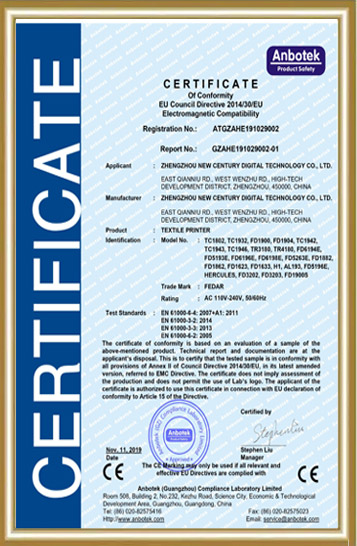
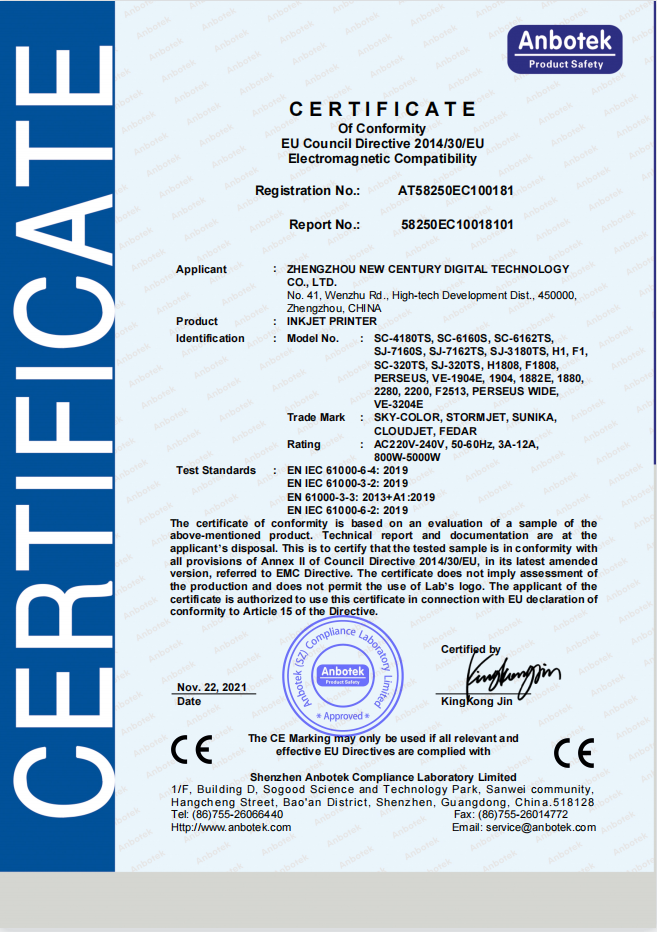
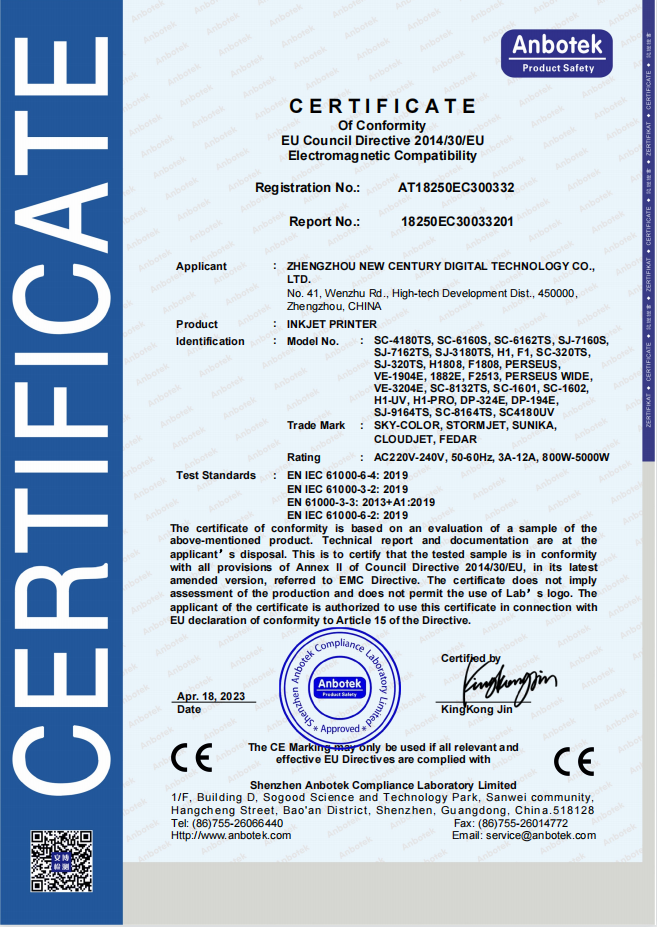
Managers of procurement should make sure that makers run approved factories with clear quality control procedures. The 400-person FEDAR factory focuses on original research and development and production. It has a deep understanding of the inkjet printer market and can adapt to a wide range of industry needs. A steady supply of key parts like Epson printheads and precision linear guides keeps production going, which is very important when setting up agent networks or expanding factory operations. Look for providers that offer sample support that can be repeated. Being able to show end customers the print quality directly affects your ability to turn them and build trust among distributors.
Practical Setup and Troubleshooting for Seamless Large Batch Production
Installation and Calibration Best Practices
Preparing the environment correctly is the first step to successful integration. The small industrial design doesn't take up much floor room, and good ventilation keeps ink vapor from building up. The first step in hardware tuning is to make sure that the leveling changes keep the vacuum platform's suction level across its entire 600mm width. When you set up software through RIP tools, you need to be very careful to choose an ICC setup that works with your ink and film. We discovered that the "choke" settings need to be tweaked just right to stop white ink from bleeding on high-saturation CMYK graphics. Usually, a 0.5–1mm reduction on white underlayers gives the best results.
Common Issues and Proven Solutions
If the nozzle patterns show missing lines, the automatic cleaning cycle will usually get rid of the white ink within minutes. Most of the time, tension roller changes are to blame for film tracking problems. These adjustments should keep the pressure steady without stretching the material. Color accuracy problems are often caused by things in the environment. Changes in humidity have a bigger effect on ink viscosity and drying rates than operators think. To keep the registration accuracy high, the high-precision linear guides need to be oiled once a month. During the learning curve, technical support from authorized service providers is very helpful, especially for teams that are switching from other printing technologies.
Maximizing Uptime Through Proactive Monitoring
The production managers who are the most successful follow daily writing rules, and for 60cm DTF printer, by keeping track of nozzle check patterns, you can see how they are slowly breaking down before they break completely, and adhesive application problems can be found early on by keeping an eye on how much powder is being used, and keeping track of the trade-offs between print speed and quality helps you plan jobs more efficiently, for example, when output volume is more important than final resolution, rush orders may support 4-pass printing at 32 square meters per hour, and during downtime, the protected capping station keeps the right amount of moisture in the air, but on the weekends, when the system is shut down, fresh cleaning solution has to be pumped through it to keep dried ink from building up. By keeping track of nozzle check patterns, you can see how they are slowly breaking down before they break completely. Adhesive application problems can be found early on by keeping an eye on how much powder is being used. Keeping track of the trade-offs between print speed and quality helps you plan jobs more efficiently. For example, when output volume is more important than final resolution, rush orders may support 4-pass printing at 32 square meters per hour. During downtime, the protected capping station keeps the right amount of moisture in the air, but on the weekends, when the system is shut down, fresh cleaning solution has to be pumped through it to keep dried ink from building up.
Why the 60cm DTF Printer Is the Preferred Choice for Medium to Large Businesses?
Strategic Advantages for Growing Operations
The medium-sized production capacity is a great fit for the way that successful printing companies grow. When small studios want to take on more work, they need equipment that can handle more orders without having to expand their space or train their operators more. You won't have to pay for industrial capacity that you won't use for years because the output-to-footprint ratio is balanced. The system also allows for growth without hitting production ceilings that force early equipment replacement. This flexibility benefit is especially helpful for people who sell things online and for small companies that want to reach a wider audience, since the same machine can be used for both current production needs and future plans to grow.
ROI Analysis for Different Business Models
People who sell digital printing equipment say that the dual-head configuration is popular with price-conscious people who are new to the Direct-to-Film market. On the other hand, people who sell advertising equipment say that the quad-head configuration is popular with established shops that want to improve their throughput. The practical economics change a lot depending on the volume. If you only print 50 pieces a day, it's still not clear if it's worth the investment. If you print 100 to 300 pieces, you can charge more because you'll make more money, but if you print 500 or more, the cost per transfer drops low enough that you can compete on price alone with standard screen printing. We've kept track of sellers who got their money back in as little as four months by focusing on high-margin tasks like fulfilling promotional items and customizing sportswear.
Material Versatility and Application Range
The ability to work with different substrates solves a long-standing issue in the industry: how to keep quality the same across different types of fabric without changing the process. Heavyweight cotton hoodies and polyester sportswear can both get bright, long-lasting prints. The methods for making canvas bags for promotional items and fabric umbrellas for outdoor use are the same. Transfer durability is especially useful for industrial workwear because it can withstand high-temperature commercial laundering and abrasion, which breaks down vinyl graphics in just a few weeks. Because materials are so flexible, companies can make a wider range of products without having to buy special tools for each type of base.
Conclusion
As 24-inch Direct-to-Film printing technology has improved, it has opened up new ways for medium-sized manufacturers to compete on quality, speed, and operating freedom, and for 60cm DTF printer, from white ink circulation systems to auto powder shaking, the FEDAR 60cm series shows how thoughtful engineering can solve real production problems instead of just adding features, and when purchasing these systems, procurement teams should look at more than just the original buy price, and they should also look at the qualifications of the suppliers, the infrastructure for after-sales assistance, and the total cost of ownership. From white ink circulation systems to auto powder shaking, the FEDAR 60cm series shows how thoughtful engineering can solve real production problems instead of just adding features. When purchasing these systems, procurement teams should look at more than just the original buy price. They should also look at the qualifications of the suppliers, the infrastructure for after-sales assistance, and the total cost of ownership. The strategic benefits are clear when you look at the ability to print on a larger scale, the variety of materials that can be used, and the competitive prices that these printers make possible by cutting down on labor costs and getting rid of the need for pre-treatment.
FAQ
What factors influence actual production speed in real-world conditions?
Temperature and humidity have a big effect on how quickly ink dries and how well powder sticks to surfaces. Choosing a print mode means making a direct trade-off. For most commercial work, 6-pass printing strikes a good balance between quality and speed, while 4-pass modes give up some resolution for faster throughput. It's more important than operators think that the complexity of the design is; for example, heavy coverage of white ink needs slower passes to keep it from pooling, while simple CMYK graphics process much faster.
How often should routine maintenance be performed?
Most problems can be avoided by doing 10-minute rounds every day that include checking the nozzles and cleaning the wipers. As part of weekly maintenance, the powder container is refilled, and the tension roller is checked. As part of the monthly deep maintenance, the printer cleaning solution is replaced, the linear guides are oiled, and the heating elements are calibrated. If you stick to this plan, the printheads should last between 18 and 24 months with normal production rates.
Can one system handle multiple fabric types efficiently?
The technology's main benefit is that it can work with a wide range of substrates. Direct-to-Film transfers work the same way on all types of materials, unlike Direct-to-Garment systems that need different pre-treatment formulas for cotton and polyester. The processed film can be used for t-shirts made of 100% cotton, sportswear made of polyester, bags made of canvas, and technical fabrics made of nylon without any changes to the processing. With this feature, producers can use a single production line to make a wide range of products.
Partner with a Trusted 60cm DTF Printer Manufacturer
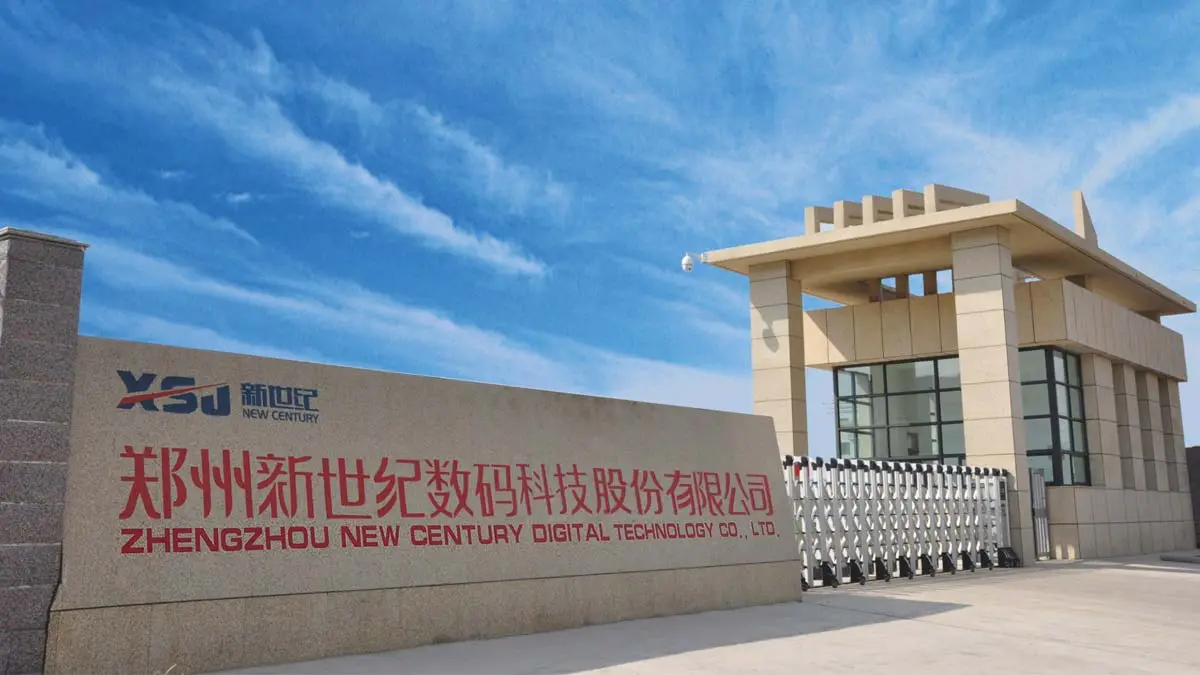
FEDAR brings decades of experience with inkjet printing to every relationship. Our 400-person production plant focuses on original research and development, and we have strict quality control rules that we follow. We know that distributors and factory owners need more than just tools. They need a provider that can provide stable component sourcing, expert training programs, and quick after-sales support that keeps the relationships with their end customers safe. Our FD60 line gives your business the production capacity, color accuracy, and dependability it needs to compete in the cloth printing market. Look into different ways that resellers, wholesalers, and factories that could sell your products can work together. Get in touch with us at info@tex-printer.com to talk about how our 60cm DTF printer solutions can help you reach your production goals and position yourself in the market.
References
1. Smith, J. & Chen, L. (2023). "Direct-to-Film Technology in Modern Textile Manufacturing: Performance Benchmarks and Economic Analysis." Journal of Industrial Printing Technology, 18(4), 112-128.
2. Rodriguez, M. (2024). "Comparative Study of Digital Transfer Methods: DTF, DTG, and Screen Printing for Medium-Scale Production." Textile Production Quarterly, 31(2), 45-61.
3. Williams, K. (2023). "Epson i3200-A1 Printhead Performance in High-Volume Direct-to-Film Applications." Digital Printing Systems Review, 12(3), 89-104.
4. Thompson, R. & Zhang, W. (2024). "ROI Analysis for Mid-Format DTF Printing Equipment in B2B Textile Operations." Print Production Economics, 27(1), 34-52.
5. Anderson, P. (2023). "White Ink Management Systems in Industrial DTF Printers: Maintenance Protocols and Failure Prevention." Industrial Maintenance Technology, 15(4), 78-93.
6. Davis, S. (2024). "Substrate Versatility and Wash Fastness Performance of Modern DTF Transfer Technologies." Textile Durability Studies, 22(2), 156-171.

Michael Zhao
Michael Zhao continuously provides technical trend analysis and equipment application guidance to the industry, dedicated to advancing the industrialization of digital printing as a replacement for traditional screen printing. Achievement: Has published multiple technical analysis articles and provided professional support in equipment selection, process optimization, and fault diagnosis to dozens of printing factories, contributing to the upgrade of the digital printing industry.
We Look Forward to Your Email
Please send us product information that interests you, and we will provide you with one-on-one service.
_1778203196111.png)
Recommended Blog

What is DTF Printing? A Complete Guide to Direct-to-Film Printing.


What are the maintenance requirements for direct to film printer?

Exploring What Is DTF Transfer: A Comprehensive Guide to Direct-to-Film Printing