High-Resolution Mid-Size DTF Printer for Precision Printing
Understanding Mid-Size DTF Printers and Their Core Technology
- Understanding Mid-Size DTF Printers and Their Core Technology
- Advantages and Practical Benefits for B2B Clients
- Comparing Mid-Size DTF Printers: Making the Right Choice
- Procurement Guide for Mid-Size DTF Printers
- Future Trends and Performance Optimization in Mid-Size DTF Printing
- Conclusion
- FAQ
- Partner with Fedar for Your Mid-Size DTF Printer Requirements
- References
When businesses evaluate Direct-to-Film printing solutions, the mid-size DTF printer emerges as a strategic asset that bridges desktop affordability with industrial-grade performance. These systems deliver exceptional image clarity through advanced printhead technology while maintaining a manageable production footprint. Designed for textile printing shops, advertising signage providers, and custom apparel manufacturers, these machines solve the challenge of achieving photographic detail without requiring warehouse-scale facilities. The balance between resolution—often reaching 3200 DPI—and practical throughput makes these printers particularly valuable for agent partners seeking reliable equipment that converts end customers through sample quality alone.
Understanding Mid-Size DTF Printers and Their Core Technology
source: FEDAR PRINRTER
How Direct-to-Film Technology Works
Direct-to-Film printing is very different from the old ways of screen printing and heat transfer vinyl. First, CMYK colour inks and white ink are put on a coated PET release film using specialised printing technology. Dye sublimation needs polyester, but DTF can be used on all fabrics, including cotton, polyester mixes, nylon, and even leather. The white ink layer makes an opaque base that lets bright colours stand out on dark fabrics. This is something that DTG printing can't do without a lot of work in the preparation steps.
Printhead Configuration and Resolution Capabilities
Its printer design is what makes a good DTF system work technically. Fedar's mid-size DTF printers use Epson i3200-A1 printheads with PrecisionCore technology, which creates drops of different sizes down to 3.5 picolitres. This tiny line control makes the edges of text sharper and the transitions between colours smoother. Businesses that want to start making things in middle quantities should use two-head setups. Four-head and six-head setups, on the other hand, increase output without losing detail. The 600mm print width can handle most needs for decorating clothing, from small banners to individual t-shirt transfers. This makes these machines useful for a variety of revenue streams.
White Ink Circulation Systems
Titanium dioxide particles that settle quickly in white ink make it difficult to use because they clog nozzles and throw off production schedules. Dual-path circulation systems are used in modern mid-size DTF printers to address this issue. Even when the printer is not being used, ink is still moving through the supply lines. Mechanical agitators in the main tank keep the particles from settling to the bottom. This engineering makes sure that the opacity stays the same across print runs, which is very important when agent partners need samples with the same quality to close deals with end customers. Managing white ink correctly cuts down on repair costs by about 40% compared to systems that don't have active circulation.
Advantages and Practical Benefits for B2B Clients
Superior Color Accuracy and Substrate Versatility
Precision printing is more than just a high quality. It also means that the colours are reproduced accurately so that they fit accepted Pantone standards and digital proofs. The CMYK+W ink configuration covers a wide range of colours, making it easy to reproduce corporate branding colours accurately, which builds trust with clients. This accuracy is very important for stores that sell advertising tools because their customers need exact colour matching for brand or franchise rules. The substrate's flexibility adds strategic value: the same machine that prints custom gym clothes can also print promotional tote bags or decorative pillow covers, which lets the business make more money without having to spend more money on new equipment.
This is what Fedar's mid-size DTF printers do for distribution partners and plant owners that makes them valuable:
Operational Efficiency Through Automation: Integrated systems for shaking and curing powder get rid of the need for manual steps that slow down production and cause quality problems. Roll-to-roll filling systems can handle continuous film stock, which means that operators don't have to do as much work during long runs. With these automation features, one technician can manage several stages of production, which increases worker efficiency while keeping the quality of the output.
Cost Management and Profit Protection: Ink delivery systems that work well place droplets precisely, reducing waste, and white ink circulation keeps expensive printhead replacements from being needed. In comparison to traditional heat presses, energy-efficient curing tunnels use less electricity. These operational savings help dealers keep their profit margins high while also keeping prices low for end customers. This is a balance that agent partners need to achieve in order to gain market share.
Maintenance Accessibility: Unlike proprietary systems that need factory-trained technicians for basic maintenance, these printers have modular parts that trained local staff can use. With common tools, changing the printhead takes less than 30 minutes. When you flush an ink line, you follow simple steps that are written down in visual guides. This serviceability directly addresses the problem that agents have with slow after-sales support, so distributors can help their customers without having to wait for international shipping.
All of these benefits take away the worries about equipment stability that keep many wholesalers from buying new printer lines. Consistent performance encourages customers to buy from the same dealer again and again, which keeps the relationship profitable over many budget cycles.
Documented Performance Standards
Specifications are important, but quality control methods are even more so. Fedar's 400-person factory follows strict testing procedures, such as ISO 105-C06 wash fastness approval, ASTM D3359 binding strength measurement, and crockmeter rub resistance testing. Thermal mapping is done on each printer to make sure that the temperature of the cure oven is the same across the heating belt within ±2°C. Optical sensors are used for printhead orientation correction to keep the accuracy of both directions within 0.1 mm. When distribution partners show bids to institutional buyers or franchise systems with strict vendor requirements, these factory standards are the proof they need.
Comparing Mid-Size DTF Printers: Making the Right Choice
Model Selection Based on Production Capacity
In order to choose between dual-head, quad-head, and six-head setups, you need to be honest about how much work you're already doing and how much you expect to grow. This comparison shows how the number of printheads has a direct effect on throughput and the ability of a business to grow. Picking the right mid-size DTF printer ensures your workflow remains efficient:
| Model | Printhead Quantity | Max Speed (6Pass) | Ideal Production Scenario |
|---|---|---|---|
| FEDAR FD60 | 2 × Epson i3200-A1 | 8㎡/h | New workshops, sample production, and seasonal companies |
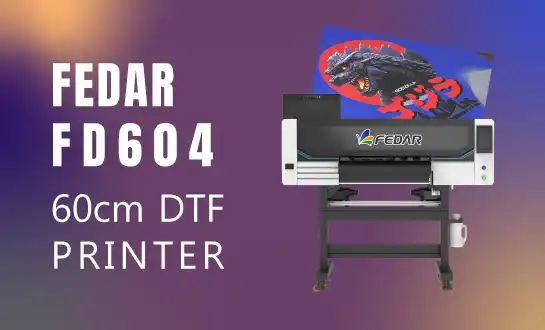
| FEDAR FD604 | 4 × Epson i3200-A1 | 24㎡/h | Established print shops and service providers with many clients |
| FEDAR FD606 | 6 × Epson i3200-A1 | 24㎡/h | Large plants, fulfilment centers, and bulk production |
If a digital printing studio wants to get into the direct-to-film market, or if a current business wants to add transfer features, the FD60 can help. It can handle about 25 to 30 standard t-shirt transfers per hour on an 8-square-meter area, which is enough for custom orders and event merchandise. Advertising equipment stores like this starting point because it lets customers test the market demand before committing to bigger systems.
The FD604 is the most productive printer for medium-sized printing shops. By tripling the output to 24 square meters per hour, large orders can be completed the same day, and the 3200 DPI sharpness that sets premium work apart is still maintained. The compact industrial design takes up about the same amount of floor room as the dual-head type, so when changing, there's no need to make the facility bigger. This ability to grow is important for wholesalers who want to build long-term relationships with their clients. Customers can start with smaller models knowing that there are ways to grow within the same brand environment.
The FD606 configuration is made for high-volume businesses like clothing fulfilment centers and contract decorators who work with big brands. The six-head design keeps the 24-square-meter flow per hour while improving redundancy. If one printhead needs to be serviced, output keeps going at a lower but still significant level. When equipment breaks down, it's important for big brand factories and foreign trading companies to be able to keep up with their shipping commitments to retail channels.
DTF Versus DTG and Sublimation Technologies
The print technology a business chooses affects more than just image quality; it also determines which customer groups it can make money from. DTG printing is great at printing full-color photos on cotton, but it needs pricey chemicals to prepare the surface, doesn't work with all substrates, and uses more ink. The bright effects of dye sublimation can only be seen on polyester, so it can only be used on athletic wear and synthetic home decor.
These problems are gone with mid-size DTF printing technology. When there is no pretreatment, the job can be set up faster and chemicals cost less. Decorators can work with projects that use natural fibres, synthetic fibres, or mixed fabrics because all substrates are compatible. The transfer film method removes the printing process from the application process. This lets quality control check the work before it is heat-pressed, which is helpful when working for clients with strict rejection policies. Because of these useful advantages, medium-sized printing companies are switching more and more to direct thermal printing (DTF) as their main way of decoration, leaving older technologies for specific uses.
Procurement Guide for Mid-Size DTF Printers
Evaluating Total Cost of Ownership
In a full cost analysis, the purchase price only shows the original expense. Smart procurement managers figure out the total cost of ownership over 36 months of use by adding up the costs of repairs, replacement parts, and lost output. A mid-size DTF printer that seems cheap but uses its own ink formulas could cost 60% more a year than one that uses supplies from other companies. The length of time a printhead lasts has a huge effect on how much it costs to run. With proper care, Epson i3200-A1 heads can last 18 to 24 months, while cheaper alternatives only last 6 to 9 months.
The amount of energy each model uses varies a lot. Efficient curing systems with multiple heating zones and automatic temperature control use less electricity and make the quality of the transfer adhesion better. When compared to hand sheet-feeding, roll-to-roll feeding systems lose less film. These factors that affect performance add up over thousands of hours of production, which has an effect on the profit margins that show whether investments in tools are worth the money.
Distribution Partner Support Infrastructure
A lot of an agent's success depends on the brand owner's help, which goes beyond the equipment itself. Regular upkeep, fixing common problems, and finding the best print profiles for different materials should all be part of technical training classes. Marketing tools, such as sample kits with real transfers on different types of cloth, help sellers show potential buyers what they can do. Competitive profit models with clear price and clear market protection rules stop channel dispute that hurts dealer relationships.
Fedar's plan meets these needs by giving new distribution partners a full onboarding experience. Regional technical representatives help with installations and train dealer staff by doing the work themselves. Wear parts like wiper blades, capping stations, and maintenance cartridges are kept in stock by the spare parts supply chain and can be sent out quickly. This infrastructure lets stores that sell advertising equipment and wholesalers of DTF equipment safely promote the product line, knowing they can help customers without running into supply chain problems that hurt their reputation.
Financing and Bulk Purchase Options
When a business buys capital tools, it often needs flexible payment plans that work with its cash flow. Leasing spreads costs over times when the studio can make money, which is good for project economics for studios that want to grow their capabilities. Equipment resellers who stock their shelves for retail or wholesale operations can benefit from bulk purchase discounts. When dealers commit to buying in bulk, they can usually get 12–18% price cuts that allow them to offer competitive prices to end customers while protecting their dealer margins.
Future Trends and Performance Optimization in Mid-Size DTF Printing
Emerging Ink Chemistry and Environmental Standards
The development of new ink formulations keeps improving how well they wash, stretch, and work with the environment. More and more people want non-toxic textile decoration, especially for kids' clothes and areas where sensitive skin is needed. Water-based pigment paints that meet OEKO-TEX Standard 100 approval meet this need. Low-temperature bonding glue lower the amount of energy needed by a heat press and make it possible to decorate heat-sensitive materials like performance fabrics that have electronics built in.
With fluorescent and speciality colour choices, you can be more creative than with normal CMYK gamuts using a mid-size DTF printer. These new ideas help businesses that make custom clothing and gifts stand out in markets that are already very crowded. By keeping up with changes in ink technology, agents can place their clients as premium providers instead of just competing on price, which gives them a strategic edge that helps them keep higher margins and loyal customers.
Workflow Integration and Automation
Design tools, colour management systems, and printing gear must all work together smoothly in today's production settings. New versions of the RIP (Raster Image Processor) software make colour profiling automatic, so the results are the same for all film batches and substrate types. Cloud-based job management systems let factory owners keep an eye on throughput data and plan preventative maintenance from their phones, so there is less downtime when things go wrong.
On the way to smart factory ideas are features for predictive maintenance, in which sensor data finds problems before they become major ones. Monitoring the amount of ink, keeping an eye on the temperature of the printhead, and checking the speed of the curing belt all improve operational visibility, which helps with planning and allocating resources. When digital printing studios and factories use these unified methods, their equipment is used 20 to 30 percent more often than when they use manual methods.
Scaling Production While Maintaining Quality
Growing a business creates a paradox: customers want steady quality while also wanting more products. Using statistical process control for important factors like colour density, cure temperature, and transfer pressure is part of strategic approaches. Regular tests of ability make sure that operators' skills keep up with what the tools can do. Standard working methods that are written down make things less unpredictable when different shifts use the same printer.
As production goes up, physical layout optimisation becomes more important. Setting up the printing, powder application, curing, and finishing stations in a way that makes sense from a workflow point of view cuts down on handling time and mistakes. Controlling the climate so that the temperature stays between 20°C and 28°C and the humidity stays between 40 and 60% stops problems with ink drying and static electricity that lower the quality of prints. These operational disciplines are what set businesses that are doing well apart from competitors that are having trouble keeping up with rising volume.
Conclusion
Modern cloth and promotional product design places a premium on high-resolution mid-size DTF printers. They produce industrial-quality work in small spaces that make them useful for a wide range of business settings, from ad shops that want to add clothing capabilities to factories that want to update old machines. Epson i3200-A1 printhead technology, automatic powder systems, and white ink circulation work together to make platforms that are reliable and ease agents' worries about the stability of equipment and the cost of upkeep. To be successful, you need to make sure that the printhead configuration matches the actual output rate, know what the total ownership costs are that go beyond the purchase price, and work with manufacturers that have strong technical support networks. As Direct-to-Film technology keeps improving with new inks and automation tools, companies that are getting good at it are now set up well for long-term growth in a wide range of new application areas.
FAQ
What factors determine which mid-size DTF printer model best fits specific business needs?
The main factors that affect decisions for a mid-size DTF printer are the amount of space needed for production, the budget, and the amount of production that can be done. Figure out how many square meters of output you need every day on average, and then choose printhead configurations that give you 20 to 30 percent more space for growth and equipment maintenance. Check the building's measurements to make sure there is enough room for areas other than the printer size for roll storage, curing equipment and quality inspection areas.
How do operational costs compare between different printhead configurations?
Ink use stays pretty much the same across models, at between $0.15 and $0.22 per square metre, depending on how dense the coverage is. The amount of electricity used depends on the number of printheads and the cure system's requirements. Maintenance costs, such as replacing printheads and buying cleaning supplies, go up as the number of heads goes up, but they go down per square metre as throughput goes up. When production rates go over 100 square meters per week, switching from dual-head to quad-head systems usually cuts the total cost per decorative item by 15 to 20 percent.
What maintenance routines sustain high-resolution performance over time?
Daily checks of the nozzles before production find clogs that need to be fixed right away before they get worse. Cleaning the printhead once a week with approved methods keeps ink from building up and affecting the accuracy of droplet placement. Bidirectional alignment stays within specifications by using test patterns to check the accuracy every month. Comprehensive maintenance done every three months, which includes checking the capping station, replacing the wiper blades, and flushing the ink lines, stops performance from slowly going down. When compared to reactive-only service methods, proper upkeep increases the life of the printhead by 40 to 60%.
Partner with Fedar for Your Mid-Size DTF Printer Requirements
Fedar's established capabilities give distributors, factory owners, and equipment resellers looking for a dependable mid-size DTF printer manufacturer a competitive edge. Our 400-person production center follows strict quality control rules and uses ISO-certified manufacturing methods to make sure that the products we make always meet foreign standards. The FEDAR FD60, FD604, and FD606 model range is flexible enough to meet a wide range of production needs. Parts are also compatible, which makes inventory management easier for dealers who serve a wide range of customers.
Technical support goes beyond the initial installation. Our team gives full training on operation, maintenance, and troubleshooting so that distributors can confidently help end customers. Marketing help, like sample kits, specification sheets, and application guides, makes it easier for sellers to show what they can do and close deals. Policies that protect the market and competitive dealer prices make it possible for committed partners to build long-term businesses instead of chasing short-term deals. Get in touch with info@tex-printer.com to talk about how Fedar's mid-size DTF printer options can help you grow your business in the promotional goods, textile printing, and custom decoration markets.
References
1. Society of Dyers and Colourists. (2021). Advances in Digital Textile Printing Technologies: Materials, Processes, and Applications. SDC Enterprises Limited.
2. Romano, Frank J. (2022). The Evolution of Direct-to-Film Printing in Commercial Textile Decoration. Printing Industries of America Technical Series.
3. Kipphan, Helmut, ed. (2020). Handbook of Print Media: Technologies and Production Methods. Springer-Verlag Berlin Heidelberg.
4. Technical Association of the Graphic Arts. (2023). Inkjet Printhead Technology and Performance Optimization in Industrial Applications. TAGA Annual Technical Conference Proceedings.
5. American Association of Textile Chemists and Colorists. (2022). AATCC Technical Manual: Test Methods for Colorfastness and Adhesion in Heat Transfer Printing. AATCC Publications.
6. International Textile Manufacturers Federation. (2023). Global Trends in Digital Textile Printing: Market Analysis and Technology Forecast 2023-2028. ITMF Research Publications.

Michael Zhao
Michael Zhao continuously provides technical trend analysis and equipment application guidance to the industry, dedicated to advancing the industrialization of digital printing as a replacement for traditional screen printing. Achievement: Has published multiple technical analysis articles and provided professional support in equipment selection, process optimization, and fault diagnosis to dozens of printing factories, contributing to the upgrade of the digital printing industry.
We Look Forward to Your Email
Please send us product information that interests you, and we will provide you with one-on-one service.






_1778203196111.png)
Recommended Blog

 Printer Considerations_1779869621127.webp)
How to Choose the Right DTF Printing Machine for Your Business?
 Printing is a Great Addition for Your Business_1781507126513.webp)
Why Direct-to-Film(DTF) Printing is a Great Addition for Your Business
Comparision Between Direct-to-Film (DTF) Printing & Sublimation Printing