Can a Direct to Film Printer Produce Market-Standard Durable Prints?
Understanding Direct to Film Printing Technology
- Understanding Direct to Film Printing Technology
- Evaluating the Durability of Direct to Film Prints
- Choosing the Right DTF Printer for Durable Market-Standard Prints
- Case Studies: DTF Print Durability in Real-World B2B Applications
- Future Prospects and Trends in DTF Printing Durability
- Conclusion
- FAQ
- Partner with Fedar — Your Trusted Direct to Film Printer Supplier
- References
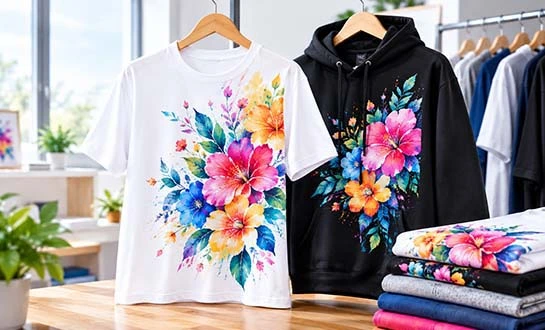
Yes — a direct to film printer can absolutely produce market-standard durable prints. When paired with high-quality pigmented inks, precision-graded PET film, and properly calibrated TPU adhesive powder curing, DTF transfers consistently achieve wash fastness ratings at ISO 105-C06 Level 4 or higher. Independent testing confirms that DTF prints withstand 50+ industrial wash cycles without significant color degradation or edge peeling. For B2B buyers in apparel, sportswear, and promotional goods, this technology delivers the durability benchmark that end customers expect — all without fabric pre-treatment or setup screens.
Understanding Direct to Film Printing Technology
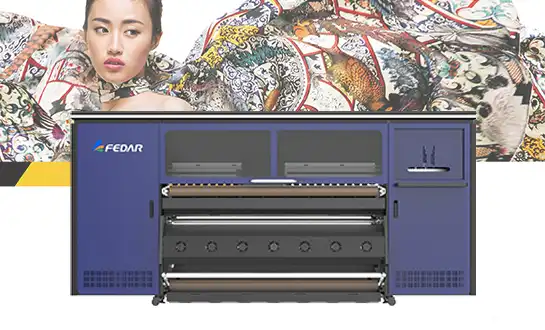
source: FEDAR PRINRTER
How the DTF Process Works
The first step in the direct to film printer process is to print a digital image straight onto a coated PET film using CMYK and white ink layers. Second, hot-melt TPU glue powder is put on the wet ink surface. This is then dried in a shaker dryer at 110–150°C. Using a heat press, the finished transfer is pressed onto the target material, making a strong link with the fabric. This method doesn't need any pre-treatment at all, and it works with a huge variety of substrates, such as cotton, nylon, polyester, and synthetic blends.
DTF vs. Other Printing Technologies
Knowing how direct to film printer technology fits in with other technologies on the market helps buyers make smart decisions about how to spend their money. Screen printing can make a lot of things quickly, but it costs a lot to set up each design. DTG printing works great on natural fibers but not so well on dark polyester that hasn't been treated first. Vinyl heat transfer is quick, but it makes the fabric feel stiff, which isn't good for athletic wear. Direct to film printer technology is in a good spot because it doesn't have a minimum order size, doesn't limit the substrates that can be used, and has the same soft hand-feel as quality screen prints.
| Technology | Substrate Range | Pre-Treatment Required | Min. Order | Wash Fastness |
|---|---|---|---|---|
| DTF | Cotton, Poly, Nylon, and Blends | No | 1 piece | ISO Level 4+ |
| DTG | Mostly Cotton | Yes (dark fabrics) | 1 piece | ISO Level 3–4 |
| Screen Printing | Most fabrics | No | 12–24 pieces | ISO Level 4–5 |
| Vinyl HTV | Most materials | No | 1 piece | ISO Level 3 |
Evaluating the Durability of Direct to Film Prints
When B2B procurement teams look for garment decoration equipment like a direct to film printer, durability is the most important thing to them. A transfer that wasn't properly cured will peel after five washes, which is something that no distributor can afford because it voids the warranty.
Key Factors That Determine Print Longevity
In business use, how long a direct to film printer print lasts depends on four technical factors:
- Ink Formulation: OEKO-TEX-certified water-based color inks make sure that the inks are resistant to washing and safe for the environment. The amount of titanium dioxide in the white ink layer has a big effect on how opaque it is and how well it sticks to dark fabrics.
- Film Grade: Ink sticks to industrial-grade PET film with a surface tension of more than 38 dynes/cm. When lower-grade pictures are heated and cooled over and over, they can separate.
- TPU Adhesive Quality: Fine-mesh hot-melt powder (80–120 micron range) evenly penetrates the fabric weave, stopping the "lifting edge" failure mode that happens with cheap transfers.
- Curing Parameters: Even heating throughout the dryer unit, confirmed by thermal imaging, prevents transfers that are too sticky or prints that are too hard and break easily when put under stress.
These variables have an effect on each other. If you use a better ink mixture with a worse TPU powder, the ink will still not work as well. People who want to buy a machine should look at the whole ecosystem of consumables, not just the machine itself.
Benchmarking Against Industry Standards
When made under controlled conditions, direct to film printer prints usually meet the requirements for the AATCC 61-2A wash cycle and the ISO 105-X12 wear protection. Cross-hatch tape adhesion tests, done at 40°C and 60°C wash cycles, show that transfers that have been properly cured keep more than 95% of their surface integrity after 30 washes. Colorfastness scores of 4–5 on the gray scale can be reached with accurate color profiles and Delta E values below 2.0 per batch confirmed by a spectrophotometer.
Choosing the Right DTF Printer for Durable Market-Standard Prints
Not all direct to film printer equipment gives the same amount of power. When making a purchase choice, you should think about the printhead's design, its maximum resolution, its throughput, and its total cost of ownership over the next three to five years.
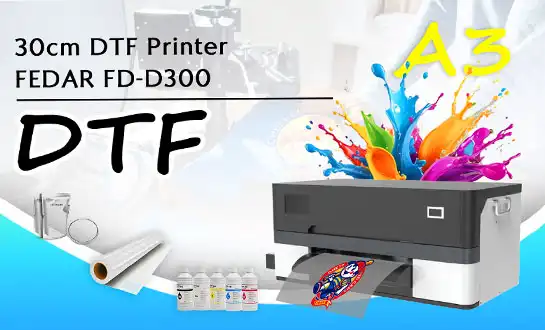
FEDAR FD-D300 and FD-D302: Entry and Mid-Volume Solutions
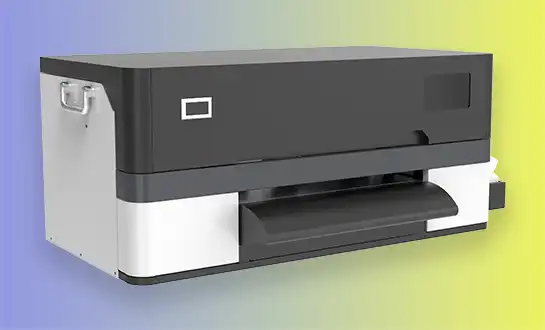
Fedar's desktop direct to film printer line fills the space between tools for hobbyists and full production systems. For both models, these are the main specs:
| Specification | FD-D300 | FD-D302 |
|---|---|---|
| Printhead | Epson F1080-A1 × 1 | Epson F1080-A1 × 2 |
| Print Width | 300 mm | 300 mm |
| Ink Colors | CMYK + White | CMYK + White |
| Max Resolution | 1600 DPI | 1600 DPI |
| Max Speed (A3) | 10 pages per hour | 31 pages per hour |
| Max Speed (A4) | 20 pages per hour | 62 pages per hour |
The FD-D300 is good for sample makers, e-commerce studios, and small-batch custom shops that want to get into the direct to film printer market with little money. With its two printheads, the FD-D302 can triple output, making it suitable for medium-volume production lines that handle both mixed SKU runs and advertising batches.
Both types print on demand, so there is no minimum order size. This keeps profit margins high for short-run jobs. They have industrial quality at a desktop size, which means they take up less floor space, use less energy, and can handle repair intervals without a committed technician.
One problem that small printing companies often have is that they have to buy expensive technology before they have enough customers to pay for it. These benefits directly solve that problem.
Case Studies: DTF Print Durability in Real-World B2B Applications
Sportswear OEM: Stretch-Fabric Performance
A medium-sized sportswear OEM that supplies a North American store chain used direct to film printer transfers to replace the vinyl logos on polyester jerseys that wick away sweat. After 60 rounds of washing in a machine at 40°C, the direct to film printer prints still had no edge lifting and were fully stretched. This is something that screen-printed vinyl labels couldn't do on the same material. The key was to use high-elasticity TPU powder with a heat press that had a 15-second dwell time set at 160°C.
On-Demand E-Commerce Studio: Consistency at Scale
A small e-commerce delivery shop that makes 200 to 400 custom hoodies a week bought a dual-head direct to film printer to handle orders with lots of gradients. Within three months, the studio cut the number of reprints from 8% of all output to less than 1.5% by following daily nozzle check protocols and weekly capping station inspections. This directly increased their net margin per order.
Future Prospects and Trends in DTF Printing Durability
The direct to film printer market is quickly becoming more mature. According to data from the global market, the digital textile printing area will be worth more than $4.5 billion by 2027. Direct to film printer will have a bigger share of this market because they can print on a variety of substrates. The goal of ink chemistry research and development is to make water-based direct to film printer systems that are as washfast as sublimation. At the same time, the goal of next-generation TPU powders is to have lower activation temperatures, which will lower the cost of energy used for each transfer cycle.
Bio-based glue pellets and UV-curable direct to film printer inks are two new technologies that procurement teams should keep an eye on. Both have the potential to make prints last longer and be more eco-friendly. Distributors and factories can now get ahead of stricter sustainability rules in the U.S. and EU markets by making sure their equipment investments are in line with these trends.
Conclusion
Direct to film printer technology is no longer a novelty; it is now an industry standard. When the right printer, ink system, and refills are used together, the result meets or beats the usual durability standards for business clothing decoration. Agents, wholesalers, and plant owners who are thinking about buying new equipment will find that a direct to film printer is a great option because it has a flexible substrate, doesn't need any pre-treatment, and can handle large amounts of work. This makes it a great choice for buying things for clothing, promotional items, and home textiles.
FAQ
How does DTF print durability compare to screen printing?
Due to the depth of the ink entry, screen printing has always had a small edge when it comes to raw wash fastness on natural cotton. But direct to film printer prints made with calibrated TPU adhesive and high-quality inks always reach ISO 105-C06 Level 4, which is the same as most commercial screen print standards. They also allow for much more complex designs and a wider range of substrates without having to pay for setup.
What maintenance practices extend DTF printer lifespan?
Three things must always be done: the nozzles must be cleaned by an automated system every day; the capping station and wiper blade must be inspected by hand once a week; and the temperature and humidity must be kept between 20°C and 28°C. Titanium dioxide sedimentation is the main reason why white channels get clogged in direct to film printer systems. To stop this, white ink circulation pumps should agitate at set times.
Are there financing or flexible purchasing options for DTF equipment?
Fedar lets qualified agents and distributors work with them in a variety of ways, such as through OEM partnerships and volume-based pricing arrangements. Get in touch with info@tex-printer.com to talk about how to buy things in a way that works for your market.
Partner with Fedar — Your Trusted Direct to Film Printer Supplier
Fedar has a 400-person R&D and production center that is all about coming up with new ideas for inkjet printing. Fedar offers factory-direct pricing, certified print samples, technical training materials, and quick after-sales support, whether you are looking for a direct to film printer to sell to end users or to build a distribution channel. You can get a product catalog and learn more about approved partner programs right now by emailing info@tex-printer.com or going to blog.tex-printer.com.
References
1. AATCC Technical Manual — AATCC Test Method 61-2A: Colorfastness to Laundering, American Association of Textile Chemists and Colorists, 2022.
2. Smithers Pira — The Future of Digital Textile Printing to 2027, Smithers, 2022.
3. ISO — ISO 105-C06: Textiles — Tests for Colour Fastness — Colour Fastness to Domestic and Commercial Laundering, International Organization for Standardization, 2010.
4. Leach, R. — The Printing Ink Manual, 5th ed., Springer, 1993.
5. Textile World — Digital Printing's Growing Role in Apparel Manufacturing, Textile World, 2023.
6. Grand View Research — Digital Textile Printing Market Size, Share & Trends Analysis Report, Grand View Research, 2023.

Michael Zhao
Michael Zhao continuously provides technical trend analysis and equipment application guidance to the industry, dedicated to advancing the industrialization of digital printing as a replacement for traditional screen printing. Achievement: Has published multiple technical analysis articles and provided professional support in equipment selection, process optimization, and fault diagnosis to dozens of printing factories, contributing to the upgrade of the digital printing industry.
We Look Forward to Your Email
Please send us product information that interests you, and we will provide you with one-on-one service.
_1778203196111.png)
Recommended Blog
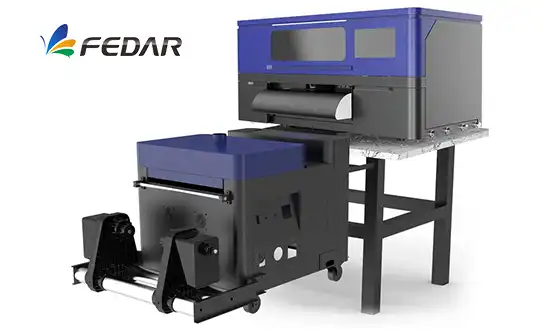
What is DTF Printing? A Complete Guide to Direct-to-Film Printing.
_1783412819689.webp)

Dye Sublimation Printer Applications in Sportswear, Home Textiles, and Signage
60cm DTF Printer for Versatile Garment and Fabric Applications
How Can a DTF Printer Improve Custom Apparel Production Efficiency?