How Can a Direct to Film Printer Improve Custom Apparel Production?
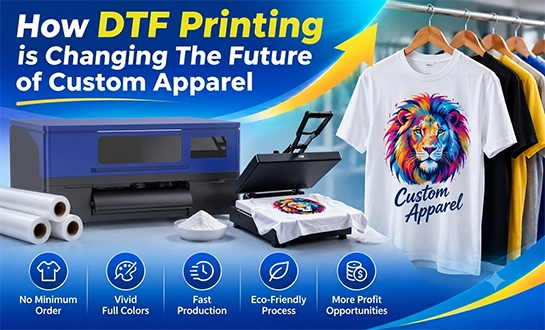
Understanding the Direct to Film Printing Process
- Understanding the Direct to Film Printing Process
- Challenges in Custom Apparel Production and How DTF Offers Solutions?
- Key Benefits of Using DTF Printers for Custom Apparel
- Choosing the Right DTF Printer for Your Business Needs
- Best Practices for Optimizing DTF Printing Performance
- Conclusion
- FAQ
- Ready to Scale Your Apparel Production? Connect With Fedar
- References
A direct to film printer improves custom apparel production by eliminating pre-treatment steps, expanding substrate compatibility, and enabling on-demand short runs without sacrificing print quality. Unlike screen printing or DTG methods, DTF technology transfers full-color designs through PET film and TPU adhesive powder onto cotton, polyester, nylon, and synthetic blends. This process reduces setup time, lowers per-unit costs for small batches, and delivers wash-resistant results that meet commercial durability standards—making it a practical upgrade for studios, print shops, and factories scaling their garment decoration capabilities.
Understanding the Direct to Film Printing Process
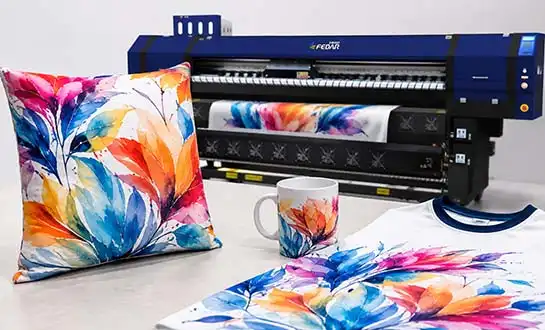
source: FEDAR PRINRTER
The steps for direct to film printing are clear: the design is printed on PET film using CMYK+White pigment inks, hot-melt adhesive powder is then applied, it cures in a shaker-dryer unit, and finally, the fabric is heated to seal the print. Understanding the process helps procurement teams choose better tools because each step has a direct effect on the quality of the result.
How DTF Compares to Traditional Printing Methods?
Screen printing costs a lot for short runs because each color needs its own screen. DTG needs to be treated before it can be used, and it doesn't work well on polyester. Sublimation can only be done on plastic surfaces that are light in color. Direct to film printing gets around all three problems because it can work with dark fabrics, mixed-fiber materials, and patterns that are hard to explain without charging extra to set up. Because of this, it is the best choice for studios that print on demand for a wide range of products.
Key Materials That Affect Output Quality
The final hand-feel and wash durability are affected by the type of PET film (hot peel vs. cold peel), the size of the TPU powder grind, and the blend of inks. Hot peel films speed up the production process, while cold peel films give clothes a softer, more matte finish that's better for store items. Using OEKO-TEX approved water-based inks cuts down on chemical waste even more and meets the needs of more and more global store buyers who want products that are good for the environment.
Challenges in Custom Apparel Production and How DTF Offers Solutions?
The biggest problems with making unique clothes are the high setup costs, limited color range, and long lead times, but a direct to film printer offers a solution. Because of how much screen printing costs, a small order of 12 customized coats, for example, can't be made cheaply. Direct to film printing solves this problem by not requiring any screen preparation at all, allowing production of a single unit at a fixed cost per print.
Digital decoration methods, such as direct to film, have grown their share of the garment printing market by over 15% between 2019 and 2023, according to data from Smithers Pira. This is mostly because they cut down on the time it takes to get branded goods and promotional clothing to market.
Another area where direct to film printing does better than older methods is print longevity. When cured at the right temperature range of 110°C to 150°C, TPU-bonded transfers always get Level 4 wash fastness on the ISO 105-C06 scale, even after being washed many times. This is very important for business-to-business clients who sell clothing, sportswear, or private-label lines for stores.
Key Benefits of Using DTF Printers for Custom Apparel
This technology has many benefits besides just better print quality. Here are the core production benefits that make direct to film a commercially sound investment:
- No minimum order quantity required. There is no minimum order amount. You can print one unit or a thousand units, the process and costs will be the same. This directly helps print-on-demand e-commerce methods and makes it easier for brand development teams to make samples.
- Broad substrate compatibility. Wide range of substrate compatibility. Direct to film transfers stick well to cotton, nylon, treated leather, canvas, and polyester mixes, which are tough for DTG and sublimation systems. This gives print shops more products they can charge for.
- High-resolution output at 1600 DPI. At 1600 DPI, the result is very clear. Fine gradients, photographic images, and complex linework all reproduce accurately, which helps premium pricing and lowers the number of customers who reject items.
- Eco-conscious production profile. eco-friendly way of making things. When compared to plastisol-based screen printing, water-based pigment inks and recyclable PET films produce a lot less chemical waste, which helps companies keep their environmental commitments.
These advantages collectively solve a core pain point in apparel customization: not being able to offer both quality and flexibility at a reasonable price point, and a direct to film printer addresses this. When companies want to move on from screen printing or add more services, direct to film printing is a good option that doesn't require a complete renovation of the space.
Choosing the Right DTF Printer for Your Business Needs
To choose the right equipment, you have to balance your budget with the number of prints you need, the resolution you need, and how much maintenance you expect. Here is a review of Fedar's entry-level direct to film printer line, which is made for workshops and small-batch production shops that want to get into the market for decorating clothes.
| Specification | FEDAR FD-D300 | FEDAR FD-D302 |
|---|---|---|
| Printhead Quantity | 1 | 2 |
| Printhead Model | Epson F1080-A1 | Epson F1080-A1 |
| Print Width | 300mm | 300mm |
| Print Colors | CMYK+W | CMYK+W |
| Max Resolution | 1600 DPI | 1600 DPI |
| Max Speed (A3) | 10/hr | 31/hr |
| Max Speed (A4) | 20/hr | 62/hr |
Samplers and studios that handle lower daily volumes will like the FD-D300. Its single-head design means it uses little energy and doesn't need much upkeep, but it still prints at an industrial level. With its two Epson F1080-A1 printheads, the FD-D302 triples throughput, reaching 62 A4 prints per hour. This makes it a good choice for shops that get a steady flow of orders or are starting to make smaller batches.
The two types of direct to film printer both have a small tabletop design. Compared to wider-format industrial systems, they take up less floor room, use less power, and need simple daily upkeep. You don't need to know anything about printing to start a direct to film printing business, and Fedar offers technical training and sample kits to help with a smooth launch.
Best Practices for Optimizing DTF Printing Performance
Controlled operating conditions and regular equipment maintenance are needed to get consistent output quality. Keeping the production area between 20°C and 28°C and the relative humidity between 40 and 60% keeps the thickness of the ink and stops static electricity from building up on PET film, which are both common reasons why powder doesn't stick well and bands.
Daily and Weekly Maintenance Routines
Clogging can be found before it affects a paid job by running nozzle check routines at the start of each production shift. Checking the closing station, wiper blade, and ink distribution pump once a week greatly increases the printhead's useful life. White ink needs extra care because the titanium dioxide pigment settles when it's not being used, so continuous circulation pumps are needed to keep the opacity stable.
Workflow Integration for Small and Mid-Scale Operations
When adding a direct to film printer to an existing production line, it works best when the settings for the RIP software, the way the film is handled, and the parameters for the heat press are all standardized. Fedar helps with this by giving dedicated technical training and sample documentation that can be used again and again. This way, agents and factory managers can train new operators without having to wait for long periods of downtime.
It's also important to keep up with changes in technology and the science of adhesive powders. Newer TPU versions give a softer hand-feel at lower hardening temperatures, which lowers the cost of energy per transfer—a small difference that adds up over thousands of prints every month.
Conclusion
Direct to film printing has grown into a reliable business technology for decorating clothing that solves the real problems that custom clothing makers have, like high setup costs, limited material options, and limited order flexibility, and a direct to film printer is at the heart of this solution. The process works on a lot of different fabrics and gives consistent, wash-durable results without the need for pre-treatment or large minimum quantities. A well-specified direct to film system with strong technical support is a long-term competitive advantage for studios, resellers, and factories looking to buy their next piece of equipment in a market that values speed and customization more and more.
FAQ
How long do DTF prints typically last on garments?
The ISO 105-C06 scale rates direct to film prints as Level 4 wash fast when they are properly cured and transferred. In normal washing conditions, prints don't lose much of their color vibrancy or line sharpness after 40 to 50 rounds of washing.
What fabric types work with DTF transfers?
Cotton, polyester, nylon, canvas, and treated leather can all safely connect to direct to film transfers. Direct to film doesn't need a lot of polyester like sublimation does, so it can be used with most normal clothing constructions.
Does DTF printing require fabric pre-treatment?
Not at all. This is one of the main operational benefits of direct to film printing. Getting rid of pre-treatment cuts down on labor time per unit and gets rid of a variable that often makes DTG processes produce inconsistent results.
What kind of after-sales support does Fedar provide?
Fedar has a specialized team of people who help customers after they've bought something from them. Support includes technical help over the phone, spare parts, help with installation, and marketing materials and sample kits for agent partners.
Is DTF printing environmentally responsible?
Direct to film is a much cleaner way to print than traditional plastisol screen printing because the CMYK and white inks are water-based, and the PET films can be recycled. Using ink systems that are OEKO-TEX approved makes the environmental image even stronger.
Ready to Scale Your Apparel Production? Connect With Fedar
A global agent network based on open cooperation models, a 400-person R&D and production facility, and strict quality control protocols distinguish Fedar as a direct to film printer manufacturer. The FD-D300 and FD-D302 are affordable direct to film printers that can produce high-quality work. Reach out to explore product samples, request a customized quotation, or learn about agent partnership terms. Contact the Fedar team directly at info@tex-printer.com or visit blog.tex-printer.com to get started.
References
1. Smithers Pira. The Future of Digital Textile Printing to 2025. Smithers Pira, 2020.
2. AATCC. AATCC Test Method 61: Colorfastness to Laundering. American Association of Textile Chemists and Colorists, 2021.
3. ISO. ISO 105-C06: Textiles — Tests for Colour Fastness — Colour Fastness to Domestic and Commercial Laundering. International Organization for Standardization, 2010.
4. Leach, R. The Printing Ink Manual (5th ed.). Springer, 1993.
5. Ujiie, H. (Ed.). Digital Printing of Textiles. Woodhead Publishing, 2006.
6. Grand View Research. Digital Textile Printing Market Size, Share & Trends Analysis Report. Grand View Research, 2023.

Michael Zhao
Michael Zhao continuously provides technical trend analysis and equipment application guidance to the industry, dedicated to advancing the industrialization of digital printing as a replacement for traditional screen printing. Achievement: Has published multiple technical analysis articles and provided professional support in equipment selection, process optimization, and fault diagnosis to dozens of printing factories, contributing to the upgrade of the digital printing industry.
We Look Forward to Your Email
Please send us product information that interests you, and we will provide you with one-on-one service.
_1778203196111.png)
Recommended Blog
Why Choose a Dye Sublimation Printer for Polyester Fabric Printing?
_1785483477752.webp)
Color Fade Solutions for Consistent Color Accuracy in Industrial Printing
How Does a 600mm DTF Transfer Printer Increase Transfer Output?
Sublimation Printer Enables Vibrant Designs on Polyester Materials
A3 DTF Printer vs A4 DTF Printer, Which is Right for Business