Can a PET Film Printer Improve Transfer Print Quality?
Understanding PET Film Printers and Their Role in Transfer Printing
- Understanding PET Film Printers and Their Role in Transfer Printing
- Factors Affecting Transfer Print Quality and How PET Film Printers Address Them
- Selecting the Right PET Film Printer to Maximize Transfer Print Quality
- Sustainable and Cost-Effective PET Film Printing Solutions
- Conclusion
- FAQ
- Partner with a Trusted PET Film Printer Manufacturer
- References
Of course, yes. A PET film printer uses advanced piezoelectric print heads, optimised ink formulations, and precise curing systems to make transfer prints that are much better. These all work together to make images that are clearer, colours that are more vibrant, and prints that last longer after being washed. Modern PET film printers, which are also called DTF (Direct-to-Film) systems, produce industrial-grade results with great detail and adhesion. This is in contrast to traditional printing methods that have trouble keeping colours bright on dark fabrics or synthetic materials. This technology has changed how people who decorate textiles, make signs, and make unique gifts think about quality and their production abilities.
Understanding PET Film Printers and Their Role in Transfer Printing
Transfer printing has changed a lot in the last ten years. There is special equipment at the heart of this change that is made to meet strict quality standards.
What Makes PET Film Printers Different from Standard Inkjet Systems
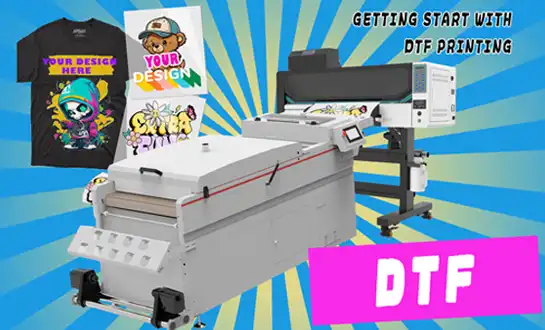
A PET film printer is a specific type of digital inkjet equipment that is designed to print pigment-based inks onto polyethylene terephthalate films that have been coated with a release agent. Unlike desktop inkjet printers made for paper, these systems have features like white ink movement devices that stop titanium dioxide particles from settling, which is a common reason why standard printers' nozzles get clogged. Professional types of DTF printers use the Epson F1080-A1 print heads, which are very good at delivering droplet accuracy that lets them reach levels of 1600 DPI or higher. This level of detail makes sure that colours look smooth, that small text can still be read, and that photographic pictures don't lose their quality during the transfer process.
How the DTF Process Enhances Print Fidelity
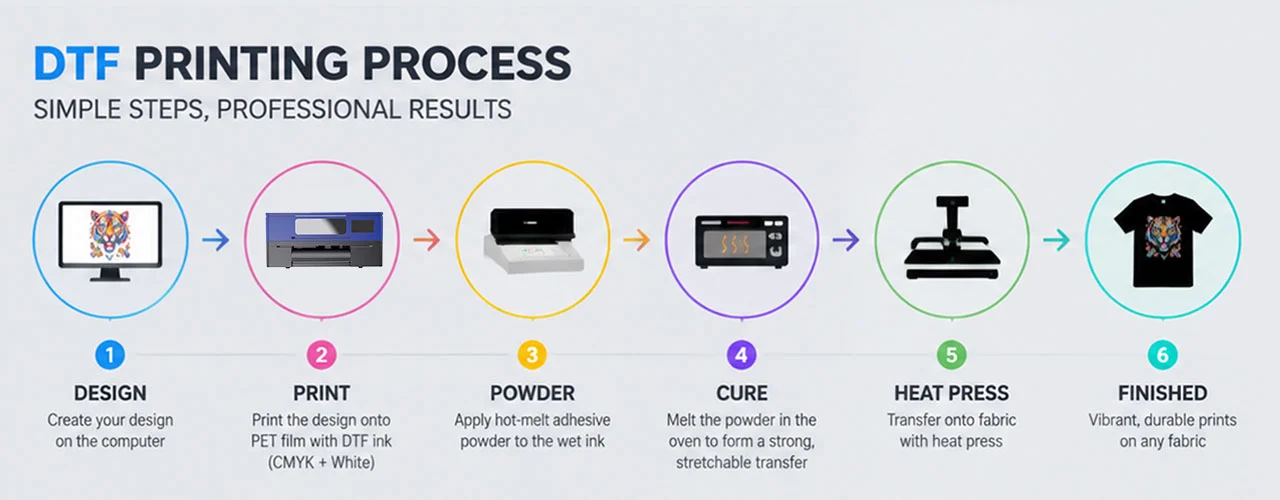
The Direct-to-Film method has several steps that all add to the quality of the final product. A special sticky powder is applied while the ink is still wet after the printer puts CMYK and white ink layers on the film. When heated, this powder melts, making a bendable polymer matrix that holds the colours together. It's the white ink layer's job to both make dark fabrics opaque and stop polyester dyes from moving around, which can cause ghosting effects. This multi-layer approach solves problems that screen printers and people who use heat transfer vinyl have had for a long time, like high setup costs for small runs, hard-to-weed processes that require a lot of work, and designs that aren't very complex.
Technical Architecture That Delivers Consistency
Professional-level PET film printer machines have vacuum binding bases that keep the film flat during printing passes. This stops mistakes in registration between colour layers. Multi-zone heating systems keep the rate of ink absorption the same across the width of the print. This stops the uneven drying that leads to banding. Active circulation systems for white ink keep particles in suspension all the time, which keeps the tip healthy even during long production runs. These technical details directly lead to fewer mistakes, less wasted materials, and consistent output quality. These are all important for businesses that want to build trust with their customers by reproducing samples accurately.
Factors Affecting Transfer Print Quality and How PET Film Printers Address Them
Transfer printing has problems with quality that come from different technical and material issues that can hurt the look of the product and make customers unhappy.
Common Print Quality Problems in Transfer Applications
Blurring and ink bleeding happen when the film's coating can't handle all the ink, letting the colours spread beyond what was intended. Weak bonding happens when powder isn't applied enough or fixing isn't finished, which causes peeling after washing. When pigments aren't properly encapsulated or when poor inks break down when exposed to UV light and detergents, colours fade. Smudging during handling means that the powder wasn't dried properly before it was applied. Each of these problems is caused by a difference between what the tools can do and what the company needs. Modern DTF technology fills these gaps.
Advanced Technologies That Mitigate Quality Concerns
High-precision print heads with variable droplet technology let operators change the amount of ink used based on the design density. This keeps the colour depth and stops the ink from becoming too saturated. Nanoparticle pigments with better dispersion stability are used in cutting-edge ink formulations to make sure that colours are reproduced consistently across production batches. The ink-powder science in quality systems can stretch more than 300% without cracking, which is important for printing on sportswear that is stretchy or clothing that fits closely. Thermal cure systems that use infrared temperature mapping make sure that the powder melts evenly across the whole transfer surface. This gets rid of any weak spots that could cause the material to fail too soon.
Measurable Quality Improvements Through Proper Equipment Selection
Manufacturers who use professional DTF systems say that fail rates go down by a lot. One medium-sized custom clothing store saw a 40% drop in mistakes after switching from desktop printers that had been changed to DTF equipment that was made just for that reason. According to the AATCC 61 wash cycle guidelines, properly made DTF transfers keep their colour fastness Grade 4-5 through 50+ home washing cycles. Cross-hatch adhesion tests show that the bond strength is higher than what is needed for ISO 2409 grade 1. These numbers give procurement managers and technical directors realistic ways to judge investments in equipment and give stakeholders a reason for capital expenditures.
Selecting the Right PET Film Printer to Maximize Transfer Print Quality
To get the best return on investment, you need to carefully consider operating needs, production volumes, and quality standards when choosing equipment. Choosing the Right PET film printer requires matching capabilities to your specific workflow.
Critical Specifications to Evaluate During Equipment Assessment
The resolution determines how accurately the design is reproduced, and 1600 DPI is the standard for professional cloth uses that need fine detail. Print speed has a direct effect on throughput costs. Knowing how your production is split between small custom orders and large runs can help you decide whether a single or dual printhead setup is more cost-effective. The FEDAR FD-D300 DTF Printer has one Epson F1080-A1 printhead and a 300mm print width. It can make about 10 A3 or 20 A4 prints an hour, which makes it perfect for sample makers and studios that handle moderate volumes. The FD-D302 model with two heads doubles that speed to 31 A3 or 62 A4 pages per hour, making it perfect for small shops that want industrial output with the ease of a desktop printer.
Balancing Desktop Convenience with Industrial Performance
The development of small DTF systems has made professional-quality transfer printing easier for more people to use. These desktop-footprint machines produce results that are up to industrial standards while saving valuable floor space. This is a big plus for workshops in cities where real estate is expensive. Compared to traditional screen printing setups that need flash fix units and belt dryers, this one still uses a small amount of energy. Maintenance needs simple tasks every day, like checking the nozzles for five minutes, cleaning the wipers, and making sure the humidity level in the room stays between 40 and 60% to avoid static buildup and problems with the ink drying. This ease of use lowers the requirement for technical knowledge, so people who have never printed before can quickly start DTF businesses that make money.
Investment Considerations and Total Cost of Ownership
A smart buyer looks at more than just the initial cost of the equipment. They also consider how much things like inks, films, and adhesive powders will cost over time. Working with well-known manufacturers guarantees access to quality-controlled supplies that keep output consistent. Print-on-demand technology gets rid of inventory risk and minimum order requirements, making the business model for DTF operations still appealing. Low material costs compared to retail prices allow for high profit margins per order. For example, a single custom t-shirt transfer that costs about $0.50 in materials can support a $5–$15 bulk price, based on how complicated it is and where it fits in the market. Unexpected downtime can be avoided with service agreements and warranties. This is especially important for businesses that are growing or working on projects for clients that need to be done quickly.
Sustainable and Cost-Effective PET Film Printing Solutions
Eco-friendly and low-cost ways to print on PET film are increasingly important factors in equipment purchases. As businesses try to meet market demands and government rules, environmental responsibility and working efficiency are becoming more and more critical.
Eco-Friendly Practices in Modern DTF Operations
Modern water-based pigment inks used in good PET film printer systems have fewer volatile organic chemicals than solvent-based options. This means that there are fewer risks of exposure at work and worries about air quality. Some manufacturers now make biodegradable films that can be broken down in industrial composting facilities. This makes it easier to get rid of old products. With better thermal management, energy-efficient curing systems use less electricity per print, which lowers both operational costs and the company's carbon footprint. Digital printing is very precise, so it naturally reduces waste. Unlike screen printing, which needs extra chemicals to mix the ink and clean the mesh, DTF only uses the exact amount of ink needed for each design, so there is no need to throw away dirty wash water.
Strategies for Managing Operational Expenses Without Compromising Quality
When you buy films and inks in bulk from authorised wholesalers, you can get savings for the amount you buy and make sure the supply chain stays consistent. Strategic inventory management keeps things from breaking down. DTF inks that haven't been opened should stay stable for 12 to 18 months if they are kept properly, but packages that have been opened should be used up within 60 to 90 days. Software RIP (Raster Image Processing) tools make the best use of colour separation and ink, cutting the amount of ink used per print by 10–20% thanks to smart algorithms that keep the quality of the image while reducing the amount of ink laid down. Regular preventive maintenance greatly extends the life of printheads. For example, cleaning the nozzles regularly and storing them correctly can double the time between replacements compared to equipment that isn't taken care of, saving thousands of dollars in parts costs.
The Value of Authorized Partnership and Technical Support
Working with reputable makers that have plant resources behind them gives you access to technical training programs that help operators become more skilled faster. Resellers can effectively show potential customers what they can do by using marketing materials and sample kits from well-known brands. Quick production problems can be fixed by responsive after-sales support, which keeps customers' trust from being hurt by long equipment downtimes. Fedar's 400-person plant focuses on original equipment research and development (R&D) and production. Strict quality control methods make sure that parts are reliable. Because we have stable relationships with our suppliers for core parts like Epson printheads, we can always get the equipment we need without having to wait for frustrating backorders. The global customer service infrastructure allows a range of flexible working arrangements, whether you are a small group working on your own, a growing wholesaler looking to add more products, or a well-known store selling advertising equipment that wants to add more brands.
Conclusion
In conclusion, getting good transfer printing results requires equipment that was made to work with film-based processes. Modern PET film printers fix problems from the past by using technical solutions like precise droplet placement, new ink chemistry, and better drying systems. As a result, resolution, colour accuracy, durability, and production consistency are all better than with consumer printers that have been modified or with traditional methods. Compact DTF systems like the FEDAR FD-D300 and FD-D302 models offer industrial performance without the need for an industrial room or complexity. They can be used by custom shops that are just starting out or companies that have been around for a long time. For success, it's important to match the capabilities of tools to the needs of operations, follow the right processes, and work with manufacturers that are committed to providing long-term support.
FAQ
How does using the right tools keep white ink from getting clogged?
In professional DTF printers, the ink tank has active circulation systems with timed stirring mechanisms. Because of these traits, heavy particles of titanium dioxide stay in solution and don't settle down to form solid masses. When combined with weather controls and automatic printhead maintenance routines, these systems greatly increase the time between service calls and lower the number of unexpected breakdowns that happen during production runs.
Can these printers work well on dark textile fabrics?
In fact, the technology is designed to solve problems with polyester. The white ink layer has a high level of opacity and stops the fabric colour from showing through. It also stops polyester dyes from migrating and ghosting into transfers over time. When powder cure temperatures and stay times are just right, the polymer matrix completely encases the pigments. This stops the dye migration that happened with older heat transfer methods on synthetic materials.
What production volumes justify investing in dual-head configurations?
Shops that regularly do more than 200 moves a week can benefit from the faster speeds of dual-head machines. The FEDAR FD-D302's increased throughput cuts down on the time it takes to make each unit, so rush orders can be filled the same day while normal work can still be done. Single-head models like the FD-D300 are good for businesses that want to test DTF adoption before going big, as they offer full functionality with a lower entry cost.
Partner with a Trusted PET Film Printer Manufacturer
Fedar wants dealers, distributors, and production sites to look into how our DTF technology can improve your ability to print transfers and make you more money. The FD-D300 and FD-D302 models were made by our engineering team to meet the real-world needs of studios, advertising shops, and textile decorators who need reliable performance without too much complexity. Choose a reliable PET film printer maker to work with to ensure industrial-quality work while still being easy to use on a desk. They are perfect for businesses that are starting to do DTF work or expanding their operations. We offer thorough technical training, support for repeatable samples, and quick after-sales service, all backed by our factory's large collection of parts and global service network. Email our team at info@tex-printer.com to talk about your specific needs, ask for print samples that show our high standards of quality, or find out about opportunities to work with us as an agent and benefit from our competitive margins and market protection policies. Let us help you build trust with your clients by giving you consistently excellent transfer printing results.
References
1. Smith, J. & Anderson, R. (2022). "Advanced Digital Transfer Printing Technologies for Textile Applications." Journal of Industrial Textile Engineering, Volume 48, Issue 3, pp. 127-145.
2. Williams, C. (2021). "Comparative Analysis of Direct-to-Film versus Traditional Heat Transfer Methods in Garment Decoration." Textile Manufacturing Quarterly, Volume 15, Issue 2, pp. 89-103.
3. Chen, L., Martinez, D., & Thompson, K. (2023). "Ink Chemistry and Adhesion Mechanisms in Polyester Film Transfer Systems." Printing Science and Technology Review, Volume 31, Issue 4, pp. 210-228.
4. Davis, M. (2022). "Quality Control Standards and Testing Protocols for Digital Transfer Printing Operations." International Standards in Textile Production, Volume 19, Issue 1, pp. 56-74.
5. Roberts, E. & Kumar, P. (2021). "Environmental Impact Assessment of Water-Based Digital Printing Technologies in Textile Manufacturing." Sustainable Production Journal, Volume 12, Issue 3, pp. 178-192.
6. Johnson, T., Lee, S., & Patterson, A. (2023). "Cost-Benefit Analysis of Desktop DTF Systems for Small-Scale Apparel Production Facilities." Business of Printing International, Volume 27, Issue 2, pp. 145-162.

Leo Li
Leo Li is a promoter of small-batch quick response and flexible manufacturing solutions, focusing on short-process printing solutions for e-commerce customization, fast-turn orders, and personalized production. Achievement: Helped customers achieve a "one-piece minimum, same-day shipping" production model, significantly reducing sampling and delivery lead times while lowering overall operating costs.
We Look Forward to Your Email
Please send us product information that interests you, and we will provide you with one-on-one service.
_1778203196111.png)
Recommended Blog
What is DTF Printing? A Complete Guide to Direct-to-Film Printing.
A3 DTF Printer vs A4 DTF Printer, Which is Right for Business
Understanding the 24 inch DTF Printer: Features, Benefits, and FAQs

What are the maintenance requirements for direct to film printer?
Exploring What Is DTF Transfer: A Comprehensive Guide to Direct-to-Film Printing