DTF PET Film Printer Supports Flexible Printing Applications for Bags, Hats, and Sports Apparel
DTF PET Film Printer Supports Flexible Printing Applications for Bags, Hats, and Sports Apparel
Understanding DTF PET Film Printers and Their Printing Technology
- Understanding DTF PET Film Printers and Their Printing Technology
- Comparing DTF PET Film Printers to Alternative Printing Solutions
- Selecting the Best DTF Printer for Your Business Needs
- Maintenance, Troubleshooting, and Optimizing Print Quality
- Procurement and Support: How to Buy and Ensure Reliable Service?
- Conclusion
- FAQ
- Partner with Fedar — Your Trusted DTF PET Film Printer Supplier
- References
If you're searching for a smarter way to decorate bags, hats, and sports apparel with vivid, durable graphics, a DTF PET film printer may be exactly what your production line needs. This direct-to-film transfer technology has reshaped how print shops, apparel decorators, and B2B distributors approach custom textile printing. By printing onto a release-coated PET film and heat-pressing the design onto virtually any substrate, shops can achieve wash-resistant, full-color transfers without pre-treatment, weeding, or fabric type restrictions — making it one of the most versatile garment decoration methods available today.
Understanding DTF PET Film Printers and Their Printing Technology
source: FEDAR PRINRTER
How the Direct-to-Film Process Works?
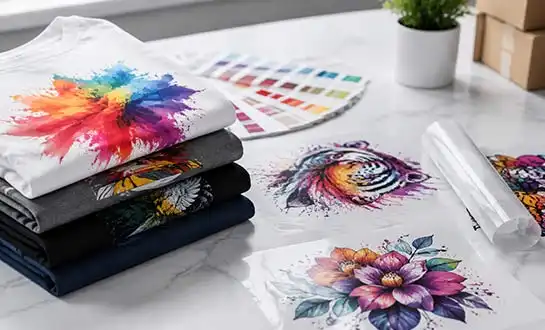
The process of using a DTF PET film printer is simple but very technical. CMYK pigment inks are used to print a digital design onto PET film that has a white base layer. After that, hot-melt glue powder is put on top of the wet ink, and it cures in a drying tube that is usually kept at a temperature between 110°C and 150°C. After being heated to about 160°C for 10–15 seconds, the final film is pressed onto the target cloth. The backing easily peels off, leaving a bright, flexible transfer that sticks to the fiber structure.
What makes DTF technology better is that the print and copy processes are not tied together. Since printing and applying happen at different stages, workers can make a lot of transfers ahead of time and only put them on clothes when they are needed. According to The Future of Digital Textile Printing to 2024 by Smithers Pira, digital decoration methods that support on-demand production are growing at a rate of more than 12% per year. This is because short-run customization is becoming more popular.
Key Technical Components That Matter
Anything that prints on film needs a press to work. The Epson F1080-A1 piezo-electric printhead is used in Fedar's small desktop models. This printhead can handle resolutions of up to 1600 DPI and can print sharp details even on rough surfaces like cloth bags or structured hat panels. The automatic white ink circulation system stops titanium dioxide from settling, which is a common reason why lower-quality machines get nozzles clogged. This keeps the white under-base density uniform over long print runs.
Comparing DTF PET Film Printers to Alternative Printing Solutions
DTF vs. DTG, Sublimation, and HTV
A lot of print shops switch to DTF after having problems with other ways of decorating, and a DTF PET film printer is at the center of this transition. This list makes it easy to see how these tools stack up:
| Technology | Fabric Compatibility | Pre-Treatment Required | White Ink Capability | Min. Order Flexibility |
|---|---|---|---|---|
| DTF | Cotton, nylon, polyester, blends | None | Yes (built-in) | 1 piece |
| DTG | Primarily cotton | Yes (time-consuming) | Yes | 1 piece |
| Sublimation | Polyester only (light colors) | None | No | 1 piece |
| HTV | Most materials | None | Limited | 1 piece |
Every clothing item needs to be pre-treated for DTG, which adds to the cost of work and chemicals. Sublimation only works on polyester and light-colored surfaces, which makes it hard to make a wide range of products. HTV needs a cleaning step that slows things down and limits the forms that can be made. All three of these problems are taken care of by direct-to-film printing: there is no need for pre-treatment, fabric restrictions, or weeding. This flexibility means that B2B wholesalers who sell mixed-fabric product lines don't have to buy as much equipment and can reach more customers.
Selecting the Best DTF Printer for Your Business Needs
Matching Machine Specs to Production Volume
The right tool choice depends on how much work you expect to get done each week and how much room you have. Fedar has two small, high-precision models that are made for sample production, small-batch runs, and starting a business.
| Model | Printheads | Print Width | Max Speed (CMYK) | Resolution |
|---|---|---|---|---|
| FD-D300 | 1 × Epson F1080-A1 | 300mm | A3: 10/hr / A4: 20/hr | 1600 DPI |
| FD-D302 | 2 × Epson F1080-A1 | 300mm | A3: 31/hr / A4: 62/hr | 1600 DPI |
The FD-D300 is a single-head unit that works great for studios that want to decorate clothes but don't have a lot of floor space, and as a DTF PET film printer, it's an excellent entry point. The fact that it's desktop-sized saves energy and lowers the need for maintenance, but it still provides industrial-grade color accuracy. When you add two Epson F1080-A1 printheads to the FD-D302, throughput doubles, and you can print 62 A4 pages per hour. This is a big increase in capacity for growing shops that get orders for hats, tote bags, and team uniforms over and over again.
These models are very helpful in production settings because they:
- Zero-experience startup: Neither unit is made for people who have experience with industrial printing. With easy-to-use software setup and plug-and-play installation, your team can start making transfers that can be sold as soon as the equipment gets there.
- Print-on-demand without minimums: If there is no minimum order quantity, you can make money on custom orders for a single item, which is very helpful for online stores that sell things and gift customization studios that have to deal with uncertain order volumes.
- Space and energy efficiency: The small tabletop design takes up almost no floor space and uses a lot less electricity than wide-format roll-fed systems. This lowers the monthly running costs without lowering the quality of the output.
- High profit margin per order: With direct-to-film printing, there is no need to set up a screen, pay for color separation, or deal with a lot of waste. This means that the cost per transfer stays low even for small amounts, protecting the profit margin on every order.
These benefits directly solve the practical problems that purchasing managers and studio owners have when they switch from decorating by hand to digital production processes.
Maintenance, Troubleshooting, and Optimizing Print Quality
Practical Steps to Sustain Peak Performance
A strict repair schedule for a DTF PET film printer is needed to get consistent quality output on bags, hats, and performance wear. Any misfiring channels are found every day by checking the nozzle patterns, which stops them from affecting production batches. Every day, you should clean the capping station and wiper blade so that dried ink doesn't damage the printhead surface. Checking the damper and encoder strip once a week makes sure that the mechanical registration is correct, which is very important when the CMYK and white layers need to be within 0.02mm of each other for clear edges.
Controlling humidity is more important than most users think. If the relative humidity in the air is between 40% and 60%, there is less chance of "oil spotting" on the film surface. This is a flaw that happens when the ink doesn't stick well to the layer and loses film and delays orders. Most coating-related problems can be avoided by using premium double-matte PET film from trusted suppliers. When you change the ink batch, you need to do color profile calibration to make sure that the ΔE color deviation stays below 2.0, which is what professional standards say should happen for clothing decoration. Anyone who has been taught and has access to the tools Fedar offers can easily carry out these routine tasks without the help of a skilled technician.
Procurement and Support: How to Buy and Ensure Reliable Service?
Why Supplier Reliability Shapes Your Long-Term ROI?
The cost of the equipment is only one part of the buying process. Response time decides whether your production floor moves or stops when a printhead needs to be replaced or software needs to be updated. Fedar has a special team for helping customers after the sale. They have clear rules for how to respond, spare parts are easy to find, and they can do diagnostics remotely. This team was created to help international distributors and resellers who can't afford long downtime.
Over 400 people work at Fedar's factory base, where they only do original research and development and make inkjet printers. Because Fedar is vertically integrated, it controls its own core component supply chain. This includes testing printhead compatibility and validating ink formulations. This lowers the risk of consumable gaps that happen when distributors rely on networks of different suppliers. Every machine comes with checked print samples that can be shared with end customers. This solves one of the biggest problems wholesalers have when they first start working with new clients.
Conclusion
Direct-to-film printing has grown into a reliable and flexible way to decorate things that can be used for both one-of-a-kind orders and structured small-batch production runs, and a DTF PET film printer is the key to this capability. The Fedar FD-D300 and FD-D302 offer this feature in a small, energy-efficient package that works for both new print shops and old ones that want to add more substrates. These units are great for businesses that sell bags, hats, and sportswear because they don't need to be pre-treated, can print on a wide range of fabrics, and can be used for print-on-demand.
FAQ
What fabrics can a direct-to-film transfer printer work on?
Cotton, polyester, nylon, canvas, denim, and blended fabrics can all be stuck together with direct-to-film transfers. DTF technology can be used on dark clothes and mixed-material items without problems with color bleeding or dye movement, while sublimation needs a lot of polyester.
Is DTF printing more cost-effective than screen printing for small orders?
Yes. To pay the cost of the screens, screen printing needs a setup fee and a minimum order quantity. Direct-to-film printing doesn't have a setup fee or a minimum order size, which makes it much cheaper for orders of less than 50 pieces, which is where most custom clothing and advertising product companies make their most money.
How durable are DTF transfers on bags and hats?
As long as they are applied and dried correctly, direct-to-film copies meet the wash fastness standards set by ISO 105-C06. The TPU adhesive powder makes a flexible, elastic bond that keeps structured hat panels and curved bag surfaces from cracking even after being used and washed many times.
Do I need technical experience to operate the Fedar FD-D300?
There is no need for previous training. The FD-D300 is made to be an easy way for people with no experience to start decorating clothes. It comes with simplified software, simple management of consumables, and full technical documentation from Fedar's support team.
Partner with Fedar — Your Trusted DTF PET Film Printer Supplier
Fedar delivers industrial-grade output in a desktop format, backed by a 400-person R&D and manufacturing facility with proven quality control. Whether you're sourcing a DTF PET film printer for your own studio or building a distribution channel, our FD-D300 and FD-D302 models offer a competitive entry point with strong after-sales support. Reach our procurement team at info@tex-printer.com or visit blog.tex-printer.com to request samples, pricing, and agent cooperation details today.
References
1. Smithers Pira. The Future of Digital Textile Printing to 2024. Smithers Pira, 2019.
2. Choudhury, Asim Kumar Roy. Principles of Textile Finishing. Woodhead Publishing, 2017.
3. Ujiie, Hitoshi. Digital Printing of Textiles. Woodhead Publishing, 2006.
4. Grand View Research. Digital Textile Printing Market Size, Share & Trends Analysis Report. Grand View Research, 2023.
5. ISO. ISO 105-C06: Textiles — Tests for Colour Fastness — Colour Fastness to Domestic and Commercial Laundering. International Organization for Standardization, 2010.
6. Leach, Robert H., et al. The Printing Ink Manual. 5th ed., Springer, 1993.

Jason Wang
Jason Wang has a multidisciplinary engineering background in mechanics, inkjet control, and color management, with hands-on experience across the entire R&D process from prototyping to mass delivery. Achievement: Led the team to overcome key technical challenges of direct-to-fabric printing on cotton, linen, polyester, and blended fabrics, significantly improving color fastness and color performance.
We Look Forward to Your Email
Please send us product information that interests you, and we will provide you with one-on-one service.
_1778203196111.png)
Recommended Blog
How Sublimation Transfer Printers Improve Custom Fabric Production Efficiency?
What is DTF Printing? A Complete Guide to Direct-to-Film Printing.
How to Choose the Best Roll to Roll DTF Printer for Your Business?
Sublimation Printing: Exploring the Technique, Machines, and Advantages
Can a Direct to Film Printer Produce Market-Standard Durable Prints?

How to Choose the Right DTF Printing Machine for Your Business?