DTF Printing Machine Supports Flexible Textile Customization for Apparel Businesses
DTF Printing Machine Supports Flexible Textile Customization for Apparel Businesses
What Makes DTF Printing a Game-Changer for Apparel Customization?
- What Makes DTF Printing a Game-Changer for Apparel Customization?
- DTF vs. Other Textile Printing Technologies: A Clear Comparison
- Procurement Guide: Selecting the Right DTF Printer for Your Business
- Implementing DTF Solutions to Enhance Production Flexibility
- Conclusion
- FAQ
- Ready to Scale Your Garment Printing with Fedar?
- References
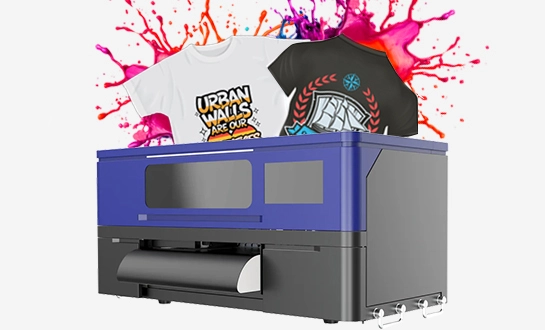
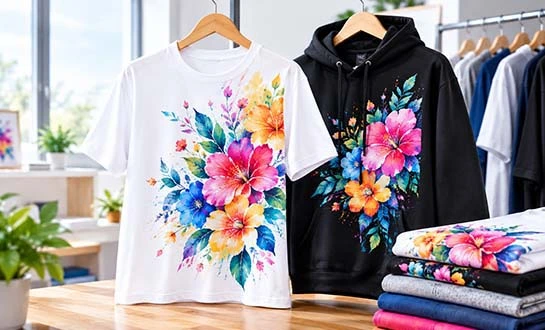
A DTF printing machine gives apparel businesses the power to print vibrant, durable designs on virtually any fabric—cotton, polyester, nylon, or blends—without pre-treatment or setup screens. Unlike screen printing or sublimation, direct-to-film technology transfers full-color artwork through a PET film and TPU adhesive layer, delivering wash-fast results at any order quantity. Whether you run a small custom studio or a mid-sized garment factory, this technology removes the traditional barriers between creative design and production-ready output, making flexible textile customization genuinely accessible at scale.
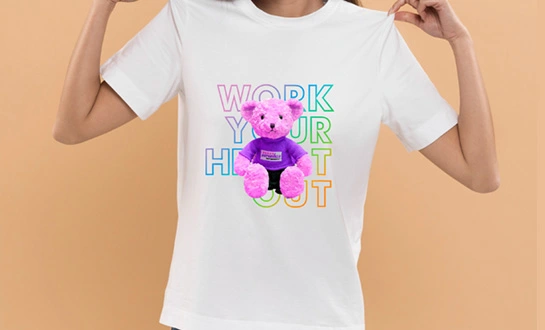
What Makes DTF Printing a Game-Changer for Apparel Customization?
source: FEDAR PRINRTER
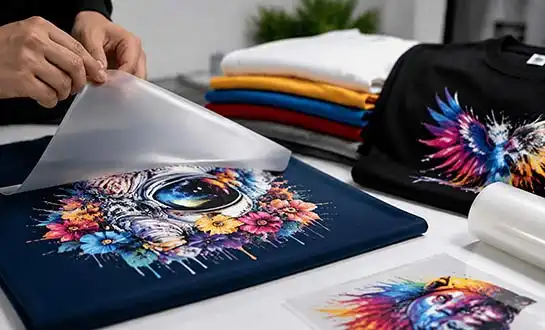
How the Direct-to-Film Workflow Actually Works
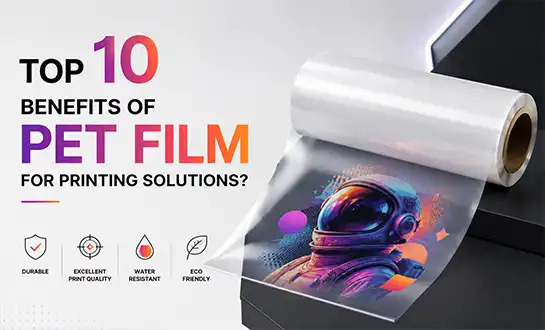
To make the transfer, you use CMYK + white water-based pigment inks to print the design onto PET film. Then you spread TPU hot-melt adhesive powder evenly over the wet ink, let the powder dry in an infrared drying tube, and finally heat-press the transfer onto the clothing. There is no need to weed, treat, or have a minimum run. The adhesive layer attaches to the strands of the fabric at the molecular level. This gives the fabric a soft feel and Level 4–5 wash fastness according to the ISO 105-C06 standard. This is the same level of durability as screen printing but on a digital process budget.
DTF really stands out because of its substrate flexibility. During the same production shift, the same machine can be used to design cotton hoodies, polyester shirts, nylon bags, and even leather patches. That kind of flexibility isn't possible with sublimation, which needs a lot of polyester, or with DTG, which needs materials that are mostly cotton and chemical pre-treatment on all dark clothes.
DTF vs. Other Textile Printing Technologies: A Clear Comparison
When reviewing capital tools, procurement directors need hard numbers, not vague claims. The following table shows how four technologies compare on the most important factors for a business-to-business buyer.
| Metric | DTF | Screen Printing | DTG | Sublimation |
|---|---|---|---|---|
| Setup cost per new design | Low | High (screen fees) | Low | Low |
| Suitable fabric types | All | All | Cotton-rich | High polyester |
| Pre-treatment required | No | No | Yes (dark clothes) | No |
| Minimum order quantity | 1 piece | 12–24 pieces typical | 1 piece | 1 piece |
| Wash fastness (ISO) | Level 4–5 | Level 4–5 | Level 3–4 | Level 4–5 |
| Max resolution achievable | Up to 1600–2400 DPI | 150–200 LPI | Up to 1440 DPI | Up to 1440 DPI |
When there are more than 500 identical pieces, screen printing is still cheaper per unit, but when the design changes, it's no longer worth it, while a DTF printing machine is clearly better in short-run, multi-color, multi-substrate situations. This is exactly the area where the print-on-demand and branded merchandise markets are growing right now.
Procurement Guide: Selecting the Right DTF Printer for Your Business
Matching Machine Capacity to Production Goals
Small studios and shops that make samples need a small unit that can do industrial work without taking up a lot of floor space, using a lot of electricity, or needing a full-time maintenance technician. Larger companies and wholesalers need enough business to make their investments worthwhile. Fedar's entry-level FD-D300 and mid-range FD-D302 were designed to meet the needs of both groups without any compromises.
It's important to know the following about these two models:
| Specification | FEDAR FD-D300 | FEDAR FD-D302 |
|---|---|---|
| Printhead Quantity | 1 × Epson F1080-A1 | 2 × Epson F1080-A1 |
| Print Width | 300 mm | 300 mm |
| Print Colors | CMYK + White | CMYK + White |
| Max Resolution | 1600 DPI | 1600 DPI |
| Max Speed (A3) | 10 prints/hr | 31 prints/hr |
| Max Speed (A4) | 20 prints/hr | 62 prints/hr |
The Epson F1080-A1 industrial-grade printhead is used in both types of DTF printing machines. Compared to cheaper options, it consistently forms droplets and lasts a long time. The FD-D302's dual-head setup more than triples output, making it the obvious choice for shops that want to move up to batch production or volume at the wholesaler level.
What to Verify Before Committing to a Supplier
Picking the right tools is important, but picking the right company to make it is just as important. Steps for key verification include:
- Factory qualifications: Make sure the provider has a real R&D and production center. Fedar's 400-person manufacturing base focuses on creating new inkjet printers, and they follow clear quality control procedures at every stage of production.
- Sample quality consistency: Ask for print samples on both dark and light substrates to see how consistent the quality is. The main reason why end-customer conversions fail in agent-led sales channels is sample output that isn't stable.
- After-sales infrastructure: Make sure the supplier offers technical training materials, access to spare parts, and quick cross-border support. Customers lose trust and don't buy from you again when you take too long to respond after the sale. This is a well-known problem for US resellers who work with equipment brands from other countries.
- Agent protection policy: Before signing a distribution deal, make sure that the market area protections and profit margin structures are clearly written down. This is part of the agent security strategy.
These steps will protect your investment and build a solid base for working together in the future.
Implementing DTF Solutions to Enhance Production Flexibility
Practical Use Cases Across Business Scales
Adding a DTF printing machine to an existing clothing workflow doesn't mean changing how things are done. The FD-D300 can be added by a small custom studio as a stand-alone machine for same-day trial production and print-on-demand orders with no minimum order number needed. The FD-D302 can be used with existing embroidery or screen printing lines in a medium-sized clothing plant to handle short-run digital orders without stopping present processes.
Both Fedar types have a design-to-transfer cycle that is short enough to allow for same-session sampling, which speeds up the client approval process directly. Foreign trade companies that handle accounts for international brands can cut down on the back-and-forth that delays order confirmation by making it possible to make verified, repeatable print samples in-house.
The difference between desktop-scale and industrial-scale DTF output is getting smaller thanks to improvements in ink chemistry, especially low-cure TPU powder formulations, and automatic powder-application units. Fedar's research and development team is always adding new features to existing products. This makes sure that tools bought today will still be competitive as the market changes.
Conclusion
DTF printing has grown to become a reliable and flexible option for clothing companies of all sizes, and a DTF printing machine is one of the best investments that print shops, custom studios, and garment distributors can make right now because it has a flexible substrate, doesn't require a minimum order, and stays wash-fast over time. Fedar's FD-D300 and FD-D302 models produce industrial-grade output in a small, energy-efficient package. They are backed by a factory with 400 employees and a support system designed for partnerships between agents in different countries. If you are thinking about what tools to buy next, the data makes a strong case for direct-to-film.
FAQ
How often does a DTF printer require maintenance?
It is standard practice to check the printhead nozzles and the capping station every day. Checking the wiper blades and the ink circulation system once a week keeps buildup from happening, which can cause the printhead to bend. Fedar machines have automatic white ink movement to stop titanium dioxide from building up, which is a major reason why DTF printing machines get clogged.
Is DTF cost-effective for runs under 50 pieces compared to screen printing?
Yes. Screen printing has per-design screen fees that make runs of less than fifty pieces for artwork with more than two colors not worth the money. Because DTF doesn't charge a setup fee for each design, it's much more successful for small-batch and on-demand sales.
Can DTF prints handle dark fabrics effectively?
Of course. In the CMYK+W ink configuration, the white ink underbase layer makes dark substrates completely see-through. This is a structural benefit over sublimation, which can't print on dark or black clothes at all to make them invisible.
What humidity level is ideal for DTF printer operation?
Keep the relative humidity between 40% and 60%. Levels outside of this range make the PET film static and speed up the drying of the ink at the printer holes, both of which hurt the quality of the print.
Ready to Scale Your Garment Printing with Fedar?
Fedar makes tried-and-true DTF printing machines that are used by resellers, factories, and studios all over the world. The FD-D300 and FD-D302 are easy to get started with because they are cheap. They have high profit margins per order, no minimum order quantity, and industrial-quality output in a laptop size. Fedar is a direct DTF printing machine manufacturer with 400 production staff and full after-sales support. They offer technical training, sample kits, and quick cross-border service. Contact our team at info@tex-printer.com or visit blog.tex-printer.com to request specifications, samples, or a personalized quotation.
References
1. Smithers Pira. The Future of Digital Textile Printing to 2025. Smithers Pira, 2020.
2. Textile World. Digital Printing's Expanding Role in Apparel Manufacturing. Textile World, 2022.
3. Journal of Coatings Technology and Research. Adhesion Performance of Hot-Melt TPU Transfer Films on Textile Substrates. Springer, 2021.
4. AATCC. AATCC Test Method 61: Colorfastness to Laundering. American Association of Textile Chemists and Colorists, 2022.
5. Printing Industries of America. State of the Industry Report: Digital Garment and Textile Decoration. PIA, 2023.
6. Grand View Research. Digital Textile Printing Market Size, Share & Trends Analysis Report. Grand View Research, 2023.
Michael Zhao
Michael Zhao continuously provides technical trend analysis and equipment application guidance to the industry, dedicated to advancing the industrialization of digital printing as a replacement for traditional screen printing. Achievement: Has published multiple technical analysis articles and provided professional support in equipment selection, process optimization, and fault diagnosis to dozens of printing factories, contributing to the upgrade of the digital printing industry.
We Look Forward to Your Email
Please send us product information that interests you, and we will provide you with one-on-one service.


_1778203196111.png)
Recommended Blog

What Causes Color Fade in Sublimation Printers and How to Fix It?
How Does a Sublimation Printer Improve Textile Printing Quality?
Why the 60cm DTF Printer Is the Best Choice for Small-Batch T-Shirt Printing