What Materials Can Be Printed with a Sublimation Printer?
Understanding Sublimation Printing and Material Compatibility
- Understanding Sublimation Printing and Material Compatibility
- Common Materials Suitable for Sublimation Printing
- Factors Influencing Material Selection for Sublimation Printing
- Comparing Sublimation Materials for Different Business Applications
- Key Equipment Specifications to Match Material Requirements
- Maintenance and Troubleshooting of Sublimation Printers Related to Material Usage
- Conclusion
- FAQ
- Partner With a Trusted Sublimation Printer Manufacturer
- References
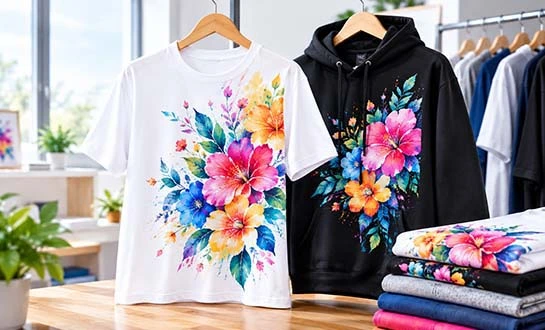
When we talk about what materials work with dye sublimation technology, the answer centers on polyester-based textiles and polymer-coated hard substrates. A sublimation printer uses heat to transform solid dye into gas, which permanently bonds with these specially treated surfaces rather than sitting atop them. This process delivers high durability, vivid full-color output, and continuous tone photo quality, making it indispensable for textile printing, promotional products, and custom signage industries. Understanding material compatibility directly impacts your production efficiency, cost management, and final product appeal.
Understanding Sublimation Printing and Material Compatibility
There is a special phase-change process that makes sublimation printing different from other inkjet methods. Under controlled heat and pressure, sublimation inks change from a solid to a gas, and they can get into the molecular structure of surfaces that are suitable. This bonding makes pictures that don't fade, crack, or peel, which are common problems with ink layers that are only on the surface.
Core Components of the Sublimation Process
In this method, three things work together: special sublimation inks, industrial-grade heat presses, and surfaces that have been properly coated. The inks have colors that are spread out and are made to gasify at certain temperatures, usually between 350°F and 400°F. To make sure that all the dye moves, heat presses use even pressure and temperature. The substrates must either naturally contain polyester or have a polymer layer that can accept and hold gasified dye molecules.
Why Material Compatibility Matters?
Choosing things that don't work well together will always lead to mistakes. Sublimation dyes can't stick to natural fibers like cotton because they don't have the right chemical structure. This means that colors look washed out and fade after only a little handling. Metals or ceramics that haven't been treated or coated can't soak up the gasified ink, so the designs come off completely. If procurement teams don't pay attention to these technical requirements, there will be more returns, their reputation will be hurt, and production time will be wasted. You have to know about materials because that's what decides whether your investment in sublimation technology makes money or waste.
Common Materials Suitable for Sublimation Printing
Your sublimation business's flexibility and market reach depend on the materials you choose. You can reach the right customers by knowing the properties of the different substrates that are used in different industries.
Polyester and Polyester-Coated Fabrics
For cloth sublimation, pure polyester fabric is still the best. Its man-made polymer chains easily take in sublimated dyes, making bright colors that don't fade when washed. A lot of sportswear, flags, table covers, and handmade clothing that needs to stay true to color and breathe are made from 100% polyester. Blends of polyester and natural fibers that have at least 65% polyester can work, but the colors will fade as the percentage of natural fibers goes up. Tri-blend fabrics are common in clothing stores, but they can be hard to work with because sublimation colors don't stick to cotton or rayon fibers. Only the polyester threads stay colored.
Polymer-Coated Hard Substrates
For sublimation inks to stick to rigid materials, they need special polymer coatings. Blank providers put these coatings on things like ceramic mugs, metal sheets, and phone cases before they are shipped. The coating is like a middle layer; it traps the gasified dye particles and bonds them permanently. This treatment makes metal signs better because it makes the graphics last longer outside in UV light and bad weather. The coatings on hardboard panels used in photography and architectural displays are similar, which makes it possible to make photo-realistic copies with finishes that won't scratch.
Specialized Sublimation Blanks
Sublimation blanks, which are pre-coated items that can be customized, are very popular in the promotional products business. Keychains, coasters, mouse pads, and tiles all have polymer finishes that work best with certain heat press settings. Glass and wood substrates can be used in this way thanks to new covering technologies, but the temperature needs to be carefully controlled so the substrates don't get damaged. These materials give print shops that sell corporate gifts and event merchandise more options for what they can sell.
Factors Influencing Material Selection for Sublimation Printing
Strategic material selection for a sublimation printer strikes a mix between business goals and technology needs. There are a lot of factors that affect which materials will work best for your business goals and customers.
Surface Properties and Coating Technologies
Advanced polymer layers control how much ink is absorbed and how true the colors are. High-quality coatings have tiny holes in them that let gasified dyes stick to them evenly and stop transfers that are blotchy or uneven. The final look is affected by the texture of the surface. Smooth coatings produce glossy finishes that work well for photocopies, while textured coatings produce matte effects that are preferred in some design styles. Cross-cut adhesion tests based on ISO 2409 standards help us check the accuracy of the coating. This makes sure it will last thru handling and external stress.
Durability and End-Use Requirements
For different uses, different levels of durability are needed. Activewear goes thru many washing cycles and wear and tear, so it needs substrates that keep the color strong thru hundreds of washing cycles. UV rays and changes in temperature can damage outdoor signs, so they need materials that won't fade after three to five years of being outside. Pillow covers and other items used for home decor put style over durability, which lets you choose from a wider range of materials. When buying things, it's important to make sure that the material requirements match the expected product lifespan. If they don't, you could end up over-engineering expensive items or not meeting quality standards.
Cost Optimization and Production Scale
Material prices have a direct effect on profit margins, especially in places where a lot of products are made. Pure polyester fabrics cost more than mixes, but they produce better results and lose less because fewer prints fail. When you buy a lot of pre-coated blanks from reputable sources, the cost per unit goes down, and the coating stays the same across production runs. We figure out the best substrate approach for each product line by looking at the total cost of ownership, which includes material costs, waste rates, compatibility with production speed, and price range in the market.
Comparing Sublimation Materials for Different Business Applications
Material choices are affected by the needs of the industry. Agents and distributors can help their clients find the best solutions by understanding these differences.
Textile and Apparel Manufacturing
Manufacturers of athletic wear rely on polyester performance fabrics that are light and still breathe well after sublimation. Sublimation doesn't clog fabric pores, so moisture-wicking fabrics keep their technical properties. The dye blends in at the molecular level instead of coating the fiber surfaces. Flags and banners are made from heavier-weight polyester fabrics that are rated for outdoor use and usually have reinforced hems and grommets. Fashion companies that want to put all-over prints on clothes need polyester knits that are stretchy and don't crack or distort when worn.
Promotional Product Companies
Gift and promotional item wholesalers need a variety of substrates to meet the needs of their clients. Polymer-coated ceramic mugs are still a popular choice for business logos because they last a long time, can go in the dishwasher, and show colors clearly. Flexible polymer coatings are bonded to plastic substrates to make personalized tech accessories with photo-quality detail. These are used to make phone cases and laptop skins. Metal water bottles and keychains feel high-end, which is why they cost more, and they keep your brand visible for a long time because the print lasts longer.
Industrial and Signage Applications
Businesses that make signs use metal plates with special sublimation coatings to make safety warnings, shop displays, and directional signs, and a sublimation printer produces these items. When exposed to direct sunlight for a long time, these materials don't fade, and they can handle wide ranges of temperatures without delaminating. Polyester fabrics that are light and easy to ship are used to make soft signs for trade show booths and retail displays. When mounted, the signs look smooth and taut. For customized equipment signs and images on control panels, you need rigid substrates with chemical-resistant coatings that stay legible in harsh industrial settings.
Home Textiles and Décor
Sublimation is popular in the home decor market for handmade curtains, bedding, and furniture fabrics because it gives customers more design options. Polyester velvet and suede-textured fabrics work great with sublimation, which can create high-end looks that aren't possible with regular printing. Polyester canvas is used for throw pillows and other decorating items because it looks like natural linen and gives colorful sublimation results. This group likes that sublimation printing can be done on demand, which lets small batches be made without the minimum order requirements that come with screen printing or traditional textile dyeing.
Key Equipment Specifications to Match Material Requirements
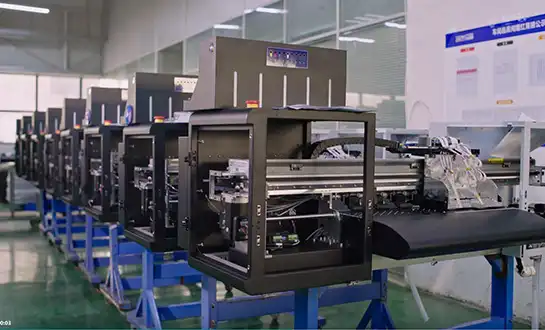
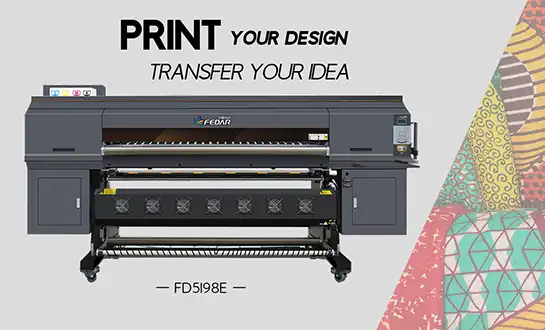
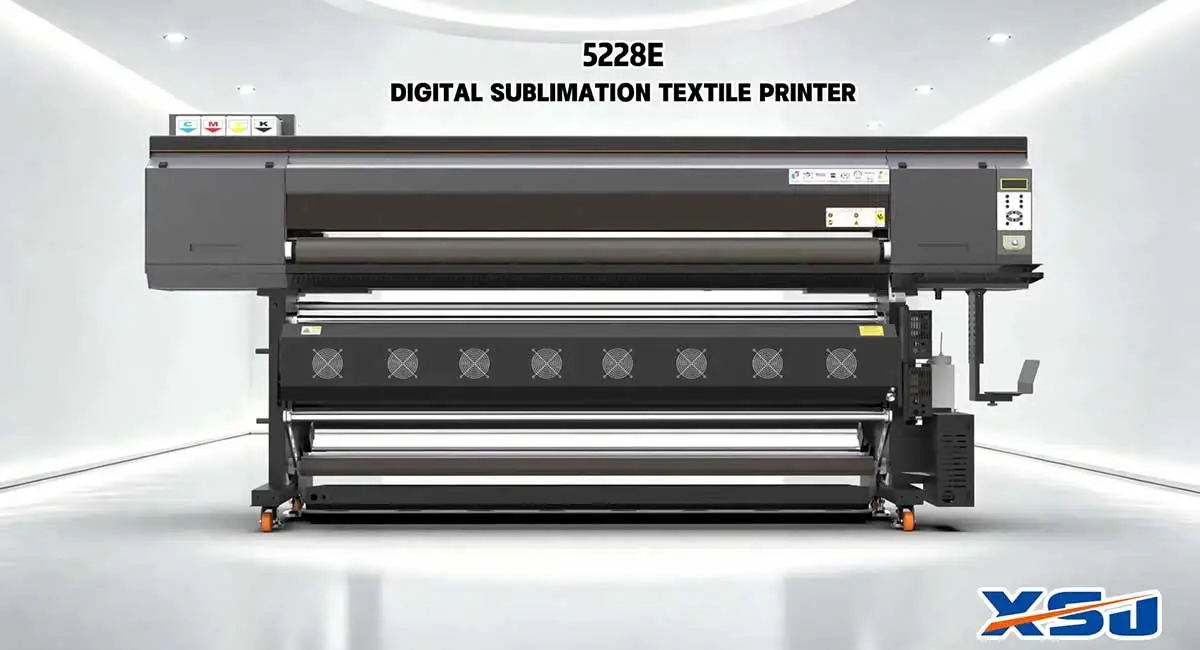
Matching the printer's powers to the needs of the material guarantees the best quality output and the most efficient production. Our industrial sublimation systems give B2B clients the professional efficiency they need.
High-Volume Production Models
When production needs more than 200 square meters per day, equipment specs become very important. Here are the main benefits of industrial-grade systems that are made to handle a lot of different types of materials:
Wide-Format Options: Big print sizes let you use full-width fabric rolls without seams, which is important for making banners and clothing panels. The FEDAR FD7428E can handle widths of 4200mm at 440㎡/h in single-pass mode, which means that home textile yardage and soft signage can be made without stopping the workflow.
Multi-Head Configurations: The FD6198E has eight printhead arrays that can produce 370㎡/h of color while keeping the 3200 DPI resolution for both CMYK and extended color gamettes. This setup works with specialty ink sets that include fluorescent colors for fashion uses. It's aimed at high-end markets where color differentiation commands higher prices.
Precision Ink Management: Industrial systems use advanced ink circulation and filtering to keep nozzles from getting clogged, which is very important when using high-viscosity sublimation inks all the time. Droplets form consistently, so ink absorbs evenly on a range of substrate textures, from smooth polyester satins to textured canvas weaves.
These benefits directly address agent worries about the dependability of equipment and the consistency of output. When customers want to see samples of your prints before they commit to large orders, having equipment that can produce the same results on different types of material gives you an edge over your competitors. Customers will not forgive you for downtime caused by clogged printheads or inconsistent ink flow. This hurts your reputation with them faster than any price advantage can fix.
| Model | Printhead Quantity | Print Width | Max Speed (CMYK) | Resolution |
|---|---|---|---|---|
| FEDAR FD6198E | 8 × Epson i3200-A1 | 1900mm | 1pass 370㎡/h | 3200 DPI |
| FEDAR FD5328E | 8 × Epson i3200-A1 | 3200mm | 1pass 420㎡/h | 360×1200 DPI |
| FEDAR FD7428E | 8 × Epson i3200-A1 | 4200mm | 1pass 440㎡/h | 3200 DPI |
Entry and Mid-Level Production Systems
Scalable equipment that balances investment costs and capability is good for new studios and print shops that are growing. With two printheads, the FD1900 works at 70㎡/h, making it perfect for custom clothing shops that make 50 to 100 clothes every day. This setup lowers the starting cost of cash while still allowing for upgrades as the business grows. The FD5194E can print with four heads at 180㎡/h, which is good for promotional product distributors who need consistent output quality on ceramic blanks, metal panels, and fabric samples without the space requirements of industrial systems.
Material-Specific Calibration Features
These days, sublimation printer systems have material profiles that change the print settings automatically based on the substrate. Heat-sensitive fabrics, like thin polyester chiffon, need lower heat press settings and precise ink loads to keep them from getting too hot. Long dwell times are needed for dye to fully migrate through thick polymer coatings on rigid substrates. Programmable profiles get rid of the need to guess, which cuts down on waste during material changes and makes it easier for workers to switch between fabric runs and hard base batches. This versatility is very helpful for agents who work with a wide range of clients who need quick sample production in a number of different material types.
Maintenance and Troubleshooting of Sublimation Printers Related to Material Usage
Material matching success is directly linked to keeping tools in good shape. Troubleshooting and maintenance for sublimation printers that are used with materials can avoid common mistakes that hurt profits.
Optimal Printer Settings for Different Materials
For each type of substrate, a different printer configuration is needed. To keep ink from bleeding through lightweight polyester fabrics, the ink density needs to be lower, usually between 80 and 85%, compared to 100% for thick canvas. Because polymer coats stop migration, higher ink loads can be used on hard surfaces. Temperature calibration is very important. For example, ceramic blanks work best at 380–400°F for 60 seconds, while polyester fabrics work best at 350–375°F for 45–60 seconds, depending on the weight of the fabric. The options for pressure affect how well the transfer works. If the pressure is too low, spots of uncolored paper show up, and if the pressure is too high, the ink spreads beyond the design borders.
Troubleshooting Material-Related Print Defects
Ghosting happens when leftover heat makes transfer paper touch printed material again when it is being removed, making images that are twice as big. This happens most often with thick clothes that keep heat in longer. This problem can be avoided by taking the paper off the press as soon as the buzzer sounds and using lower temperatures. Color shifting happens when printed colors are different from screen images. This is usually caused by choosing the wrong ICC setting for the substrate type. We keep separate color profiles for coated metals, polyester knits, and woven banners. For each, we use spectrophotometer readings to make sure the Delta E value is less than 2.0. When printheads get clogged, they can't fire consistent ink droplets, which leads to banding defects. This problem can be avoided by setting up automatic cleaning cycles every 50 square meters of printing.
Essential Maintenance Routines
When moving between standard and custom inks, the nozzle stays open as long as the printer is cleaned every day with the recommended solvents. Tracking mistakes that lead to picture distortion on long cloth runs can be avoided by checking media feed systems once a week. Wiper blades and capping station seals should be replaced once a month to protect the printhead when the machine is not in use. When purchasing managers look at sublimation systems, they should make sure that the suppliers give them detailed maintenance schedules and consumables that are easy to get. Equipment downtime costs $150 to $300 an hour in lost production, so it's important to have preventative maintenance plans in place to protect ROI.
| Maintenance Task | Frequency | Purpose |
|---|---|---|
| Cycle for cleaning the printhead | Every day or after changing the ink | Keeps nozzles from getting clogged and color from getting dirty |
| Changes to the media tension | Based on material type | Guarantees accurate tracking for a range of material weights |
| Check the settings on the heat press | Every week | Keeps the temperature and pressure steady for quality control |
| Flush the ink circulation system | Every 100 operating hours | Stops debris from building up and changing the way droplets form |
Conclusion
Sublimation printing with a sublimation printer works best when the materials used are compatible with each other. Polyester fabrics and polymer-coated substrates have the right chemical properties for permanent dye bonding. However, the equipment must be able to handle the production scale and variety of materials needed. Strategic substrate selection strikes a balance between quality standards and cost parameters, allowing businesses in the apparel, promotional products, signage, and home decor markets to make money. Proper upkeep methods that are specific to the material protect investments in equipment and guarantee consistent output quality that builds trust with clients.
FAQ
Can I print on cotton or cotton-blend fabrics with sublimation?
Pure cotton can't take sublimation dyes because the cellulose fibers in it don't have the chemical bonds that are needed to hold on to gasified inks. Cotton-polyester blends only work sometimes because the polyester takes dye but not the cotton, giving the fabric a "faded" or old-fashioned look. Blends that have at least 65% polyester in them look good for some fashion purposes, but the color richness is still lower than with pure polyester. Other methods, such as direct-to-garment printing (DTG) or DTF transfers, work better if you need bright prints on cotton.
What coatings do hard substrates need for sublimation compatibility?
For rigid materials, you need special polymer layers that are made to stick to sublimation dyes when heated. Usually, polyester-based resins are used to make these coatings, which are put on using industrial spray or dip methods. The layer has to be able to handle temperatures up to 400°F without breaking down or coming off the base. Reliable blank providers offer things that have already been coated and tested to make sure they stick and accept color. Due to the accuracy needed in coating layers and curing processes, coating objects yourself rarely leads to commercial-quality results.
How long do sublimated prints last on different materials?
Surface printing methods fade more easily than sublimation because it forms ties at the molecular level. Polyester fabrics keep 90% of their color vibrancy after 50 industrial wash cycles at 140°F, which is a lot longer than vinyl transfers or direct screen prints. When placed outside, coated aluminum signs will keep their color for three to five years even when they are exposed to UV light all the time. Because the dye becomes part of the glaze, ceramic items can go thru endless washing cycles. Choosing the right materials is important for longevity; using recommended substrates and the right transfer factors will give you the longest life.
Partner With a Trusted Sublimation Printer Manufacturer
To get regular sublimation results on a range of materials, you need to work with a well-known equipment maker who knows how production works. Join forces with a reliable sublimation printer maker like Fedar, whose 400-person factory focuses on original research and development (R&D) and production. It has strict quality control procedures developed over years of serving global markets. Our systems use Epson i3200-A1 printhead technology, delivering high-quality continuous-tone photos at speeds ranging from 70㎡/h to 440㎡/h.
We offer flexible ways to work together that can be tailored to the needs of agents, distributors, and factories. These include thorough technical training, sample materials that can be copied for client presentations, and quick customer service after the sale to protect your relationships with your end customers. Our tech team helps you solve substrate problems that other companies can't by giving you material-specific printer settings and troubleshooting advice. Contact our team at info@tex-printer.com or go to blog.tex-printer.com for more information on specifics and ways to work together as an agent to help your business grow in the sublimation market.
References
1. Gupta, S. (2021). Digital Textile Printing: Technologies and Applications. Woodhead Publishing.
2. Hauser, P. J. (2019). "Sublimation Transfer Printing on Polyester Fabrics: Process Optimization and Quality Parameters." Textile Research Journal, 89(12), 2401-2415.
3. International Organization for Standardization. (2020). ISO 2409:2020 - Paints and Varnishes - Cross-Cut Test. Geneva: ISO.
4. Leach, R. H., & Pierce, R. J. (2020). The Printing Ink Manual (6th ed.). Springer.
5. Provost, J. (2018). "Polymer Coating Technologies for Rigid Substrate Decoration." Journal of Coatings Technology and Research, 15(4), 891-903.
6. Ujiie, H. (Ed.). (2022). Digital Printing of Textiles (2nd ed.). Woodhead Publishing.

Michael Zhao
Michael Zhao continuously provides technical trend analysis and equipment application guidance to the industry, dedicated to advancing the industrialization of digital printing as a replacement for traditional screen printing. Achievement: Has published multiple technical analysis articles and provided professional support in equipment selection, process optimization, and fault diagnosis to dozens of printing factories, contributing to the upgrade of the digital printing industry.
We Look Forward to Your Email
Please send us product information that interests you, and we will provide you with one-on-one service.
_1778203196111.png)
Recommended Blog

A3 DTF Printer: with vs. without Oven System How To Choose?
High-Resolution Mid-Size DTF Printer for Precision Printing
How to Choose the Best Roll to Roll DTF Printer for Your Business?