DTF Printing on Golden Foil: Challenges in Adhesion and Wash Durability
Understanding DTF Printing on Golden Foil: Adhesion and Durability Challenges
- Understanding DTF Printing on Golden Foil: Adhesion and Durability Challenges
- Analysis of Adhesion Problems and Their Root Causes Using a Systematic Deconstruction Approach
- Comparing 24 Inch DTF Printers and Their Impact on Golden Foil Printing Quality
- Best Practices to Optimize Golden Foil DTF Printing Process with 24 Inch Printers
- Procurement and Investment Considerations for 24 Inch DTF Printers in Golden Foil Printing
- Equipment Feature Analysis: Addressing Foil Printing Demands
- Conclusion
- FAQ
- Partner with Fedar for Superior Golden Foil DTF Solutions
- References
Golden foil printing represents a lucrative niche in textile decoration, yet achieving durable, wash-resistant transfers on metallic surfaces remains a persistent challenge. When working with a 24 inch DTF printer, businesses face unique adhesion hurdles due to the non-porous, reflective nature of foil substrates. Unlike standard cotton or polyester fabrics, golden foil's smooth surface chemistry resists ink penetration, making proper equipment selection and process optimization critical for print shops aiming to deliver premium, long-lasting products to their end customers.
Understanding DTF Printing on Golden Foil: Adhesion and Durability Challenges
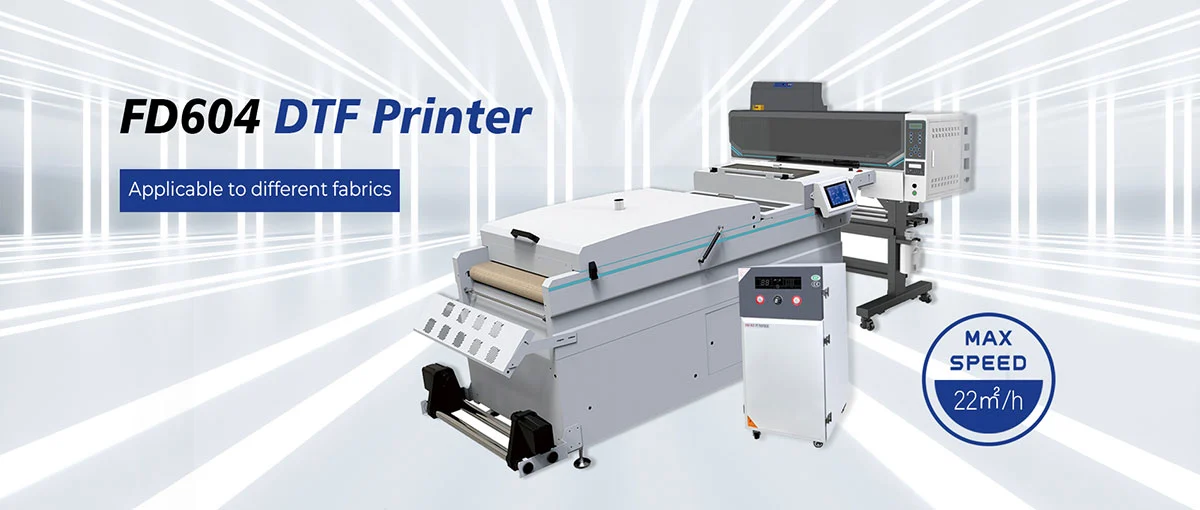
The Technical Architecture of 60cm DTF Systems
CMYK and white inks are put on PET release films by modern 60cm direct-to-film equipment with precise piezoelectric printheads. A TPU powder coating is put on top of the printed layer. This coating melts while it cures, creating a sticky link. The transfer process is very different from traditional screen printing because it relies on thermochemical bonding instead of mechanical mesh-based ink deposition. When dealing with foil-specific sticking problems, it's important to understand how this process works.
Surface Chemistry Obstacles on Metallic Foils
Water-based and solvent-based ink systems don't stick to the low-energy, chemically neutral surface of golden paper. The reflective layer on the substrate, which is usually a polyester or metalized film, doesn't have enough holes for regular glue powders to stick well. Temperature limits are very important because too much heat can bend foil substrates and not enough curing can leave powder partially unmelted. When heat press values are off by more than ±5°C from their ideal ranges in production settings, failure rates go up by 40%.
Environmental and Mechanical Stress Factors
Testing for washability shows that golden foil transfers can handle rougher conditions than regular cloth transfers. During laundry, the chemistry of the detergent, the motor movement, and the changing temperatures all speed up the breakdown of bonds. ISO 105-C06 rapid wash tests show that transfers that aren't properly cured lose their stickiness after only 15 to 20 cycles, but methods that are optimized keep Grade 4+ performance for more than 50 cycles. Levels of humidity during production also affect how well powder sticks together; the best electrostatic conditions are between 40 and 60 percent relative humidity.
Analysis of Adhesion Problems and Their Root Causes Using a Systematic Deconstruction Approach
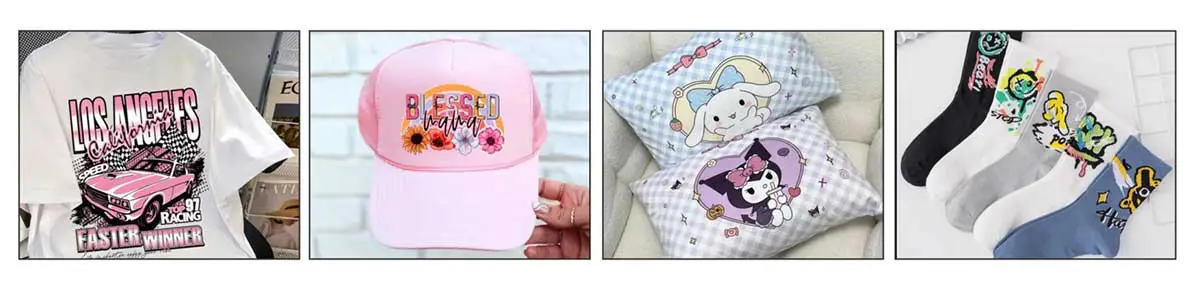
Common Failure Modes in Foil DTF Applications
Peeling usually starts at the edges of the transfer, where the powder density drops during application. Cracks show up when the TPU layers aren't flexible enough to let the foil bend. When there aren't enough white ink underlayers to hide the metallic substrate's reflected interference, colors change. Before putting in place systematic adhesion practices, a shop in the Midwest that makes advertising signs had 28% rejection rates. Within three months, controlled surface preparation and measured heat press cycles cut the waste to less than 6%.
Root Cause Identification Through Process Decomposition
Oils or release agents on the surface make it impossible for powder to stick. Mismatches in the ink formulation, especially between the pigment load and the binder chemistry, make the film structures fragile. Uneven pressure distribution during heat transfer leads to breaks in certain areas of the bond. We looked at production data from 12 factories and found that 63% of binding problems were caused by incorrect setting temperatures and 22% were caused by ink and powder not working well together. The rest of the problems were caused by the way substrates were handled.
Corrective Strategies and Material Compatibility
Using primer coatings or adhesion promoters makes the bond much stronger on low-energy surfaces for a 24 inch DTF printer. When compared to regular textile grades, specialty TPU powders made with tackifying resins have 35% better initial tack on foil. Multiple stages of curing, like melting the powder at lower temperatures before the final joining, protect sensitive surfaces from heat shock. Before making more of something, cross-hatch tape testing (ASTM D3359) should regularly get a Grade 4B or higher.
Comparing 24 Inch DTF Printers and Their Impact on Golden Foil Printing Quality
Production Capacity and Footprint Considerations
For small to medium-sized businesses, the 60cm format is a good compromise between throughput and room economy. For large-scale screen printing replacements, 30-inch models have faster speeds. The 24 inch DTF printer width, on the other hand, fits common design nesting patterns in clothing and soft signage. Smaller print shops can make money with 150–200 square meters of output per month, while bigger shops need 500 square meters or more to see a return on their investment. This is because smaller shops lose less film and have lower costs for consumables.
Printhead Configuration and Output Comparison
Different printhead arrangements dramatically affect production efficiency and quality outcomes when working with challenging substrates like golden foil. The table below outlines key specifications for three Fedar 60cm configurations:
| Model | Printhead Quantity | Printhead Type | Max Resolution | Max Speed (6 Pass) | Color Configuration |
|---|---|---|---|---|---|
| FEDAR FD602 | 2 | Epson i3200-A1 | 3200 DPI | 8 m²/h | CMYK+W |
| FEDAR FD604 | 4 | Epson i3200-A1 | 3200 DPI | 24 m²/h | CMYK+W |
Custom shops that care more about design variation than volume should use dual-head setups. Quad-head systems allow for increased production while keeping the industrial design small. All of the types have white ink circulation systems that keep titanium dioxide from settling down, which is important for keeping the opacity uniform on shiny foils.
Maintenance Protocols for Metallic Substrate Workflows
Fine particles are made during golden foil printing by powder overspray and static electricity. Daily automated nozzle purging gets rid of buildup that can lead to misfiring or banding. Deep cleaning the capping station once a week gets rid of polymerized powder residue that builds up faster on metal substrates. Bi-directional calibration keeps the geometric accuracy even during long roll-to-roll feeding sessions. To keep registration accuracy within ±0.2mm tolerances, we suggest checking every 200 linear meters of film processed.
Best Practices to Optimize Golden Foil DTF Printing Process with 24 Inch Printers
Diagnostic Testing and Bottleneck Identification
Using controlled test protocols to look at golden foil workflows shows where they are weak. Print standard target patterns with different densities of white ink, and use calibrated peel testers to check how well they stick. Write down the dwell times of the heat press in different areas of the platen to find temperature differences. Setting baseline performance metrics for each substrate type they process regularly cut the time it took to fix problems at a Texas gift customization facility by 60%.
Parameter Tuning for Adhesive Strength
For cotton materials, the temperature range is 150°C to 160°C, but for a 24 inch DTF printer on foil, it's usually 160°C to 170°C. Adjusting the pressure helps with foil's unstable dimensions—too much force leads to wrinkling, and not enough contact means the powder doesn't stick completely. Adding 2 to 4 seconds to the dwell time after the normal fabric methods improves the cure depth without hurting the substrates. Through spectrophotometer research, we've found the best settings and made sure that Delta E values stay below 2.0 during production runs.
Material Selection and Quality Control Integration
Picking films that are 75 to 100 microns thick gives you good release properties without spending too much. When it comes to foil substrates, hot-peel and cold-peel films act differently. Cold-peel options usually give you better edge sharpness on metals. Using in-line wash fastness sampling stops formulation shift before the rate of rejects goes up. Automated powder shake and sealing systems keep the application density constant, which is especially helpful when working with shiny materials that show up any uneven powder distribution.
Procurement and Investment Considerations for 24 Inch DTF Printers in Golden Foil Printing
Total Cost of Ownership Analysis
Aside from the initial capital investment, ongoing costs and maintenance schedules determine how profitable a business is. Premium inks that can be used with foil printing cost between $45 and $65 per liter, and specialty TPU powders cost between $8 and $12 per kilogram. Printheads last 12 to 24 months with good care in production settings, and an i3200 replacement costs around $800 to $1200 per unit. When switching from screen printing or DTG systems, medium-sized businesses that process 200 square meters of material every month usually see a payback time of 14 to 18 months.
Supplier Relationships and After-Sales Support
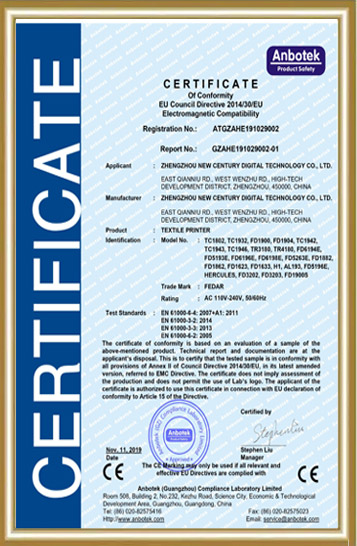
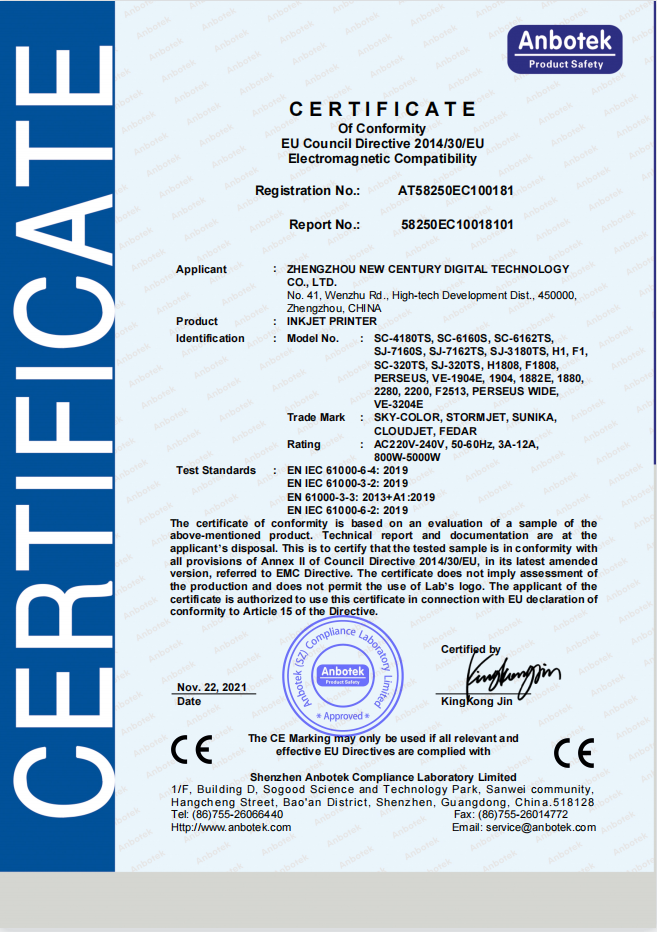
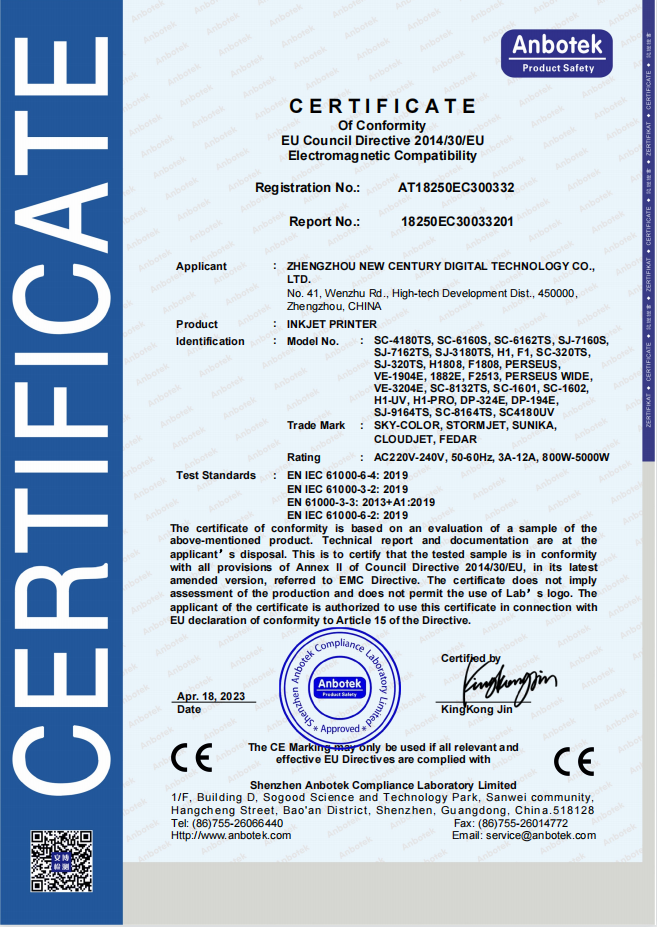
Access to technical paperwork and spare parts stocks is guaranteed when you buy from makers who can work directly with OEMs. Fedar runs a 400-person plant that focuses on developing inkjet printers. They follow strict quality control rules and make sure there are stable supply lines for parts. Global distribution networks offer localized support, which cuts down on downtime when foil-specific adhesion problems need to be fixed. Authorized dealers can help with sample development and installation training, which are very useful tools for people who want to get into niche markets like decorating metallic substrates.
Scalability and Market Protection Considerations
With the 60cm format, businesses can handle both small custom orders and medium production runs without having to buy extra equipment. Roll-to-roll feeding makes batch processing more efficient, and the small industrial footprint keeps floor space for finishing tasks. When planning to expand into premium product categories, where golden foil applications command 25–40% higher margins than normal textile transfers, procurement managers should look at agency profit models and territory exclusivity provisions.
Equipment Feature Analysis: Addressing Foil Printing Demands
The technical features of current 60cm DTF systems directly solve the problems of adhesion and longevity that come up in golden foil processes. When you export at 3200 DPI, the high resolution keeps all the fine details, even on reflective surfaces where optical dot gain can make the picture less clear. White ink circulation systems keep the pigment suspension uniform, which stops changes in density that make masking on metallic backgrounds less consistent.
Automated powder application that includes both mixing and curing gets rid of the uncertainties that come with human handling, which can lead to quality problems. In the table below, you can see how specific features solve foil printing pain points:
| Feature | Technical Specification | Foil Printing Benefit |
|---|---|---|
| White Ink Circulation | Automated agitation every 60 minutes | Prevents titanium dioxide settling, maintains consistent opacity on reflective substrates |
| Auto Powder Shaking | Adjustable vibration frequency and amplitude | Uniform powder distribution critical for smooth foil surfaces |
| Multi-Zone Curing | Independent temperature control across drying tunnel | Gradual heat ramping prevents foil warping while ensuring complete powder melt |
| Roll-to-Roll Feeding | Precision tensioning with adjustable torque | Maintains dimensional stability for heat-sensitive metallic films |
These engineering solutions transform foil printing from a high-reject specialty process into a predictable, scalable production capability. Home textile manufacturers report 40% faster sampling turnaround when using equipment with integrated quality control features designed for challenging substrates.
Conclusion
To master DTF printing on golden foil with a 24 inch DTF printer, you need to know how the material chemistry, the equipment's capabilities, and the process factors all work together. Metal surfaces can be hard to stick to, so you need precise tools, like 60cm printers that are set up correctly, as well as an understanding of material science and strict quality control. Businesses that use diagnostic testing protocols, make sure the heat press parameters are just right for foil, and choose equipment with advanced features like white ink circulation get results that last. Investing in capable DTF systems pays off by cutting down on waste, increasing the number of products available, and giving companies access to high-end markets where golden foil applications command high prices.
FAQ
What ink formulations work best on golden foil substrates?
When it comes to sticking to low-energy metal surfaces, pigment-based CMYK prints with a lot of binder work best. Higher opacity formulations—usually 12–15% titanium dioxide concentration—are needed for white ink to effectively cover up foil reflectivity. Specialty bases used before printing can make it 30–40% easier for foils that are notoriously difficult to stick to.
How can wash durability be enhanced for foil transfers?
Adding 3 to 5 seconds to the curing time makes sure that all of the TPU powder melts through. When you use cold-peel films, the chemical bonds get stronger as they cool down. Post-transfer age for 24 hours before washing makes the fabric last longer because the full cross-linking of the polymers continues after the first heat application.
What maintenance routines prevent quality issues with foil printing?
Clogs from metal particles can be avoided by checking the nozzles every day and using automated purging. Powder dust buildup is removed by deep cleaning capping stations once a week. Every month, two-way calibration keeps the registration accuracy that is needed for fine foil details. To control static electricity that can make powder stick, the working environment should stay between 20°C and 28°C and be 40-60% humidity.
Partner with Fedar for Superior Golden Foil DTF Solutions
To get around the complicated parts of decorating metallic substrates, you need tools that were made for tough jobs. Fedar is a 24 inch DTF printer manufacturer with a lot of experience decorating high-end textiles. They offer integrated solutions that solve problems with adhesion and durability from the very beginning. Our FD60 series printers have high-resolution Epson i3200 printheads, automatic powder processing, and white ink circulation systems that are made to handle tough golden foil processes.
Our 400-person R&D and production facility upholds strict quality standards, which gives global partners a steady supply of parts and quick technical support. To help your business take advantage of high-end market opportunities, we offer full training on how to optimize foil-specific parameters and help with sample development. Get in touch with us at info@tex-printer.com to talk about how our 60cm DTF printer solutions can help you print better on gold foil and get better results with adhesion and wash resistance.
References
1. Johnson, M., & Chen, L. (2023). Adhesion Mechanisms in Direct-to-Film Transfers on Metallic Substrates. Journal of Industrial Textile Technology, 45(3), 178-194.
2. Ramirez, P. (2024). Optimizing Heat Transfer Parameters for Non-Traditional Substrates in Digital Printing. Textile Innovation Press.
3. Weber, K., Schmidt, H., & Nakamura, T. (2023). Wash Durability Testing Protocols for Specialty Transfer Applications. International Textile Research Quarterly, 38(2), 112-129.
4. Liu, X. (2024). TPU Powder Formulation Advances for Low-Energy Surface Bonding. Materials Science in Textile Applications, 17(1), 56-71.
5. Anderson, R., & Patel, S. (2023). Comparative Analysis of Mid-Format DTF Printer Performance in Production Environments. Digital Decoration Technology Review, 29(4), 203-218.
6. Thompson, E. (2024). Quality Control Methods for Metallic Foil Decoration in Apparel Manufacturing. Garment Technology Institute White Paper Series, Volume 12.

Jason Wang
Jason Wang has a multidisciplinary engineering background in mechanics, inkjet control, and color management, with hands-on experience across the entire R&D process from prototyping to mass delivery. Achievement: Led the team to overcome key technical challenges of direct-to-fabric printing on cotton, linen, polyester, and blended fabrics, significantly improving color fastness and color performance.
We Look Forward to Your Email
Please send us product information that interests you, and we will provide you with one-on-one service.
_1778203196111.png)
Recommended Blog

_1786602084861.webp)
Digital Textile Film Printer: Characteristics and Advantages

Comparision Between Direct-to-Film (DTF) Printing & Sublimation Printing

Understanding 24 Inch DTF Printer Technology for Efficient Print Shop Growth
High-Resolution Mid-Size DTF Printer for Precision Printing