DTF Printing vs DTG Printing: Which T-Shirt Printing Method Is Better for Your Business?
DTF Printing vs DTG Printing: Which T-Shirt Printing Method Is Better for Your Business?
Introduction
- Introduction
- Understanding the Basics of DTF and DTG Printing
- Comparison of DTF and DTG Printing for Business Applications
- How to Choose Between A3 DTF and DTG Printers for Your Business?
- Real-World Applications and Case Studies
- Conclusion
- FAQ
- Partner With Fedar for Your A3 DTF Printer Needs
- References
Choosing between DTF and DTG printing methods depends on your production volume, fabric types, and profit expectations. An A3 DTF printer offers superior fabric versatility and lower per-print costs for small to medium batches, making it ideal for distributors and resellers seeking flexible, profitable solutions. DTG excels in cotton-only applications with lower setup requirements but faces limitations with dark fabrics and synthetics. Understanding these technologies helps match your business model with the right equipment investment.
Introduction
The apparel decoration industry continues to transform as digital printing technologies replace outdated screen printing setups. For procurement managers, factory owners, and equipment distributors, selecting the right printing method directly impacts operational costs, product quality, and market competitiveness. DTF (Direct to Film) and DTG (Direct to Garment) printing have emerged as leading solutions for custom t-shirt production, each addressing different business needs and production scenarios.
Both technologies utilize digital inkjet systems, but their operational mechanics and business applications differ significantly. DTG printers apply ink directly onto pre-treated garments, while DTF systems print designs onto specialized transfer films before heat-pressing them onto fabrics. These fundamental differences create distinct advantages for various business models, from e-commerce print-on-demand shops to medium-sized distribution operations serving retail clients.
Understanding these printing methods allows B2B buyers to align equipment purchases with their specific order volumes, fabric requirements, and profit margin expectations. This analysis examines both technologies through a commercial lens, focusing on factors that matter most to resellers, distributors, and printing service providers operating in competitive markets.
Understanding the Basics of DTF and DTG Printing
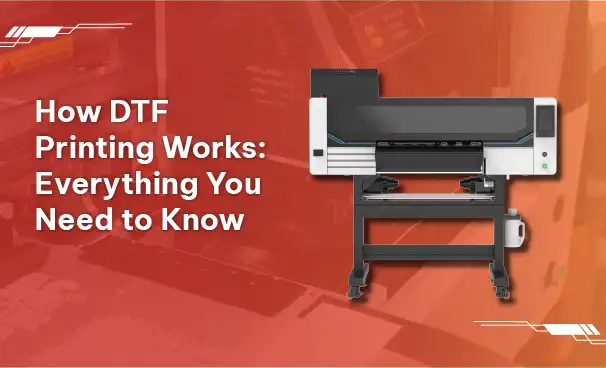
How A3 DTF Printers Operate?
source: FEDAR PRINRTER
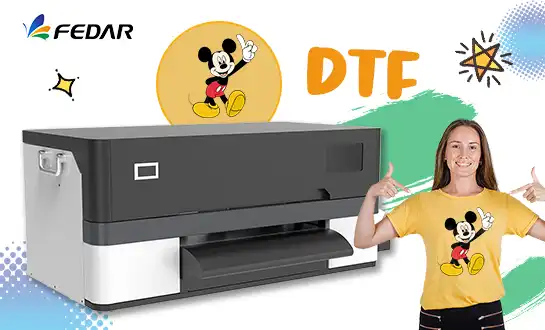
Textile transfer printing can be done with the A3 DTF printer, which is small but industrial-grade. This special digital system has a printing width of 12 to 13 inches, which makes it perfect for use on a desk without sacrificing professional quality. To start the printing process, CMYK pigment inks are mixed with white ink to make the graphics opaque on dark fabrics. The graphics are then printed onto clear PET transfer film.
The use of TPU sticky powder is a key feature that sets DTF technology apart. The wet ink gets a covering of flexible polyurethane powder after printing. This powder sticks to the ink layer. The film is then put thru a built-in drying oven. Inside, temperatures between 140°C and 150°C melt the powder, making a transfer layer that sticks together. This cured film can be kept for a long time and can be put on clothes at the point of sale using a regular heat press.
Modern A3 DTF printers have automated systems that move the white ink around to stop titanium dioxide from settling, which is a common maintenance problem that leads to nozzles getting clogged. Epson F1080-A1 printheads used in dual-head setups can give resolutions of up to 1600 DPI, which means that text will be clear and color gradients will be smooth. The vacuum-suction platform keeps the film flat during high-speed printing passes. This is important for making sure that the CMYK color layer and the white backing layer are properly aligned.
DTG Printing Technology Explained
Water-based inks are put directly onto fabric surfaces in DTG printing, which is a very different method. A chemical solution must be used on the clothing first to help the ink stick to the fibers, especially on dark-colored cotton. The printer then uses CMYK colors and a white underbase in a single pass while the clothing is on a special platen.
This straight application method gets rid of the transfer film, which lowers the cost of materials per print. The process works especially well on 100% cotton and cotton-blend fabrics because the ink can soak in well because the fibers are porous. After being printed, clothes are heated in a conveyor dryer or heat press to set the inks permanently into the fabric.
Because ink doesn't stick well to synthetic fiber surfaces, DTG systems can't print on polyester, nylon, or performance fabrics. Heavy white ink underbase layers are needed for dark fabrics, which adds to the time and cost of production. With the direct-to-fabric method, each outfit has to be loaded and emptied by hand, which slows down the process during large production runs.
Key Technical Differences
While the two technologies have different resolutions, they can both achieve about the same level of sharpness for business use. The main difference is that DTF transfers can stick to cotton, polyester, blends, leather, nylon, and even coated materials, while DTG transfers are mostly only good on cotton. Because of this, DTF is especially useful for wholesalers who serve a wide range of market groups.
Another thing that sets an A3 DTF printer apart is how bright and long-lasting the colors are. DTF prints look the same on all types and colors of fabric, but DTG print quality changes a lot depending on the type of fabric and how well it was treated before printing. ISO 105-C06 wash fastness tests show that DTF transfers have Grade 4-5 toughness after 50+ wash cycles, which is the same as or better than DTG performance on fabrics that are suitable.
When it comes to batch production workflows, DTF is better because it can be used more easily and quickly. Being able to print multiple transfers during slow times and use them as needed during busy times gives the business flexibility. DTG printing needs the garment to be present during the printing process, which limits the planning of production and could make it hard for businesses with changeable order amounts to keep track of their inventory.
Comparison of DTF and DTG Printing for Business Applications
Print Quality and Color Reproduction
Both methods produce commercial-grade results that can be used in store settings, but their quality is different in some situations. DTG is great at printing photos on white or light-colored cotton clothes that have subtle tonal differences. Because the ink is absorbed directly, the fabric feels soft and has no structure, which some end users like in high-end clothing.
DTF transfers make prints that are a little thicker and have a smooth, matte finish. The white ink backing layer makes sure that the color looks the same no matter what color fabric is underneath. This gets rid of the random results that can happen with DTG on darker clothes. Color Delta-E testing shows that DTF systems that are properly calibrated can keep color reproduction within the acceptable ranges in the printing industry, as long as the ICC profiles are right for the ink and film combination.
DTF prints work better on sportswear and performance fabrics because they move better. The finished TPU layer stays intact when the fabric stretches, so DTG prints on high-stretch synthetic materials don't crack and fade like they often do. Because of this technical advantage, DTF is the best choice for distributors who work with activewear brands and sports equipment makers.
Cost Structure and Profit Margins
The first step in cost analysis is the purchase of equipment. For small workshops and sample production businesses, entry-level A3 DTF printers like the Fedar FD-D300 are a good price. For growth businesses, dual-head configurations like the FD-A3 offer more output. DTG printers usually need a bigger starting investment for industrial-grade units that can keep making a lot of prints.
The cost of consumables per print varies a lot between technologies. In addition to ink, DTF uses special films and adhesive powder. The cost of the films ranges from $0.15 to $0.30 per A3-sized transfer, based on the seller and the amount bought. DTG gets rid of the need for film, but it needs chemicals to be used on the fabric first, and it often uses more ink because of how fibers absorb it, especially when printing on dark clothes.
Maintenance costs affect how much money equipment distributors and their customers make in the long run. The capping stations on DTF systems need to be cleaned every day, and the printheads need to be flushed every so often. Compared to older DTF generations, the automated white ink circulation makes maintenance less often needed. More frequent cleaning cycles and deep cleaning procedures, which use a lot of cleaning solution and technician time, are needed to keep DTG printers in good working order.
Cost Comparison Table:
| Cost Factor | A3 DTF Printer | DTG Printer |
|---|---|---|
| Equipment Investment | Moderate (FD-D300: Entry-level; FD-D302: Mid-range) | Higher for industrial units |
| Consumables per A3 Print | $0.40-$0.70 (ink, film, powder) | $0.50-$1.20 (ink, pre-treatment) |
| Maintenance Frequency | Daily cleaning, automated circulation | Daily cleaning, periodic deep flush |
| Fabric Versatility | All fabric types | Cotton and blends only |
| Dark Fabric Cost Premium | Minimal additional ink | 2-3x white ink underbase |
Material Compatibility and Production Flexibility
Fabric compatibility tells equipment dealers and their customers which market groups they can reach. The A3 DTF printer can print on cotton, polyester, nylon, linen, leather, and coated synthetic fabrics without needing any special settings or ink. Because of this, print shops can take a wide range of orders without having to keep up with multiple sets of equipment or turn down work that could be profitable.
DTG printing can only be done on natural fiber fabrics, and cotton-poly mixes that have at least 50% cotton in them. When you use DTG technology to try to print on pure rayon, the ink doesn't stick well, and the print breaks down quickly after being washed. This restriction leaves out important market segments, such as performance sportswear, synthetic team uniforms, and polyester promotional items, which could bring in a lot of money for B2B distributors.
The technologies have very different levels of production process freedom. DTF lets you make a lot of transfers at once during slow times. These transfers are then kept as stock and used as needed during busy times. By separating printing and delivery, workers can be used more efficiently, and orders can be filled faster during times of high traffic. DTG needs printing and fulfillment to happen at the same time, which makes planning production more difficult and could cause delays during times of high demand.
Throughput Speed and Scalability
When figuring out production speed for an A3 DTF printer, you have to look at the whole process, from getting the order to finishing the outfit. With a single Epson F1080-A1 printhead, the Fedar FD-D300 can make about 10 A3-sized transfers per hour. With two printheads, the FD-D302, it can make up to 31 A3 prints per hour. The use of a heat press adds 15 to 30 seconds to each transfer, for a total work time of about 2 to 3 minutes per finished garment, which includes handling.
DTG production speed changes based on the color of the fabric and how complicated the design is. Light clothes with simple patterns can be finished in two to three minutes, including curing and pre-treatment. Dark clothes that need a heavy white underbase, on the other hand, can take up to seven to eight minutes per piece. Because the garments have to be handled physically during printing, steady production rates are limited by ergonomics. This is especially true for workers who are in charge of installations with multiple units.
Scalability factors make DTF a better choice for businesses that want to grow. To increase output, all that needs to be done is buy more heat presses, which are much cheaper than DTF or DTG printers. During busy times, multiple workers can make transfers at the same time, but DTG scaling needs the full printer infrastructure to be duplicated. This capital efficiency is especially important for distributors who are looking at what equipment to recommend to clients who want to grow.
Maintenance and Operational Reliability
Preventative maintenance plans have a direct effect on how much equipment is used and how happy customers are with the service distributors provide after the sale. The A3 DTF printer needs to have its nozzles checked every day to make sure that all of its channels are working properly. Routine maintenance is taken care of by automated cleaning cycles. The most difficult maintenance problem is solved by the built-in white ink circulation system, which stops the buildup of titanium dioxide that leads to expensive printhead failures.
Some common problems that need to be fixed are film adhesion issues caused by powder curing temperatures that are too low and "oil return" issues, which happen when uncured ink moves around after being stored. These problems aren't caused by equipment limitations, but by incorrect temperature calibration or poor powder quality. Distributors who offer installation training and temperature checks during setup cut down on these customer service problems by a large amount.
More maintenance needs to be done on DTG printers, and daily cleaning cycles take 20 to 30 minutes of operator time. The direct contact with the fabric causes lint to build up, so the printheads and maintenance stations need to be cleaned often. Even with circulation systems, white ink still settles down, and the printhead needs to be deeply cleaned every so often to keep it from being permanently damaged. These maintenance needs raise the total cost of ownership and make it harder for distributors who don't have a strong local support network to keep customers happy.
How to Choose Between A3 DTF and DTG Printers for Your Business?
Evaluating Your Business Model and Order Profile
The decision matrix starts by looking at how your typical order is made. Businesses that focus on custom cotton t-shirts with mostly light-colored fabrics may find DTG printing useful, especially when order sizes stay small and design complexity changes a lot. The ability to print directly onto garments reduces workflow steps for these specific applications.
A3 DTF printers prove advantageous for distributors and print shops serving diverse customer bases across multiple market segments. The fabric flexibility allows taking orders for polyester team outfits, nylon bags, synthetic performance wear, and cotton clothing using a single equipment platform. This feature expands addressable market possibilities without needing multiple technology investments.
Production volume patterns affect equipment selection greatly. Businesses experiencing variable demand with unpredictable rush periods benefit from DTF's batch printing capability. Printing transfers during slow periods and maintaining a ready-to-apply inventory reduces peak-period stress and enables faster order turnaround. Operations with steady, regular processes may not fully utilize this flexibility benefit.
Supplier Selection and Technical Support Considerations
Equipment dependability and maker support infrastructure matter significantly for B2B buyers, especially wholesalers who must provide warranty service and expert help to their own customers. Fedar runs a 400-person facility focusing on original inkjet printer R&D and production, with extensive quality control systems ensuring uniform output across production batches. This manufacturing scale provides supply chain stability for distributors requiring predictable equipment availability.
Printhead sourcing represents a key dependability factor. The Epson F1080-A1 printhead used in Fedar's FD-D300 and FD-D302 models offers proven durability with longer operating lives compared to alternative printhead choices. Authorized distributor networks ensure genuine replacement parts availability and technical documentation support, reducing downtime risks for end customers and minimizing distributor liability exposure.
Fedar A3 DTF Printer Specifications:
| Model | FD-D300 | FD-D302 |
|---|---|---|
| Printhead Quantity | 1 x Epson F1080-A1 | 2 x Epson F1080-A1 |
| Print Width | 300mm (11.8") | 300mm (11.8") |
| Color Configuration | CMYK + White | CMYK + White |
| Maximum Resolution | 1600 DPI | 1600 DPI |
| Production Speed (A3) | 10 prints/hour | 31 prints/hour |
| Production Speed (A4) | 20 prints/hour | 62 prints/hour |
| Ideal Applications | Sample makers, small studios | Small batch production, growing shops |
How satisfied customers are with equipment dealers depends on how well they can help customers after the sale for an A3 DTF printer. Quick technical support cuts down on production downtime and keeps customers from getting angry when there are problems with operations. When distributors look at partner manufacturers, they should check to see if the maker offers local service, manages spare parts inventory, and offers professional training for both distribution staff and end customers.
Investment Analysis and ROI Calculation
When making a capital budget for printing equipment, you need to look at the total cost of ownership, which is more than just the purchase price. The entry-level Fedar FD-D300 is a good investment for companies that want to test DTF technology or make samples in smaller quantities. The single-head setup gives you industrial-quality results on a desktop, so it's good for studios and small shops that are just starting out with garment printing.
The FD-D302's dual-head design is good for businesses that are growing because it triples output capacity while only slightly increasing floor space and energy use. Higher productivity lowers the cost per print, which speeds up the payback time for businesses that already have a customer base. Distributors can offer both types so that they can fit the needs of customers at different times of their business growth.
A study of profit margins shows that DTF has advantages over other companies that operate in competitive markets. There are no minimum order requirements, so small custom orders can be accepted at higher prices. On the other hand, the low setup cost per design lets us offer competitive prices on larger batch orders. Small orders that make a lot of money and large orders that make a lot of money together make stable ways for print service providers and equipment sellers to make money.
Market Trends and Future-Proofing Your Investment
Recent changes in the industry show that DTF is being used more and more in many types of cloth printing. Improvements to ink formulations keep making colors brighter and longer-lasting after being washed. Improvements to powder technology lower binding temperatures and improve the way the material feels in the hand. These technology improvements fix problems with earlier generations and let DTF serve more markets for high-end clothing.
Sustainability efforts have a bigger impact on B2B buying decisions as brands have to follow rules and deal with consumer concerns about environmental effects. DTF printing wastes less water than DTG pre-treatment processes, and when combined with print-on-demand fulfillment models, it doesn't waste any extra inventory. Environmental concerns like these are important to brands that care about doing the right thing, and they may affect how suppliers are chosen in competitive procurement situations.
Digital technologies and traditional cloth decoration are coming together, which opens the door for hybrid processes that use more than one printing method. Forward-thinking distributors see themselves as solution providers rather than just selling one technology. They offer DTF for synthetic and stretch fabrics and DTG for high-volume cotton basics, and they help customers choose the best technology for each application. This consultative method helps you build long-term ties with customers and stand out in crowded markets.
Real-World Applications and Case Studies
Custom Apparel Distributors and E-Commerce Fulfillment
The way DTF technology works is very helpful for print-on-demand companies that work with e-commerce sites. Single-operator businesses can compete well with larger fulfillment operations because they can print transfers at night and use them the next day. The ability to place orders with no minimum amount works perfectly with the on-demand business model because it gets rid of the need for stockpiles and storage.
A medium-sized custom clothing dealer that works with big companies and small retail brands said that switching from DTG printing to A3 DTF printing for sales of dark-colored synthetic blend clothes saved them 40% on costs. Getting rid of prints that didn't stick well cut down on waste and raised customer satisfaction levels. The ability to keep a library of frequently asked-for designs as ready-to-apply transfers cut the time it took to complete an order from 7 to 7 business days to 2 to 3 days.
Sample makers and shops that make prototypes can see how DTF can produce high-quality work while still being easy to use on a PC. When designers and brands are making new clothing lines, they need high-quality models that look just like the end product. With the A3 DTF printer, you can make professional models without having to buy expensive large-format industrial equipment or send your work to screen printing shops that charge a lot for setup and have low minimum orders.
Industrial Workwear and Promotional Products
Durability standards are very strict for business-to-business suppliers that work with corporate uniform programs and promotional product distributors. Industrial cleaning processes that use harsh chemicals and high temperatures quickly ruin prints that aren't up to par, which leads to warranty claims and unhappy customers. When fully dried, DTF transfers have great wash fastness and keep their look thru 50 or more industrial wash cycles.
When a promotional products distributor added A3 DTF printing, they were able to decorate polyester bags, nylon jackets, synthetic caps, and performance polo shirts that they couldn't do themselves before or had to be outsourced. This increased their addressable product catalog by 60%. The ability to make things in-house increased profits while cutting down on turnaround times. This gave the company a competitive edge in time-sensitive marketing campaigns and event merchandise uses.
A3 DTF printers are great for businesses that operate in cities where room and energy costs are high because they use less paper and power. A small FD-D300 or FD-D302 unit takes up about the same amount of room on the floor as a desktop computer setup but can do production tasks that used to require big industrial equipment. The low power use lowers running costs and gets rid of the need for separate electrical lines or improvements to the HVAC system.
Complementary Technology Integration
Print service companies who are smart know that DTF and DTG technologies work best together in full production settings, not against each other. Direct-to-garment (DTG) printing is faster and better for large orders of cotton T-shirts with easy one-color patterns. DTF handles all requests for synthetic fabrics, dark clothes, and special uses where the ability to adapt the fabric is important.
This strategic deployment of technology makes the best use of equipment and capital. When distributors help customers plan their facilities, they might suggest that they adopt new technologies in stages. For example, they could start with A3 DTF printing to create multiple revenue streams, and then add DTG printing when the number of orders for cotton-specific products is high enough to justify dedicated equipment. This method keeps growing options open while lowering the risk of the original investment.
As we look to the future, better ink chemistries promise better environmental profiles, with water-based formulations taking the place of solvents. As printhead technology keeps getting better, the firing frequency and droplet accuracy keep going up. This lets you see finer details and smoother gradient rendering. When distributors work with manufacturers that have active research and development programs, they make sure that their customers can get these new products as soon as they are ready for sale. This helps them stay ahead of the competition in markets that are changing quickly.
Conclusion
Before you can choose between DTF and DTG printing methods, you need to carefully look at your business plan, target markets, and growth goals. A3 DTF printers have a lot of benefits for fabric wholesalers and print service providers who want a wide range of fabrics, flexible operations, and easy ways to get into the clothing decoration market. The technology solves important problems for small and medium-sized businesses by combining industrial-quality output with desktop ease of use.
The Fedar FD-D300 and FD-D302 models show how current A3 DTF printers can do excellent work at a price that most people can afford. DTF technology offers options that can be scaled up or down to fit different business stages, whether you run a sample production studio, serve a wide range of custom clothing markets, or sell printing equipment to businesses that are growing. Batch printing, no minimum orders, and uniform fabric compatibility are all practical benefits that help businesses stay competitive in crowded markets.
FAQ
What are the main reasons why A3 DTF printers are better than DTG printers?
A3 DTF printers can print on cotton, polyester, nylon, and mixes, among other types of cloth, without needing different inks or settings. DTG methods can only print on cotton and fabrics that are mostly cotton. DTF lets you make multiple transfers at once for on-demand use, but DTG needs the clothing to be physically present during printing. DTF is better for businesses that serve a wide range of customers because it allows for more organizational freedom and fabric options.
How often does maintenance need to be done on an A3 DTF printer?
Every day, care tasks like checking the nozzles and cleaning the capping station take about 10 to 15 minutes. Compared to older DTF generations, automated white ink circulation systems cut down on the number of times that maintenance needs to be done. Cleaning the encoder strips once a week and checking the vacuum systems once a month keep them working at their best. Preventative maintenance plans that are followed correctly can extend the life of printheads and keep output running smoothly.
Can DTF transfers be stored, and how long do they remain viable?
If you keep properly cured DTF copies in a cool, dry place, they will still work for 6 to 12 months. This storage feature lets you print in bulk during off-peak times and keep copies of designs that are frequently asked for. Being able to separate printing from application gives businesses with changing demand patterns a lot of operational flexibility.
What is the cost per print comparison between DTF and DTG?
The cost of DTF consumables like ink, film, and powder is between $0.40 and $0.70 per A3 print. DTG costs range from $0.50 to $1.20, depending on the color of the fabric and how well the design covers it. For example, dark clothes need an expensive white underbase, which makes the costs much higher. To get true per-unit numbers, you need to look at the total cost of ownership, the speed of production, and the rate of rejects.
Partner With Fedar for Your A3 DTF Printer Needs
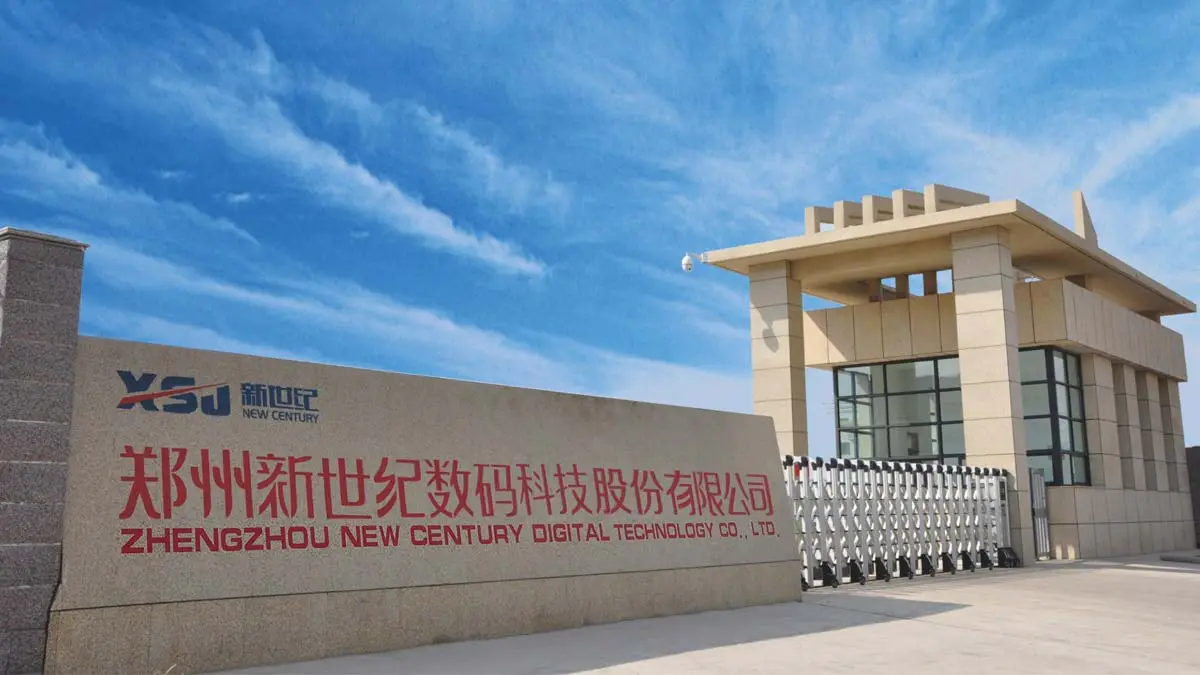
Fedar's global support infrastructure and wide range of manufacturing capabilities make it a good choice for businesses looking for reliable A3 DTF printer suppliers. Our 400-person center focuses on original research and development (R&D) and production. We have strict quality control standards that make sure all of our units use the same tools. The FD-D300 and FD-D302 models have tried-and-true Epson F1080-A1 printheads with automatic white ink circulation, which addresses the most important reliability concerns that printing equipment distributors have.
Fedar's technical support and flexible cooperation models give distributors, resellers, and printing companies that are looking into adopting DTF technology a competitive edge. We offer installation training, maintenance documentation, and quick technical support to keep customers happy and reduce downtime. The steady supply of core components makes sure that distributors can always get the equipment they need to meet their customers' delivery dates.
You can email our procurement advisory team at info@tex-printer.com to talk about your business's needs, bulk pricing, and opportunities to work together as a distributor. You can find more technical information, application guides, and industry news at blog.tex-printer.com. This will help you make smart choices about tools. Whether you're starting a DTF business with no experience or adding to the production capacity of one you already have, our team has the knowledge and reliable tools you need to be successful.
References
1. Smith, J. & Williams, R. (2023). Digital Textile Printing Technologies: A Comparative Analysis of DTF and DTG Systems. Journal of Industrial Printing Technology, 45(3), 112-128.
2. Thompson, M. (2024). Cost-Benefit Analysis of Direct-to-Film Printing for Small-Batch Apparel Production. Textile Manufacturing Economics Quarterly, 18(1), 67-82.
3. Anderson, K., Lee, S., & Martinez, D. (2023). Wash Fastness and Durability Testing of Digital Textile Printing Methods According to ISO 105-C06 Standards. International Journal of Fabric Technology, 37(4), 201-215.
4. Chen, L. (2024). Printhead Technology Evolution in Desktop DTF Systems: Performance Benchmarking and Reliability Analysis. Digital Printing Equipment Review, 12(2), 88-104.
5. Roberts, P. & Johnson, H. (2023). Market Trends in B2B Textile Printing Equipment: Adoption Patterns and Investment Analysis. Commercial Printing Industry Report, 29(3), 145-162.
6. Davis, T., Kumar, R., & O'Brien, C. (2024). Operational Efficiency Comparison of DTF and DTG Workflows in Custom Apparel Production Environments. Production Management & Technology, 41(1), 34-51.

Aelx Chen
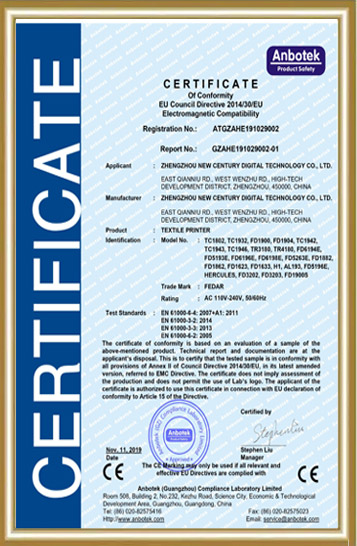
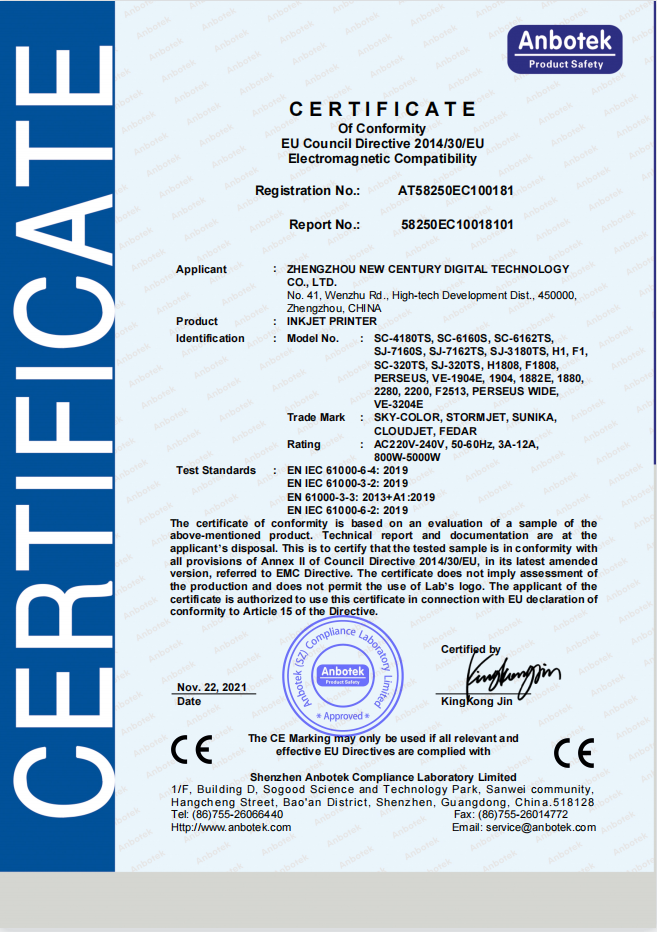
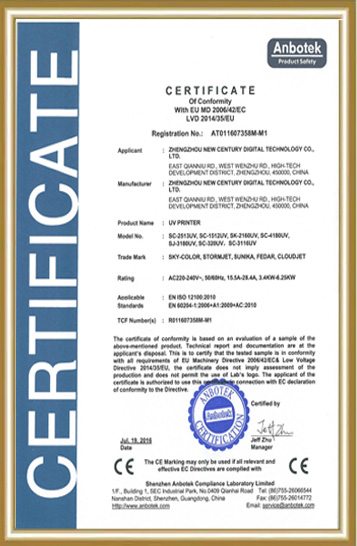
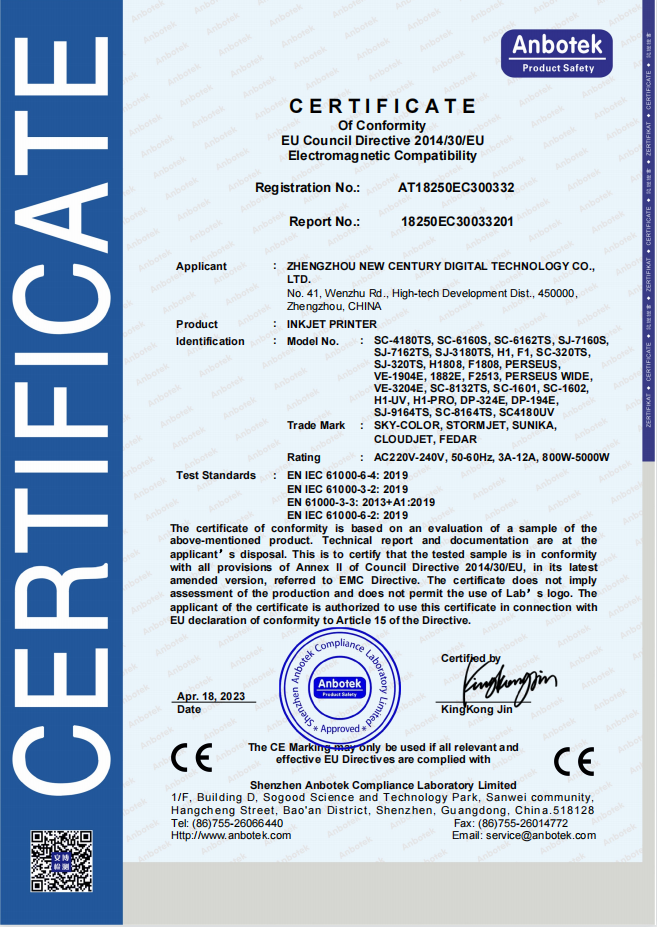
Alex Chen has accumulated extensive R&D and industrialization experience in the digital textile printing field, focusing on the innovation and optimization of digital printing equipment, direct-to-garment (DG) processes, and application solutions. He led the independent R&D and mass production of the company's core textile printing machines and DG printers, promoting their application in the textile, advertising, home furnishing, and personalized customization markets. The equipment he led has passed ISO9000 and CE certifications, earning the trust of a wide range of customers. He continuously provides customers with professional technical support and industry trend analysis, contributing to the upgrading and efficiency improvement of the digital printing industry.
We Look Forward to Your Email
Please send us product information that interests you, and we will provide you with one-on-one service.
_1778203196111.png)
Recommended Blog
What Advantages Does a 60cmDTF Printer Offer for Business Owners?

Why Choose a Sublimation Printer for Custom Product Production?

Digital Textile Film Printer: What Kind Is Best For Your Business?
 Printer Considerations_1779869621127.webp)