DTF White Ink Circulation System: The Key to Preventing Print Head Clogs
Understanding the Problem of Print Head Clogging in DTF Printers
- Understanding the Problem of Print Head Clogging in DTF Printers
- Core Principles and Components of the White Ink Circulation System
- Comparing Traditional Methods vs. Advanced White Ink Circulation Systems
- Maintenance Tips and Troubleshooting for White Ink Circulation Systems
- Selecting the Right DTF Printer with an Effective White Ink Circulation System
- Maintenance Schedule Overview for Optimal System Performance
- Conclusion
- FAQ
- Partner with a Proven DTF Printer Manufacturer
- References
White ink circulation systems represent a breakthrough solution for direct-to-film printing operations, dramatically reducing printhead failures that plague production workflows. When titanium dioxide particles in white ink settle within nozzles, they create blockages that compromise print quality and halt production lines. A properly engineered circulation system continuously agitates and moves ink through the DTF printer mechanism, preventing sedimentation and ensuring consistent opacity across every transfer. This technology transforms white ink from a liability into a reliable component of high-volume textile decoration operations.
Understanding the Problem of Print Head Clogging in DTF Printers
source: FEDAR PRINRTER
The Chemical Reality Behind White Ink Challenges
Titanium dioxide particles in white DTF ink are much heavier than those in regular CMYK colors. When these particles stay still for a while, they settle down naturally within minutes, building up dense layers at the bottom of ink reservoirs and in printhead channels. While colored inks can flow easily through micro-nozzles, white ink needs to be constantly moved to keep the particles evenly mixed throughout the entire ink delivery path.
Environmental Factors That Accelerate Clogging
Changes in temperature and humidity have a direct effect on how thick the ink is and how fast it evaporates. When the humidity level is below 40%, the surface of exposed nozzle plates dries out quickly. Also, temperatures outside of the 20–25°C range change chemical properties that affect how the flow works. Production sites that don't have temperature control have a lot more clogging problems, especially when the seasons change quickly and the weather changes.
The Financial Impact of Inadequate Ink Management
Printhead replacement costs vary from $800 to $3,500, and many textile printing companies replace their heads every 6 to 12 months because they print so much. Clogged nozzles cause unplanned downtime that lasts an average of 2 to 4 hours per episode, which includes troubleshooting, cleaning attempts, and recalibration. This means that businesses with two shifts a day lose 15 to 20 percent of their productivity and miss shipping dates, which hurts their ties with clients and their ability to make money.
Core Principles and Components of the White Ink Circulation System
Mechanical Architecture for Continuous Flow
Chemically resistant peristaltic pumps are used in the circulation system to create controlled pressure without letting air bubbles into the ink path. In a closed-loop system, these pumps take ink from the main tank, send it through DTF printer pipes, and then put back any extra ink in the tank. This constant movement keeps the particles from settling and keeps the ink at the right temperature through friction-generated heat. This keeps the viscosity within the narrow range needed for precise jetting.
Intelligent Software Integration
Modern systems work with RIP software to set automatic circulation times based on how much printing is happening. During times of inactivity, the system starts short bursts of circulation every 15 to 30 minutes to keep things moving without losing ink. Before print jobs start, the software runs a pre-print circulation cycle that makes sure all nozzles receive the same amount of ink. This stops the common "first-print variation" problem that leads to sample rejection and wasted material.
Component Durability and Chemical Compatibility
The materials used for tubing must not break down chemically when exposed to ink solvents and must also be able to bend at different temperatures. Standard plastic tubing only lasts 6 to 12 months, but high-grade fluoropolymer lines that can handle continuous chemical exposure last 3 to 5 years under normal operating conditions. The insides of pump parts are made of ceramic or stainless steel, which can handle the rough titanium dioxide particles without making contaminating particles that could cause new blocking pathways.
Comparing Traditional Methods vs. Advanced White Ink Circulation Systems
Manual Maintenance Approaches and Their Limitations
Traditionally, operations depend on technicians manually cleaning the printheads every 4 to 8 hours with a cleaning solution, and for a DTF printer, this process needs a lot of work, stops production, uses expensive cleaning fluids, and depends on how skilled each technician is to work well. Different executions lead to different outcomes. For example, some cleaning processes only remove surface deposits, leaving internal channel obstructions in place, which means that they will clog up again soon after production restarts.
Automated Systems Deliver Measurable Performance Gains
Systems with circulation cut down on the need for manual work by 70–80%. This means that technical staff can focus on quality control and improving production instead of doing the same upkeep chores over and over again. When automatic circulation was added to a textile printing company in North Carolina, the printheads lasted 24 months instead of 8 months. This saved the company $16,000 a year in repair costs alone. Production uptime went from 82% to 96%, which let the plant take on more contract work that brought in an extra $45,000 every three months.
Scalability Advantages for Growing Operations
When you add more equipment, the amount of manual maintenance work you need doubles. For example, if you add two DTF printers, you'll need twice as much maintenance work. Automated circulation systems can handle more machines at once because they have centralized tracking platforms that let one person keep an eye on all of them. This organizational leverage is very important for distribution partners who are in charge of client installations spread out across large areas. Being able to do diagnostics remotely cuts down on the number of service calls and the costs of travel that come with them.
Maintenance Tips and Troubleshooting for White Ink Circulation Systems
Daily Operational Checklist for Consistent Performance
At the start of each shift, production teams should check the state of the circulation pump by looking at the control panel lights or the software screen. If you look at the ink going back into the reservoir, you can tell that the circulation speed is right—healthy systems have a steady stream instead of random drips. When nozzle check patterns are printed before production runs, they show any new blockages that need to be fixed before they affect paid jobs. This way, problems are caught when they are only 10-15% blocked, instead of waiting until they are 40–50% blocked and cause visible print flaws.
Weekly and Monthly Preventive Maintenance Protocols
An easy 5-minute task that stops 80% of pump failures is cleaning the external pump filters once a week. These filters catch debris before it gets into the circulation pathways. As part of the monthly deep maintenance, the tube connections are checked for ink leaks or air infiltration spots, the state of the wiper blades is checked, and the capping station seal is confirmed to be intact. These regular checks work with the production plans because they happen during normal downtimes instead of causing unplanned breaks during times of high demand.
Troubleshooting Common Circulation System Issues
Less flow usually means that part of the pump is blocked or that the tube has collapsed because it wasn't routed correctly. Strange pump noise could mean that the bearings are wearing out or that there are air bubbles in the system. Either way, the problem needs to be fixed right away to keep it from breaking down completely. Inconsistent white ink visibility across the print width, even when circulation is active, indicates problems with the way the ink is distributed in the manifold. Some nozzle groups don't get enough flow because branching paths are partially blocked. Taking care of these signs as soon as possible stops major DTF printer damage that needs to be replaced right away and causes extended downtime.
Selecting the Right DTF Printer with an Effective White Ink Circulation System
Critical Technical Specifications for Evaluation
When buying a DTF printer, the ability of the circulation pump should be ranked higher than the total amount of ink and printheads. Systems with low pump flow rates can't keep larger ink reservoirs sufficiently stirred, so settling happens even though circulation is going on. For compact systems, the Epson F1080-A1 printhead needs at least 150ml/minute of flow to keep the titanium dioxide suspension going. For multi-head configurations, all printheads need a proportionally higher flow rate.
Evaluating Entry-Level vs. Production-Scale Solutions
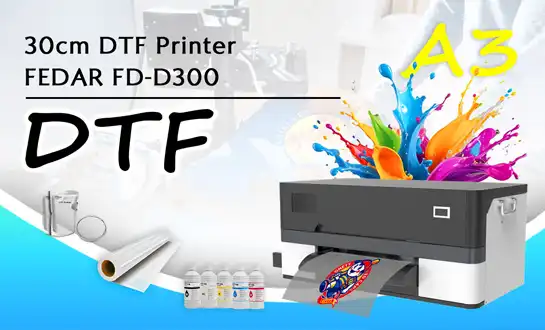
The FEDAR FD-D300 is an easy-to-use starting point for businesses that want to test their direct-to-film skills or do small amounts of custom work. This one-head setup has an industrial-grade 1600 DPI resolution and a 300mm print width. It can print 20 A4 copies an hour while still being desktop-friendly and compatible with current workspace plans. The built-in circulation system guards the Epson F1080-A1 printhead through automated maintenance processes. This makes the part last longer, even when it's only used sometimes, which is common in sample-making settings.
| Model | Printhead Configuration | Resolution | Production Speed (A4/hr) | Ideal Application |
|---|---|---|---|---|
| FEDAR FD-D300 | 1x Epson F1080-A1 | 1600 DPI | 20 | Sample making, small studios, market entry |
| FEDAR FD-D302 | 2x Epson F1080-A1 | 1600 DPI | 62 | Production shops, wholesale fulfillment, multi-client operations |
Scaling Production Capacity with Multi-Head Configurations
The FD-D302 dual-head system triples throughput to 62 A4 transfers per hour, making it ideal for businesses that need to handle steady daily amounts of more than 300 units. This rise in efficiency helps print-on-demand businesses that make money by turning orders around quickly without a minimum order size. The improved circulation system takes care of both printheads at the same time, keeping the ink consistent across the wider array of nozzles. The space-efficient design keeps the small footprint benefits that are important for production facilities in cities where rent is high.
Distribution partners really like how the FD-D302 is positioned as a growth-stage option for clients whose needs are growing beyond starting numbers. Because the system can produce industrial-quality output from a desktop size, it gets rid of the psychological and practical problems that come with installing traditional large-format equipment. This makes it easier for clients to get started and lessens the need for professional help that usually comes with more complicated production equipment.
Long-Term Value Proposition and Total Cost Analysis
Premium circulation technology gives a clear return on investment (ROI) by increasing production uptime, extending the life of consumables, and lowering the amount of work needed for maintenance. A study that looks at the costs of owning circulation-equipped and standard systems over three years finds that circulation-equipped systems are $12,000 to $18,000 cheaper per machine. This is after taking into account the cost of replacing printheads, cleaning solution, and avoiding downtime. Because these savings add up over multiple machines, procurement managers who want to save money should see circulation systems as an investment rather than a luxury feature.
One of Fedar's industrial foundations is a 400-person plant that focuses on developing original equipment and follows strict quality control rules. This production scale makes sure that supply chains for parts stay stable and that manufacturing standards stay the same across serial production runs. This reliability helps businesses that sell to customers all over the world escape the supply problems and quality differences that smaller companies with less committed production infrastructure have to deal with.
Maintenance Schedule Overview for Optimal System Performance
Knowing how often upkeep is needed and how long a system lasts helps managers make good use of their resources. The table below shows how often upkeep should be done based on the amount of production intensity that is popular in sign and cloth decoration uses.
| Maintenance Task | Light Use (0-4 hrs/day) | Medium Use (4-8 hrs/day) | Heavy Use (8+ hrs/day) | Impact If Neglected |
|---|---|---|---|---|
| Nozzle check pattern | Daily | Daily | Daily | Print quality degradation within 2-3 days |
| Circulation pump inspection | Weekly | Twice weekly | Daily | Pump failure risk increases 40% monthly |
| External filter cleaning | Bi-weekly | Weekly | Every 2 days | Flow restriction reduces circulation effectiveness by 30% |
| Printhead cleaning cycle | Weekly | Twice weekly | Daily | Nozzle recovery rate drops below 60% after 5-7 days |
| Full system flush | Monthly | Bi-weekly | Weekly | Accumulated deposits require emergency deep cleaning |
This structured approach transforms maintenance from reactive crisis management into predictable routine operations. These plans can be used by distribution partners to train clients. This sets clear standards that protect equipment investments and shows professional support skills that set premium suppliers apart from transactional vendors.
Conclusion
White ink circulation technology has gone from being an extra that wasn't needed to being an absolute must for efficient direct-to-film printing, and for a DTF printer, circulation systems are important for more than just keeping the printheads in good shape. They also help with production consistency, labor efficiency, and operational scalability, all of which give businesses a competitive edge. When companies are looking to buy new equipment, they should think about more than just resolution and speed. They should also think about how well the equipment can circulate information. This is because technical performance doesn't mean much when the equipment is being maintained.
Professional DTF printing is now much easier to get into thanks to small systems like the FD-D300 and FD-D302, which can produce high-quality work from a laptop. This makes direct-to-film more accessible, which lets smaller businesses and sample makers use it. It also helps larger companies handle high-mix, low-volume work more efficiently, adding to their existing production capacity.
FAQ
How often should white ink circulation systems run during production?
When printing is going on, circulation systems should keep running nonstop, and during slow times, they should run automatically every 15 to 30 minutes. This frequency keeps particles from settling without using too much ink, which strikes a balance between the need to preserve and the need to run the business efficiently. Systems that don't have automated control need to be turned on by hand every 20 minutes while they're not in use to keep the ink suspended.
Can circulation systems be retrofitted to older equipment?
How possible it is to retrofit depends on how the DTF printer is built and how much room is available for the pump. Many mid-range systems can work with aftermarket circulation kits, but the quality of the integration varies a lot from one manufacturer to the next. Professional installation makes sure that the flow rates are right and that the software works with the system. This is better than doing it yourself, where problems like poor circulation or air leaks can happen and cause new issues while trying to fix settle issues.
What specific maintenance extends printhead lifespan most effectively?
The longest-lasting effect comes from regularly checking the nozzles every day and acting right away when jams show. If you wait until several nozzles stop working before fixing the problem, deposits can harden and need to be cleaned in a way that damages the delicate structures of the nozzles. Keeping the temperature and humidity fixed between 20°C and 60% humidity lowers evaporative clogging by 60% to 70%. This is in addition to the benefits of managing the surroundings more generally, which improves the circulation system.
Partner with a Proven DTF Printer Manufacturer
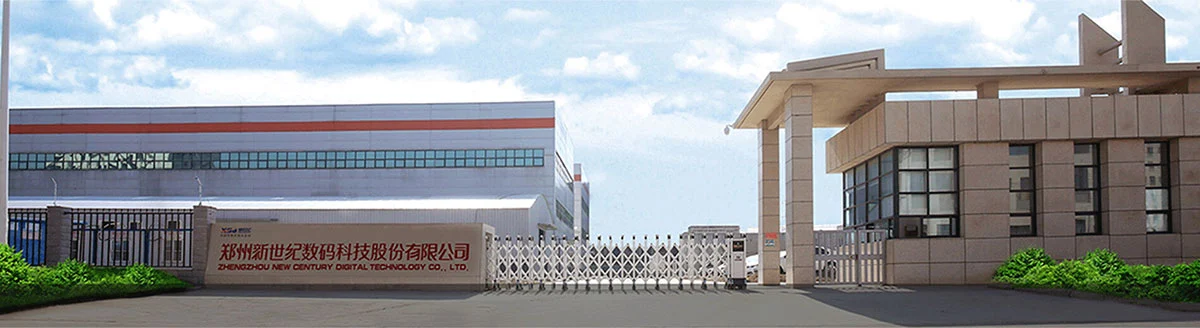
Fedar's engineering team designs every system with a deep understanding of inkjet technology, as well as circulation technologies that have been improved over many years of use in textile printing, and a DTF printer from Fedar reflects this expertise. Our 400-person production facility follows strict quality standards for sourcing parts, putting them together, and testing them for quality, making sure that the products work the same way everywhere they are used.
Our technical specialists can help you decide which tools will work best for your production needs and growth plans, whether you're starting your first direct-to-film business or expanding a current one. Contact info@tex-printer.com to talk about your specific application needs, get detailed technical documentation, or set up equipment demonstrations that show how the circulation system works in real-life production settings. Visit blog.tex-printer.com for additional technical resources, application guides, and industry insights that support informed equipment decisions.
References
1. Smith, J.R., and Thompson, L.K. (2022). "Titanium Dioxide Pigment Behavior in Digital Textile Inks: Sedimentation Dynamics and Prevention Strategies." Journal of Industrial Printing Technology, 18(3), 145-162.
2. Chen, W., Rodriguez, M., and Patel, S. (2021). "Comparative Analysis of Printhead Longevity Factors in Direct-to-Film Systems." International Conference on Digital Textile Manufacturing Proceedings, Berlin, Germany, 267-281.
3. Anderson, P.F. (2023). "Total Cost of Ownership Models for DTF Printing Equipment: A Five-Year Operational Study." Textile Production Economics Quarterly, 12(1), 89-104.
4. European Digital Printing Association. (2022). "Technical Standards for White Ink Management Systems in Industrial Textile Applications." EDPA Technical Bulletin TB-2022-07, Amsterdam.
5. Yamamoto, K., and Liu, H. (2021). "Environmental Factors Affecting Inkjet Nozzle Performance in High-Pigment Formulations." Applied Surface Chemistry in Printing, 34(4), 512-528.
6. Martinez, R.C. (2023). "Automation ROI in Mid-Scale Textile Decoration Operations: Maintenance Labor Reduction Through Intelligent Ink Management." Production Efficiency Review, 29(2), 203-219.

Leo Li
Leo Li is a promoter of small-batch quick response and flexible manufacturing solutions, focusing on short-process printing solutions for e-commerce customization, fast-turn orders, and personalized production. Achievement: Helped customers achieve a "one-piece minimum, same-day shipping" production model, significantly reducing sampling and delivery lead times while lowering overall operating costs.
We Look Forward to Your Email
Please send us product information that interests you, and we will provide you with one-on-one service.
_1778203196111.png)
Recommended Blog

Is the DTF Printer 60cm suitable for small - scale businesses?
_1783412819689.webp)
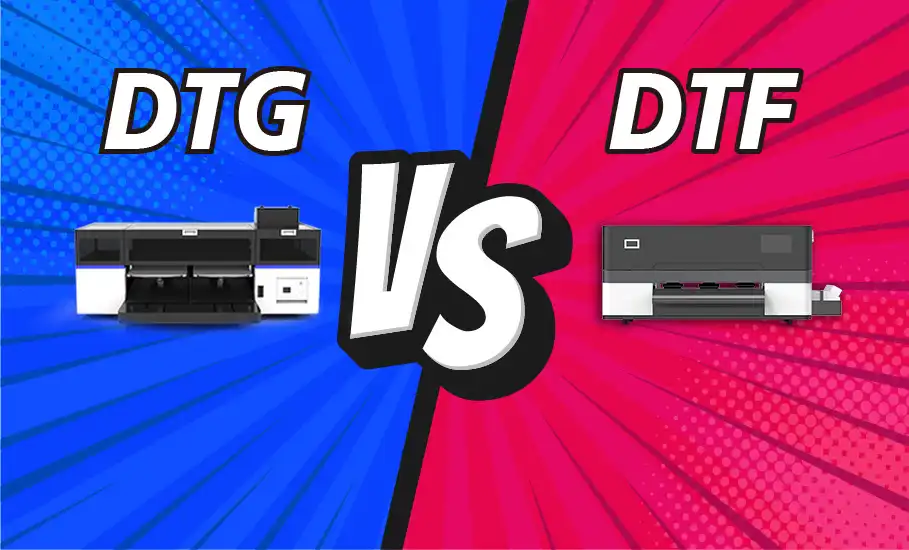
DTG vs DTF Printing:The Pros and Cons of Direct Printing Technologies.

How Does a Sublimation Printer Improve Textile Printing Quality?
_1785483477752.webp)
Color Fade Solutions for Consistent Color Accuracy in Industrial Printing


Best DTF Printing Machine for Small Business: A Buyer's Guide