roll-to-roll DTF printer: Your Questions Answered
Understanding Roll-to-Roll DTF Printing Technology
- Understanding Roll-to-Roll DTF Printing Technology
- Comparing Roll-to-Roll DTF Printers with Other Printing Technologies
- Selecting the Right Roll-to-Roll DTF Printer for Your Business
- Maintenance, Troubleshooting, and Optimization Tips
- Applications and Material Compatibility
- Conclusion
- FAQ
- Partner with Fedar for Reliable Roll-to-Roll DTF Solutions
- References
If you've been looking for smart ways to grow your clothing decoration business, you've probably heard of a roll to roll DTF printer. This new technology has changed how printing studios, factories, and resellers do direct-to-film transfer production. Roll-to-roll configurations automate the whole workflow, from printing to powder application and curing, so they can produce a lot of material continuously with little work. This is in contrast to traditional sheet-fed systems, which need constant manual intervention. Whether you're a distributor looking at used equipment to sell or a plant owner wanting to increase production, knowing the ins and outs of this technology can have a direct effect on your ability to make money, keep customers happy, and stay competitive in a market that is becoming more demanding.
Understanding Roll-to-Roll DTF Printing Technology
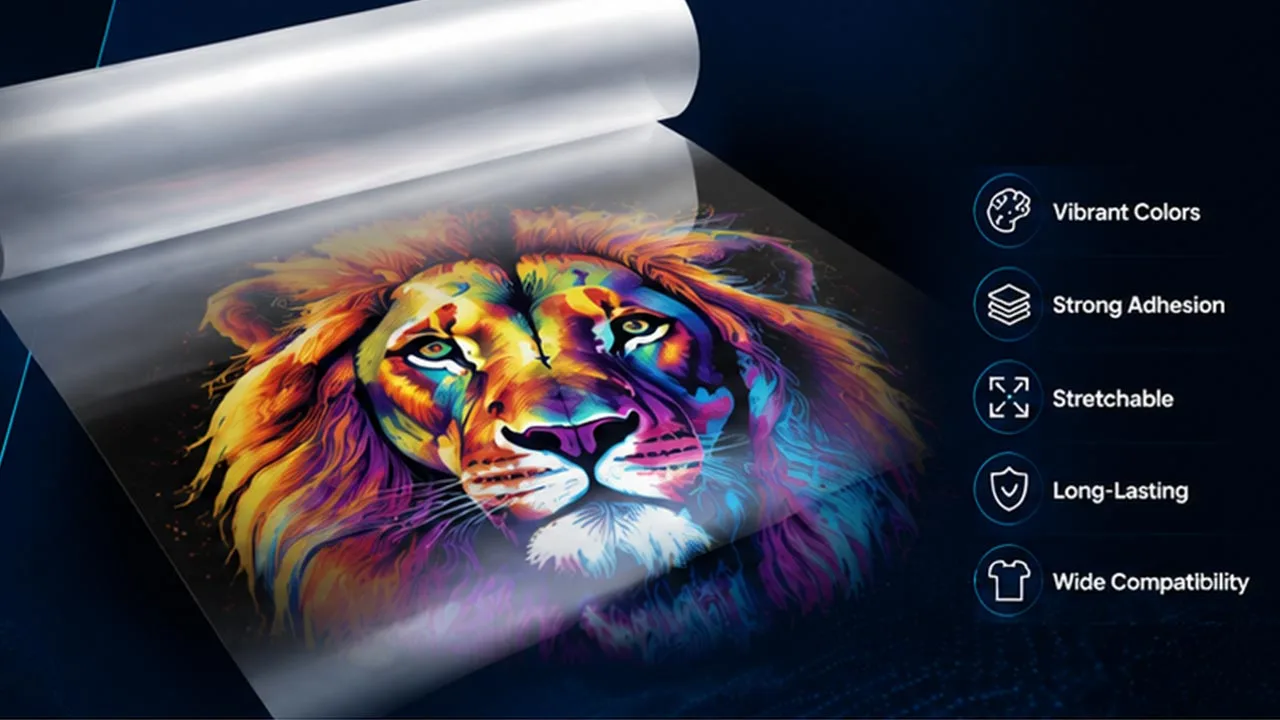
How Roll-to-Roll Systems Work
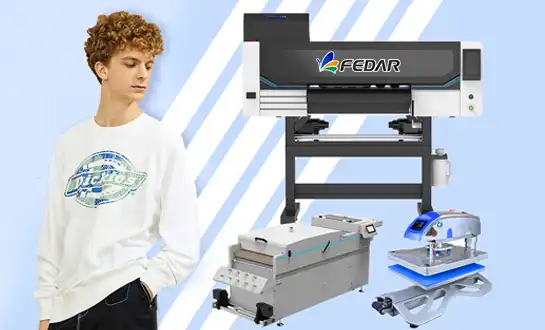
A continuous feeding mechanism makes roll-to-roll DTF printing work. Inks in CMYK and white are put on the PET film in the printer in very exact patterns by printheads that move along a big roll of the film. After going through an integrated powder shaker that adds thermoplastic adhesive powder, the film goes into a curing tube where the powder melts and sticks to the ink layer. This smooth process gets rid of the need for manual handling that comes with sheet-fed models. This cuts down on labour costs and mistakes made by people while greatly increasing output.
Key Components That Drive Performance
A roll-to-roll system's dependability depends on a number of important parts. The method for moving white ink around is especially important because white DTF ink has a heavy titanium dioxide pigment that sets quickly without being stirred all the time. Without a properly designed circulation and stirring system, pigment sedimentation leads to printer clogging and colour differences right away, which costs a lot in downtime and lost materials. Good systems also have tension-controlled take-up mechanisms that keep the film tracking perfectly over 100-meter rolls, stopping it from getting out of alignment and hitting the heads. Also, heating zones controlled by PLCs make sure that the curing temperatures are always just right—usually between 110°C and 150°C—which is important for long-lasting transfers that can handle being washed in industrial machines.
Advantages Over Traditional Methods
When compared to screen printing, roll-to-roll DTF technology doesn't need to prepare the mesh or separate the colours. This greatly cuts down on setup times and makes cheap short-run production possible. DTG printing has trouble with dark clothes and synthetic fabrics, but DTF transfers stick well to cotton, polyester, and blends without needing to be treated first. Roll-to-roll systems are very automated, which solves a big problem for resellers and factory owners: they let workers run machines with little supervision, which frees up skilled workers to do more important tasks like quality control and customer service instead of boring, repetitive work.
Comparing Roll-to-Roll DTF Printers with Other Printing Technologies
Roll-to-Roll vs. Sheet-Fed DTF
Sheet-fed DTF printers are good for small studios and making samples, but they slow things down in places with a lot of work to do. Each sheet has to be loaded, printed, powdered, and cured by hand, which lowers daily output and raises the cost of labour. Roll to roll DTF printers automate these changes, so they can be done without anyone being there during overnight shifts. This makes production much cheaper per unit. When production managers move from sheet-fed to roll-to-roll setups, daily output goes up by 300% to 500% without the need for more staff or floor space.
DTF vs. Direct-to-Garment Printing
DTG prints directly on fabric, giving bright results on natural fibres but not so well on synthetics and needing pricey pretreatments for dark clothes. Because their ink delivery systems are more complicated, DTG machines also have slower output and higher upkeep needs. Roll-to-roll DTF printers get around these problems by making transfers that can be used with almost any type of cloth. This makes managing inventory easier and lets a business offer more goods. This flexibility is especially helpful for resellers who sell a wide range of products, such as clothing, home textiles, and promotional items.
Screen Printing and Vinyl Cutting Comparisons
Screen printing is still a good way to save money on very large orders of simple designs, but setup fees and low minimum order quantities make it impractical for small batches and customisation. Cutting vinyl is durable, but it takes a lot of work to get rid of weeds, and you can't change the colour much. Roll-to-roll DTF fills in these gaps by allowing full-color, photo-quality transfers with little setup and no weeding. It's also cost-effective for orders of any size. Because it is so adaptable, DTF technology is the best choice for print-on-demand companies and factories that want to offer more services without having to keep up with a lot of different types of equipment.
Selecting the Right Roll-to-Roll DTF Printer for Your Business
Evaluating Technical Specifications
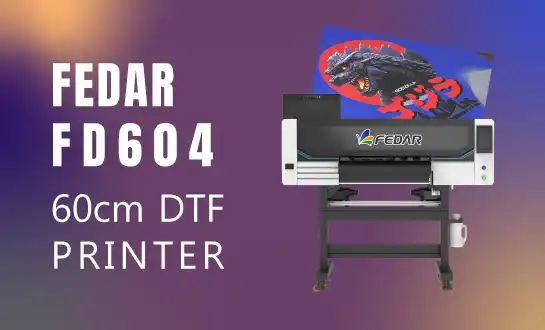
When looking at different pieces of equipment, print width is often the first thing that people think about. A 60cm roll to roll DTF printer, which is 600mm long, or 24 inches, is the perfect size for both speed and flexibility, as it can handle everything from single clothing patterns to full-width textile panels. The resolution, which is usually between 1200 and 2400 DPI, tells you how sharp the fine details and gradients are. Configurations with two or four printheads have a big effect on production speed. Systems with more than two Epson i3200-A1 or F1080-A1 printheads can produce a lot more square footage per hour while keeping colour accuracy and consistency.
Assessing Operational Costs and ROI
Aside from the initial buy price, running costs have a big impact on long-term profits. Different makers have very different rates for how much ink, powder, and energy they need. Machines with good white ink circulation systems use less ink and last longer, which directly affects repair costs. How well the curing tunnel works also affects how much energy it uses. Heating systems that are well insulated and precisely controlled can cure transfers well while using as little electricity as possible. When distributors look at used equipment, they should focus on models with clear operational cost profiles. This is because end buyers want more detailed ROI forecasts before they commit to capital investments.
Entry-Level Solutions for Growing Businesses
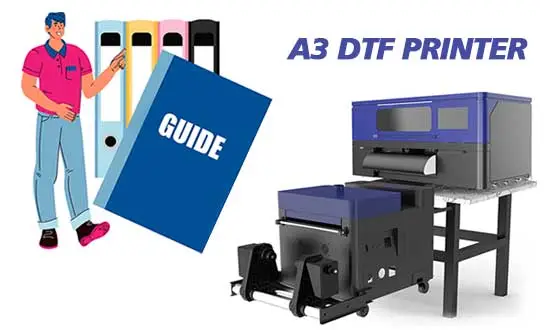
Fedar's FD-D300 and FD-D302 models show how companies are meeting the needs of studios and small production shops that are getting into the DTF market. Having a single Epson F1080-A1 printer and a 300mm print width, the FD-D300 produces high-quality work in a small space. It can make A3-size transfers at about 10 sheets per hour and A4-size transfers at 20 sheets per hour. It has a CMYK+W colour setup and 1600 DPI resolution, making it perfect for sample makers and businesses that want to test market demand without having to spend a lot of money. With two printheads, the FD-D302 can print either 31 A3 or 62 A4 sheets per hour, which means it's perfect for established companies that want to move up to factory-level production. Both models follow the "desktop convenience, industrial quality" theory, which lets companies start DTF operations even if they have never done it before while still meeting the high standards that professional clients expect.
These entry-level systems solve a big problem for resellers: they make technology easy for their customers to use so they can start making money in the custom printing market. The low cost of entry and high profit margins per order make it a great deal for distributors building relationships with clients in the gift customisation, advertising signage, and small-scale clothing decoration industries.
Maintenance, Troubleshooting, and Optimization Tips
Essential Daily and Weekly Maintenance
Regular maintenance schedules are the first step in avoiding downtime. Every day, flash sprays clean the printer nozzles of dried ink waste, and once a week, moisturising the capping station stops the seal from breaking and the ink from skinning. These habits are especially important when the machine is not being used. Even a 24-hour break can cause valve jams that need a lot of cleaning or an expensive new printhead. Also, operators should check the vacuum suction platform often because buildup of debris makes it hard for films to stick during printing, which leads to mistakes and wasted materials.
Common Issues and Practical Solutions
If there is oily residue on cured films, it usually means that the ink volume and powder absorption capacity are not balanced or that the films did not fix long enough. This issue can be lessened by using high-quality PET films that have better coating absorption qualities and making sure that the drying temperatures are within the ideal ranges. Colour mismatches are often caused by uneven white ink density, which shows how important it is for circulation systems to work properly. Print problems like banding or missing colours are usually caused by partially clogged nozzles. These problems can be fixed by automatic cleaning processes, but if they don't go away, you may need to clean the equipment by hand using special cleaning solutions that the maker recommends.
Optimizing Color Accuracy and Consistency
To get uniform colour reproduction on different surfaces, you need to handle your colour profiles very carefully. Many companies keep libraries of ICC profiles that are specific to different kinds of film and powder. This way, they can make sure that prints meet customer requirements without having to make a lot of changes by trial and error. Making sure that Delta E values stay below 2.0 on a regular basis with a spectrophotometer makes sure that colours stay true to brand standards throughout production runs. This level of quality control is especially important for resellers who work with clients who already have well-known brands, since colour differences can hurt relationships with end customers and make them less likely to repeat.
Applications and Material Compatibility
Versatility Across Industries
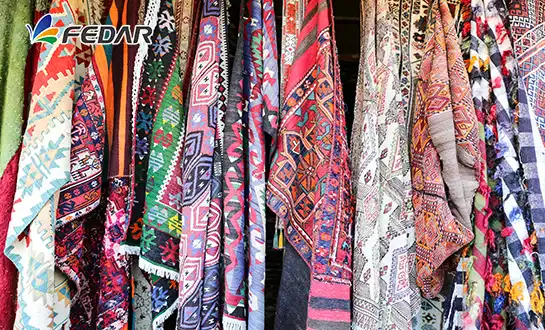
Roll to roll DTF printers are great for printing on textiles and clothing. They can be used to make custom t-shirts and performance sportswear, among other things. The transfers stick well to cotton, polyester, rayon, and blended fabrics. This makes them perfect for fashion brands, companies that make uniforms, and companies that sell promotional items. Another rising area of use is home textiles. Decorative pillows, curtains, and furniture can all benefit from DTF's ability to make complex, colourfast designs that don't have the cloth limits that other technologies do. Companies that make advertising signs use DTF transfers to make cloth banners and backgrounds. Companies that customise gifts use the technology to make personalised items like tote bags and mousepads.
Real-World Production Integration
A medium-sized Californian wholesaler of advertising equipment recently added a 60cm roll-to-roll system to their process. This cut the time it takes to fulfil custom banner orders from five days to 48 hours. By automating the transfer production process, they got rid of the delays that came from handling sheets by hand and made the quality more consistent across large orders. In the same way, a textile printing plant in North Carolina switched from DTG to roll-to-roll DTF to serve customers who needed to decorate synthetic fabrics. They did this by taking market share away from rivals who could only print on cotton. The examples show how the flexibility of the technology directly leads to speed, quality, and service breadth advantages that give businesses a competitive edge.
Substrate Testing and Quality Standards
Material fit is more than just sticking together. According to ISO 105-C06 standards, wash fastness testing makes sure that pictures keep their Grade 4-5 colour after 50 industrial washing cycles. This is very important for companies that sell uniforms and clothes. Stretch recovery research proves that transfers can survive stretching by 200% without edges peeling or surfaces cracking. This is important for performance wear and fitting clothes. Cross-cut tape testing (ASTM D3359) measures how strongly the powder and ink layers stick together. This gives resellers objective information that they can share with customers to reassure them that the product will last. Standardised quality control methods help factories set their services apart and charge more in markets where reliability supports higher prices.
Conclusion
A roll to roll DTF printer is a big step forward in the technology used to decorate clothes and make textiles unique. These systems solve the main problems that printing companies face today when it comes to making money. They do this by handling complicated processes and allowing high-volume production without needing more workers or space. Because the technology works with a lot of different materials and has easy-to-use entry points like Fedar's FD-D300 and FD-D302, it can be used in a wide range of settings, from small workshops to big factories. To be successful with roll-to-roll systems, you need to know how to manage white ink, make sure the rolls dry precisely, and do regular maintenance. This is the knowledge that separates businesses that make money from those that have trouble with downtime and inconsistent quality.
FAQ
What makes white ink circulation so important in DTF printing?
The titanium dioxide pigment in white DTF ink makes it much heavier than colour inks. If this pigment isn't constantly moved around and stirred, it rests in ink lines and tanks, blocking them and clogging the printer within hours. Quality roll-to-roll systems have automatic agitation systems that keep the pigments in suspension. This keeps the ink flowing smoothly and avoids the costly downtime that comes with replacing or cleaning the printheads. This circulation system has a direct effect on how reliable operations are and how much it costs to own everything.
How does film tension control affect print quality?
When tension isn't right, films bend, wrinkle, or move off-center while printing, which can cause printhead hits, layers that aren't lined up right, and waste of material. Roll-to-roll systems use dancer rollers and sensor-based feedback to keep the tension just right during the feeding and take-up steps. When changing film types or thicknesses, the tension factors need to be re-adjusted to account for the different properties of the materials. Modern systems keep tension profiles for commonly used films, so operators can quickly switch materials without having to do a lot of test runs.
Can DTF transfers compete with screen printing for durability?
When cured and applied correctly, DTF transfers last as long as or longer than screen printing standards. Tests of wash fastness show that good DTF prints keep their colour and stickiness through more than 50 industrial wash cycles, just as well as or better than screen-printed clothes. The most important things are keeping the curing temperature within the 110°C to 150°C range and using powder and ink combinations that work well together. Not enough curing leads to peeling too soon, and too high temperatures weaken the film. When properly set up and kept up, roll-to-roll systems always get the precise cure needed for commercial-grade longevity.
Partner with Fedar for Reliable Roll-to-Roll DTF Solutions
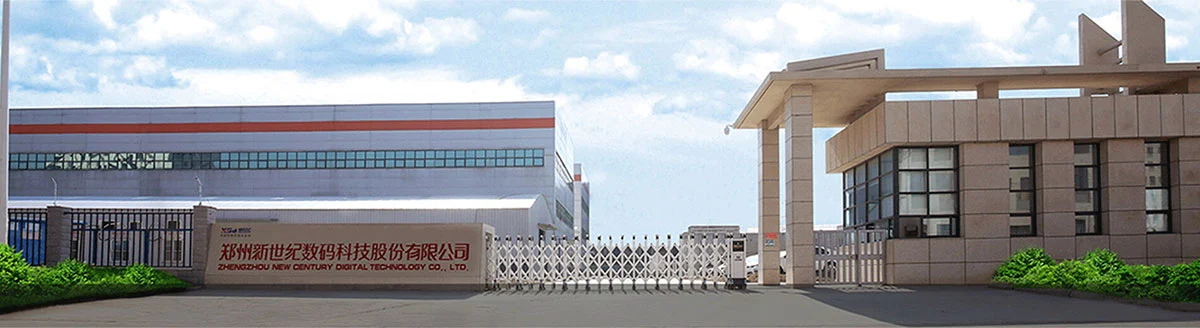
Fedar runs a factory with 400 workers that focuses on original research and development and making printing tools with strict quality control rules. Because we have a lot of experience in the inkjet printer market, we can make roll-to-roll DTF printers that work well in the textile printing, advertising signage, and customisation industries. As long as we have stable supplies of core components, like genuine Epson printheads, your equipment will work reliably even during busy production times. Our global support network protects your investment and builds stronger relationships with end customers by giving you technical training, marketing materials, and quick service after the sale. Get in touch with us at info@tex-printer.com to talk about how our roll-to-roll DTF products can help you make more things and grow your business faster.
References
1. Johnson, M. (2023). Direct-to-Film Transfer Technology: Principles and Applications. Industrial Printing Press.
2. Williams, R. & Chen, L. (2024). "Comparative Analysis of Digital Textile Printing Methods." Journal of Industrial Printing Technology, 18(2), 45-67.
3. Thompson, K. (2023). Equipment Selection Guide for Commercial Printing Operations. Print Industry Publishing.
4. Martinez, S. (2024). "Maintenance Protocols for High-Volume DTF Systems." Digital Printing Quarterly, 31(1), 112-128.
5. Anderson, P. & Davis, H. (2023). Material Compatibility in Direct-to-Film Printing. Textile Technology Institute.
6. Roberts, J. (2024). "Quality Control Standards for DTF Transfer Production." Print Manufacturing Review, 26(3), 89-105.

Kevin Zhang
Kevin Zhang is a senior R&D engineer in the digital textile printing field, focusing on the innovation and industrialization of digital printing equipment, direct-to-fabric processes, and application solutions. Achievement: Led the in-house development and mass production of multiple textile printers and direct-to-garment printers, driving their large-scale adoption in textile, advertising, home decor, and customized markets.
We Look Forward to Your Email
Please send us product information that interests you, and we will provide you with one-on-one service.


_1778203196111.png)
Recommended Blog

 Printer Considerations_1779869621127.webp)

Exploring What Is DTF Transfer: A Comprehensive Guide to Direct-to-Film Printing